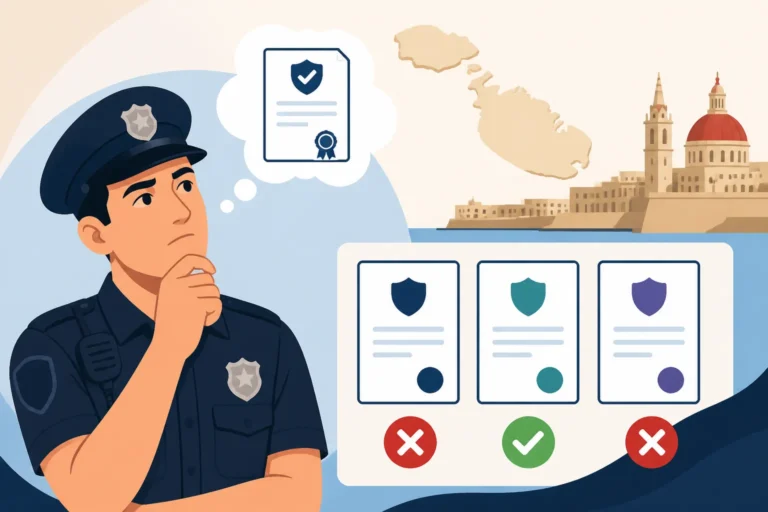
Can I Apply for a Residence Permit While Visiting Malta?
Ah, the classic expat conundrum: you fall in love with Malta on a holiday, dream of moving here, and then wonder if you can simply extend your stay and sort out your paperwork while basking in the Mediterranean sun. It's a question that pops up more often than you'd think, filled with hope and a healthy dose of administrative dread. This guide will meticulously break down whether you can indeed apply for a Maltese residence permit while visiting, covering the nuances for both EU and non-EU citizens, the types of permits, and the critical pitfalls to avoid.
The Nuance of Applying for Residence While Already in Malta
When you're swept up in the charm of Malta – the history, the sunshine, the vibrant expat community – it's natural to want to make it your permanent home. The idea of seamlessly transitioning from a tourist to a resident without leaving the island is incredibly appealing. However, the reality of immigration law, particularly for non-EU citizens, is rarely that straightforward. While there are indeed specific circumstances where applying for a residence permit from within Malta is permissible or even expected, it’s far from a universal right and requires careful planning and understanding of the local regulations.
For EU/EEA/Swiss citizens, the process is generally much simpler, allowing for registration of residence after arrival. For third-country nationals (non-EU/EEA/Swiss), the default expectation for many initial long-stay permits is to apply from your country of origin or legal residence. Attempting to circumvent these rules can lead to serious complications, including visa overstays, application rejections, and even future entry bans. Understanding the specific type of permit you seek and your current visa status is paramount.
EU/EEA/Swiss Citizens: A Smoother Transition
If you're lucky enough to hold a passport from an EU/EEA country or Switzerland, you're already operating under the principle of free movement. This means you have the right to enter Malta for up to three months without any special conditions beyond a valid ID or passport. After these initial three months, if you intend to stay longer, you are required to register your residence. This is not an application process in the same restrictive sense as for non-EU citizens, but rather a registration of your legal right to reside here.
You don't need to "apply" for permission to stay; you simply declare your presence and purpose (e.g., employment, self-sufficiency, study) to Identità, the agency responsible for citizenship and expatriate affairs. This registration process is usually done entirely within Malta after you've arrived and established your reason for staying. It’s significantly less bureaucratic and less likely to hit snags related to your entry visa status. You essentially arrive, find a place to live, potentially a job, and then proceed to register for your eResidence document, which confirms your rights. You can find more comprehensive details on this process in our guide, Moving to Malta as an EU/EEA Citizen: Registration and Your Rights.
Third-Country Nationals: The "Yes, But" Scenario
For citizens outside the EU/EEA/Switzerland – often referred to as "third-country nationals" – the answer to whether you can apply for a residence permit while visiting Malta is a resounding "yes, but it's complicated." It largely depends on what kind of permit you're seeking, your current immigration status in Malta, and whether Malta's immigration policies allow for a "change of status" application from within its borders.
The Schengen Borders Code, which Malta adheres to, generally dictates that a short-stay visa (C-visa, i.e., a tourist visa) is not intended for the purpose of seeking long-term residence. The implicit understanding is that you intend to leave the Schengen Area before your short-stay visa or visa-free period expires. Applying for a long-stay permit while on a short-stay visa can sometimes be seen as an abuse of the visa system. However, specific Maltese policies have carved out exceptions or pathways for certain permit types, making this a grey area that demands meticulous attention to detail.
Common Residence Permits and Application Routes
Malta offers a variety of residence permits catering to different purposes, such as work, study, retirement, or digital nomadism. The feasibility of applying for these while visiting hinges on the specific permit's regulations.
The Single Permit: Work and Residence Combined
The Single Permit is the most common route for non-EU citizens who wish to work and live in Malta. It combines your work authorisation and residence permit into one document. Historically, and still predominantly, the initial application for a Single Permit is expected to be lodged from outside Malta, usually from your country of origin or legal residence. Once an "Approval in Principle" is issued, you would then apply for a D-visa (national long-stay visa) to enter Malta.
However, there are limited exceptions where one might apply from within Malta:
- Switching Status: If you are already lawfully resident in Malta under a different permit (e.g., a student permit or another long-stay visa type), it is often possible to apply for a Single Permit from within the country. This isn't really "applying while visiting," but rather "applying while already resident on another long-term basis."
- Special Circumstances: In rare cases, if you entered Malta on a D-visa that was not for the Single Permit but allows for subsequent application, or if there are humanitarian grounds, Identità may consider an in-country application. But do not rely on this.
- The Employer's Role: Your prospective employer plays a crucial role in the Single Permit process. They are usually the primary applicant, submitting documentation on your behalf. If they are willing to explore an in-country application, they would need to engage with Identità directly, often requiring strong justification.
The general advice remains: for your first Single Permit, apply from abroad. The process of obtaining your The Single Permit in Malta: Combined Work and Residence, Step by Step usually involves a multi-stage application that is cumbersome to manage if you're battling a ticking visa clock. For more details on entry visas, refer to The D-Visa National Long-Stay Visa for Entering Malta.
The Nomad Residence Permit: A Notable Exception
Here's where things get interesting for those looking to apply while visiting. Malta's Nomad Residence Permit, designed for digital nomads and remote workers, explicitly allows for applications from individuals who are already lawfully present in Malta on a short-stay visa. This is a significant deviation from the traditional rules for most long-term residence permits.
If you're currently in Malta on a Schengen C-visa (tourist visa) or a visa-free stay, you can apply for the Nomad Residence Permit. However, there are crucial caveats:
- No "Visa Shopping": Your intent when entering Malta must genuinely have been for tourism. If immigration authorities suspect you entered solely to apply for residence, your application might be scrutinised or rejected.
- Sufficient Funds and Remote Work: You must meet the income threshold (currently €2,700 gross per month, although this can change) and genuinely work remotely for a company registered outside Malta, or be self-employed with clients outside Malta.
- Visa Validity: Your short-stay visa must be valid throughout the application process. While an application is pending, you are generally allowed to remain in Malta. However, if your short-stay visa expires before a decision is made, you will be issued an interim permit. It is vital to apply well before your visa runs out to avoid becoming an overstayer, which could jeopardise your application and future immigration prospects.
- No Travel: While your application is pending and your short-stay visa has expired, you cannot typically travel outside Malta. Exiting the country could mean your application is considered abandoned, or you might face difficulties re-entering.
This permit offers a genuine pathway for those who have fallen in love with Malta and wish to formalise their stay as remote workers. Companies like Sirelo often provide relocation services that can assist with understanding these processes, though for permits themselves, official government channels or immigration lawyers are key.
Student Permits: Generally From Abroad
For international students, the standard procedure for obtaining a Student Residence Permit requires you to apply from your country of origin or legal residence. You would typically need an acceptance letter from a recognised Maltese educational institution to even start this process. Once approved, you would then secure a D-visa to enter Malta.
Applying for a student permit while on a short-stay visa is generally not recommended or even possible for initial applications, as it contravenes the intent of the short-stay visa. However, if you are already in Malta on a different type of long-term residence permit (e.g., a Single Permit) and wish to switch to a student permit, that might be a possibility, though it involves a formal change of status application with Identità. For a full breakdown, check out Student Residence Permits for Malta: Requirements and Renewal.
Family Reunification Permits
If you are a family member of an existing Maltese resident (e.g., spouse, child), the process can sometimes be initiated from within Malta, especially if you entered on a short-stay visa or a visa-free arrangement, provided your family member meets the stringent sponsorship requirements. However, this is not a guarantee and depends heavily on the nationality of the family member, the type of permit they hold, and your relationship status.
For non-EU citizens joining an EU citizen, the process is generally easier, akin to the EU citizen registration mentioned earlier. For non-EU citizens joining a non-EU resident, the process is more complex, with specific income and accommodation requirements for the sponsor. It's often advisable for these applications to be started from outside Malta, but exceptions exist. It’s crucial to consult Identità or an immigration lawyer for specific advice on your situation.
Special Residence Programmes
Malta offers several special residence programmes, such as the Malta Permanent Residence Programme (MPRP), the Global Residence Programme (GRP), and others designed for high-net-worth individuals or specific investor categories. Many of these programmes do allow applicants to initiate their applications while lawfully present in Malta on a short-stay visa.
These programmes typically involve significant financial commitments (investment, property purchase/rental, administrative fees) and extensive due diligence. Given the financial implications, it's often more practical for potential applicants to visit Malta, understand the landscape, engage with legal and financial advisors, and then proceed with their application from within the country. However, as with the Nomad Permit, your entry must be lawful and your initial intent for tourism, not immediate residency application, should be clear.
Summary of Application Scenarios from Within Malta
To simplify, here's a general overview of which common permit types can or cannot typically be initiated from within Malta while on a short-stay visa (C-visa/visa-free period):
Permit Type Can I Apply While Visiting on a Short-Stay Visa? to Malta from your short-stay visit. It will offer advice on how to navigate the complex immigration system to make your dream of living in Malta a reality. The process of applying for a residence permit while visiting Malta can be a minefield of regulations, delays, and potential misunderstandings. Many hopeful expats envision arriving in Malta on a tourist visa and then smoothly transitioning into a resident status. While this is certainly an option for some, particularly EU citizens or those applying for specific schemes like the Nomad Residence Permit, for others, especially non-EU nationals seeking standard work permits, it's generally not the advisable route.
Malta, like any sovereign nation, has strict immigration policies aimed at controlling who enters and for what purpose. A short-stay Schengen visa (Type C) or a visa-free entry is almost always granted with the explicit understanding that the visitor intends to leave before the authorised stay expires. Any attempt to use this entry for a clandestine switch to long-term residency can be viewed negatively by immigration authorities. The key is understanding which permit types genuinely accommodate in-country applications and which require you to apply from abroad before entering Malta on a specific long-stay (Type D) visa.
EU/EEA/Swiss Citizens: Effortless Transition
If you're an EU, EEA, or Swiss citizen, you're in a much more fortunate position when it comes to applying for residence while visiting Malta. The principle of free movement means you don't need a visa to enter or even to seek employment. You can simply arrive in Malta with your passport or national ID card and begin your job search or property hunt.
Once you have established your intent to reside for more than three months – typically by securing employment, proving self-sufficiency, or enrolling in a study program – you are required to register your residence with Identità. This is a crucial step for your long-term stay, not an application for permission to enter, but rather a formalisation of your presence and rights.
The process involves submitting certain documents, such as your passport/ID, proof of accommodation (like a rental agreement), and proof of your means of subsistence (e.g., employment contract, bank statements, or proof of enrolment). This registration grants you an eResidence card, which is essential for accessing many public services, including Healthcare in Malta for Foreign Residents: The Complete System Guide (2027) and opening a local bank account. You essentially integrate yourself into the system after arrival, which is a stark contrast to the experience of non-EU citizens. It’s a formality that affirms your existing rights, rather than granting new ones.
Non-EU Citizens: The Complexities of Changing Status
For non-EU citizens, the landscape changes dramatically. The general rule for obtaining a long-term residence permit in Malta is to apply from your country of origin or legal residence. If your application is approved "in principle," you would then apply for a The D-Visa National Long-Stay Visa for Entering Malta at a Maltese embassy or consulate abroad. This D-visa allows you to enter Malta specifically for the purpose of collecting your residence permit.
However, certain exceptions and specific permit types do allow for in-country applications or a change of status, but these are narrowly defined and come with significant risks if not managed correctly.
Understanding Visa Intent and Overstay Risks
One of the biggest pitfalls for non-EU citizens attempting to switch from a tourist stay to a residence permit is the "intent" clause. When you apply for a Schengen C-visa (short-stay) or enter visa-free, you declare your intention to visit for a limited period (e.g., tourism, business, visiting family) and to leave before your authorised stay expires. Immigration authorities can view an immediate application for a long-term residence permit as misrepresentation of your original intent, potentially leading to refusal.
Moreover, if your short-stay visa or visa-free period expires while your residence permit application is still pending, you risk becoming an overstayer. Overstaying can result in:
- Application Refusal: Your residence permit application could be rejected outright.
- Deportation: You may face orders to leave the country.
- Entry Bans: You could be banned from re-entering the Schengen Area for a significant period (e.g., 1-5 years).
- Future Visa Difficulties: It will make it incredibly difficult to obtain any future visas for Malta or other Schengen countries.
This is why, unless explicitly allowed by the permit scheme, it's almost always safer and less stressful to apply for your long-term residence permit from outside Malta. Planning your move with a clear understanding of the immigration requirements for non-EU citizens, as detailed in our guide Moving to Malta from Outside the EU/EEA: What You Need to Know, is crucial.
Specific Permit Pathways for In-Country Applications
Despite the general advice, Malta has created specific pathways where applying for residence while already in the country is a legitimate option.
The Nomad Residence Permit
The Nomad Residence Permit is perhaps the most prominent example of a long-term residence permit that actively allows applications from within Malta. If you are a digital nomad or remote worker from a third country, you can enter Malta on a short-stay visa or under a visa-free arrangement and then apply for this permit.
The key requirements for this permit include demonstrating that you work remotely for an employer outside Malta or are self-employed with clients outside the country, and that you meet the minimum income threshold. Critically, your initial entry into Malta should still be genuinely for tourist purposes. If you arrive with a huge moving container arranged by Sirelo, and then immediately apply for a Nomad Permit, it might raise questions about your declared intent.
When applying from within Malta for the Nomad Residence Permit, you need to be acutely aware of your current short-stay visa's expiry date. The authority, Residency Malta Agency, will process your application, and if it looks like your short-stay visa will expire before a decision is reached, they usually issue an interim permit or a notification that allows you to remain lawfully in Malta while your application is processed. However, during this interim period, you might be restricted from international travel. This makes careful timing essential.
Special Residence Programmes
Malta's various special residence programmes, such as the Malta Permanent Residence Programme (MPRP), the Global Residence Programme (GRP), and other investment-based schemes, generally permit applicants to initiate their process while lawfully present in Malta on a short-stay visa. These programmes are designed to attract high-net-worth individuals or investors, and the process often involves extensive consultations with approved agents, lawyers, and financial advisors in Malta.
Given the significant financial commitments and the complexity of these applications, visiting Malta to explore options, meet advisors, and conduct due diligence is an integral part of the process. Therefore, the authorities have made provisions for applications to be lodged from within the country. However, once again, the principle of lawful entry and respecting visa conditions remains. These are typically not "change of status" applications from a standard tourist visa but rather applications under specific investment or residence-by-exception schemes.
Switching Between Long-Term Permits
If you are already a long-term resident in Malta under one type of permit (e.g., a student permit, a Single Permit, or a permit as a researcher), and your circumstances change (e.g., you finish studying and get a job offer), it is generally possible to apply for a different type of long-term residence permit from within Malta. This is not "applying while visiting" but rather "changing your residence status."
For example, if you hold a valid student permit and receive a job offer, you can apply for a The Single Permit as a Combined Work and Residence Permit in Malta without having to leave the country. Similarly, if you're on a Single Permit and wish to switch employers, you typically apply for a new Single Permit while remaining in Malta, as outlined in Changing Employers on a Single Permit in Malta: The Rules. This distinction is crucial: applying from an existing long-term permit status is usually permissible; applying from a short-term tourist visa for a standard long-term permit generally is not.
The Application Process and What to Expect
No matter if you're an EU citizen registering your presence or a non-EU citizen applying for a specific permit, navigating Malta's bureaucracy can be… an experience. Identità is the primary agency for residence permits, and their processes, while improving, can still test your patience.
Documentation and Appointments
Regardless of the permit type, you will need to prepare a comprehensive set of documents. This typically includes:
- Valid passport (with sufficient validity, often 6-12 months beyond your intended stay).
- Proof of accommodation in Malta (rental agreement, property deed).
- Proof of financial means (bank statements, employment contract, scholarship).
- Health insurance coverage. For non-EU permit holders, this is often a mandatory requirement, and providers like Cigna Global offer plans tailored for expats. Details on requirements for non-EU permit holders can be found in Private Health Insurance Requirements for Non-EU Permit Holders in Malta.
- Police conduct certificate (from your home country and potentially from Malta if you've been here for a certain period).
- Specific forms for your permit type.
- Photographs meeting passport standards.
You'll almost certainly need to book an appointment with Identità for biometrics (fingerprints and photo) and possibly for document submission. These appointments can sometimes have long waiting times, which is another reason why starting an application while on a short-stay visa can be risky if your visa is close to expiry. For more general information on required documents, check out What Documents Do I Need for a Maltese Residence Permit?.
Processing Times and Travel Restrictions
Identità processing times can vary wildly, from a few weeks to several months, depending on the type of permit and the workload. If you are a non-EU citizen applying from within Malta and your short-stay visa expires while your application is pending, you will likely be issued an acknowledgement letter or interim permit that allows you to remain in Malta. However, this usually means you cannot travel outside the country until your eResidence card is issued. Exiting Malta could invalidate your application or prevent re-entry.
For EU citizens, once you register and your application is processing, your right to reside and travel within Schengen typically remains unaffected. However, having your eResidence card in hand is always advisable for smooth travel and administrative dealings.
The Role of Identità
Identità is the central authority you'll be dealing with for all residence permit applications. Their website (identita.gov.mt) provides forms and guidelines, but sometimes the real-world application process can differ or require additional documentation. Preparing for your interactions with Identità requires patience and meticulous organisation. Understanding their procedures, booking appointments, and knowing what to do if you encounter delays is key to a smoother experience, as outlined in Dealing with Identità: Applications, Biometrics, and the eResidence Card.
Recommendations for a Smooth Transition
Considering the complexities, here are some actionable recommendations to navigate the process of moving to Malta and applying for residence:
- Research Thoroughly BEFORE You Arrive: Understand which specific residence permit applies to your situation. Don't assume you can easily switch statuses. Check the official Identità and Residency Malta Agency websites for the most up-to-date requirements. Our comprehensive guide, Visas and Immigration to Malta: The Complete Guide for Foreigners (2027), is a great starting point.
- For Non-EU Work Permits (Single Permit): Apply From Abroad: Unless you fall into one of the very specific exceptions (e.g., already holding another long-term permit), the safest and most reliable route for an initial Single Permit is to secure a job offer and apply from your home country. You'll then enter Malta on a D-visa specifically issued for that purpose.
- Nomad Permit Applicants: Plan Your Timing: If you intend to apply for the Nomad Residence Permit while in Malta on a short-stay visa, make sure you have ample time on your visa (ideally 2-3 months remaining) to submit your application. Be prepared to stay in Malta throughout the processing period, as travel might be restricted.
- Have All Documents in Order: Before you even consider applying, ensure all necessary documents are prepared, translated (if required), and apostilled. Missing documents are a common cause of delays and rejections.
- Seek Professional Advice: For complex cases or if you're unsure about your eligibility, engage with a reputable immigration lawyer or approved agent in Malta. Their expertise can save you significant time, stress, and potential pitfalls. They can provide tailored advice based on your specific nationality and circumstances.
- Maintain Lawful Status: Absolutely avoid overstaying your short-stay visa or visa-free period. If your application is pending and your visa is about to expire, seek advice from Identità immediately to understand your options for remaining lawful.
While the dream of moving to Malta on a whim is enticing, the reality of immigration often requires careful planning and adherence to regulations. Knowing whether you can apply for a residence permit while visiting Malta is a critical piece of that puzzle, and understanding the nuances for your specific situation will ultimately lead to a much smoother, more successful move.
Disclaimer
The information provided in this guide is for general informational purposes only and does not constitute legal or professional advice. Immigration laws and policies in Malta are subject to change. While every effort has been made to ensure accuracy, readers should always consult with Identità, Residency Malta Agency, or a qualified immigration lawyer for advice tailored to their individual circumstances before making any decisions related to their residence status in Malta.