How Does the Schengen 90/180 Rule Apply to Malta?
One of the trickiest things about planning an extended trip or considering a move to Malta, especially if you're coming from outside the European Union, is navigating the infamous Schengen 90/180-day rule. It's a source of endless confusion and anxiety for many, and trust me, you're not alone if you find it baffling. This guide will cut through the jargon, explaining exactly how this rule applies to your stay in Malta, what counts, what doesn't, and how to avoid any nasty surprises.
Understanding the Schengen Area and Malta's Role
Let's start by demystifying the Schengen Area itself, because understanding its purpose is key to grasping the 90/180 rule. Many people mistakenly think of it as the EU, but it's not quite the same. It's a massive zone of 27 European countries that have effectively abolished passport and any other type of border control at their mutual borders. Think of it as one giant country for travel purposes, even though politically and legally, they remain distinct sovereign states. This means you can travel from, say, France to Germany to Italy without showing your passport at each border, just as you would travelling between states in the USA or provinces in Canada.
This freedom of movement, while fantastic for tourism and business, necessitated a common approach to external borders and, crucially, a limit on how long non-EU/EEA/Swiss nationals could stay. Without it, someone could enter one Schengen country, travel freely within the zone, and never leave, effectively bypassing individual country immigration rules. This is where the 90/180 rule steps in, acting as a harmonised short-stay visa policy for the entire zone.
What is the Schengen Area?
The Schengen Area encompasses most EU member states, alongside a few non-EU countries like Iceland, Liechtenstein, Norway, and Switzerland. Its primary goal is to allow for the free movement of people, goods, services, and capital. For travellers, it means no internal border checks, making seamless journeys across multiple countries a reality. However, for those from outside this zone, it also means that your time spent in any of these countries collectively counts towards your allowable short-stay period. You're not getting 90 days in Malta, then another 90 in Italy, and so on. It's 90 days across the entire bloc.
This integrated approach is incredibly convenient but also demands careful planning for visitors. For instance, if you flew into Rome, spent a month there, then flew to Malta, those 30 days in Italy already count against your 90-day allowance for the entire Schengen Area. It's a common trap for first-time visitors who don't fully grasp the "one zone" concept. The unified visa policy for short stays (up to 90 days) aims to prevent visa shopping or indefinite stays by those who do not hold a long-term residence permit in one of the member states.
Malta as Part of Schengen
Yes, Malta is a proud and full member of the Schengen Area, having joined way back in 2007. This means that if you're entering Malta from outside the Schengen zone, you'll go through passport control and immigration procedures upon arrival. However, once you're officially in Malta, you can travel freely to any other Schengen country without further passport checks. Conversely, if you enter the Schengen Area via another country – let's say a direct flight into Frankfurt – and then fly to Malta, your first entry stamp will be from Germany, and you won't pass through immigration again when you land in Malta.
This seamless travel is a huge plus for tourists looking to explore more of Europe. You can enjoy Malta's beautiful beaches and historic sites, then hop on a cheap flight to Italy or Spain for a few days without the hassle of extra border controls. However, this convenience comes with the responsibility of understanding the overarching 90/180 rule. Your days in Malta contribute to the same cumulative total as your days in any other Schengen country. This is especially important for anyone considering an extended holiday that might involve multiple short stays or looking to transition from a tourist visit to something more permanent. Always remember that for short stays, Malta is just one small piece of the bigger Schengen puzzle.
The Core of the 90/180 Rule Explained for Malta
Now, let's get down to the nitty-gritty of the rule itself. It's frequently misunderstood, often leading to accidental overstays, which can cause significant problems. The key takeaway is that it's a "rolling" window, not a fixed period starting from your first entry. This distinction is crucial and where most people get tripped up.
Calculating Your Days: The "Rolling" Window
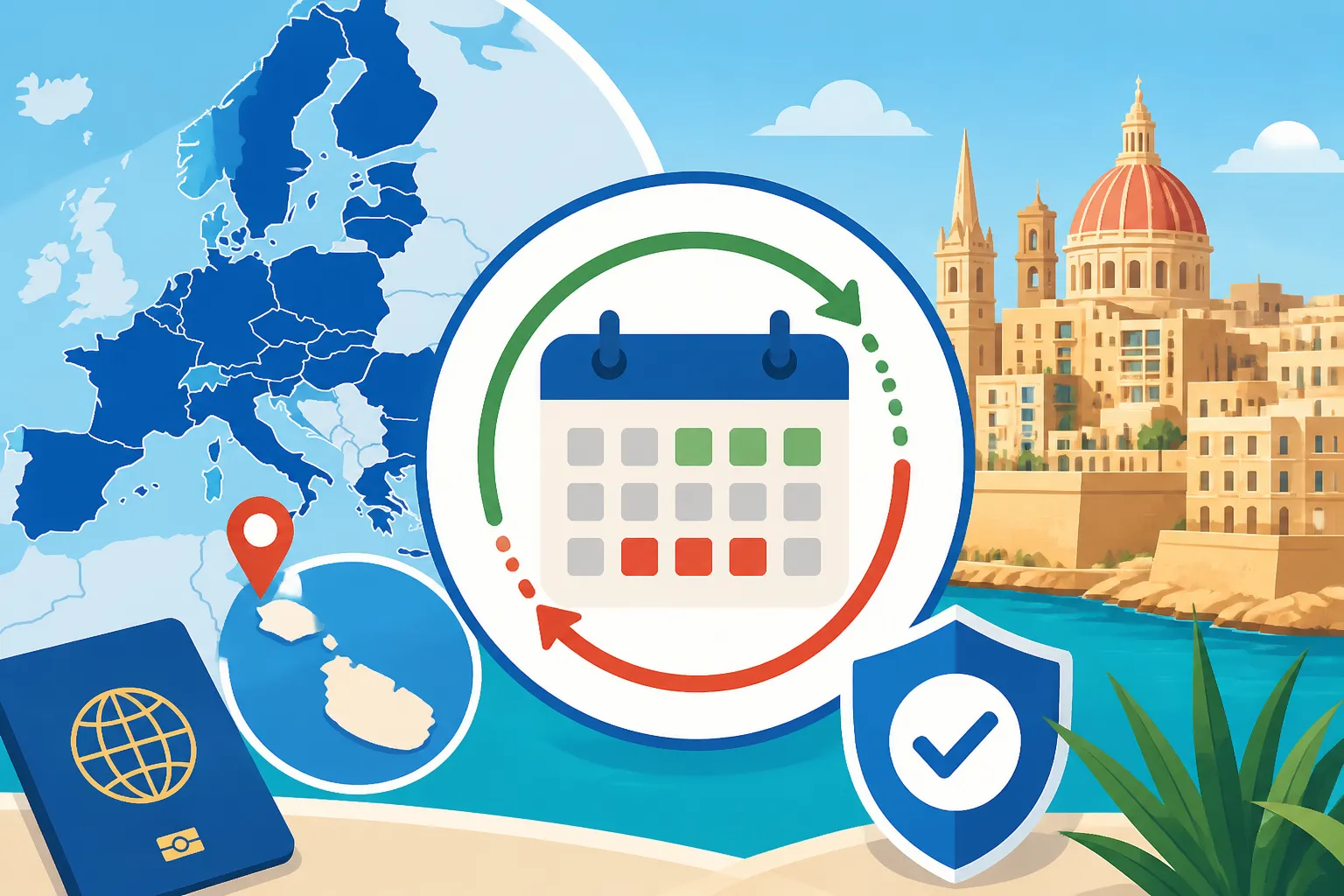
The rule states that you can stay for a maximum of 90 days within any 180-day period. The crucial part is "any 180-day period." This isn't a calendar year, nor does it reset every six months. It's a continuous, moving calculation. To determine if you're in compliance, you need to look back 180 days from each day you are present in the Schengen Area. Within that 180-day look-back window, you must not have exceeded 90 days of stay.
Let me give you an example, because that's usually the easiest way to wrap your head around it.
Imagine you first entered the Schengen Area on January 1st. You stay for 60 days, leaving on March 1st. You've now used 60 of your 90 days.
You then decide to return to Malta on June 1st. To check if you can enter, you look back 180 days from June 1st (which would take you back to early December of the previous year). Within that period, you spent 60 days. This means you still have 30 days remaining within your current 180-day cycle.
Now, let's say you stay for those 30 days, leaving on July 1st. You've used all 90 days. You cannot re-enter the Schengen Area for a short stay until enough time has passed for your earliest entry days to fall outside the 180-day look-back window.
This rolling calculation means that you can't just leave for 90 days and assume you can come back for another 90. You need to use a calculator (there are many free ones online, even official ones from the EU) or meticulously track your entry and exit stamps. This rule applies uniformly across all Schengen states, including Malta. It's not about being 'out' of Malta, but 'out' of the entire Schengen zone.
What Counts Towards Your 90 Days?
Any day, or part of a day, you spend in the Schengen Area as a short-stay visitor counts towards your 90 days. This includes:
- Tourism: Your typical holiday trips, exploring Valletta, Gozo, or the historical sites.
- Business trips: Attending conferences, meetings, or short-term work assignments that don't require a specific work permit.
- Visiting friends and family: Even if you're staying with locals, it's still a short-term visit.
- Short-term study: Language courses or other studies lasting less than 90 days.
- Transit: Even if you're just passing through a Schengen airport on your way to a non-Schengen destination, the days spent within the Schengen zone (e.g., waiting for a connecting flight overnight) will count.
Essentially, if you entered with a standard tourist visa or as a visa-exempt national (like citizens of the US, Canada, UK, Australia, etc.), then every moment you're physically present within the Schengen borders contributes to that 90-day tally. This applies whether you're relaxing on a beach in Mellieħa, attending a quick business meeting in St. Julian's, or even waiting for a ferry connection. It’s imperative to keep a close eye on your entries and exits to avoid inadvertently overstaying, especially if you plan multiple visits within a year.
Stays That Don't Count
Thankfully, not every stay in Malta or the Schengen Area counts towards the 90-day limit. These are the exceptions that allow people to live, work, or study long-term:
- National Long-Stay Visas (D-Visas): If you apply for and are granted a national long-stay visa (often called a D-Visa) for Malta, the days you spend in Malta under this visa do not count towards the 90/180 rule. This visa is typically issued for purposes like work, study, family reunification, or specific long-term stays. While a D-Visa allows you to transit through other Schengen countries to reach Malta, its primary function is to grant you legal entry to Malta for a longer period. It's the first step towards getting a residence permit. You'll find more information on this in our guide on The D-Visa National Long-Stay Visa for Entering Malta.
- Maltese Residence Permits: Once you have obtained a Maltese residence permit – such as a The Single Permit as a Combined Work and Residence Permit in Malta, a Student Residence Permits for Malta Requirements and Renewal, or a The Nomad Residence Permit Income Threshold and Conditions – your time spent living in Malta under this permit does not count towards the 90/180 rule. In fact, your residence permit effectively overrides the short-stay limitations for Malta itself. Moreover, a valid Maltese residence permit allows you to travel to other Schengen countries for up to 90 days within any 180-day period for tourism, just like a visa-exempt national, but your time in Malta is secured by your permit. The process for these permits can be complex, and you might need assistance from services like Sirelo if you're planning a major move.
- Bilateral Agreements: Very occasionally, some countries might have specific bilateral agreements with certain Schengen states that allow for different visa-free stays. However, these are rare and typically don't apply to the vast majority of visitors. Always double-check with the Maltese authorities or your nearest embassy if you think this might apply to you.
Understanding this distinction is vital. Many newcomers mistakenly believe that once they apply for a residence permit while on a tourist visa, they are automatically allowed to stay longer. This is generally not the case, and one should never assume. Always consult official guidelines or seek legal advice. If you're looking to transition from a short-term visit to long-term living, it's crucial to understand The Difference Between a Visa and a Residence Permit in Malta.
Practical Implications and Common Pitfalls for Visitors to Malta
The 90/180 rule isn't just a bureaucratic hurdle; it has very real implications if you don't adhere to it. For visitors to Malta, especially those from non-EU countries, navigating this rule correctly is crucial to avoid serious issues.
Overstaying: The Risks and Consequences
Overstaying your permitted 90 days in the Schengen Area, even by a single day, is a serious immigration offence with potentially severe consequences. Maltese immigration authorities, like those in other Schengen countries, do not take overstays lightly. The immediate risks include:
- Fines: You could face significant financial penalties. The amount can vary, but it's rarely a small sum and can increase with the length of your overstay.
- Deportation: You might be detained and deported from Malta, which is a stressful and costly experience.
- Entry Bans: This is perhaps the most impactful consequence. An overstay often results in an entry ban from the entire Schengen Area for a period, typically ranging from a few months to several years. This means no more holidays, no business trips, and no visits to friends or family in Malta or any other Schengen country for the duration of the ban. Such a ban would make it incredibly difficult to obtain any future visas, including long-term residence permits, for Malta or any other EU country.
- Future Visa Denials: Even if you avoid an immediate ban, a record of overstaying will flag you as a risk in the Schengen Information System (SIS), making it exceedingly difficult to obtain any type of visa or residence permit for Malta or any other EU country in the future. This can affect your plans for Moving to Malta from Outside the EU/EEA What You Need to Know significantly.
- Impact on Other Countries: An overstay in Schengen can also negatively impact your ability to secure visas for other non-Schengen countries, as your immigration history is often reviewed internationally.
It’s easy to think a few extra days won't matter, but they absolutely do. Always err on the side of caution and ensure you leave well within your allotted time. Our article on What Happens If I Overstay My Permit in Malta? delves into this in more detail, but the key message is clear: do not overstay.
Tracking Your Days: Tools and Tips
Given the complexities of the rolling 180-day window, relying on memory or rough estimates is a recipe for disaster. Luckily, there are several ways to accurately track your Schengen days:
- Official Schengen Calculator: The European Commission provides an official online calculator, which is arguably the most reliable tool. You input your past entry and exit dates, and it tells you how many days you've used and how many you have left. Always use the official tool or one that precisely mimics its logic.
- Passport Stamps: Your passport is your official record. Immigration officers at Schengen external borders will stamp your passport upon entry and exit. Carefully check these stamps to ensure they are clear and accurate. Keep a personal log based on these stamps.
- Personal Travel Log: Maintain a detailed personal log of all your entries and exits from the Schengen Area, noting the exact dates. This serves as a backup to your passport stamps and can help you plan future trips.
- Schengen Visa Information System (VIS): While not directly accessible to the public for tracking, it's the system immigration authorities use. Your consistent record-keeping helps ensure you match their data.
It's a good idea to set reminders for yourself well in advance of your 90-day limit. This proactive approach ensures you have ample time to plan your departure or, if you're fortunate enough to have a long-stay visa or residence permit application in progress, understand your specific allowances. Remember, ignorance of the rule is not an excuse for overstaying.
When the 90/180 Rule Doesn't Apply
While the 90/180 rule is broad, there are specific situations where it doesn't apply to your stay in Malta or other Schengen countries:
- Long-Term Residence Permit Holders: If you hold a valid residence permit for Malta (or any other Schengen country), the time you spend in that specific country under that permit does not count towards your 90/180 short-stay limit. This permit grants you the right to live and reside long-term. With a Maltese residence permit, you are generally allowed to travel to other Schengen countries for up to 90 days within any 180-day period as a tourist. This means your "tourist" allowance for other Schengen states is separate from your time living in Malta.
- National Long-Stay Visa (D-Visa) Holders: As mentioned earlier, if you enter Malta on a D-Visa, this visa explicitly permits you to stay in Malta for longer than 90 days. The days spent in Malta on this visa do not contribute to your 90/180 Schengen short-stay tally.
- Citizens of EU/EEA/Switzerland: If you are a citizen of an EU or EEA country, or Switzerland, you have the right to free movement within the Schengen Area. The 90/180 rule simply does not apply to you. You can stay in Malta, or any other Schengen country, for as long as you wish, subject only to registering your residence if your stay exceeds three months. For more on this, check out Do EU Citizens Need a Residence Document to Live in Malta?.
- Dual Nationality: If you hold dual citizenship, and one of your nationalities is that of an EU/EEA/Swiss country, you should always use your EU/EEA/Swiss passport when entering and exiting the Schengen Area. In this scenario, you are treated as an EU citizen, and the 90/180 rule does not apply to you.
It's important to understand these distinctions because they can drastically change your travel and relocation plans. Always clarify your status and the applicable rules before making assumptions about your length of stay.
| Type of Stay/Permit | Counts Towards 90/180 Limit? | Travel within Schengen allowed? |
|---|---|---|
| Short-Stay Visa/Visa-Exempt Tourist | Yes | Yes |
| National Long-Stay (D) Visa (for Malta) | No (for time in Malta) | Yes (for transit to Malta) |
| Maltese Residence Permit (e.g., Single Permit) | No (for time in Malta) | Yes (90/180 for other Schengen) |
| EU/EEA/Swiss Citizenship | No | Yes, unrestricted |
| Overstayed Permit/Visa | N/A (Illegal) | No |
Moving to Malta Long-Term: Beyond the 90/180 Rule
For many, Malta isn't just a holiday destination; it's a potential new home. If you're looking to make the move permanently, or for an extended period, you'll quickly discover that the 90/180 rule only applies to your initial short-term visits. To establish genuine long-term residence, you need to go through the proper immigration channels, which involves applying for specific visas and residence permits.
Transitioning from Short-Stay to Residence
This is one of the most critical areas of confusion for aspiring expats. Generally speaking, you cannot simply arrive in Malta on a tourist visa (or as a visa-exempt visitor) and then apply for a long-term residence permit, hoping to extend your stay beyond the 90 days. The expectation is that you apply for the appropriate long-stay visa from your home country or country of legal residence before you enter Malta.
For example, if you plan to work in Malta, you would typically need to secure a job offer, then apply for a D-Visa (National Long-Stay Visa) from a Maltese embassy or consulate outside Malta. This D-Visa allows you to enter Malta legally for the purpose of submitting your full residence permit application with Identità (the Maltese identity agency). Our guide on Can I Apply for a Single Permit from Inside Malta? provides more detail on the limited exceptions to this rule, but it’s crucial to understand that they are exceptions, not the norm.
The risk of attempting to switch status from within Malta on a short-stay visa is high. If your application is rejected, or if processing takes longer than your 90-day limit, you could find yourself in an illegal overstay situation. This would then lead to the very consequences we discussed earlier, including potential deportation and entry bans. It's far safer and less stressful to complete the necessary visa and permit applications before you pack your bags. If you are considering a permanent relocation, companies like Sirelo can offer invaluable assistance with the logistics of moving your belongings to Malta.
Different Paths to Maltese Residence
Malta offers a variety of residence permits designed to cater to different circumstances for non-EU/EEA/Swiss nationals. The path you take depends entirely on your purpose for living in Malta:
- Work Permits (Single Permit): If you have a job offer from a Maltese employer, you'll typically apply for a The Single Permit in Malta Combined Work and Residence, Step by Step. This permit combines your work authorisation and residence status into one document.
- Student Permits: For those enrolling in longer-term education, a Student Residence Permits for Malta Requirements and Renewal is necessary. These permits cover stays exceeding 90 days for study purposes.
- Family Reunification: If you are joining a spouse, parent, or child who is already a legal resident in Malta, you can apply for a Family Reunification in Malta Bringing Your Loved Ones permit.
- Nomad Residence Permit: For remote workers, Malta has introduced The Nomad Residence Permit Income Threshold and Conditions, allowing eligible individuals to live and work remotely from the island for up to a year, renewable. This has been a game-changer for many digital nomads.
- Self-Sufficiency / Independent Means: For individuals with sufficient financial resources not tied to employment, other residence schemes exist, often requiring a specific income threshold or capital.
- Investment or Special Residence Programmes: Malta also has various programmes, such as the Malta Permanent Residence Programme (MPRP) or the Global Residence Programme, which offer residence based on investment or specific financial criteria.
Each of these paths has its own specific set of requirements, documentation, and processing times. It's a journey that demands patience and meticulous attention to detail. Securing adequate health coverage, for instance, is a critical requirement for most long-term residence permits. Providers like Cigna Global offer comprehensive international health insurance plans that are often accepted for permit applications, ensuring you meet the requirements and have peace of mind regarding your health needs while living abroad. Always ensure you research the specific permit category that applies to your situation and gather all necessary documentation well in advance. Our comprehensive guide on How Do I Apply for a Maltese Residence Permit? covers the general process in detail.
Disclaimer
The information provided in this article is intended for general guidance only and does not constitute legal or immigration advice. While we strive to keep the information accurate and up-to-date, immigration laws and regulations in Malta and the Schengen Area can change frequently. It is essential to consult the official websites of Identità (Malta's identity agency), the Ministry for Foreign and European Affairs and Trade, or a qualified immigration lawyer or consultant for the most current and personalised advice regarding your specific situation. Relying solely on general information may not be sufficient for individual circumstances.