How Do I Notify a Change of Circumstances to Identità in Malta?
Oh, the joy of Maltese bureaucracy! If you've lived here for any length of time, you know that just when you think you've finally sorted out your residence permit and all the paperwork, life throws a curveball. A new job, a new home, a new family member – these wonderful changes in your personal life often mean yet another dance with Identità. This guide is here to walk you through exactly how to notify Identità of any significant changes in your circumstances, sparing you some of the headaches and potential pitfalls many expats stumble through.
Why Notifying Identità is Crucial for Expats in Malta
Let’s be honest, after the initial sprint to get your residence permit, the thought of more paperwork might make you want to curl up in a ball and pretend it doesn't exist. But trust me, when it comes to Identità, ignoring changes in your circumstances is a gamble you really don't want to take. It’s not just about dotting i’s and crossing t’s; it’s about maintaining your legal status on the island.
The Legal Obligation and Its Consequences
Malta, like most countries, has strict rules about who can reside within its borders and under what conditions. Your residence permit, whether it's a Single Permit, a Nomad Residence Permit, or an EU/EEA registration, is issued based on specific information you provided at the time of application. When those underlying facts change – your address, your employer, your marital status, or even your passport details – Identità needs to know.
This isn't merely a polite request; it's a legal obligation outlined in Maltese immigration laws. Failing to notify Identità of significant changes can lead to a whole host of unwelcome consequences. At best, you might face delays or complications when you try to renew your permit in the future. At worst, your current permit could be deemed invalid, you could face fines, or even be seen as residing illegally in Malta, which, believe me, nobody wants. There are reports of people being denied re-entry after a holiday because their registered address didn't match what was on file, or their permit was quietly invalidated due to an unreported job change. It’s an administrative headache that can quickly escalate into a legal nightmare.
What Constitutes a "Change of Circumstances"?
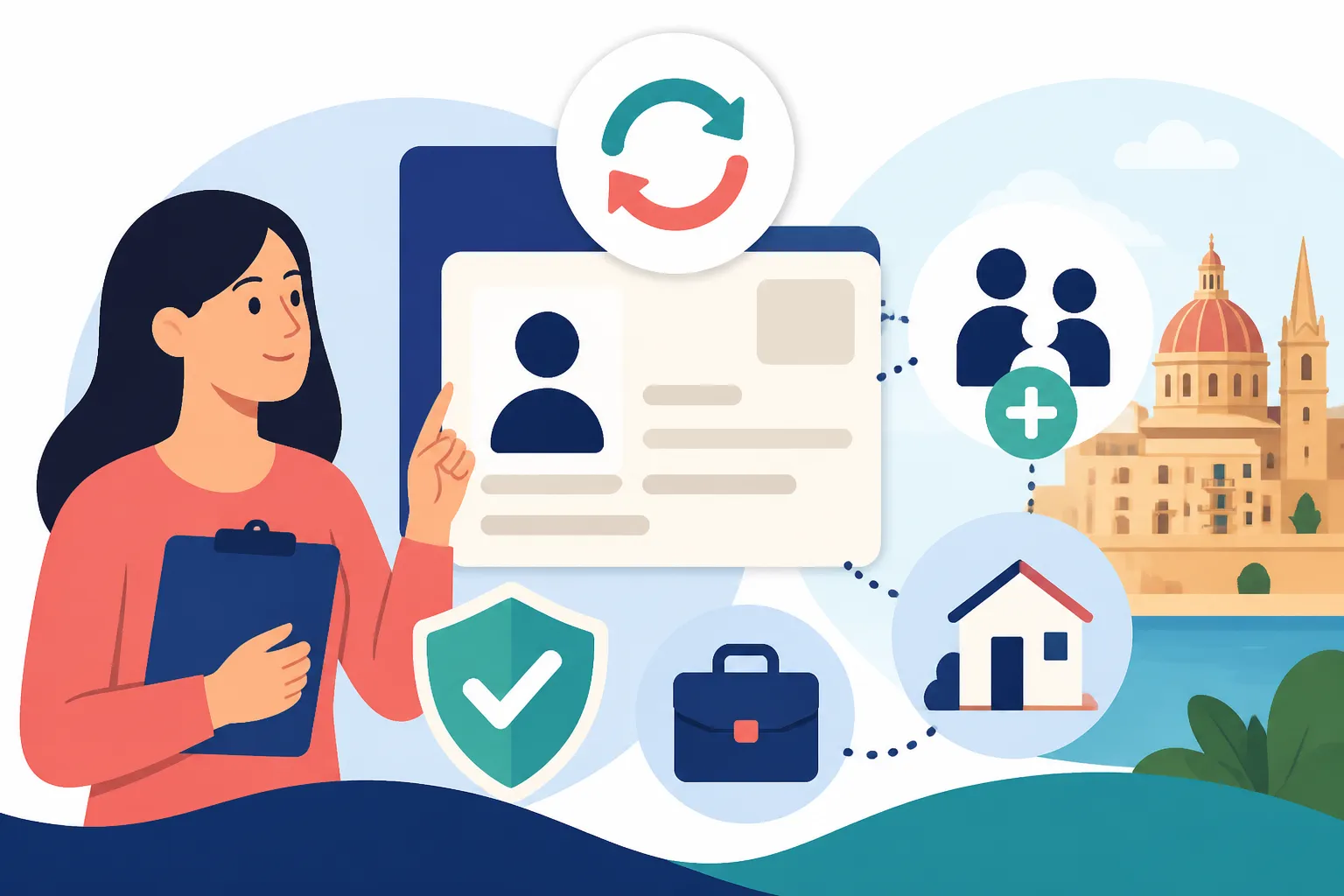
So, what exactly counts as a "change" that requires you to get back in touch with Identità? It's more than just major life events. Here’s a detailed breakdown:
- Change of Address: This is probably the most common one. Whether you’ve moved across the street, across the island, or even just gotten a new apartment in the same building, your registered residential address needs to be updated. Identità uses this for all official correspondence, and it’s a fundamental part of your residency record.
- Change of Employment/Employer: For those on a Single Permit or other work-based permits, this is critical. If you start a new job, change roles significantly within the same company, or, heaven forbid, lose your job, Identità must be informed. Your permit is intrinsically linked to your employment. A new employer usually means a whole new permit application or at least a significant amendment.
- Change in Marital Status: Getting married or divorced while in Malta? These changes affect your personal status and can have implications for family reunification permits or even your tax status.
- Birth of a Child: Welcoming a new arrival into your family is a joyous occasion, but it also means registering your child and potentially applying for a dependent's residence permit for them.
- Change of Passport/Nationality: If you renew your passport, get a new one due to it being lost or stolen, or even acquire a new nationality, Identità needs to update your records. Your eResidence card is linked to your passport details.
- Change in Financial Situation (relevant to certain permit types): For permits that require proof of stable and sufficient financial means (like the Nomad Residence Permit or self-sufficiency routes), a drastic change in your income or financial standing could trigger a need for notification.
- Loss of Job: This is a particularly sensitive one for work permit holders. If you are made redundant or resign, there are often grace periods to find new employment, but you absolutely must notify Identità and Jobsplus immediately. Ignoring it can lead to your permit being revoked.
- Student Status Changes: If you’re here on a student permit and you change your course, switch educational institutions, or withdraw from your studies, this needs to be reported.
These aren't exhaustive lists, but they cover the most frequent scenarios. When in doubt, it’s always better to over-communicate with Identità than to risk non-compliance.
The Step-by-Step Process for Notifying Identità
The thought of dealing with Identità again can feel daunting, like facing a dragon in a bureaucratic quest. But like any quest, it's manageable if you know the steps and have the right tools (i.e., documents).
Gathering Your Documentation
Ah, Malta and its love affair with paperwork! You’ll quickly learn that for almost every administrative process here, you need a document for your document. For notifying Identità of a change, being meticulously prepared is your best defense against endless trips and frustration.
Generally, you'll need your current eResidence card, your valid passport, and often a copy of your previous permit application. Beyond that, the specific supporting documents will vary wildly depending on the nature of your change:
- For a Change of Address:
- A copy of your new lease agreement (Private Residential Leases Act registered with the Housing Authority is crucial!).
- Proof of residence, such as a utility bill (ARMS bill) in your name at the new address, or a declaration from your landlord.
- If you're a non-EU national, you'll likely need the new lease agreement to be attested. This can be a real pain, as it essentially means another Identità visit just for this.
- For a Change of Employment:
- Your new employment contract, signed by both you and your employer.
- A Jobsplus engagement form.
- A new application form (often a 'Single Permit Renewal/Amendment' form even if your permit isn't expiring, as the employer details are central).
- A letter from your previous employer confirming your termination date (if applicable).
- Any relevant qualifications or professional registration if your new role requires them.
- For a Change in Marital Status:
- Original marriage certificate (apostilled/legalised if from outside Malta).
- Original divorce decree (apostilled/legalised).
- New passport reflecting name change, if any.
- For the Birth of a Child:
- Child's birth certificate (issued in Malta).
- Your and your partner's passports and eResidence cards.
- Proof of relationship (marriage certificate, if applicable).
- For a New Passport/Nationality:
- Your old passport.
- Your new passport.
- Your current eResidence card.
Crucial tip: If any of your supporting documents are not in English or Maltese, you will need a certified translation. Don’t just bring a Google Translate printout; it won’t be accepted. Always make sure to bring both original documents and good quality photocopies of everything.
Submitting Your Notification to Identità
Once you’ve got your paperwork marathon completed, it’s time for the actual submission. This is where it gets a little tricky, as the method can vary depending on the type of change and Identità’s current procedures.
- Online Portal: For some minor updates, or sometimes as an initial step, Identità may offer an online submission portal. This is usually the quickest and least painful method. However, for significant changes like a new job or address, this is often just the first step, with physical submission still required.
- Physical Appointment: This is the most common route for serious changes. You'll need to book an appointment with Identità, usually through their online booking system. Appointments can be notoriously difficult to get, sometimes requiring you to check at midnight for new slots or book weeks in advance. If you're based on the main island, you'll generally go to their office in Marsa. If you live in Gozo, there's a smaller Identità office at the Gozo General Hospital. Remember that for many permit types, your application is submitted to Identità (formerly Identity Malta) which is now a part of the Ministry for Home Affairs, Security, Reforms and Equality.
Booking Appointments and Submitting Documents to Identità can be a test of patience, so be prepared! - Email: While you might send an email for an initial query or to follow up, official changes almost always require a physical submission or an online process with document uploads. Don't rely solely on email for a formal notification of a change in circumstances.
When you submit, you'll likely be required to fill out a specific form. For simple address changes, there might be a "Change of Details" form. For employer changes, you're usually looking at a "Single Permit Amendment" or "Single Permit Renewal" application, even if your current permit is still valid for some time, as it necessitates an update to the core conditions. Always check the Identità website for the latest forms; they change them more often than I change my socks!
Common Changes and Specific Identità Requirements
Let’s dive into the nitty-gritty of the two most frequent changes: your address and your job. These are the ones that cause the most grief if not handled correctly.
Changing Your Residential Address
Moving house in Malta is an experience in itself, but the fun doesn’t stop once you’ve unpacked your last box. You still have to tell Identità where you live. This is particularly important because your official communications, including your eResidence card delivery, depend on it.
The process typically involves:
- New Lease Agreement: You absolutely need a valid, legally registered lease agreement with the Housing Authority. Landlords are legally obliged to register leases, but sometimes they drag their feet. For non-EU nationals, your lease needs to be attested by Identità to prove that you have adequate accommodation for your permit type. This is another step where you'll need to book an appointment.
- Proof of Residence: An ARMS utility bill in your name at the new address is usually the gold standard. If you’ve just moved in and don't have one yet, a declaration from your landlord (usually on the lease agreement itself or a separate form provided by Identità) confirming you reside there can sometimes suffice temporarily.
- Filling out the Form: There's usually a specific "Change of Address" or "Change of Details" form that you'll need to complete, providing both your old and new addresses.
For non-EU nationals, the lease attestation requirement can feel like an extra hurdle, but it’s there to ensure that your accommodation meets the standards required for your residency. Without it, your address change might not be fully recognised, which can impact permit renewals down the line. To get the full lowdown on this, read our dedicated guide on How Do I Update My Address with Identità in Malta?.
Imagine this scenario: you move from St. Julian's to Marsaskala. You've signed your new lease, unpacked your boxes, and you're enjoying the quieter life in the south. You might think, "I'll tell Identità when I renew my permit next year." Big mistake. A few months later, your bank sends a crucial letter about your account, but it goes to your old address, where you no longer live, because Identità (and thus the public registry that banks use) hasn't been updated. Or, worse, your eResidence card expires, and the renewal invitation goes to the wrong place. Always update your address ASAP.
Changing Employment or Losing Your Job
This is perhaps the most high-stakes change for many non-EU expats on Single Permits. Your right to reside in Malta is often directly tied to your employment.
For a New Job/Employer:
If you've found a new employer or changed roles significantly with your current one (which essentially creates a new employment relationship in the eyes of Identità), you generally need to:
- Obtain a New Offer/Contract: A formal offer and employment contract from your new employer are paramount.
- Jobsplus Engagement Form: Your new employer will need to submit an engagement form to Jobsplus (Malta's Public Employment Services). This registers your new employment.
- Apply for a Permit Amendment/Renewal: This is where it gets tricky. Sometimes, it’s an amendment to your existing Single Permit. Other times, especially if your current permit is close to expiry or the change is substantial, it might trigger a full new Single Permit application. Always clarify this with Identità. You cannot just start a new job and assume your old permit covers it, even if it has time left. Your permit specifies your employer.
- Get an updated eResidence card: Once approved, your eResidence card will be updated to reflect your new employer.
The golden rule here is: do not start working for a new employer until your permit amendment or new permit is approved. Some expats end up in a bind because they started before getting the green light, only to find themselves working illegally. For a deeper dive into this, see Do I Need to Tell Identità If My Job Changes in Malta?.
For Losing Your Job:
This is a stressful situation for anyone, and for expats, it carries the added anxiety of potentially losing your right to stay.
- Immediate Notification: You (or ideally, your employer) must notify Jobsplus and Identità as soon as your employment ends.
- Grace Period: Malta usually offers a grace period (often three months) for Single Permit holders to find new employment after their previous job ends. During this time, your permit status remains somewhat valid, allowing you to seek new work.
- New Application: If you find a new job within this grace period, you will then need to apply for a new Single Permit or an amendment with your new employer's details.
- Leaving Malta: If you fail to secure new employment within the grace period, you will unfortunately be expected to leave Malta.
Understanding What Happens to Your Permit If You Lose Your Job in Malta is absolutely crucial for your peace of mind and legal standing. This period can be incredibly challenging, and getting the right information and acting swiftly is your best course of action.
Other Significant Life Changes
Life, as they say, happens! And when it does, remember Identità might need to be in the loop.
- Marriage/Divorce: If you get married to a Maltese or EU/EEA citizen, or even another non-EU national, this change can impact your eligibility for specific residence permits or enable family reunification. Similarly, divorce can affect dependent permits. You'll need to submit your official certificates and potentially new application forms.
- Birth of a Child: If you have a child in Malta, you’ll need their Maltese birth certificate to apply for their dependent residence permit. This process ensures they are properly registered as residents. You can find more information on How Do I Register a Newborn for Healthcare in Malta? which also touches on the administrative side.
- Passport Renewal/New Nationality: When you get a new passport (even from the same country), your eResidence card linked to your old passport becomes problematic. You'll need to apply for an updated eResidence card with your new passport details. If you acquire a new nationality, you'll need to inform Identità and apply for an updated permit that reflects this.
- Student Status Change: For student permit holders, dropping out, changing your course significantly, or switching universities requires notification. Your permit is tied to your educational enrollment.
Remember, for changes involving family members, the ripple effect can be significant. If your permit status changes, it will likely affect your dependents as well. Always ask Identità for clear instructions on how to proceed for all family members.
What to Expect After Notifying Identità
You've done the hard work, gathered the documents, and submitted your notification. Now comes the part that truly tests an expat's patience: the waiting game.
Processing Times and Acknowledgment
Maltese administrative processes are renowned for not being the fastest. Identità is no exception. While some minor updates might be processed relatively quickly, significant changes that require permit amendments or new card issuance can take weeks or even months.
When you submit your documents, make sure you receive an acknowledgment of receipt. This is your proof that you’ve done your part. It might be a stamped copy of your application form, a printed receipt, or an email confirmation. Keep this safe! It’s invaluable if you need to query delays or prove you’ve submitted.
Updated eResidence cards after a simple address change can take months, sometimes because of a minor clerical error. This is why following up (politely, of course!) after a reasonable waiting period is perfectly acceptable. Our guide on Understanding Identità Processing Times and Delays can give you a more realistic picture of what to expect.
Potential Outcomes and Next Steps
Once Identità processes your change, there are a few possible outcomes:
- Approval and New eResidence Card: For many changes, the end result is a new eResidence card reflecting your updated details (e.g., new address, new employer, new passport number). You'll typically receive an SMS or email notification when it's ready for collection.
- Requests for Further Documentation: It’s not uncommon for Identità to come back to you requesting additional documents or clarifications. Don’t get disheartened; it’s part of the process. Respond promptly and provide exactly what they ask for.
- Interviews: In some complex cases, particularly those involving family reunification or significant changes to your permit type, you might be called in for an interview.
- Impact on Other Services: Once your details are updated with Identità, this often trickles down (eventually!) to other government services. For example, your updated address will be reflected in the public registry, which banks and other institutions access. However, it's often prudent to proactively update your address with your bank, ARMS (for utilities), Jobsplus, and your GP/health centre yourself, rather than waiting for the Identità update to propagate.
Always keep copies of everything you submit, and any correspondence you receive from Identità. Create a dedicated folder for your immigration documents – it will save you immense stress in the long run.
When planning your move or a significant change, remember that services like Sirelo can help ease the stress of relocation logistics, ensuring you have one less thing to worry about during these administrative tasks. And for those significant life changes, especially if they impact your permit, it's always wise to ensure your health coverage is up-to-date. Providers like Cigna Global offer comprehensive plans that can cover you through various life stages, regardless of your permit status changes, offering a layer of security.
Summary of Common Changes and Required Documents
To help you get organised, here's a quick overview of some common changes and the typical documents Identità will expect:
| Type of Change | Key Documents Required (General) | Additional Notes |
|---|---|---|
| Residential Address | New lease agreement (registered), proof of residence (e.g., ARMS bill), 'Change of Details' form. | Non-EU nationals require lease attestation. Update banks, utilities, and health centre separately. |
| Employment/Employer | New employment contract, Jobsplus engagement form, specific Single Permit amendment/renewal form. | Do NOT start new employment until permit update is approved. Be aware of grace periods if losing a job. |
| Marital Status | Original marriage/divorce certificate (apostilled/legalised if foreign), updated passport (if name changed). | Affects family reunification and dependent permits. |
| Birth of a Child | Child's Maltese birth certificate, parents' passports & eResidence cards, dependent permit application form. | Essential for registering the child as a resident and for future services. |
| New Passport | Old passport, new passport, current eResidence card, 'Change of Details' or eResidence card replacement form. | Important for travel and identification. Your eResidence card details must match your current passport. |
| Loss of Job | Termination letter from employer, notification to Jobsplus, potentially withdrawal of current permit. | Immediate action required. Typically a grace period (e.g., 3 months) to find new employment, after which you must leave if no new job secured. |
This table provides a general overview, but always check the official Identità website or contact them directly for the most up-to-date and specific requirements for your individual situation.
Disclaimer
Please remember that I am an expat blogger sharing my experiences and general information, not a legal or immigration expert. While I strive to provide accurate and up-to-date advice, immigration laws and procedures in Malta can change. Always consult the official Identità (Identity Malta Agency) website, or seek advice from a qualified immigration lawyer or consultant for your specific circumstances. This information should not be taken as legal advice.