How to Register for Health Entitlement with the Entitlement Unit in Malta
Navigating the paperwork in Malta can often feel like trying to find a specific grain of sand on Golden Bay during peak August. I clearly remember standing in the heat outside St. Luke’s Hospital, clutching a folder of documents and wondering why no one told me I needed a specific stamped letter from my employer. This guide solves that frustration by walking you through the exact steps to register with the Entitlement Unit.
The Entitlement Unit: Your Gateway to Care
The Entitlement Unit is arguably the most important office you will visit after your residence permit is sorted. Located within the sprawling, historic grounds of St. Luke’s Hospital in Gwardamanga, this unit is responsible for determining whether you have the right to access the Maltese public healthcare system for free, or at a subsidized rate. It is not enough to simply pay your taxes or hold a residency card; you must be "entitled" in their database.
When you first arrive, the sheer scale of the St. Luke’s complex can be intimidating. It is a mix of active medical offices, administrative hubs, and older buildings that look like they have seen better days. You are looking for the ground floor of the Outpatients block, or more specifically, the designated Entitlement Unit office. Don't be surprised if the signage isn't as clear as you’d like. I spent forty minutes my first time just trying to find the right door. Once you are inside, the atmosphere is classic Maltese bureaucracy: busy, a bit loud, but generally staffed by people who want to help if you have your ducks in a row.
The core mission of this unit is to verify that you are contributing to the system or that you fall under a specific international agreement that grants you care. They act as the bridge between your social security contributions and the actual medical services provided at Mater Dei Hospital or your local health centre. Without their "stamp of approval," which often comes in the form of a Certificate of Entitlement, you might find yourself facing hefty bills for services that should be free. Knowing How to Register for Free Healthcare in Malta? is the first step in ensuring your peace of mind while living on the islands.
What Does the Entitlement Unit Actually Do?
Beyond just checking your ID, the Entitlement Unit manages various categories of health rights. They process S1 forms for EU retirees, handle the entitlement for Third Country Nationals (TCNs) on work permits, and manage the specific schemes for chronic illnesses. They are the keepers of the "Health Stack," the internal database that hospitals and clinics query when you check in for an appointment.
If you are a worker, they verify that your Social Security Contributions in Malta: Classes, Rates, and Benefits are being paid correctly. If there is a lapse in your employment history, or if your employer hasn't been diligent with the paperwork, the Entitlement Unit will be the first to flag it. They don't just look at the present; they often look at your residency history to determine if you qualify as an "Ordinary Resident." This distinction is vital because it determines the depth of coverage you receive.
Why You Cannot Skip This Step
You might think that having a Maltese ID card is enough. While Getting Your Maltese ID Card Number: The Key to Accessing Healthcare is a prerequisite, it does not automatically trigger health entitlement. I have known expats who lived here for two years, assuming they were covered because they saw the social security deduction on their payslips, only to be hit with a €500 bill after an emergency room visit because they never registered with the unit.
The system is not proactive. It is reactive. You must present yourself (or your digital application) to the unit to be recognized. This is especially true if you are transitioning between different types of permits. If you move from a student visa to a work permit, or from a nomad residence permit to a permanent one, your entitlement status must be updated manually. If you are currently in a transition period or waiting for your paperwork to clear, having a backup like SafetyWing can be a lifelace, providing coverage for those awkward gaps where the government system hasn't caught up with your new status.
Who Actually Qualifies for Entitlement?
Eligibility in Malta is a patchwork of local laws, EU regulations, and bilateral agreements. It is not a one-size-fits-all situation. The Entitlement Unit has different "tracks" depending on your nationality and the reason for your stay. Understanding which bucket you fall into will save you from bringing the wrong documents and facing a "come back tomorrow" response.
The general rule is that if you are working and paying social security in Malta, you are entitled to the same care as a Maltese citizen. However, the nuances start to appear when we talk about family members, retirees, and those on specific residency schemes. The unit must verify that your presence in Malta is legal and that you meet the "Ordinary Residence" criteria, which generally means you intend to stay for at least six months or have already been here for that duration.
EU, EEA, and Swiss Nationals
For those from the EU, the process is governed by the principle of equal treatment. If you are employed or self-employed, your entitlement is relatively straightforward based on your contributions. However, if you are a pensioner or a "posted worker" (sent here by a company in your home country), you will likely need an S1 form. This form is issued by your home country’s health authority and essentially tells Malta, "We will pick up the tab for this person’s care."
The Entitlement Unit is very strict about the S1. It must be an original document, and it must be current. If you are an EU citizen but not working—perhaps living on savings—you might not be entitled to free care unless you have lived here for five years and gained permanent residency. In these cases, the unit will look for evidence of private comprehensive insurance. Many newcomers use SafetyWing during these initial months to prove they won't be a burden on the state before their formal entitlement is processed.
Third Country Nationals (Non-EU)
If you are from outside the EU, your entitlement is almost always tied to your work permit. The "Single Permit" combines work and residence, and once you have your "Approval in Principle" letter and have started your job, you can approach the Entitlement Unit. Your coverage is usually limited to the duration of your work permit. If your permit expires, so does your free healthcare.
For those on the Nomad Residence Permit, the situation is different. Generally, nomads are required to have their own private health insurance as a condition of their permit and do not pay local social security. Therefore, they are usually not entitled to free public healthcare. For these individuals, a flexible plan like SafetyWing is often the standard choice because it meets the visa requirements while offering the global mobility nomads need. If you are a TCN family member, your entitlement depends on the status of the "sponsor" (the family member who is working). You will need to prove the relationship through apostilled birth or marriage certificates, which the Entitlement Unit will inspect with a microscopic eye.
The Documentation Labyrinth
This is where most expats lose their patience. The Entitlement Unit requires a very specific set of documents, and they must be the correct versions. Digital copies are increasingly accepted via email, but if you go in person, bring physical copies of everything.
The requirements can change, so always check the latest updates from Identità (formerly Identity Malta) and the Health Ministry. However, the core list remains fairly stable. You are essentially proving three things: who you are, why you are here, and that you are contributing to the Maltese state.
The Essential Checklist
The following table outlines the documents typically required for the most common expat categories. Note that "certified translations" are mandatory for any document not in English or Maltese.
| Applicant Category | Primary Documents Required | Additional Requirements |
|---|---|---|
| EU Employed | Passport/ID, Maltese ID Card, Work Contract | Recent Payslip or Jobsplus Engagement Form |
| EU Pensioner | Passport/ID, Maltese ID Card | S1 Form from home country |
| Non-EU (TCN) Worker | Passport, Maltese eResidence Card | Work Contract & Employer Declaration |
| Dependents/Family | Passport, Maltese ID Card | Apostilled Marriage/Birth Certificates |
| Self-Employed | Passport, Maltese ID Card | Jobsplus Registration & Receipt of SS Payments |
Proving Your Employment Status
The Entitlement Unit needs to see that you are an active part of the workforce. The most common document requested is the Jobsplus Engagement Form. This is a document your employer generates when they hire you. It confirms your start date and your position. If you are a freelancer, you will need to provide your own Jobsplus record showing you are registered as self-employed.
I’ve had friends who started a job on a Monday and tried to register with the Entitlement Unit on Tuesday. Often, the system hasn't updated yet. It is usually better to wait until you have your first official payslip, which clearly shows the "NI" (National Insurance) deduction. This is the "smoking gun" evidence that you are paying into the pot. If your employer is lagging on providing this, you can point them to the rules regarding Social Security Contributions and What They Fund in Malta to remind them of their obligations to you.
Dealing with Certificates from Abroad
If you are relying on an S1 form or a bilateral agreement (like those Malta has with Australia or the UK for specific durations), the paperwork must be pristine. For Australians, for example, the Medicare card and passport are usually enough for short-term "reciprocal" care, but for long-term entitlement, the Unit will want more.
A common pitfall is the "Certificate of Coverage." If you are a posted worker, your home country might issue a certificate saying you are still paying social security there. The Entitlement Unit will use this to issue a limited-term entitlement. If there is any doubt about your international paperwork, the clerks will often ask for a "Social Security History," which you can usually get online from your home country’s portal. During the weeks it takes to coordinate between two different national bureaucracies, having SafetyWing ensures you aren't left vulnerable if an accident happens while your S1 is "stuck in the mail."
The Step-by-Step Registration Process
Once you have your documents, you have a choice: the "Digital Route" or the "Physical Route." Before 2020, you had to trek to Gwardamanga. Today, the Entitlement Unit is much more receptive to email applications, which is a godsend if you work 9-to-5 or live in the North or Gozo.
However, the digital route isn't always faster. Sometimes an email sits in an inbox for two weeks, whereas a face-to-face visit gets you a result in twenty minutes. If you are in a rush—perhaps you have a looming specialist appointment—I highly recommend the in-person visit. Just make sure to get there early; the queue starts forming before the doors even open.
Option 1: The Email Application
To apply digitally, you need to send high-quality scans (not blurry phone photos) of all your documents to the Entitlement Unit's official email address. In your email, clearly state your Maltese ID card number and your current address. It helps to be extremely polite and concise. I’ve found that a subject line like "New Health Entitlement Application – [Your Name] – [ID Number]" works best.
The unit will review your scans and, if everything is in order, they will reply with a PDF version of your "Certificate of Entitlement." This is a white piece of paper with a government header that lists your "Category of Entitlement" and the expiry date. Print this out and keep it in your wallet! You will need it whenever you visit a Health Centre for the first time. If you don't hear back within ten working days, a polite follow-up email is standard. If you're still waiting and need to see a doctor immediately, you might wonder Can I See a Doctor in Malta Before My Health Entitlement Is Approved?. The answer is usually yes, but you’ll have to pay upfront unless you have a private policy like SafetyWing to cover the costs.
Option 2: The In-Person Visit
If you decide to go to St. Luke's, check the current opening hours. Usually, they are open from 8:00 AM to 2:30 PM, but these hours often shorten during the "summer schedule" (July to September). When you arrive, there is a ticket machine. Take a number and wait. The waiting room is a great place to people-watch, but it can be stuffy, so bring a bottle of water.
When your number is called, present your folder. The clerk will look through your ID, your work contract, and your Jobsplus forms. They will type away at an old-school keyboard for a few minutes, checking your records against the Social Security database. If all is well, they will print your certificate right then and there. It’s a very satisfying feeling to walk out of that building with your "golden ticket" to the healthcare system. Just remember that if you move house, you should technically inform them so they can update your record and ensure you are assigned to the correct health centre catchment area.
Navigating Common Hurdles and Frustrations
Even with the best preparation, things can go sideways. The most common frustration is the "System Gap." This happens when your Maltese ID card is issued, but the Social Security department hasn't yet linked your ID number to your contributions. This is a classic "left hand not talking to the right hand" scenario.
If the Entitlement Unit clerk tells you, "You aren't showing up in the system," don't panic. It doesn't mean you aren't entitled; it just means the data hasn't migrated yet. You might need to visit the Social Security office (often located in Valletta or at a local hub) to ensure your records are active. This kind of run-around is exactly why The Entitlement Unit: Sorting Out Your Right to Treatment in Malta is considered a rite of passage for every new expat.
Dealing with Expired Permits
If you are on a work permit, your entitlement is hard-coded to expire on the same day as your ID card. This creates a stressful "blackout period" when you are renewing your permit. Identità can take months to issue a new card, and during that time, the Entitlement Unit’s system will show you as "Not Entitled."
To fix this, you need to show the Unit your "Blue Receipt" (the interim document Identità gives you while your card is being printed). This usually grants you a temporary extension of entitlement for three to six months. However, some health centres are finicky about the blue receipt. To avoid being denied care for a sudden illness during this window, many expats maintain a SafetyWing policy. It acts as a bridge that keeps you covered globally while the local Maltese departments take their time with the bureaucracy.
The "Private vs. Public" Confusion
Another hurdle is the misconception that paying for a private GP means you don't need entitlement. While you can always pay out of pocket to see a doctor at a pharmacy, you will still need public entitlement for subsidized prescriptions, blood tests at the health centre, or if you are referred to Mater Dei for surgery.
If you have a chronic condition and need free medication through the "Yellow Card" (Schedule V) or "Pink Card" schemes, the Entitlement Unit is your first stop. They will not process these cards until your basic entitlement is confirmed. If you are struggling to get your public entitlement sorted due to a complex employment situation, having SafetyWing can be a huge relief, as it allows you to access private specialists without waiting for the public system to "recognize" you.
Life After Entitlement: Using the System
Getting your certificate is the end of the beginning. Now you need to actually use the system. Your next step is to find out which Health Centre you belong to. Malta is divided into catchment areas; if you live in Sliema, you go to Gzira; if you live in Swieqi, you go to the Mosta or Pembroke hubs.
You should take your Certificate of Entitlement to your local Health Centre to "register" with them. They will put you in their local ledger, which makes it much easier when you walk in at 2:00 AM with a fever. They will also tell you about Registering with a Health Centre and Choosing a GP in Malta, which is slightly different than in the UK or US, as you don't always have one specific "assigned" doctor, but rather a team of GPs at the centre.
Accessing the myHealth Portal
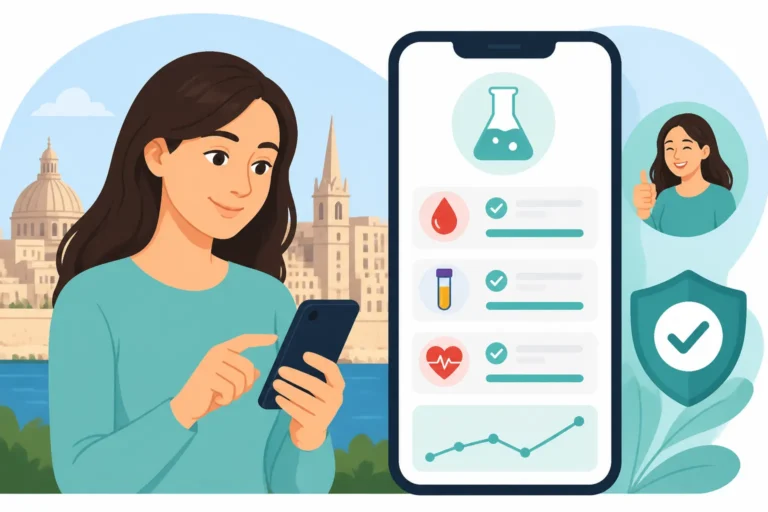
Once you are registered and entitled, you can sign up for the myHealth portal using your e-ID credentials. This is a fantastic digital tool that lets you see your lab results, your upcoming appointments at Mater Dei, and even your medication history. It is one of the most modern aspects of Maltese healthcare.
The portal also allows you to link with a private GP. This means your private doctor can see the results of the tests you had done for free at the public health centre. It’s the best of both worlds. However, the portal will only work if your Entitlement Unit status is "Active." If your entitlement expires, you might find yourself locked out of your own medical records online. Keeping your status current with the Unit is the only way to ensure continuous access to this data.
Understanding the Costs
Even with entitlement, not everything is 100% free. While the consultation and hospital stay are free, you will often have to pay for your own medications unless you qualify for the POYC (Pharmacy of Your Choice) scheme due to low income or a chronic illness. You can learn more about What Public Healthcare Costs in Malta: Free Services and Paid Extras to avoid any surprises.
Dental care is another area where public entitlement is limited mostly to emergencies (extractions or acute pain). For cleanings, fillings, or crowns, most expats use private dentists. Similarly, if you want to skip the six-month wait for an MRI or a non-essential surgery, you will be looking at the private sector. This is where the debate between public and private becomes real. Many of us use the public system for emergencies and the "big stuff," while relying on a mix of private out-of-pocket visits and insurance like SafetyWing for speed and convenience.
Disclaimer
This guide is intended for informational purposes only and does not constitute legal or medical advice. Healthcare regulations and entitlement criteria in Malta are subject to change by the Ministry for Health and Identità. While we strive to keep this information up to date, always verify the latest requirements with the official Entitlement Unit or your employer before submitting applications. No two expat situations are identical, and specific cases may require additional documentation not covered in this guide.