Registering with a Health Centre and Choosing a GP in Malta
Finding your way through the Maltese medical bureaucracy can feel like wandering through the silent city of Mdina without a map—beautiful but confusing. I remember standing in the Floriana Health Centre with a pounding migraine and a handful of crumpled documents, only to be told I was in the wrong "catchment area." This guide solves the mystery of where you belong, how to register, and how to find a GP who actually understands your history.
Understanding the Health Centre System in Malta
Primary healthcare in Malta is delivered primarily through a network of regional health centres and smaller community clinics. Unlike many other countries where you register with one specific family doctor at a private practice, the public system here is centralized. When you need a doctor, you don't necessarily call a personal GP; you visit the hub that serves your specific town or village.
The system is designed to be a "one-stop shop." These centres aren't just for seeing a doctor when you have the flu. They house everything from podiatry and physiotherapy to immunization clinics and blood-draw services. However, the first hurdle every expat faces is realizing that you cannot just walk into any centre you like. You are bound by your residential address, which dictates your "catchment area."
How Regional Health Centres Function
Malta is divided into several main health regions, each anchored by a major health centre. These hubs, such as those in Mosta, Paola, and Floriana, are often open 24/7 for urgent cases, but their routine services—like specialist clinics or scheduled nursing—operate during standard business hours. It is vital to understand that these centres act as the gatekeepers to the rest of the public health system.
If you are a resident and pay social security, most services here are free at the point of use. You will often find the waiting rooms a mix of locals and expats, and while the décor might remind you of a 1980s school building, the medical care is generally high-standard. The doctors working here are often the same ones you might see in private clinics later in the evening, so you are getting professional expertise even if the environment feels a bit institutional.
The Concept of Catchment Areas
This is where most newcomers get tripped up. If you live in Sliema, your designated centre is Gzira. If you live in Naxxar, you head to Mosta. If you show up at the "wrong" centre for a non-emergency, the receptionists—who are legendary for their adherence to the rules—will politely but firmly redirect you to your home hub. Before you make the trip, you should verify Which Health Centre Do I Go to After Moving to Malta? to ensure you aren't wasting a morning in the wrong queue.
This geographical restriction applies to your primary GP visits and routine check-ups. However, in a genuine emergency, any of the 24-hour hubs will stabilize you. For everything else, from getting a sick note to monitoring a chronic condition, you must stick to your assigned location. This is why having your lease agreement and ID card updated with your current address is so critical; the system relies entirely on where you "officially" reside.
How to Register for Health Entitlement
Before you can even think about seeing a GP for free, you need to prove you have the right to be there. Simply living in Malta isn't enough. The public system is funded through social security contributions, and the staff at the health centre will need to see proof that you are part of that system. This is a multi-step process that involves more than just showing up with a smile.
For many expats, the period between arriving and getting your full paperwork can be a "grey zone." During this time, it is wise to have a backup. While you wait for your official entitlement to be processed, having coverage from a provider like SafetyWing can be a lifesaver. It ensures that if you need to visit a private clinic because your public registration is still in limbo, you aren't paying the full cost out of pocket.
The Role of the Entitlement Unit
The Entitlement Unit, located in Guardamangia (near the old St. Luke’s Hospital), is the heart of this process. They are the ones who issue the "Certificate of Entitlement." This document is your golden ticket. Without it, the health centre may charge you as a "non-entitled" patient, which can result in unexpected bills for even basic consultations.
You will need to submit an application to them, often via email or in person, demonstrating your status as an employee, a self-employed person, or an EU pensioner. For those coming from the EU, Transferring EU Health Rights to Malta with an S1 Form or EHIC is a common route. For third-country nationals, the process usually links directly to your work permit. It is a bit of a "chicken and egg" situation—you need the job for the permit, the permit for the ID card, and the ID card for the health registration.
Essential Documents for Registration
When you finally head to the health centre to "register" or for your first visit, bring a folder. Digital copies are great, but the Maltese public service still has a deep love for physical paper. You will typically need your eResidence card, your social security number, and ideally, your Entitlement Certificate. If you are still waiting on the card, you might find Can I See a Doctor in Malta Before My Health Entitlement Is Approved? to be an essential read.
If you are a non-EU resident, the requirements are stricter. You will often need to show that your employer is actively paying your contributions. If you are a digital nomad on a residence permit, you might not be entitled to free public care at all and will rely entirely on your private insurance. Always double-check your specific permit type to see where you stand in the eyes of the Maltese health authorities.
Choosing and Accessing a GP in Malta
Here is the secret that many expats don't realize: there are actually two parallel ways to see a GP in Malta. There is the "Health Centre GP" (the public route) and the "Pharmacy GP" (the private route). Most locals actually use a combination of both. In the public system, you don't "choose" a specific doctor; you see whoever is on duty when you arrive or when your appointment is booked.
This can be frustrating if you prefer "continuity of care"—seeing the same person who knows your history. If that is important to you, you might find yourself leaning toward the private sector. However, the public GPs are the ones who can enter you into the system for free long-term medication or public hospital surgeries, so it is vital to be registered with them regardless of where you usually go for a cold.
Public GP Services vs. Private GPs
In the public health centre, you can often "walk in" for urgent issues. You take a number, sit in a plastic chair, and wait. On a busy Monday morning in Mosta, this wait can be three hours. On a Tuesday afternoon in Gzira, it might be twenty minutes. It is a bit of a gamble. The consultation is free, and the doctor can write prescriptions and referrals.
Private GPs, on the other hand, usually operate out of the "doctor's office" located in the back of almost every local pharmacy. You usually call the pharmacy to book a slot or see the doctor's hours posted on the door. A visit usually costs between €15 and €30. It is incredibly convenient. If you are using Private Healthcare and Insurance in Malta: When You Need Cover, these visits are often what you'll use for minor ailments. Many expats prefer this because you can often book a specific time and build a relationship with one doctor.
The Referral System to Specialists
If your medical issue requires more than a basic GP can provide, you enter the referral system. In Malta, you cannot simply call Mater Dei Hospital and book a specialist. You must be referred. A GP at a public health centre will write a referral note which is then vetted by the hospital. You then wait for a letter in the mail (the "blue letter") with your appointment date.
If you use a private GP, they can also write a referral to the public hospital, but the process can sometimes be slightly different. Many people who are in a hurry choose to see a specialist privately at clinics like St. James or DaVinci. This bypasses the months-long waiting lists for non-urgent public consultations. If you are navigating this, understanding How the Specialist Referral System Works in Malta's Public Hospitals can save you a lot of confusion regarding which paperwork goes where.
Detailed Guide to Health Centre Locations
Knowing where to go is half the battle. Each major centre has its own personality and level of "business." For example, the Floriana centre is the "Grand Central Station" of Maltese health; it’s always busy, serves a massive population, and handles a lot of administrative queries. Meanwhile, some of the smaller community clinics (called "Berga") are only open a few hours a week for basic nursing.
| Health Centre | Main Towns Served | 24/7 Availability |
|---|---|---|
| Mosta | Mosta, Naxxar, St. Paul's Bay, Mellieha | Yes |
| Floriana | Valletta, Floriana, Hamrun, Marsa | Yes |
| Paola | Paola, Tarxien, Fgura, Santa Lucija | Yes |
| Gzira | Sliema, Gzira, St. Julian's, Kappara | No (Usually 8am-8pm) |
| Kirkop | Zurrieq, Safi, Kirkop, Qrendi | Yes |
| Rabat | Rabat, Mdina, Dingli, Attard | No (Check local hours) |
Major Hubs: Mosta, Paola, and Floriana
The Mosta Health Centre is a lifeline for those living in the north. If you live in the "expat belt" of St. Paul's Bay or Bugibba, this is your primary hub. It is modern compared to some others and handles a high volume of patients. Because it is 24/7, it also acts as a mini-emergency room. If you have a deep cut or a suspected broken bone that isn't life-threatening, going here is often faster than heading to the main hospital's A&E.
Paola serves the south and is another heavy hitter. It has recently seen upgrades to its facilities. When you visit these hubs, always check in at the reception desk first. You will need to show your ID card. Even if you are just there for a blood test that your private doctor ordered, you still have to go through the central reception. Don't forget that for certain services, you might need to Registering with a Health Centre and Choosing a GP in Malta specifically for that department, such as the diabetic clinic or the well-baby clinic.
Using the myHealth Portal
Malta has made great strides in digital health. The myHealth portal is a fantastic tool that allows you to see your records, lab results, and even your pharmacy history online. To use it, you need an active e-ID (which you get when you receive your residence card). Once you are in the system, you can "link" yourself to a specific doctor—this is as close as the public system gets to "choosing" a GP.
Through the portal, you can see the results of that blood test you had three days ago without having to go back to the centre to ask. It also allows your chosen private doctor (if they are registered on the system) to see your public hospital records. This bridge between the public and private sectors is incredibly useful. If you are tech-savvy, I highly recommend Booking Appointments and Using myHealth Online in Malta as soon as your ID card arrives. It takes the guesswork out of your medical history.
Comparing Public and Private Primary Care
Deciding which route to take often depends on your budget, your urgency, and your patience. I have lived here long enough to know that for a simple prescription refill, the health centre is fine. For a persistent, nagging issue where I want 20 minutes of a doctor's undivided attention, I go private.
| Feature | Public Health Centre | Private Pharmacy GP |
|---|---|---|
| Cost | Free (for entitled residents) | €15 – €30 per visit |
| Wait Time | 30 mins to 4 hours (Walk-in) | Usually scheduled/Short wait |
| Continuity | Low (See whoever is on duty) | High (Can see the same doctor) |
| Referrals | Direct to public specialists | Can refer to both public/private |
| Hours | Many are 24/7 for urgent care | Limited to pharmacy hours |
| Atmosphere | Busy, clinical, functional | Quiet, personalized, local |
Many expats find that while they are waiting for their ID card and Entitlement Unit paperwork, the private route is the only realistic option. During this gap, having a plan like SafetyWing is brilliant because it covers the larger, more unexpected costs that a simple €20 GP visit can't handle. Once you are fully integrated into the Maltese system, you might still choose to pay for a private GP just to save yourself the afternoon of waiting in a crowded public lobby.
Step-by-Step Tutorial: Your First Visit
So, you’ve woken up with a sore throat and you want to do things the "proper" way. Here is the reality of how that first visit to a Maltese health centre actually looks. Don't expect a pristine, silent waiting room. Expect a lot of local chatter, the smell of strong coffee from a nearby vending machine, and a digital ticket system that might or might not be working.
- Verify your hub: Check which centre serves your town. Don't guess.
- Pack your "Identity": Take your eResidence card. If you don't have it, take your passport and your "Approval in Principle" letter from Identità.
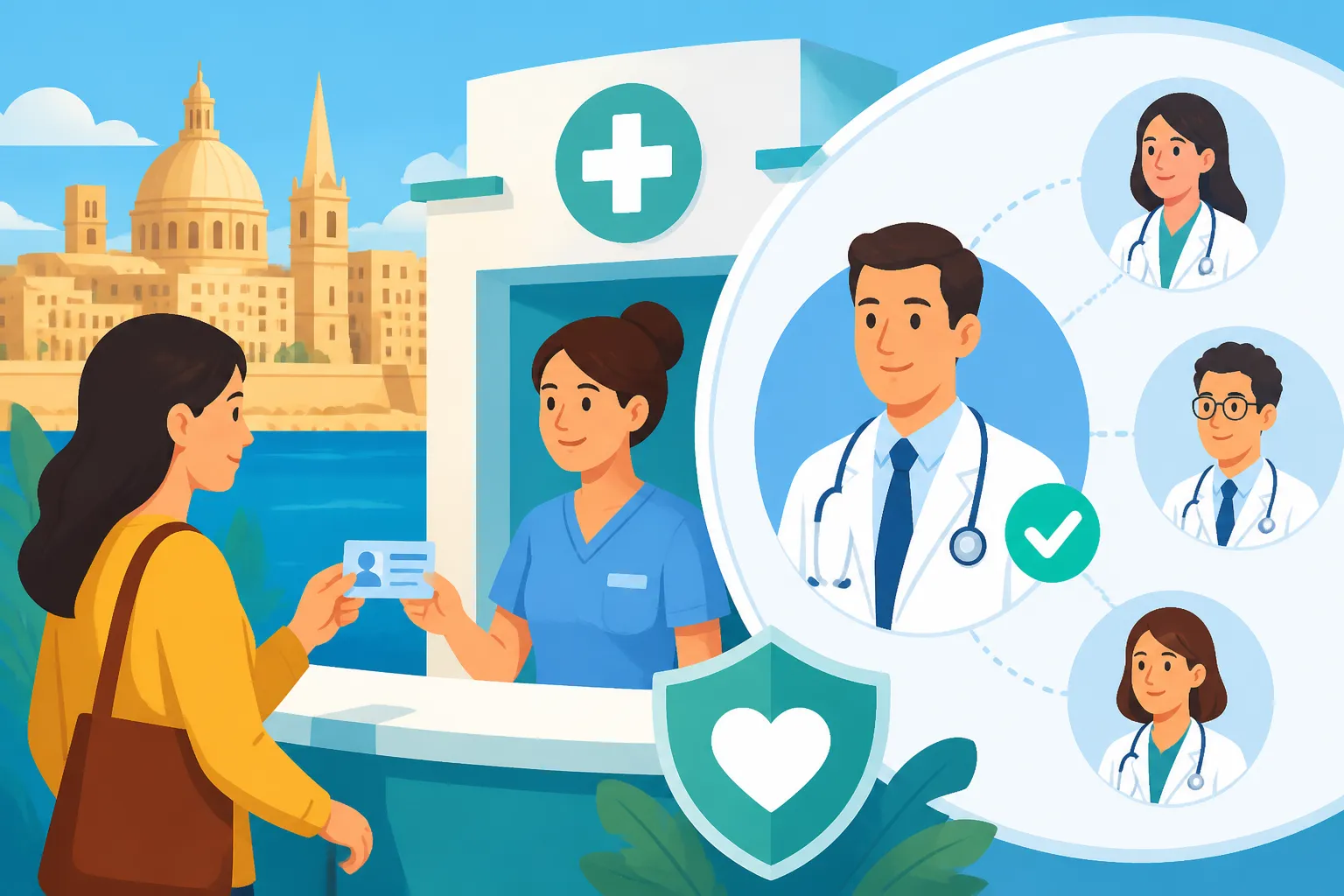
- The Reception Desk: Walk up to the main desk. Tell them you need to see a GP. They will ask for your ID card and enter you into the system. They will give you a paper slip with a number.
- The Waiting Area: Find a seat. Watch the screen. When your number appears, it will also show a room number (e.g., Room 5).
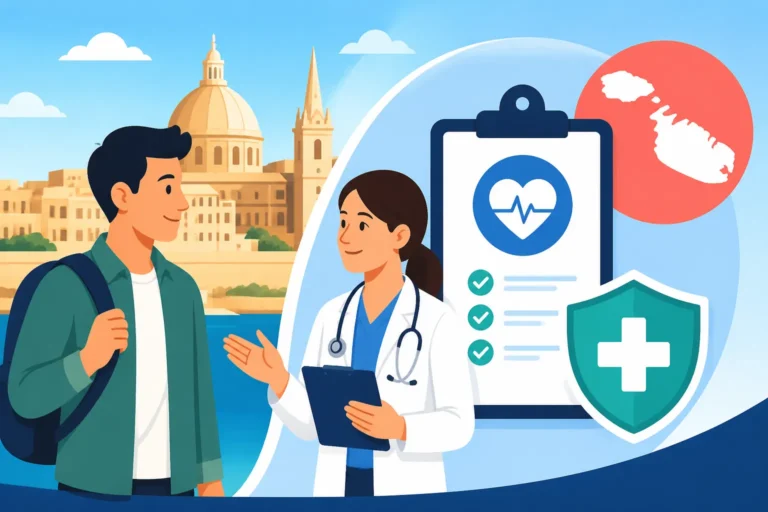
- The Consultation: The doctor will see you. They speak excellent English (it's an official language here). Be direct. If you need a sick note for work, tell them before they finish typing.
- The Exit: Usually, you just leave. If they gave you a prescription, you head to a pharmacy. If it’s a "pink card" or chronic medication, you might need to head to the POYC office within the centre.
Booking vs. Walking In
While the GP service is largely walk-in, many other services are strictly by appointment. This includes things like the "Well Baby" clinic, diabetes specialists, or podiatry. You can't just show up for these. You usually need a referral from the GP you just saw, and then the department will contact you with a date.
If you are a parent, you will quickly become familiar with Family and Children's Healthcare in Malta: Maternity, Well-Baby, and Beyond. These appointments are usually very well-organized, but they are booked weeks in advance. If you miss one, re-booking can be a headache, so put it in your calendar with three reminders!
Pharmacy of Your Choice (POYC) Integration
If the GP determines that you have a chronic condition (like asthma or hypertension), you might be entitled to free medication. This is handled through the POYC scheme. The doctor will fill out a "Schedule V" form (often called the "Yellow Card" or "Pink Card").
Once this is processed, you don't pick up your medicine at the health centre. Instead, you choose a local pharmacy near your house, and they become your designated pick-up point. It is a fantastic system that saves you from trekking to the hospital or health centre every month. To get started, you'll want to read The POYC Pharmacy of Your Choice Scheme: How to Collect Free Medicines to understand how to register your preferred pharmacy.
Common Pitfalls and Solutions
Even with the best intentions, the system can be prickly. Many expats get angry at the "inefficiency," but usually, it's just a misunderstanding of how the Maltese handle their administration. Patience is a currency here. If you approach the staff with a "mela" (the Maltese word for 'alright' or 'so') and a bit of a smile, things move much faster.
Language Barriers and Communication
While almost every doctor and nurse in Malta speaks fluent English, some of the older support staff or receptionists might prefer Maltese. If you run into a communication wall, don't panic. Most of the time, Can I See a Doctor in English in Malta? is a resounding yes. If you feel you aren't being understood, politely ask for a clarification or see if a younger staff member is nearby.
Another tip: medical terms can sometimes vary. In Malta, a "Sick Note" is officially a "Blue Med 1" or "Blue Med 2" form. If you tell your employer you have a "Doctor's Note," they will specifically be looking for that blue piece of paper. Make sure the GP stamps it clearly; an unstamped note is often rejected by HR departments.
Dealing with Waiting Times
The waiting times are the biggest complaint. The "hack" is to go during "off-peak" hours. Avoid Monday mornings at all costs—that's when everyone who got sick over the weekend shows up. Mid-week afternoons (Tuesday to Thursday) between 2:00 PM and 4:00 PM are often the quietest times.
If you are a busy professional or a digital nomad, the wait might simply be too expensive in terms of lost time. This is why many people keep SafetyWing for the bigger stuff but use a local private GP for the small things. Spending €20 to be seen in 15 minutes is often a better deal than spending four hours for free. If you do find yourself waiting, bring a book or make sure your phone is charged; some centres are in "dead zones" for mobile data because of the thick limestone walls!
Disclaimer
The information provided in this guide is for educational and informational purposes only and is based on the author's personal experience as an expat in Malta and current public health guidelines as of 2026. While every effort has been made to ensure accuracy, healthcare policies, catchment areas, and entitlement rules in Malta can change frequently. This guide does not constitute professional medical or legal advice. Always consult with the Maltese Health Authorities, the Entitlement Unit, or a qualified medical professional for specific advice regarding your health or legal status in Malta.