Is Public Transport Really Free in Malta?
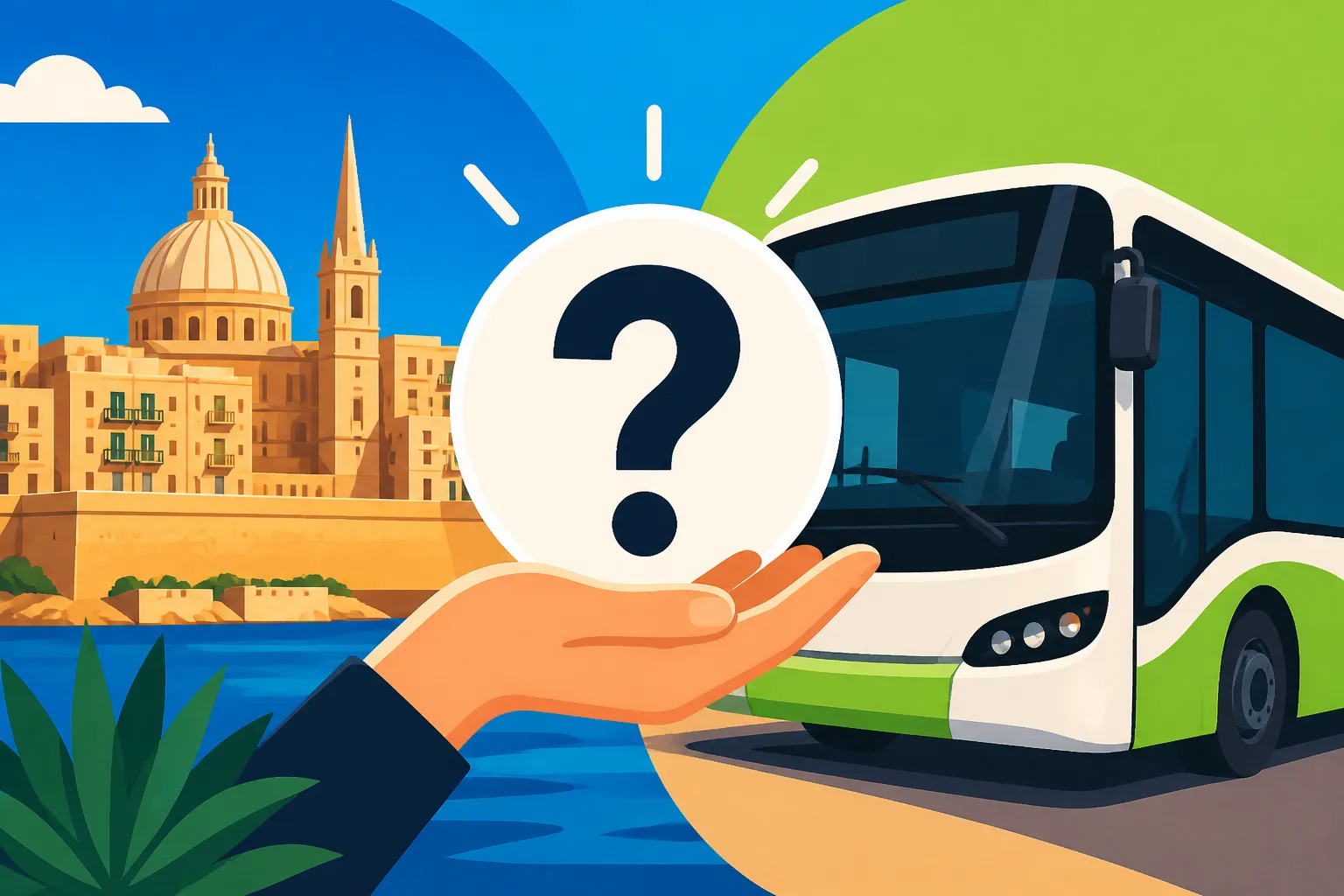
Moving to Malta, you hear whispers, often with a raised eyebrow, that public transport is "free." It sounds too good to be true, doesn't it? This is a mix of wonderful truth and tricky nuances that can catch newcomers off guard. This guide is here to untangle the "free bus" mystery, clarify who benefits, and help you get around Malta like a seasoned local.
The Truth About "Free" Public Transport in Malta
Ah, the magical phrase "free public transport in Malta." It certainly grabs your attention, and for good reason! It’s a huge perk, but it’s not a blanket free-for-all for everyone from the moment they step off the plane. There are specific conditions, and understanding them is key to truly benefiting from this system.
Who Qualifies for Free Bus Travel?
So, who gets to ride for free? The golden ticket to Malta's free bus network is possession of a valid, personalised Tallinja Card, and critically, you must be a resident of Malta or Gozo. This means you need to have a proper legal residence status here, not just be visiting on holiday or considering a move.
For us expats, this typically means you've completed your residence permit application process through Identità, received your eResidence card, and then applied for your personalised Tallinja Card. It’s not something you get automatically with a tourist visa or a short-term rental agreement. The system is designed to benefit those who have committed to living here, contributing to the local economy and social fabric.
If you’re an EU/EEA national, your right to reside here means you can apply for the card once you’ve registered your residence. For non-EU nationals, your single permit, nomad residence permit, or other long-stay permit is your gateway. Without that proof of residency, you’ll be paying for your bus journeys like any other visitor. It's a system that rewards those who've gone through the administrative hoops, and believe me, after sorting out my own paperwork, I definitely appreciate the perk!
How to Register and Get Your Tallinja Card
Getting your personalised Tallinja Card is a fairly straightforward process, but it does require a bit of patience and the right documents. Think of it as a rite of passage for residents.
The first step, as mentioned, is securing your official residence status in Malta. This means having your Maltese ID card number, which is printed on your eResidence card. Once that's in hand, you can head over to the Malta Public Transport website and apply for a Personalised Tallinja Card.
Here's a simplified breakdown of the application process:
- Gather your documents: You’ll need a copy of your Maltese eResidence card (front and back), a recent passport-style photo, and your contact details.
- Apply online: The easiest way is through the official Tallinja website. Fill in the online form with your personal details, including your ID card number. Upload your photo and eResidence card copies.
- Pay the application fee: There's a small administrative fee for issuing the card.
- Wait for delivery: The card will typically be mailed to your registered address in Malta. This can take a few weeks, so apply as soon as you have your eResidence card. During this waiting period, if you're desperate to use the bus, you might have to buy single tickets or a temporary Explore card, which isn't free.
There are different types of personalised Tallinja Cards, each offering specific benefits. The standard "Adult" card is what most working expats will get. Students registered at local educational institutions can apply for a "Student" card, often with even more generous fare structures (though usually not entirely free for all services like the resident adult card). There are also cards for children and concessionary rates for specific groups, like those with disabilities. It’s worth checking the specific requirements on the Malta Public Transport website to ensure you apply for the correct one.
For new arrivals, there's often a bit of a grace period. While you're waiting for your eResidence card to be issued by Identità, you might not be able to get your personalised Tallinja Card immediately. In this interim, you will unfortunately have to pay for your bus journeys. This is where you might consider a temporary solution like a 7-day ExplorePlus card or just buying single tickets. It’s a bit of a bummer, but a necessary evil while the administrative wheels turn. When planning your move, consider that you might need to budget for transport costs during your first few weeks or even months. Getting your Maltese eResidence Card and ID Number is truly a pivotal step for so many aspects of life here, including free transport.
What Exactly is Covered as "Free"?
Now, let's get down to the nitty-gritty of what "free" really means. When you have a personalised Tallinja Card and are a resident, you get free travel on all scheduled day routes operated by Malta Public Transport. This covers the vast majority of the island's bus network, running from early morning until late evening (around 11 PM to midnight, depending on the route).
So, whether you're commuting from Mosta to Valletta for work, heading to the beach in Mellieħa, or exploring the silent city of Mdina, your regular bus journey during the day is free. You still need to tap your Tallinja Card on the reader when you board the bus – this is crucial, as it registers your journey and helps Malta Public Transport monitor passenger numbers and service usage. If you don't tap, technically, you're not registering your free journey, and in rare cases, could face a fine if an inspector catches you.
However, it’s important to understand the exceptions. Not everything with wheels and an engine is covered:
- Night Routes (N-routes): These special services, often denoted with an 'N' prefix (e.g., N13), run primarily in the late hours after regular services stop. They typically incur a separate, flat fare, even with a personalised Tallinja Card. You'll need to have credit loaded onto your card to pay for these.
- On-Demand Services: Malta Public Transport operates an "On-Demand" service, which is a sort of flexible mini-bus service that you book via an app. This is not free and operates on a separate fare structure.
- Direct Routes (TD-routes): While many direct routes (like TD2 to St. Julian's or TD13 to Marsaxlokk) are now covered by the free scheme, always double-check the latest information. In the past, some were premium routes requiring payment. It’s always safest to check the Tallinja website or app.
- Valletta Ferry Service: The small ferries connecting Valletta to Sliema and Cospicua (Three Cities) are a fantastic way to bypass traffic and enjoy the harbour views, but they are not part of the free bus network. You'll need to purchase a ticket or use credit on your Tallinja Card for these.
- Gozo Channel Ferry: The main ferry linking Malta to Gozo is a lifeline for inter-island travel, but it is also not free. Foot passengers and vehicles all pay a fare, typically on the return journey from Gozo to Malta. We’ll delve more into Getting to Gozo: The Ferry, Fast Ferry, and Inter-Island Travel.
- Fast Ferry Services: Newer high-speed catamaran services operating between Valletta and Gozo, or Valletta and Sicily, are entirely separate commercial ventures and also require paid tickets.
So, while the bus network is largely free for residents, remember that "free" has its boundaries. For those other services, you'll need to load money onto your Tallinja Card, which functions like a debit card for public transport payments.
Navigating Malta's Bus Network as a Resident
Once you’ve got your shiny, personalised Tallinja Card, the real fun begins: navigating Malta’s extensive, and sometimes bewildering, bus network. It's a learning curve, but one that quickly becomes second nature.
Understanding the Tallinja Card System
Your personalised Tallinja Card is more than just a ticket to free rides. It's also your wallet for those services that aren't free, like the night buses or the Valletta ferry. This is where the concept of 'top-up' comes in.
You can load credit onto your Tallinja Card at various points across the island. The most common ways are:
- Online: Via the Tallinja website. This is super convenient, allowing you to top up from your phone or computer anytime, anywhere.
- Tallinja Card Booths: Located at major bus terminals like Valletta, Mater Dei Hospital, and the airport.
- Retail Outlets: Many kiosks, newsagents, and shops display the Tallinja logo and can top up your card for you. Just ask for a "top-up Tallinja."
When you use a service that isn't free, you simply tap your card, and the relevant fare is deducted from your credit balance. It's similar to how Oyster cards work in London or OV-chipkaarts in the Netherlands. You can check your balance online or at a Tallinja booth. Knowing how much credit you have is important, especially if you're planning a late night out or a trip on one of the paid ferry services.
The system is pretty reliable, but like anything, it has its quirks. Sometimes the readers on the buses can be a bit finicky, or you might forget to tap off if you're used to systems that require it (Malta is generally tap-on only for buses, but for other services like ferries, it might be tap-on and tap-off, so always observe what others are doing).
Planning Your Journey and Bus Etiquette
Getting around Malta by bus can be an adventure! The island is small, but the routes can be surprisingly indirect, winding through villages. This can add a good chunk of time to your journey, so effective planning is essential.
The Tallinja App (available for both Android and iOS) is your best friend. It provides real-time bus tracking, route planning, and estimated arrival times. Google Maps is also incredibly useful and often just as accurate, integrating the Malta Public Transport schedule data. Using these apps requires mobile data, so make sure you’re connected. For new arrivals, considering an eSIM from providers like Airalo can be a lifesaver for immediate connectivity to check bus times and navigate.
Here are a few tips for navigating the bus network:
- Be at the stop early: Buses, especially during peak hours or in touristy areas, can be delayed. "Malta time" is a real phenomenon, so add a buffer to your travel plans.
- Signal the bus: Buses won't always stop unless you clearly wave at them as they approach the stop. Don't be shy!
- Know your stop: Although buses often announce stops, it's a good idea to keep an eye on your map (via the app) or the window. Press the "stop" button well in advance of your desired stop.
- Peak hour crunch: During morning and evening commutes, and especially in summer, buses can get very crowded. Be prepared to stand, and potentially miss a bus or two if it's too full. Patience is a virtue here!
- Respect the driver: Maltese bus drivers are generally friendly, but they have a job to do. Be clear about your destination if you need to ask, and try to keep the flow moving.
For those considering Choosing Where to Live in Malta: Towns, Regions, and Gozo, bus connectivity should definitely be a factor. While major hubs like Valletta, Sliema, and St. Julian's are incredibly well-served, living in more remote areas can mean fewer direct routes and longer journey times, making a car almost a necessity.
When Public Transport Isn't the Best Option
As much as I love the free bus system, there are definitely times when it just doesn't cut it. For all its benefits, public transport in Malta isn't always the most efficient or convenient mode of travel.
Consider these scenarios:
- Urgency or tight schedule: If you have an important appointment, need to catch a flight, or are simply in a hurry, relying solely on the bus might cause undue stress. Delays are common, and traffic (especially in areas like Birkirkara or Marsa) can be brutal.
- Late nights: As mentioned, after midnight, regular services dwindle, and you're left with fewer night routes or no buses at all.
- Remote locations or specific needs: If you're heading to a less-serviced area, or if you're carrying heavy shopping (imagine weekly groceries on a crowded bus!) or travelling with young children and lots of gear, a bus can be cumbersome.
- Cross-island travel in specific directions: Sometimes, getting from one side of the island to the other requires going through the central hub of Valletta, which can turn a seemingly short journey into a much longer one.
In these situations, alternatives become indispensable. Ride-hailing apps like Bolt and eCabs are prevalent and generally affordable. They offer door-to-door service and can save you a lot of time and hassle. Taxis are also available, though generally pricier. For longer stays or certain lifestyles, many expats decide that eventually, investing in a car or regularly using ride-hailing is necessary. We cover more on Driving in Malta: Licences, Roads, and Buying a Car if you're considering this option.
Costs and Alternatives for Non-Residents and Specific Scenarios
Even if you don't qualify for free bus travel, or if you need to use those special services, Malta's public transport system still offers good value. Understanding the various options will help you budget effectively for Cost of Living in Malta: Budgeting for the Real Numbers.
Pay-As-You-Go and Tourist Options
For visitors, short-term residents, or those still waiting for their personalised Tallinja Card, there are a few ways to pay for your bus journeys:
- Single Journey Tickets: You can buy a ticket directly from the bus driver using cash. As of early 2026, a single journey typically costs €2.00 in summer and €1.50 in winter, valid for 2 hours and allowing transfers. Night service tickets are usually €3.00.
- Tallinja Card Explore: This is a pre-paid card designed for tourists. It offers unlimited travel on day services for 7 days (usually around €21). This can be excellent value if you plan to use the bus frequently to explore the island.
- Tallinja Card Flex: This is a top-up card that offers cheaper fares than cash tickets (e.g., €0.75 per journey, with a daily cap). It’s ideal for those who don’t use the bus enough for an Explore card but still want a convenient option.
- Contactless Payments: Malta Public Transport has been rolling out contactless payment options directly on buses, allowing you to tap your credit/debit card for single journeys. This is incredibly convenient for spontaneous travel without needing to carry cash or a specific card.
The best option for you depends entirely on your usage. If you're just taking a couple of bus rides, single tickets are fine. If you're staying for a week and plan to traverse the island, the Explore card is probably your best bet. If you're waiting for your resident Tallinja Card, a Flex card might bridge the gap.
The Gozo Ferry and Other Marine Transport
As I touched on earlier, the "free bus" scheme doesn't extend to the ferries, which are crucial for getting around certain parts of Malta and connecting to Gozo.
- Gozo Channel Ferry: This is the main car and passenger ferry between Ċirkewwa (Malta) and Mġarr (Gozo). You generally pay on your return journey from Gozo to Malta. The cost for a foot passenger is modest (currently around €4.65), while taking a car and its occupants is considerably more (around €15.70). These prices are subject to change, of course. For those considering moving or frequently visiting Gozo, these costs add up.
- Valletta Fast Ferries: Services like Gozo Highspeed and Virtu Ferries Gozo offer rapid catamaran connections between Valletta and Mġarr (Gozo). These are faster but more expensive than the Gozo Channel ferry (around €9-€13 one way for adults, depending on booking and residency status). They are perfect if you want to get to Gozo quickly without going all the way to Ċirkewwa.
- Valletta Harbour Ferries: The small passenger ferries connecting Valletta to Sliema and the Three Cities (Cospicua) are hugely popular for their scenic routes and ability to bypass traffic. A single journey usually costs around €1.50, and you can pay with cash, contactless, or by tapping your Tallinja Card (using loaded credit). They’re a fantastic way to experience the harbours and are often quicker than the bus for these specific routes.
| Transport Type | Covered by "Free" Resident Tallinja Card? | Typical Cost (Non-Resident/Paid Service) | Notes |
|---|---|---|---|
| Malta Public Transport | Yes (Day routes for residents) | €1.50 – €2.00 (single ticket) | Tap Personalised Tallinja Card to validate free ride. |
| Buses (Day Routes) | €21 (7-day Explore Card) | ||
| Buses (Night Routes) | No | €3.00 (single ticket from driver) | Requires credit on Tallinja Card or cash. |
| Valletta Harbour | No | €1.50 (single ticket) | Connects Valletta to Sliema/Three Cities. |
| Ferries | |||
| Gozo Channel Ferry | No | €4.65 (foot passenger return) | Pays on return from Gozo. Cars cost more. |
| Fast Ferries | No | €9.00 – €13.00 (one-way) | High-speed catamaran to Gozo. |
The Cost of Convenience: Private Transport Options
While Malta's public transport is a great backbone, many expats eventually find themselves exploring private transport options for various reasons – often convenience, speed, or access to less-serviced areas.
- Ride-Hailing (Bolt, eCabs): These services are ubiquitous, competitively priced, and incredibly convenient. You simply book via an app, and a driver picks you up. They are especially useful for airport transfers, late-night travel, or when you’re in a hurry.
- Taxis: Traditional white taxis are available but tend to be more expensive than ride-hailing services. Always agree on a fare upfront, or ensure the meter is used.
- Car Rental: For short visits or specific needs, car rental is a popular option. It gives you maximum flexibility to explore hidden coves and less accessible parts of the island. However, be prepared for Maltese driving habits, narrow roads, and challenging parking!
- Car Ownership: Many long-term residents opt to buy a car. While it provides ultimate freedom, it comes with significant costs: purchase price, insurance, road tax, fuel, and the constant headache of finding parking. This is a big decision, especially if you're settling in Malta from scratch.
Ultimately, the "free" bus service covers your core daily transport needs as a resident, helping to keep your cost of living in Malta down. But for those moments when speed, comfort, or directness are paramount, you’ll be dipping into your wallet for other options.
The Expat Perspective: Realities and Recommendations
Living in Malta as an expat means adjusting to a new way of life, and public transport is definitely part of that adjustment. It's a system that evokes a mix of gratitude and occasional exasperation!
The Initial Learning Curve and Common Frustrations
When I first moved here, the idea of "free buses" was a huge draw. But the reality of actually using them took some getting used to. The biggest shock for many newcomers is often the sheer indirectness of routes. What looks like a short distance on a map can involve multiple detours through residential streets, turning a 15-minute drive into a 45-minute bus journey. Then there’s the "Malta time" effect on schedules – sometimes buses are early, sometimes late, and sometimes they seem to vanish into thin air.
- Crowds and Capacity: During peak tourist season or daily commutes, buses can be packed. You might find yourself standing shoulder-to-shoulder, or even having to wait for the next bus if one is too full. This can be particularly frustrating when you're trying to get to work or catch a flight.
- Air Conditioning (or lack thereof): While many newer buses have decent AC, some older models might not. In the scorching Maltese summer, a bus without effective air conditioning can feel like a sauna on wheels, adding another layer of discomfort to your journey.
- Lack of Direct Routes: As mentioned, the hub-and-spoke system radiating from Valletta can be inefficient for cross-island travel. Getting from, say, St. Paul's Bay to Marsaxlokk often means going into Valletta and then out again, rather than a direct route.
It's easy to get frustrated, especially when you're new and still trying to find your feet. My advice? Embrace patience. It's a skill you'll hone living in Malta, and the bus system is a fantastic training ground. Use the apps religiously, have a backup plan (like Bolt) for crucial timings, and view it as part of the unique Maltese experience. And always remember, despite the quirks, it’s free for residents!
The Environmental and Economic Benefits of Public Transport
For all its challenges, the free public transport system for residents is a genuinely fantastic perk, offering both environmental and economic advantages.
- Economic Savings: Let's be honest, this is a major one. Not having to pay for daily commutes or casual trips around the island saves a significant amount of money each month. When you consider the cost of fuel, car insurance, road tax, and maintenance in Malta, the "free" bus translates to hundreds, if not thousands, of euros saved annually. This can make a real difference to your overall Malta living costs. For new expats, managing your finances from day one is key, and this helps immensely.
- Environmental Impact: Opting for public transport, even with its occasional delays, contributes to a greener Malta. With so many cars on the road and persistent traffic issues, every bus journey helps reduce carbon emissions and ease congestion. It's a small but tangible way to contribute to the island's sustainability efforts.
- Community and Exploration: The bus system forces you to slow down and observe. You'll see parts of Malta you might miss whizzing by in a car. It also provides opportunities to meet people, whether it’s a quick chat with a local or a fellow expat also navigating the system. It’s a way to feel more connected to the island’s rhythm. When you're trying to make friends as a newcomer in Malta, these small daily interactions can sometimes open doors.
When you weigh the pros and cons, the free public transport for residents is overwhelmingly a positive aspect of life in Malta. It requires a mindset shift, a bit of forward planning, and a healthy dose of patience, but the financial and environmental benefits make it a truly worthwhile part of the expat experience. If you’re planning your move to Malta, remember that resources like Sirelo can help you with the logistics of international moving, so you can focus on getting settled and eventually, enjoying your free rides!
Disclaimer
The information provided in this guide is for general informational purposes only and is subject to change. While we strive to keep the content up-to-date and accurate, regulations, prices, and services related to public transport and residency in Malta can be updated by the authorities. We recommend checking the official Malta Public Transport website and Identità Malta's website for the most current and specific information relevant to your personal situation.