Prescriptions in Malta: Free Entitlement Medicines and Buying Privately
Standing at a pharmacy counter in Sliema or Msida for the first time can be an exercise in utter confusion when the pharmacist starts asking for documents you have never heard of. I remember my first month here, clutching a simple inhaler prescription and being baffled by questions about "Schedule V" cards and "entitlement units." This guide solves the mystery of the Maltese prescription system, explaining how to get your medicine for free and when you will need to pay.
Understanding the Maltese Prescription System
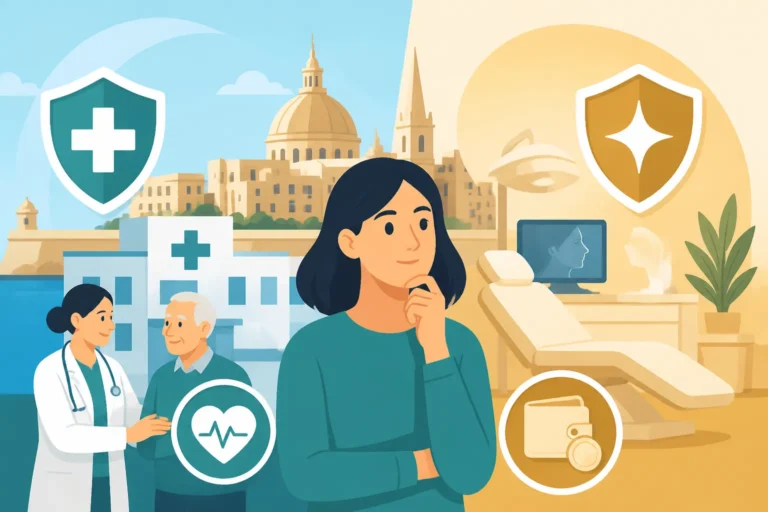
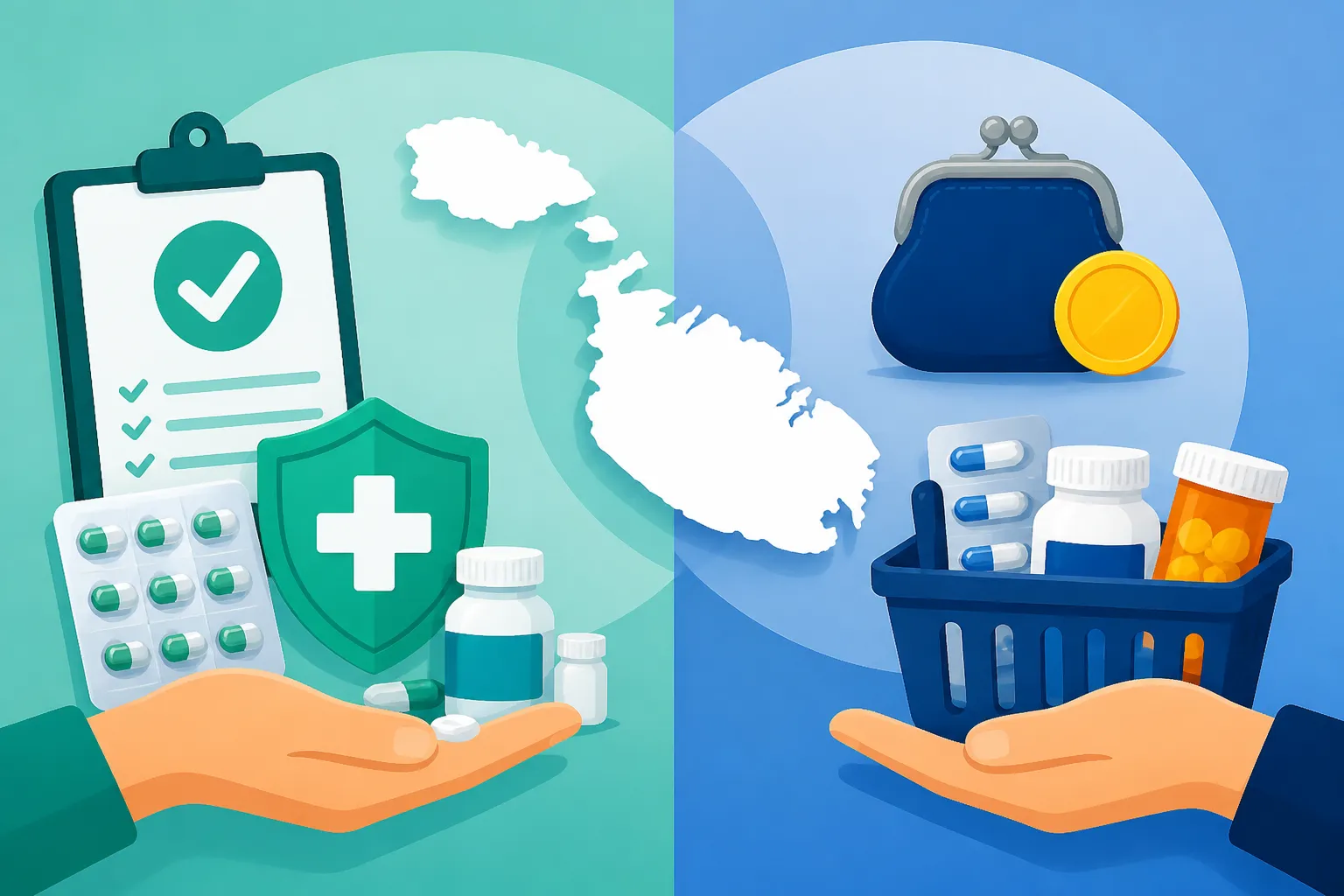
The prescription landscape in Malta is divided into two distinct worlds: the public system, where medication is often free but requires significant paperwork, and the private system, which is fast and accessible but comes with a retail price tag. Navigating these two requires a basic understanding of how doctors here interact with your medical history. Unlike some countries where a single card covers everything, Malta uses a condition-specific approach to free medicine.
The Role of the GP in the Prescription Process
Your first point of contact will almost always be a General Practitioner (GP). In Malta, you have the choice of visiting a GP at a local government health center or seeing a private GP, often found in the back room of a local pharmacy. If you are using the public system, you will likely need to be Registering with a Health Centre and Choosing a GP in Malta to ensure your records are centralized. Public GPs can issue the necessary paperwork for free chronic medication, but the queues can be long and the environment a bit utilitarian.
Private GPs, on the other hand, offer a much more "on-demand" service. You can usually walk into a pharmacy in the evening, pay a fee (typically between 15 and 30 Euros), and walk out with a prescription. However, a private GP prescription does not automatically entitle you to free medicine from the government. Even if you have private coverage, such as SafetyWing, to handle your consultation costs, the medication itself will be a separate out-of-pocket expense unless you have gone through the official state "entitlement" channels.
White, Pink, and Yellow: The Color-Coded Script System
Malta loves its color-coded bureaucracy, and prescriptions are no exception. Most private prescriptions are written on standard white forms. These are straightforward: you take them to the counter, the pharmacist fills them, and you pay the market price. However, when you enter the world of state-subsidized care, colors matter. You might hear people talking about the "Pink Card" or the "Yellow Card," which refer to specific entitlement levels based on income or chronic illness.
The "Yellow Card" (Schedule V) is what most expats with long-term conditions eventually aim for. It covers specific chronic diseases like diabetes, hypertension, or asthma. If you are just starting your journey and haven't secured your state rights yet, How Malta's Public Healthcare Works: Entitlement, Contributions, and Costs is essential reading to understand how your social security payments eventually lead to these colored documents. Without them, even the most essential life-saving medicine will remain a private purchase.
Accessing Free Medicines via the POYC Scheme
The Pharmacy of Your Choice (POYC) scheme is a brilliant, if slightly bureaucratic, system that allows residents to collect their free chronic medications from a local private pharmacy rather than trekking to a government hospital. It was designed to reduce the massive queues at Mater Dei Hospital, and for the most part, it works well. However, you cannot just walk in and join; there is a specific sequence of events you must follow.
Who Qualifies for Free Medications?
To qualify for free medications, you must first be entitled to public healthcare. This usually means you are employed in Malta and paying social security, or you are an EU pensioner with a registered S1 form. For many new arrivals, there is a "waiting period" while your paperwork is processed. During this gap, many expats rely on SafetyWing to cover unexpected medical costs until their local entitlement is fully active.
Once your general entitlement is confirmed, the specific medication must be on the government's formulary. Not every drug is free. The government has a list of approved medications for specific conditions. If your specialist insists on a brand-name drug that isn't on the list, you might find yourself paying for it privately even if you have a "Yellow Card." It is always worth asking your doctor if the prescribed drug is available under the POYC scheme.
The Registration Process for the Pharmacy of Your Choice
Registration is where most foreigners get stuck. You cannot register for the POYC until you have your What Is the Schedule V (Pink Card) Scheme in Malta? or equivalent document. Once you have that, you must visit a local pharmacy that participates in the POYC scheme (look for the green and yellow sticker on the door). You will fill out an application form, and you must choose one specific pharmacy as your permanent collection point.
Choose wisely. While you can change your pharmacy later, it involves more paperwork and a waiting period. Pick one that is near your home or work and has opening hours that fit your schedule. I made the mistake of picking a pharmacy near my first apartment, and when I moved across the island, I had to keep commuting back there for months until the transfer was processed. The pharmacist will then link your ID card to the national system, and your "entitlement" will be visible on their computer.
Collecting Your Medication and Schedule V Cards
Once you are registered, you don't actually get a new prescription every month. Instead, your specialist or GP will issue a "long-term" authorization that is kept on file. You simply go to your chosen pharmacy every month (or every two months, depending on the supply) with your ID card. The pharmacist checks the system and hands over your medicine.
It is vital to keep an eye on the expiry date of your Schedule V card. These are not permanent; they usually need renewal every few years. The renewal process often requires a fresh consultation with a specialist at the hospital. If you let it lapse, the pharmacy system will "lock," and you will be forced to buy your medicine privately until the new card arrives. For those with complex needs, How the Specialist Referral System Works in Malta's Public Hospitals explains how to get the consultant's signature required for these renewals.
Buying Medicines Privately in Malta
For many expats, the private route is simply easier, especially for non-chronic issues like a one-off infection or a skin rash. Private medicine in Malta is generally affordable compared to the US, though it can be pricier than in some other EU countries. If you are a digital nomad or a short-term visitor using SafetyWing, the private route is your primary path, as you likely won't be in the social security system long enough to qualify for POYC.
Costs and Availability of Private Prescriptions
The cost of medication in Malta is regulated, meaning the price for a specific box of pills should be the same whether you buy it in Valletta or Mellieha. However, Malta is a small island, and supply chain issues are a reality. It is not uncommon for a specific brand of birth control or blood pressure medication to be "out of stock" across the entire island for weeks at a time.
When this happens, pharmacists can often suggest an equivalent generic, but they are strictly regulated on what they can substitute without a new prescription. If you find your medication is out of stock, don't panic. Check smaller, family-run pharmacies in less touristy villages; they sometimes have backstock that the big chains in Sliema have already exhausted.
Over-the-Counter (OTC) vs. Prescription-Only Medicines
Malta is quite strict about what requires a prescription. While you can get basic painkillers, cough syrups, and some mild antihistamines over the counter, anything containing an antibiotic, a high-strength steroid, or a controlled substance requires a doctor's note. This can be a shock if you are used to countries where things like "Tylenol 3" or certain eye drops are available freely.
If you aren't sure, you can always talk to the pharmacist. In Malta, pharmacists are highly respected and often act as a "first line" of medical advice. They can tell you if you need a doctor or if an OTC remedy will suffice. For a deeper dive into what you can find on the shelves, check Buying Over-the-Counter Medicine at a Maltese Pharmacy. If the pharmacist tells you a doctor is necessary, remember that many pharmacies have a GP on-site during specific evening hours.
Handling Emergency Medication Needs
If you run out of essential medication on a Sunday or a Public Holiday, your options are limited but existent. Pharmacies in Malta operate on a roster system for Sundays. Only a few are open in each region, and they usually only open from 9:00 AM to 12:30 PM (and sometimes a few in the afternoon). You can find the "Pharmacy Roster" in local newspapers or online on the government health portals.
In a true emergency, where you need medication that cannot wait until Monday, you may need to visit the Emergency Department at Mater Dei. However, be prepared for a long wait. If you have travel insurance or a nomad policy like SafetyWing, you might be able to use a private 24/7 clinic like St. James Hospital to get a quick script, which is much faster than the public A&E for non-life-threatening refills.
International Prescriptions and Moving to Malta
One of the biggest headaches for new expats is the transition of their existing medical regimen. You cannot simply bring a prescription from your home country and expect a Maltese pharmacist to honor it. The rules are specific, and the enforcement is tight.
Bringing Regular Medication from Abroad
When you first move, you are generally allowed to bring a three-month supply of your personal medication. It is highly recommended to keep these in their original packaging and carry a copy of your original prescription or a letter from your doctor. This is especially important for controlled substances (like ADHD medication or strong painkillers), which could otherwise cause issues at customs.
Newcomers are often advised: do not assume you can find your exact brand here. Before you leave, check Can I Bring My Regular Medication into Malta from Abroad? to see if your specific meds are even licensed in Malta. If they aren't, you will need to work with a Maltese doctor to find a local alternative. This transition should be one of your first priorities during your "honeymoon phase" on the island.
Validity of Foreign Prescriptions in Maltese Pharmacies
Technically, under EU law, a prescription from another EU country should be recognized in Malta if it contains specific information (the "Cross-Border Prescription" rules). In practice, many local pharmacists are hesitant to fulfill them because the formats vary so wildly. If you have an EU prescription, ensure it clearly lists the generic name of the drug, not just the brand name.
For non-EU citizens, a prescription from your home country (like the US, UK, or Canada) is almost never accepted at the counter. You will need to take that prescription to a Maltese GP, who will then transcribe it onto a Maltese form. They will usually want to see your medical records or at least the original box before they do this. It's a small extra step, but it's the only way to get your meds legally.
Managing Specialized and Chronic Health Needs
Some health needs require more than just a standard GP visit. If you are dealing with mental health, pregnancy, or pediatric care, the prescription rules have a few extra layers of complexity that can catch you off guard.
Mental Health and Restricted Medications
Medications for mental health conditions, particularly those classified as "Schedule II" (like certain sedatives or stimulants), are very tightly controlled in Malta. These require a special "Green Prescription" form, which only certain doctors can sign. Often, a regular GP cannot start you on these; you must be seen by a psychiatrist within the public system or a private one.
If you are using the public system for this, be aware that waiting times for a psychiatrist can be significant. This is a situation where having private support or a policy that covers specialist visits, like SafetyWing, can be a lifesaver. It allows you to see a private psychiatrist quickly to get your Maltese script started while you wait for your Mental Health Support in Malta: Services, Therapy, and Mount Carmel Hospital appointments to come through.
Maternity and Pediatric Prescriptions
If you are pregnant, you are entitled to certain free medications and supplements through the state, but again, only if you are registered with the Maternity Care in Malta: Antenatal Visits, Birth, and the Maternity Benefit system. Most expectant mothers are given a "Maternity Book" which tracks their prescriptions.
For children, the system is quite generous. Children under the age of 16 are often eligible for free medication for acute illnesses if the parents meet certain income criteria, or for any chronic condition. However, many expat parents prefer to use private pediatricians for speed. A private pediatrician will write a standard script, and you will pay for the medicine at the pharmacy. It is often worth the 20 Euros to avoid sitting in a health center waiting room with a sick toddler for three hours.
Comparing Public vs. Private Prescription Routes
To help you decide which path is right for your current situation, I’ve put together this comparison table. Most of us living here long-term end up using a hybrid of both.
| Feature | Public (POYC/Health Centre) | Private (Pharmacy GP/Specialist) |
|---|---|---|
| Cost of Medication | Free (for approved conditions) | Full Retail Price |
| Doctor Consultation Fee | Free | €15 – €50+ |
| Wait Time | Can be several hours | Usually 10-30 minutes |
| Paperwork Level | High (Entitlement, POYC forms) | Low (Standard script) |
| Pharmacy Choice | Fixed to one location | Any pharmacy on the island |
| Ideal For | Chronic, lifelong conditions | Acute issues (infections, rashes) |
| Availability | Subject to government tenders | Better access to diverse brands |
For someone just starting out, the private route is the path of least resistance. You pay for the convenience. But if you are managing a condition like diabetes, the cost of insulin and testing strips adds up incredibly fast. In that case, putting in the effort to navigate The POYC Pharmacy of Your Choice Scheme: How to Collect Free Medicines is well worth the initial headache.
Final Advice for New Arrivals
The best thing you can do when you arrive is to find your "home" pharmacy. Don't just go to whichever one is closest to the supermarket. Find a pharmacist who is patient and willing to explain the local quirks to you. When I first moved to Mosta, I found a small pharmacy where the owner actually sat me down and walked me through how to apply for my "Yellow Card." That kind of local knowledge is worth more than any government website.
Also, always keep a digital copy of your prescriptions on your phone. If you ever lose your physical paper, having a photo can at least help a pharmacist or a doctor see what you were previously prescribed. Malta is slowly moving toward an e-health system via the myHealth Portal in Malta, but for now, paper is still king. Being organized will save you from a lot of unnecessary stress in those first few months.
Healthcare Disclaimer
The information provided in this guide is for informational purposes only and does not constitute medical or legal advice. Healthcare regulations and entitlement criteria in Malta are subject to change. While we strive to keep this information up to date, you should always consult with the official Entitlement Unit, the POYC department, or a qualified medical professional in Malta regarding your specific health needs and legal rights to free medication. Private insurance policies, including SafetyWing, are subject to their own terms and conditions; always check your specific policy wording for coverage details.