Can I Get Contraception Prescribed for Free in Malta?
Finding your way through the Maltese healthcare system often feels like navigating the narrow, winding streets of Mdina—charming at first, but incredibly easy to get lost in. When I first moved here, I assumed that "free public healthcare" meant the same thing it did back home, only to find that reproductive health is treated quite differently on this island. This guide clarifies exactly what you can get for free, what requires payment, and how to navigate the local medical culture to get the contraception you need.
The Reality of Free Contraception in the Maltese Public System
If you are coming from a country where birth control is handed out for free at any clinic, Malta might give you a bit of a culture shock. The short answer to whether you can get contraception for free here is: usually no, but there are specific exceptions. Unlike many other European nations, birth control pills, patches, and IUDs are not part of the standard list of free medications provided by the state for the general population.
In Malta, the public healthcare system is robust, yet it is deeply influenced by the country’s traditional values. While you can certainly access How Malta's Public Healthcare Works: Entitlement, Contributions, and Costs, contraception is viewed more as a private lifestyle choice or a specific medical treatment rather than a basic preventative health right. This means that for the vast majority of expats and locals alike, you will be paying out of pocket at a local pharmacy.
There is, however, a loophole. If a consultant at a public hospital like Mater Dei determines that you need hormonal treatment for a chronic medical condition—such as severe endometriosis or Polycystic Ovary Syndrome (PCOS)—you might be eligible for a "Pink Card" or a Schedule V document. This would allow you to access certain hormonal medications for free through The POYC Pharmacy of Your Choice Scheme: How to Collect Free Medicines. However, getting this requires a specialist referral and a clear medical diagnosis that isn't just "preventing pregnancy."
Visiting the GU Clinic in Floriana
The one place where the word "free" actually applies to sexual health is the Genitourinary (GU) Clinic located within the primary health centre in Floriana. This is the island's hub for everything related to sexual health, and it is a godsend for expats who are still trying to figure out How to Register for Health Entitlement with the Entitlement Unit in Malta.
The GU Clinic provides free testing for STIs, free consultations, and free advice. When it comes to contraception, the doctors here can give you a prescription, which saves you the cost of a private GP visit. However, you will still take that piece of paper to a pharmacy and pay the retail price for the medication. I remember my first visit there; the staff were incredibly professional and non-judgmental, which is a relief if you’ve heard rumors about the island’s conservative leanings.
Wait times at the GU Clinic can be long. It is not a walk-in service for routine contraception advice; you typically need to call and book an appointment weeks in advance. If you are a digital nomad or someone waiting for their residency to be processed, you might find that using a service like SafetyWing provides a safety net for other medical issues, but for the GU Clinic, your presence in Malta is usually enough to access their diagnostic services. Just be prepared to wait for that phone to be answered—the clinic is notoriously busy.
The Role of Health Centres and GPs
If the GU Clinic is too backed up, your next step is Registering with a Health Centre and Choosing a GP in Malta. Every region in Malta has a dedicated health centre (like those in Mosta, Paola, or Gzira) where residents can see a General Practitioner for free, provided they have their social security contributions in order.
A GP at a public health centre can write you a prescription for the pill or other hormonal methods. While the consultation is free, the actual product is not. It is also worth noting that some doctors in the public system may have personal objections to prescribing contraception. While this is becoming less common among the younger generation of doctors, some expats have been given a "difficult time" or a lecture. If this happens, don't get discouraged. You have every right to seek a second opinion or simply visit a private GP.
For many of us who value our time and privacy, paying €15 to €30 for a private GP consultation at a local pharmacy clinic is often the preferred route. These doctors are generally very accustomed to the needs of the expat community and will provide a prescription quickly. If you are using SafetyWing for your international medical coverage, remember that while they cover many unexpected illnesses and emergencies, routine "maintenance" like birth control is usually an out-of-pocket expense you should budget for.
Understanding the Cost of Contraception in Malta
Since you will likely be paying for your contraception, it helps to know what the damage to your wallet will look like. Compared to the US, prices are quite reasonable, but if you’re used to the UK's NHS, it feels like an unnecessary tax on being a woman.
Prices for the contraceptive pill usually range between €8 and €15 per month, depending on the brand. If you prefer a long-acting reversible contraceptive (LARC), such as an IUD or an implant, the initial cost is higher. You will have to pay for the device itself at the pharmacy and then pay a specialist (usually a private gynecologist) to fit it. This fitting can cost anywhere from €70 to €150.
| Method | Estimated Cost | Prescription Required? | Is it Free? |
|---|---|---|---|
| Oral Contraceptive Pill | €8 – €15 per month | Yes | No (Unless Schedule V) |
| Contraceptive Patch | €12 – €18 per month | Yes | No |
| Hormonal IUD (Mirena) | €150 – €200 (Device only) | Yes | No |
| Copper IUD | €50 – €80 (Device only) | Yes | No |
| Contraceptive Injection | €10 – €15 (Every 3 months) | Yes | No |
| Emergency Contraception | €20 – €30 | No | No |
| Condoms | €5 – €12 (Pack) | No | No |
If you are looking for Sexual and Reproductive Health Services in Malta for Newcomers, you should also be aware of the Morning After Pill (MAP). It became legal in Malta only recently (2016) and is available over the counter without a prescription. You simply walk into a pharmacy and ask for it. However, the pharmacist is legally allowed to refuse to sell it based on conscientious objection. If that happens, stay calm and just walk to the next pharmacy—there is usually one every few hundred meters in busy areas like Sliema or St. Julian's.
Private Healthcare and Specialist Referrals
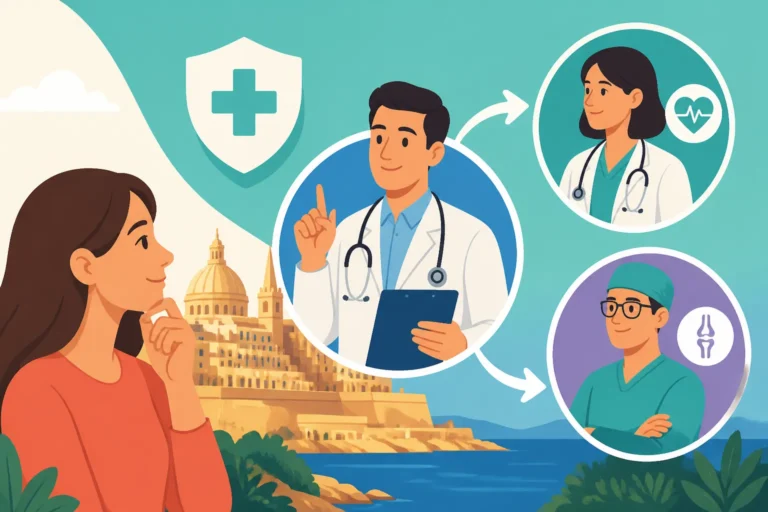
Many expats eventually decide that the public system's waiting lists are too much of a headache, leading them to explore Private Healthcare and Insurance in Malta: When You Need Cover. If you want a specific type of IUD or a more in-depth consultation with a gynecologist, going private is the fastest way.
When you go private, you skip the need for How the Specialist Referral System Works in Malta's Public Hospitals. You can simply call a private hospital like St. James or a clinic like DaVinci and book directly with a gynecologist. The consultation will cost between €50 and €100, but the level of care and the speed of service are usually worth it.
For those living here on a nomad visa or a work permit, having a plan like SafetyWing can be a lifesaver for major medical issues, allowing you to use your budget for these routine private gynecological visits. I personally found that having a regular private gynecologist in Malta made me feel much more "at home" and looked after than trying to navigate the crowded halls of Mater Dei and Beyond: A Guide to Malta's Public Hospitals and Health Centres for something as routine as a smear test or a pill refill.
Important Cultural Nuances for Expats
Living in Malta requires a bit of "island logic." This applies to healthcare too. Pharmacies here are more than just shops; they are the frontline of the medical system. Every pharmacy has a doctor’s clinic attached to it, usually operating for a few hours in the morning or evening.
If you run out of your prescription and can’t get an appointment, sometimes—and I stress sometimes—a pharmacist you have a good relationship with might give you a "grace pack" of your pills if you show them your old box. This isn't official policy, but in Malta, relationships (and being polite) go a long way. However, don't rely on this. Always try to have a valid prescription.
Another thing to keep in mind is the availability of certain brands. Malta is a small market. If you are used to a very specific brand of birth control from your home country, it might not be imported here. It is a good idea to bring a list of the active ingredients and dosages so a Maltese doctor can find the local equivalent. If you are worried about coverage during your move, checking if SafetyWing covers a final check-up before you depart your home country can be a smart move to ensure you have a few months' supply while you settle in.
Navigating the Pharmacy of Your Choice Scheme
If you do happen to qualify for free medication due to a chronic condition, you will need to understand how to use the system. You can't just walk into any pharmacy and get free meds. You must register with a specific pharmacy near your home.
This is part of The POYC Pharmacy of Your Choice Scheme: How to Collect Free Medicines. Once you are registered, your consultant will give you a "yellow card" or a "pink card" which is then entered into the national database. You then collect your medications every month or two from your designated pharmacy. It's a bit of paperwork at the start, but it saves a significant amount of money over the long term if you are managing a condition like endometriosis alongside your need for contraception.
Emergency Contraception and Your Rights
As mentioned, the Morning After Pill is available without a prescription. This was a hard-fought battle in Malta, and while it's a victory for reproductive rights, the "conscientious objection" clause can still be a hurdle. If you find yourself in a situation where you need emergency contraception on a Sunday or a public holiday, you need to check which pharmacies are open.
Pharmacies in Malta operate on a roster for Sundays. You can find the "Sunday Pharmacy List" in local newspapers or online. It is always a good idea to call ahead to ensure they have the MAP in stock and that the pharmacist on duty is willing to dispense it. It sounds like an extra layer of stress you don't need in an emergency, but that is the reality of the current Maltese landscape.
In conclusion, while you won't find contraception for "free" in the way you might expect, it is accessible and relatively affordable. By using the GU clinic for prescriptions and understanding the local pharmacy culture, you can manage your reproductive health effectively. Malta is a wonderful place to live, but it does require you to be a bit more proactive and informed about your healthcare choices than you might be used to back home.
Disclaimer
This article is for informational purposes only and does not constitute medical or legal advice. Healthcare policies in Malta, particularly regarding reproductive health and entitlement, can change. Always consult with a qualified medical professional or contact the Malta Health Entitlement Unit for the most current information regarding your specific circumstances.