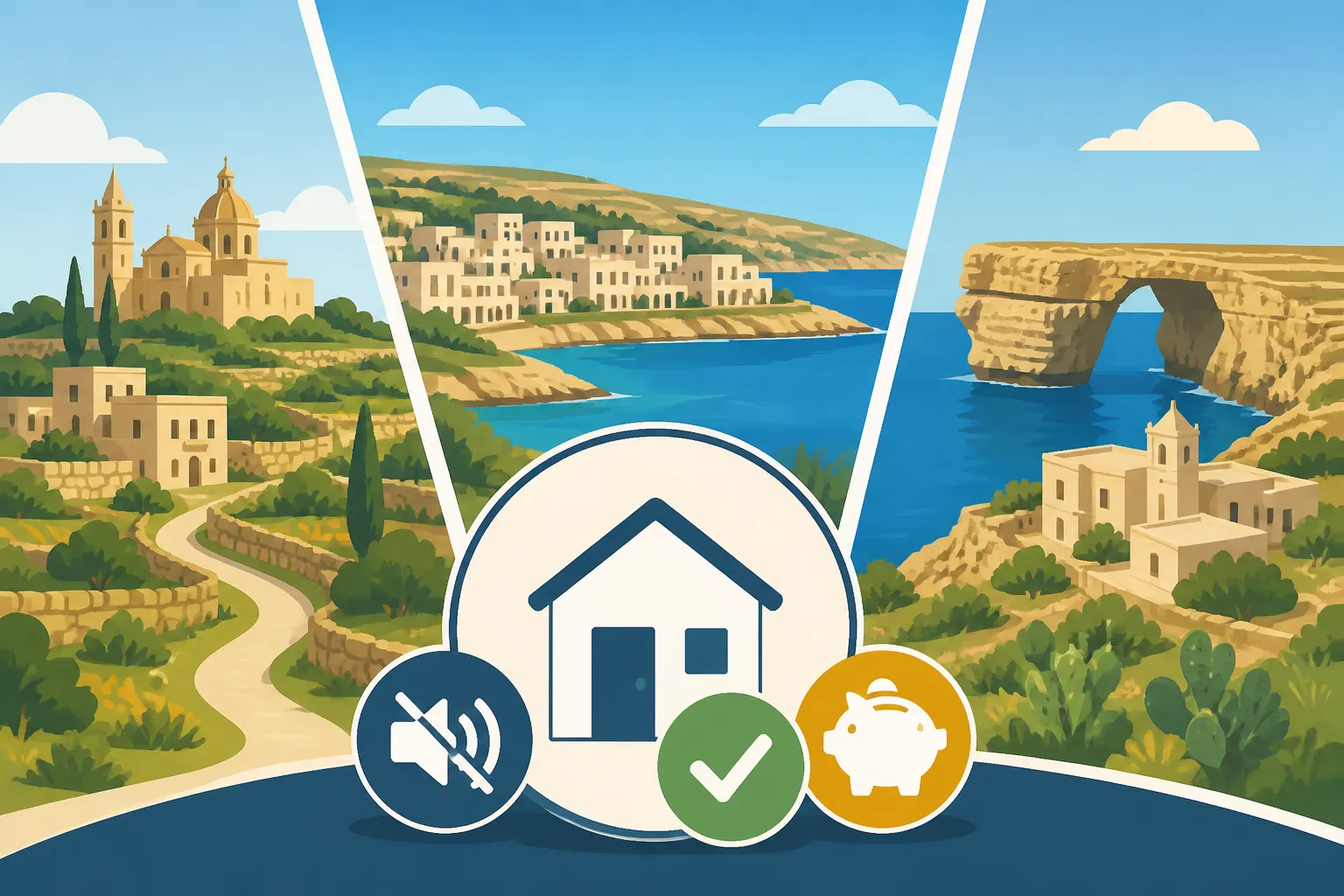
Quieter and Cheaper Areas: The South, the North, and Gozo
Finding your slice of paradise in Malta often means navigating a bit of a paradox: you want the sun, the sea, and the vibrant culture, but perhaps not the hustle, bustle, and eye-watering prices of the popular central areas. It's a common dilemma for expats, and it can feel like you're constantly weighing your budget against your sanity. This guide is for those of you craving a calmer, more affordable existence on the islands, exploring the genuine charms and practical realities of living in Malta's quieter South, tranquil North, or the serene sister island of Gozo.
The Quest for Serenity and Savings in Malta
When you first arrive in Malta, everyone points you towards Sliema, St. Julian's, and perhaps Valletta or Gżira. And for good reason – these areas are packed with amenities, nightlife, and job opportunities, making them incredibly convenient. However, this convenience comes at a significant cost, not just to your wallet but often to your peace of mind. The constant traffic, the crowded pavements, and the sheer volume of people can be a culture shock, especially if you're coming from a quieter background or simply seeking a more relaxed pace of life.
Why the Usual Hotspots Might Not Be for You
Let's be honest, those prime locations are expensive. The cost of renting an apartment in Sliema or St. Julian's can easily gobble up a significant chunk of your monthly income. We're talking about €800-€1500+ for a decent one or two-bedroom place, and often without much character or space. Beyond the rent, everything else seems to follow suit: parking is a nightmare, groceries can feel pricier at convenience stores, and simply finding a quiet spot for a coffee can be a challenge. The energy is undeniable, but it's not for everyone. Many expats, after the initial novelty wears off, find themselves yearning for a retreat from the perpetual motion. It’s important to understand that your lifestyle preferences deeply impact your finances here. If you want to dive into the specifics of what living here really costs, check out our guide on How Much Does It Cost to Live in Malta Each Month?.
What often gets overlooked in the initial excitement of moving to Malta is the subtle yet persistent noise pollution in the more populated areas. Construction is almost constant, traffic horns are a daily symphony, and the general hum of urban life can wear you down. For those who work remotely, or have young children, or simply appreciate quiet evenings, these central hubs can quickly become overwhelming rather than invigorating. It’s not just about money; it’s about quality of life. The mental toll of always being "on" in a bustling environment is a real factor that many newcomers underestimate until they've experienced it firsthand.
Understanding the Trade-offs: Convenience vs. Cost
Moving away from the central areas almost always means gaining affordability and peace, but it also necessitates a realistic look at the trade-offs. The most obvious is transport. While Malta's public transport system, particularly the buses, offers extensive coverage, journey times can be longer from the South or North, and particularly from Gozo. If your job or social life is heavily concentrated in the central areas, you’ll need to factor in this additional commute time and potentially reduced flexibility. However, with the advent of free bus travel with a Tallinja Card, the cost burden is significantly lessened, as explained in Public Transport in Malta: Free Bus Travel and the Tallinja Card.
Another common concern is access to amenities. While the quieter villages have their own local shops, pharmacies, and eateries, they might not offer the same vast selection of international restaurants, trendy bars, or niche speciality stores found in Sliema. This isn’t necessarily a negative – it often leads to discovering authentic local gems and supporting small businesses, fostering a deeper connection to Maltese culture. However, if having every conceivable shop and restaurant on your doorstep is a priority, then you'll need to adjust your expectations. This trade-off is often about shifting from convenience-at-all-costs to a more deliberate, community-focused way of living.
Embracing the Charm of Malta's South
The South of Malta often feels like a different country compared to the bustling central district. Here, life moves at a slower pace, and the fishing traditions are still very much alive, offering a more authentic glimpse into Maltese culture. You'll find picturesque harbours, rugged coastlines, and a sense of community that can be harder to forge in the more transient expat enclaves. Many people moving to Malta often overlook the south, drawn by the perceived glamour of the north, but the south offers a robust and welcoming alternative, particularly for families and those seeking a calmer life. It is often lauded as a place where you can genuinely connect with local life. If you're wondering about the cost differential, our guide Is It Cheaper to Live in the South of Malta? dives deep into this specific question.
Birżebbuġa, Marsaxlokk, and Marsaskala: A Glimpse into Authentic Maltese Life
Let's talk specifics. Birżebbuġa, affectionately known as 'B'Buġa,' is a charming seaside town renowned for its sandy beach, Pretty Bay – one of the few sandy beaches in the south. It has a relaxed, family-friendly atmosphere with a strong local community feel. While it might not have the high-end restaurants of St. Julian's, it boasts excellent, affordable seafood restaurants and local shops. Rental prices here are noticeably lower than in the central areas, often offering more space for your money, whether it's an older, larger apartment or a traditional townhouse. The challenge can sometimes be parking, especially in summer, but residential permits alleviate some of that pressure for locals.
Then there's Marsaxlokk, famous for its vibrant Sunday fish market and the colourful Luzzu fishing boats that dot its harbour. Living in Marsaxlokk means waking up to the gentle clinking of masts and the smell of fresh sea air. It's idyllic and picturesque, drawing tourists during the day, but it settles into a quiet, close-knit community in the evenings. While tourist-oriented restaurants can be found, there are also authentic local eateries. Due to its popularity with day-trippers, some streets can be busy on weekends, but the residential areas remain peaceful. It's a fantastic option for those who appreciate marine life and a truly Maltese vibe.
Marsaskala strikes a balance between a laid-back fishing village and a rapidly developing residential hub. It's perhaps the most 'modern' of the southern towns mentioned, with a wider array of amenities including supermarkets, pharmacies, and even a shopping centre. It offers a beautiful promenade, popular for walks and jogs, and several swimming spots. Marsaskala attracts a mix of locals and expats, creating a lively yet still relaxed atmosphere. You can often find newer apartments here at more competitive prices than in the central region, making it a strong contender for those wanting a bit more convenience without the hefty price tag.
The Practicalities of Living South: Transport and Amenities
Living in the South does require a bit of strategic planning, particularly concerning transport. While the bus system connects these towns to Valletta and other key areas, journeys can take longer. For instance, a bus ride from Birżebbuġa or Marsaxlokk to Valletta can take anywhere from 30 to 50 minutes, depending on traffic and the route. From Marsaskala, it might be slightly quicker. This is where having your own transport can be a game-changer, but it's not essential. Many expats in the South rely solely on the buses and find it manageable, especially if their work allows for flexible hours or is located closer to home. If you are considering buying a car, remember that driving in Malta has its own quirks, which you can read about in our detailed guide on Driving in Malta: Licences, Roads, and Buying a Car.
In terms of amenities, these southern towns are well-equipped for daily life. You'll find local grocers, butcher shops, bakeries, and several larger supermarkets like Lidl or PAMA in nearby areas, ensuring you don't miss out on essentials. Healthcare facilities are accessible, with local health centres providing primary care, and Mater Dei Hospital still reachable within a reasonable drive for emergencies. The community spirit is often stronger here; local festa (village feast) celebrations are a huge part of the cultural calendar, giving you ample opportunities to immerse yourself. For those with children, local schools are available, and the quieter environment is often cited as a benefit for family life.
Real-Life Budgeting for Southern Living
The financial benefits of living in the South are perhaps the most compelling for many. Rent prices are consistently lower, often by 20-40% compared to central areas for comparable property sizes. This means you might find a spacious, three-bedroom apartment in Marsaskala for the same price as a smaller two-bedroom in Swieqi, for example. This difference frees up a significant portion of your income for other expenses or for savings. Utility costs, while governed by national tariffs, can also feel less burdensome if you're not constantly running air conditioning in a smaller, less well-insulated central apartment.
Beyond rent, everyday expenses like dining out or even a simple coffee tend to be more affordably priced at local establishments. You’re less likely to find the inflated tourist prices that sometimes creep into the central areas. Shopping at local markets for fresh produce, especially in Marsaxlokk, can also lead to savings. The cost of living is genuinely lower, making your salary stretch further. It’s a compelling argument for those looking to manage their finances effectively, and it provides a stark contrast to the narratives of Malta being a perpetually expensive place. If you are a single person or a family, the cumulative savings over a year can be substantial, making the longer commute a worthwhile trade-off for many.
Discovering the Tranquility of Malta's North
Malta's North offers a different flavour of quiet. While still popular with tourists, especially in the summer months, its residential areas often maintain a peaceful, village-like atmosphere, characterised by beautiful natural landscapes, sandy beaches, and stunning sea views. It’s a great choice for those who love the outdoors, enjoy hiking, or simply want to be closer to some of Malta's most beautiful coastal spots. It offers a balance between being accessible to amenities and providing a true escape from the urban sprawl.
Mellieħa, St. Paul's Bay (Beyond the Tourist Traps), and Xemxija
Mellieħa is arguably one of the most picturesque towns in the North, perched on a hill overlooking the largest sandy beach in Malta, Mellieħa Bay (Għadira). It’s an attractive village with a charming church, a good selection of shops, and a more upmarket feel than some of the other northern towns. Many apartments and houses here boast fantastic sea views, making it a very desirable location. Mellieħa manages to combine a strong community vibe with excellent amenities and proximity to natural beauty. Rent prices are more competitive than in the central areas, though perhaps slightly higher than in some parts of the South due to its scenic appeal and proximity to popular beaches.
St. Paul's Bay is a bit of a paradox. The central, more tourist-heavy parts like Buġibba and Qawra can be lively and busy, especially in summer. However, moving slightly inland or to the western side of St. Paul's Bay, towards areas like Mosta or even parts of Xemxija, you discover a much quieter, more residential side. Here, you'll find a mix of older Maltese homes and newer apartments, often with more affordable rents. The area around Xemxija, nestled in a valley overlooking St. Paul's Bay, is particularly serene, offering beautiful views and a peaceful environment. It’s a perfect base for exploring the northern hiking trails and accessing the ferry to Gozo.
Xemxija itself is a smaller, quieter area, almost a suburb of St. Paul's Bay but with its own distinct character. It's built into the hillsides, offering stunning panoramic views of the bay. It’s less developed than Buġibba or Qawra, making it ideal for those seeking true tranquility. You’ll find a few local restaurants and shops, but the main draw is its peaceful atmosphere and proximity to nature. It's popular with those who appreciate coastal walks and a slower pace of life, and rental prices here can be very reasonable, especially for older properties.
Balancing Accessibility and Calm in the North
Just like the South, transport from the North requires consideration. Mellieħa is a key transport hub for buses heading further north (e.g., to Cirkewwa for the Gozo ferry) and south towards Valletta. A bus journey from Mellieħa to Valletta typically takes around 45-60 minutes, which is comparable to, or sometimes slightly longer than, from the South. St. Paul's Bay also has excellent bus connections, including express routes that can cut down commute times to the central areas. For those who frequently travel to Gozo, living in the North offers the significant advantage of being a much shorter drive or bus ride to the Cirkewwa ferry terminal. For those who enjoy an occasional escape to the sister island, this proximity is invaluable.
The North of Malta is generally well-served with amenities. Mellieħa has large supermarkets, local shops, banks, and pharmacies. St. Paul's Bay (including Buġibba and Qawra) offers an even wider array of options, from international supermarkets to various retail outlets and restaurants. You won't feel cut off from essentials. Healthcare access is good, with local clinics and the Mater Dei hospital within reach. The main advantage of the North, however, is the immediate access to some of Malta's best natural attractions: Golden Bay, Għajn Tuffieħa, and the various coastal hiking paths. It’s a dream for nature lovers and those seeking an active outdoor lifestyle away from the urban concrete.
Rental Market Realities and Lifestyle in the Northern Villages
The rental market in the North is diverse. In Mellieħa, you might find a mix of modern apartments and traditional terraced houses, often with more outdoor space or better views than central properties, all at a more attractive price point. In the quieter parts of St. Paul's Bay and Xemxija, older, more spacious apartments and maisonettes are commonly available, offering excellent value. While prices may surge in tourist-heavy areas like Buġibba during peak season, focusing on the more residential parts can yield significant savings. Always remember that when looking for property, understanding the nuances of Maltese rental contracts is crucial; our guide on Renting a Home in Malta: Contracts, Deposits, and Tenant Rights offers vital insights.
The lifestyle in the North is generally more relaxed and family-oriented. There are plenty of opportunities for outdoor activities, from swimming and sunbathing at the beaches to exploring nature reserves. The presence of international schools in the North also makes it appealing to expat families. While nightlife is more subdued than in St. Julian's, there are still pleasant restaurants and bars for socialising. The community, while perhaps less transient than central areas, often has a good mix of locals and expats, especially those who appreciate the slower pace and natural beauty. It’s a great place to build a new life where the Mediterranean rhythm feels more pronounced and less rushed.
Gozo: The Ultimate Escape
For many expats seeking true tranquility and a significant drop in living costs, Gozo is the answer. Malta’s smaller sister island is a world away, despite being just a 25-minute ferry ride across the Comino channel. Gozo is greener, quieter, and boasts a distinct charm and identity that captivates those who choose to call it home. It's not just a different location; it's a different way of life. If you're pondering a move to this peaceful island, you'll definitely want to read What Is It Like to Live in Gozo as a Foreigner?.
Why Gozo Calls to Many Expats Seeking Peace
The immediate draw of Gozo is its undeniable serenity. The pace of life is significantly slower than on mainland Malta. Traffic is minimal, the air feels cleaner, and the dominant sounds are often church bells, birdsong, or the distant bleating of goats. This peaceful environment is a huge draw for retirees, digital nomads, artists, and families seeking a quieter upbringing for their children. It truly feels like stepping back in time, with a stronger emphasis on traditional village life and community values.
Gozo also offers breathtaking natural beauty that often surpasses Malta’s. From the dramatic cliffs of Dwejra to the rolling hills and secluded bays, there’s an abundance of scenic landscapes to explore. For those who love hiking, diving, or simply being immersed in nature, Gozo is an absolute paradise. The sense of community on Gozo is also a significant factor. Villages are tight-knit, and neighbours often know each other, fostering a welcoming atmosphere that can quickly make newcomers feel at home. This strong sense of belonging is something many expats cherish and find difficult to replicate in busier urban settings.
Navigating Daily Life on Malta's Sister Island
Life on Gozo, while idyllic, does come with its unique practicalities. The main connection to Malta is the ferry from Mġarr Harbour, which runs frequently, usually every 45 minutes during the day. While reliable, you need to factor in this journey time if you have commitments on the main island. For a comprehensive look at how to get there, consult our guide on How Do I Get from Malta to Gozo?. It’s a pleasant ride, but it adds an extra layer to any travel plans to Malta. This is often the biggest hurdle for Gozo residents, but one that many happily accept for the benefits of island life.
On Gozo itself, transport is less of an issue. The island is small enough to navigate easily by car or scooter, and there’s a local bus service connecting the villages to the capital, Victoria (Rabat). Amenities are surprisingly comprehensive for an island of its size. Victoria offers a wide range of shops, supermarkets, banks, and other services. Most villages have local grocers, pharmacies, and small eateries. Healthcare is provided by the Gozo General Hospital in Victoria, which is part of the public health system. While for highly specialised care or complex procedures you might need to go to Mater Dei in Malta, the Gozo hospital provides excellent general services. For those seeking basic mobile connectivity and data, especially in the more rural parts of Gozo, a reliable eSIM from a provider like Airalo can be a lifesaver, ensuring you're always connected without hunting for local SIM cards.
Cost of Living and Community on Gozo
The financial advantages of living on Gozo are substantial. Rent prices are significantly lower than on mainland Malta, even compared to the South and North. You can find spacious farmhouses with character, modern apartments, or traditional houses with ample outdoor space for very competitive prices. It's not uncommon to find a two or three-bedroom apartment for €500-€800, which would be unheard of in most parts of Malta. This lower housing cost dramatically reduces your overall cost of living, allowing your money to stretch much further.
Beyond rent, many everyday expenses are also cheaper on Gozo. Local produce, especially from farm-to-table suppliers, can be more affordable. Dining out at local restaurants often comes with a more modest bill. The slower pace of life also means less temptation for impulse spending. The community on Gozo is incredibly welcoming. There's a strong expat network, often blending seamlessly with local life. Social gatherings revolve around village events, local festivals, and informal meet-ups. It's a place where people genuinely get to know their neighbours, and a sense of collective belonging is palpable. This creates a supportive environment for newcomers, making it easier to build friendships and integrate into island life. If you're contemplating a move, the holistic picture of Gozo's affordability and community spirit makes it a very attractive option.
Making the Move: Practical Considerations for Quieter Areas
Deciding to move to a quieter, more affordable part of Malta or Gozo is an exciting step, but it requires some practical planning. It’s not just about finding a cheaper apartment; it’s about adapting your lifestyle and understanding the logistics of living outside the main urban centres. From transport to setting up your home, a bit of foresight goes a long way.
Transport Links and Infrastructure
As we've touched upon, public transport is Malta's primary mode of getting around for many, and it serves the South and North reasonably well, though with longer journey times. The Tallinja Card makes it incredibly cost-effective, essentially offering free travel once you register as a resident. However, be prepared for buses that might not always run perfectly on time, especially during peak hours or in the height of summer. Having a car can offer unparalleled flexibility, allowing you to explore more remote beaches or easily get to supermarkets without relying on bus schedules. But consider the cost of purchasing, insuring, and maintaining a car in Malta, as well as the challenges of parking, even in quieter areas. For those considering Gozo, the ferry is your lifeline to Malta, and while it's efficient, it still dictates some aspects of your schedule. Remember to account for the ferry travel time in your plans if you have regular commitments on the main island.
When it comes to digital infrastructure, Malta's quieter areas generally have good internet and mobile coverage. Major providers like GO, Epic, and Melita offer various broadband and mobile packages. However, if you're venturing into particularly remote areas in the countryside, especially on Gozo, it's always worth checking the specific coverage for your chosen property before committing. Having a backup internet option, perhaps through a mobile hotspot or an eSIM service, can provide peace of mind for remote workers. While setting up utilities, remember that the tiered utility tariffs can lead to higher costs if you don't register as a resident; our guide on Understanding Tiered Utility Tariffs and Registered Residents in Malta explains this in detail.
Finding Accommodation: Tips for Off-the-Beaten-Path Locations
Finding a rental property in the quieter parts of Malta or Gozo often involves a slightly different approach than the bustling central areas. While online portals like MaltaPark, Facebook groups (like 'Malta Rentals' or 'Gozo Rentals'), and estate agents are still valuable, properties in these areas might stay on the market longer or be advertised more locally. Sometimes, word-of-mouth or simply asking around in local shops can uncover hidden gems. Be open to older properties that might offer more space and character at a better price, though they might require a bit more maintenance or have different insulation standards.
When viewing properties, pay close attention to the immediate surroundings. Is it on a main road? Is there construction planned nearby? Are there local amenities within walking distance? For those relocating internationally, using a moving service like Sirelo can simplify the logistical headache of getting your belongings to these slightly less accessible locations. They can help with everything from packing to shipping, taking a huge load off your mind. Always remember to scrutinise your lease agreement thoroughly, as your rights as a tenant are vital; refer to Your Rights Under Malta's Private Residential Leases Act for comprehensive information. Don't be shy about negotiating rent, especially for longer leases or if the property has been vacant for a while.
Settling In and Building a Community
One of the most rewarding aspects of living in Malta's South, North, or Gozo is the opportunity to truly integrate into a local community. While central areas often have a more transient expat population, the quieter towns tend to foster more stable and integrated communities. To make the most of this, make an effort to engage with your neighbours, visit local każini (village clubs), attend village festa celebrations, and frequent local shops. Learning a few basic Maltese phrases can go a long way in breaking the ice, even though English is widely spoken. This genuine interaction can lead to lasting friendships and a deeper understanding of Maltese culture.
Joining local clubs, sports groups, or volunteering can also be excellent ways to meet people, both locals and other expats who have chosen a similar lifestyle. The expat communities in these areas, while smaller, are often very supportive and active. Websites and social media groups dedicated to expats in Malta or Gozo can provide valuable resources and opportunities for connection. Building a social life in Malta, especially outside the main party zones, often requires a bit more intentionality, but the rewards are a richer, more authentic experience of island life. Don't forget that your new environment brings its own set of seasonal changes and considerations; our guide on Coping with Malta's Climate: Summer Heat, Humidity, and Winters can help you prepare.
Disclaimer
Please remember that while I strive to provide the most accurate and up-to-date information based on my knowledge and real-time data, rules, regulations, and market conditions in Malta can change. This guide is intended for informational purposes only and should not be taken as legal, financial, or immigration advice. Always consult with relevant professionals or official government sources for specific guidance pertaining to your individual circumstances.