How Do I Separate My Waste for Collection in Malta?
Moving to Malta, you quickly realise that everything from finding an apartment to getting your Maltese eResidence Card and ID Number involves a new set of rules and, let's be honest, a fair bit of head-scratching. And then there’s the rubbish. Believe me, you’re not alone if you’ve stood bewildered with three different coloured bags, wondering what goes where and when. This guide is here to unravel the mysteries of waste separation and collection in Malta, helping you master this essential part of daily life without losing your mind.
Understanding Malta's Waste Separation System: It's Not as Simple as It Looks
When you first arrive, you might notice the colourful array of rubbish bags on doorsteps, and the slightly frantic scurry to get them out on the right day. Malta has, over the past years, made significant strides towards more sustainable waste management, but the system can feel a bit fragmented and, dare I say, slightly chaotic for newcomers. It’s a mix of national guidelines and local council quirks, which often leaves expats feeling more confused than enlightened.
The Different Bags and Their Colours: A Visual Guide (and why it matters)
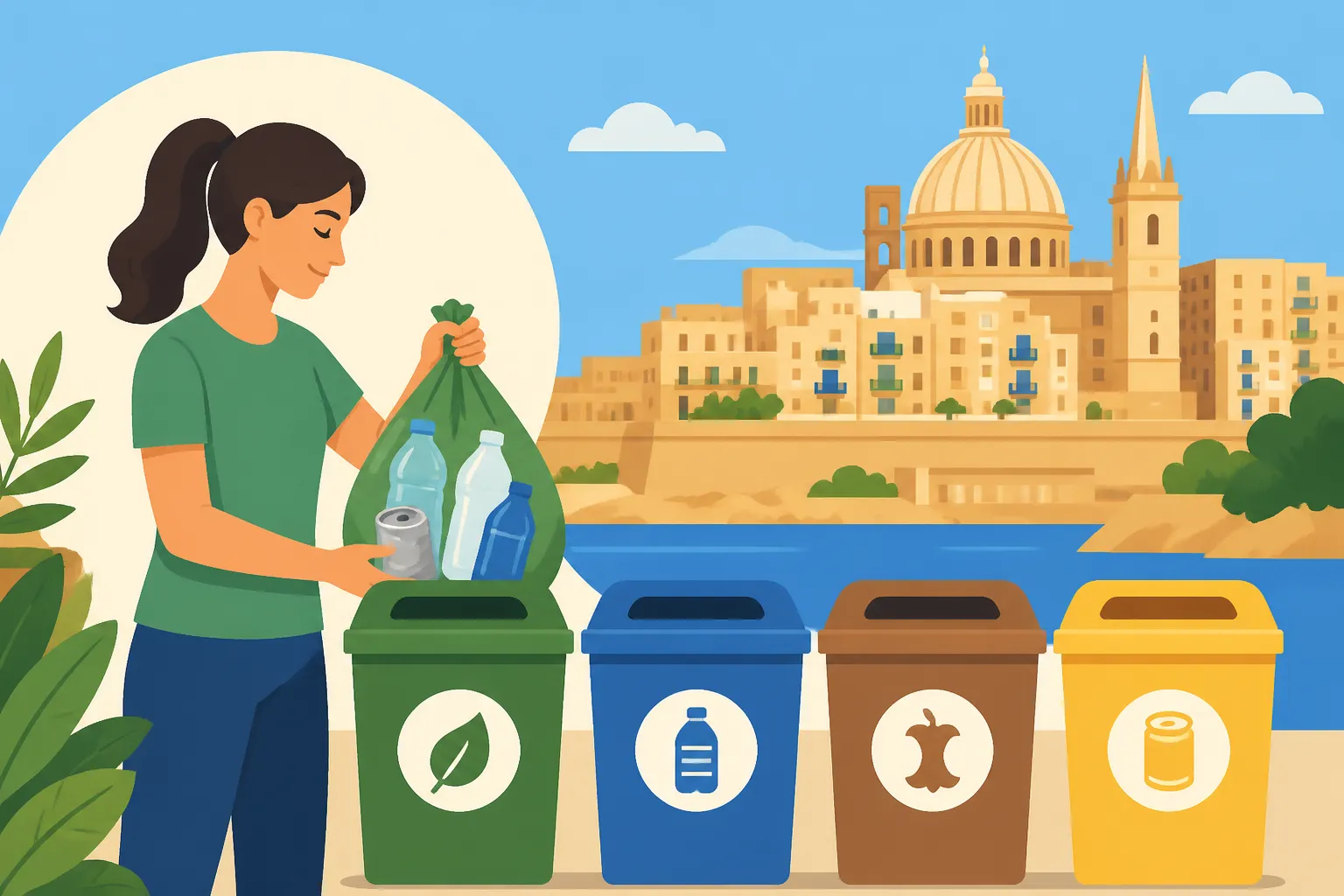
At its core, Malta’s waste separation relies on four main categories, each with its designated collection day and often, a specific bag colour. Getting this right is crucial not just for environmental reasons, but also to avoid potential fines or, worse, your bags being left uncollected to fester in the Maltese sun – a truly unpleasant experience, especially in summer!
Let’s break down the main players:
- The Black Bag (Mixed Waste): This is your general waste bag, often referred to as "the black bag" because, well, it’s usually black. This is where anything that can't be recycled or composted, and isn't hazardous, ends up. Think non-recyclable plastics like cling film or soiled food packaging, hygiene products, broken ceramics, old clothes that aren't fit for donation, and that general residue of daily life. For years, this was the only bag, so older residents sometimes still struggle to separate, but as an expat, you’re often more tuned into these things. The goal is to minimise this bag's contents as much as possible through proper separation.
- The Grey or White Bag (Recyclable Waste): This bag is for dry recyclables. In most localities, you’ll use a translucent grey or white bag for this. This is for your plastic bottles and containers (think PET and HDPE, the common juice bottles and milk cartons), paper, cardboard, metal cans (soft drink and food cans), and Tetra Pak cartons. The absolute golden rule here, and one that trips many people up, is that everything must be clean and dry. A greasy pizza box or a yoghurt pot that hasn't been rinsed will contaminate the whole batch, rendering it unrecyclable. So, a quick rinse and dry are your friends here!
- The Organic Bag (Food and Garden Waste): This is arguably the most recent and significant addition to Malta’s waste management system, and it often causes the most confusion due to its various bag colours. You might see white, green, or even brown biodegradable bags used for organic waste. The key is that these bags are usually supplied by the local council or Wasteserv and are designed to break down. Into this bag go all your food scraps: fruit and vegetable peels, cooked food remnants (yes, even meat and fish bones in small quantities), coffee grounds, tea bags, eggshells, and small amounts of garden waste like leaves or grass clippings. What cannot go in are liquids, oils in large quantities, plastic of any kind (even "biodegradable" plastics unless specifically certified for composting), glass, or metal. Getting this right really cuts down on the volume of your black bag.
- Glass Collection: While glass is a recyclable, it generally has its own specific collection day, often once a month, and requires its own separate container or bag. You'll typically place clean, empty glass bottles and jars (no ceramics, pyrex, or lightbulbs!) directly on the pavement, or in a clear bag, for a dedicated truck to pick up. Sometimes local councils provide specific small, reusable bins for glass.
Why the Rules Vary: Local Councils and the National Strategy
You might be thinking, "Great, so I just need to remember four categories and their days." Ah, but here’s where the Maltese charm (and potential frustration) comes in. While the types of waste and the principles of separation are national, overseen largely by Wasteserv Malta, the actual collection days and specific schedules are determined by your local council.
This means that if you live in Sliema, your organic waste collection day might be Tuesday and Saturday, but if you move down the road to St Julian's, it could be Monday and Thursday. It’s not a huge difference, but it’s enough to catch you off guard if you just assume a one-size-fits-all approach. These variations are often posted on local council websites, included in informational leaflets dropped through your door, or available via the Wasteserv Malta app. You’ll find that during festive periods or public holidays, collection days can also shift, adding another layer to the puzzle.
Many of us expats, when we first arrived, found ourselves constantly asking neighbours or checking Facebook groups to make sure we weren't missing a collection day. It's just part of the Everyday Living in Malta: Shopping, Climate, and Local Customs learning curve!
What Goes Where: A Detailed Breakdown for Each Waste Stream
Let’s dive a bit deeper into what you should really be putting into each bag. This is where many common mistakes happen, and understanding the nuances can make a big difference in ensuring your efforts contribute effectively to Malta's recycling and composting goals.
Organic Waste: The Green/White/Brown Bag (and what you can't put in it)
The organic waste stream is a fantastic initiative aimed at reducing the amount of waste sent to landfills. It's all about natural materials that can decompose.
What can go in your organic bag:
- All food scraps: This includes raw and cooked food, fruit and vegetable peels, stale bread, pasta, rice, eggshells, fish bones, and even small amounts of meat bones. The emphasis here is on small amounts and scraps. Don't put a whole roasted chicken carcass in there; that's better destined for the black bag.
- Coffee grounds and tea bags: These are perfect for composting, just make sure to remove any plastic tags or staples if they aren’t biodegradable.
- Small garden waste: Leaves, grass clippings, and small twigs are generally accepted. However, if you're doing a major garden clear-out, you’ll need to use a civic amenity site (more on that later).
- Biodegradable kitchen towels/tissues: If they haven't been in contact with harsh chemicals.
What cannot go in your organic bag (common mistakes):
- Liquids and oils: While food residues are fine, pouring leftover soup or cooking oil into the bag is a no-no. Liquids make the bag messy, attract pests, and complicate the composting process. Used cooking oil should be collected in a bottle and taken to a civic amenity site.
- Plastic of any kind: Even if a product claims to be "biodegradable" or "compostable," unless it is specifically certified for industrial composting and accepted by Wasteserv, it should not go in. This includes plastic bags, plastic food containers, and cling film.
- Glass, metal, or ceramics: These are non-organic and will not decompose.
- Nappies, pet waste, or hygiene products: These belong in the black bag due to their sanitary nature.
- Large branches or soil: These are considered bulky waste.
The logic behind the organic waste collection is straightforward: it's about turning food and plant matter back into something useful, like compost. This significantly reduces the environmental impact of landfills and helps create a circular economy for natural resources.
Recyclable Waste: The Grey or White Bag (Plastics, Paper, Metal, Glass)
This is the stream that truly demands diligence and understanding. When it comes to the grey or white bag, the mantra is "clean and dry." This isn't just a suggestion; it's a critical requirement for successful recycling.
What can go in your grey/white bag:
- Plastics: Look for the recycling symbols (triangles with a number inside, usually 1 or 2 for common packaging). This includes plastic drink bottles (water, soft drinks), milk cartons, shampoo bottles, and detergent bottles.
- Paper and Cardboard: Newspapers, magazines, flyers, clean cardboard boxes (flattened), and paper packaging.
- Metal: Aluminium cans (soft drinks, beer) and tin cans (food cans, e.g., tuna, beans).
- Tetra Pak cartons: For milk, juice, or soups.
What cannot go in your grey/white bag (very common mistakes):
- Any food-soiled items: A greasy pizza box, a yoghurt pot with residue, or a plastic container that hasn't been rinsed. These will contaminate the entire load, making it unrecyclable and diverting it to general waste. Take the extra minute to rinse and dry!
- Plastic bags themselves: While many people put their recyclables in a plastic bag, the bag itself is often not recyclable in this stream due to its material type and the way it gums up machinery. Reusable bags for your recyclables that you then empty into the larger collection bag are ideal.
- Polystyrene/Styrofoam: Packaging peanuts, takeaway containers, or appliance packaging made of polystyrene are generally not accepted in the kerbside recycling.
- Soft plastics/film: Cling film, crisp packets, sweet wrappers, or plastic film from food packaging are usually not accepted. These are often made of mixed plastics or are too thin to process efficiently.
- Glass: Remember, glass has its own collection! Putting it in the grey/white bag means it will likely be separated out and possibly broken, creating hazards.
- Textiles, electronics, or hazardous materials: These have dedicated disposal routes.
It’s disheartening to put so much effort into separating, only for your bag to be rejected because one item wasn't clean enough. Be diligent, and when in doubt, it's safer to put it in the black bag than to contaminate the recycling.
Mixed Waste: The Black Bag (The Rest of It)
The black bag is, effectively, the last resort. If an item cannot be truly recycled, composted, or taken to a civic amenity site, it goes here. Your goal, as a responsible resident, should be to make this bag as small as possible.
What typically goes in your black bag:
- Sanitary products: Nappies, sanitary towels, tissues (not used for food waste), wet wipes.
- Contaminated packaging: Greasy takeaway containers (if not suitable for organic), very soiled plastic or paper.
- Certain plastics: Plastic bags, plastic toys, foam packaging, cling film, crisp packets, sweets wrappers, plastic cutlery – basically, most plastics that aren’t rigid bottles or containers.
- Ceramics and porcelain: Broken plates, mugs, plant pots (these are not glass!).
- Lightbulbs: Regular incandescent bulbs go here. Fluorescent tubes and energy-saving bulbs contain hazardous materials and should go to a civic amenity site.
- Dust and general sweepings.
- Ash from fireplaces: Ensure it's cold!
- Old clothes/textiles: If they are truly beyond repair or donation. Otherwise, consider donation points or textile recycling.
While it seems like a catch-all, if you're successfully separating your organic and recyclable waste, this bag should be significantly lighter and less frequent. It’s a reflection of how well you’re engaging with the system.
Beyond the Kerbside: Special Waste and Bulky Refuse in Malta
Not everything fits neatly into a black, grey, or organic bag. Malta has facilities for those larger, more awkward, or potentially hazardous items that need special handling. These are crucial services that many expats might not know about, but they're vital for proper disposal.
Bring-In Sites and Civic Amenity Sites: For Everything Else
Think of these as your go-to for items that don't get picked up from your doorstep.
- Bring-In Sites: These are smaller collection points, typically located in various public spots within towns and villages. They consist of separate skips or bins for specific materials: glass, paper, plastic, and metal. They are designed for convenient drop-off of clean, separated recyclables when you miss a collection day or have small quantities to dispose of. They are generally accessible 24/7. Just make sure you're putting the right item in the right slot!
- Civic Amenity Sites (CAS) / Recycling Centres: These are larger, staffed facilities designed for a much broader range of waste, including bulky items, hazardous waste, and special recyclables. Malta has several of these strategically located across the islands, operated by Wasteserv. For instance, you’ll find them in places like Mrieħel, Ħal Far, Luqa, and Xewkija (Gozo).
What you can take to a Civic Amenity Site:
- Bulky refuse: Old furniture (sofas, chairs, tables), mattresses, large appliances (fridges, washing machines, ovens – often called "white goods").
- Electronic waste (WEEE): Old TVs, computers, printers, small kitchen appliances, hair dryers. This category is important as electronics contain valuable materials that can be recovered and hazardous ones that need careful disposal.
- Hazardous waste: Paints, solvents, motor oil, batteries (car batteries, household batteries), fluorescent light tubes, certain chemicals. Never put these in your regular bins!
- Construction and demolition waste (small quantities): Tiles, concrete, rubble from DIY projects.
- Garden waste (large quantities): If you've pruned a tree or done a major garden clear-out.
- Used cooking oil: Collected in sealed containers.
- Textiles: Large quantities of clothes, fabric scraps.
To use a civic amenity site, you typically need to show your ID card or eResidence card to prove you are a resident. They have specific opening hours, so it's best to check Wasteserv's website or the Wasteserv Malta app before you go. Having access to your phone’s data to quickly check these details is really handy, so if you’re still sorting out your local SIM, an eSIM from a provider like Airalo can be a lifesaver for these kinds of on-the-go checks!
Bulky Refuse Collection and Hazardous Waste Disposal
For very large items that you can’t transport yourself to a civic amenity site, most local councils offer a bulky refuse collection service. This usually requires pre-booking an appointment with your local council. You'll specify the item (e.g., "one old sofa," "two mattresses"), and they'll give you a date and time to place it outside your door. It’s a fantastic service, but you must book it; just leaving large items on the street is illegal and will likely result in a fine.
When it comes to hazardous waste, like old paints, chemicals, or car batteries, civic amenity sites are your primary port of call. Local councils might occasionally organise special collection days for certain hazardous items, but these are less frequent. It’s critical to dispose of these responsibly to protect both human health and Malta's delicate environment.
Tips for Success and Avoiding Common Pitfalls
Navigating Malta's waste system can feel like learning a new language, but with a few pointers, you'll soon be a pro. Just like getting organised with your relocation with a service like Sirelo makes the big move smoother, applying a bit of strategy to your waste management helps immensely with daily living.
Getting Your Head Around Collection Schedules and Local Variations
As mentioned, collection days can vary significantly by locality. Here’s how to stay on top of it:
- Local Council Websites: Your first stop should always be your local council’s official website. They often have dedicated sections detailing waste collection schedules, usually under "Waste Management" or "Services."
- Wasteserv Malta App: Wasteserv, the national waste management agency, has a very useful mobile app. You can input your locality, and it will provide the specific collection schedule for your area, including any changes due to public holidays. It’s truly a game-changer for many expats.
- Look Around and Ask: Observe your neighbours! When do they put out their organic waste? When do the grey bags appear? If all else fails, a friendly chat with a local can often clear things up. Don't be shy; everyone here knows the rubbish dance.
- Leaflets: Keep an eye out for informational leaflets dropped in your mailbox by the local council or Wasteserv. These often contain annual schedules.
Always remember that schedules can be dynamic, especially around holidays. For instance, if a public holiday falls on a Monday, your black bag collection might be pushed to Tuesday or cancelled altogether for that week.
Practical Advice for Expats: Storage, Smells, and Making It Work
Malta is an island with a warm climate, and rubbish, especially organic waste, can quickly become an issue if not managed well. Most apartments don't have large utility rooms or gardens for bins.
- Multiple Bins: Invest in at least three separate bins inside your home: one for organic, one for recyclables, and one for mixed waste. Smaller, stackable bins can be a good solution for compact spaces. Some people even keep a separate container for glass to collect until the monthly collection day.
- Dealing with Smells: This is particularly important for organic waste, especially in the heat.
- Use the right bag: Only use the official Wasteserv biodegradable bags or equivalent.
- Small, frequent bags: Don't let your organic waste sit for days. If you have frequent organic collections (e.g., twice a week), use smaller bags and put them out often.
- Keep it sealed: Ensure your organic bin has a tight-fitting lid.
- Rinse containers: As mentioned, rinse recyclable containers thoroughly.
- Consider a small pedal bin with a lid and charcoal filters for organic waste inside your kitchen.
- Putting Bags Out: Place your bags on the pavement outside your residence shortly before the designated collection time, not the night before. This helps minimise smells, prevent animals from getting into them, and keeps the street tidier.
- The Gozo Difference: If you're living in Gozo, the system is fundamentally the same, with the same coloured bags and waste streams, but the specific collection days and some local regulations might differ from Malta. Always check with your Gozo local council.
- Don’t be Afraid to Ask: It takes time to get used to a new system. If you're struggling, talk to your landlord, your neighbours, or even check out expat Facebook groups in Malta – someone will always have the answer or at least share your pain!
Making an effort with waste separation not only contributes to a cleaner Malta but also makes your own living environment more pleasant. It's one of those small things that can significantly impact your daily Cost of Living in Malta: Budgeting for the Real Numbers and overall comfort.
| Waste Type | Bag Colour (Typical) | Contents | Collection Frequency (Typical) | Key Rule |
|---|---|---|---|---|
| Mixed Waste | Black | Non-recyclable, non-organic, non-hazardous (hygiene, soiled packaging, ceramics) | 2-3 times/week | Minimise contents; last resort for waste. |
| Recyclables | Grey / White | Clean & dry plastics (bottles), paper, cardboard, metal cans, Tetra Pak | 1-2 times/week | MUST BE CLEAN AND DRY. |
| Organic Waste | Green / White / Brown | Food scraps, fruit/veg peels, coffee grounds, small garden waste | 2-3 times/week | Use Wasteserv-approved bags; no liquids/plastic. |
| Glass | No specific bag/bin | Clean glass bottles & jars (no ceramics, pyrex, lightbulbs) | Monthly | Place directly on pavement or in clear bag. |
When you're Setting Up Your Home in Malta: Utilities, Internet, and Insurance, understanding how your waste is managed is just as vital as knowing how your electricity bill works. It all contributes to a smooth transition to island life.
Disclaimer
The information provided in this guide is for general informational purposes only and is subject to change. While every effort has been made to ensure accuracy, waste management regulations and schedules in Malta can be updated by national authorities or local councils. Always consult official Wasteserv Malta resources and your specific local council's information for the most current and accurate details. We are not responsible for any actions taken based on the information provided herein.