What Is Approval in Principle and What Happens Next in Malta?
The moment you get that email with "Approval in Principle" for your Maltese residence permit, it feels like winning the lottery, right? After weeks, maybe even months, of anxious waiting, it’s a huge relief. But hold your horses, because while it’s a critical green light, it’s not the final finish line, and many newcomers find themselves wondering, "What exactly is this, and what on earth do I do next?" This guide is here to walk you through what Approval in Principle means for your move to Malta and the essential steps that follow.
Demystifying "Approval in Principle" for Your Maltese Permit
That coveted "Approval in Principle" (AIP) notification is a monumental step in your journey to live and work in Malta, but it’s often misunderstood. It’s not your residence card, and for many, it doesn't immediately grant you the right to move or start working. Think of it as a conditional acceptance, a formal declaration from Identità (Malta's agency for identity, passports, and citizenship) that your application meets the core criteria and, in principle, they are willing to grant you a residence permit.
What Exactly Is AIP?
At its heart, Approval in Principle means that Identità has reviewed your submitted application – be it for a Single Permit, Nomad Residence Permit, or another long-term stay – and has found no fundamental issues preventing its approval. They've checked your eligibility, verified the main documents, and are satisfied with the initial information. It's their way of saying, "Yes, this looks good. Now, here are the final steps you need to take before we issue the actual permit."
This stage is crucial because it significantly reduces the uncertainty. Before AIP, you're essentially in limbo, unsure if your application will even be considered viable. Once you have it, you know you're on the right track, and the remaining hurdles are primarily administrative and logistical. It allows you to proceed with more confidence, especially if you're moving from a country that requires a D-Visa to enter Malta to complete the process. Without AIP, applying for a D-Visa would be a shot in the dark, often leading to rejection because you lack the underlying permit approval.
Who Receives AIP and For Which Permits?
AIP is most commonly issued for long-term residence permits, particularly those that require a significant pre-screening of eligibility. The most frequent recipients are applicants for:
- Single Permits: This is a combined work and residence permit. Your employer usually initiates this process, and once your eligibility for the role and your background checks out, Identità issues an AIP. This confirms that Malta is willing to let you work and reside here, provided you complete the in-country requirements. You'll likely also receive an "Approval in Principle and the D-Visa: Entering Malta to Start Work" letter if you're a non-visa-exempt national.
- Nomad Residence Permits: For digital nomads, the AIP means that your remote work status, income thresholds, and other conditions have been met. It gives you the green light to plan your physical move.
- Family Reunification Permits: If you're joining a family member already residing in Malta, the AIP confirms that your relationship and the sponsor's financial and accommodation capacities are deemed sufficient.
- Student Permits (sometimes): While often a more direct application, for certain longer courses or specific nationalities, an AIP might be issued to facilitate the visa application.
It's less common for EU/EEA citizens, as their right to reside is based on EU treaties, and their process focuses more on registration rather than a permit application in the same vein. They simply register their residence upon arrival. However, for anyone requiring a residence permit, the AIP is a vital part of the administrative gauntlet.
The Significance of AIP for Your Move
Receiving AIP is like getting the keys to your new life in Malta – but you still have to pack the moving truck and drive it over. It’s the stage where you can firmly start making concrete plans without the looming fear of outright rejection.
Firstly, for non-EU/EEA nationals who require a visa to enter the Schengen Area (and Malta), the AIP is usually the primary document you'll use to apply for your D-Visa (National Long-Stay Visa). Without it, your visa application would likely be refused because you wouldn't have a valid reason for a long-term stay. The D-Visa is critical because it allows you to enter Malta specifically for the purpose of completing your residence permit application, typically granting you a stay of up to 90 or 180 days.
Secondly, it's the signal to start logistical preparations. You can now confidently book your flights, arrange your accommodation, and even start looking into shipping your belongings. Many individuals hold off on these commitments until they have this initial approval, understanding the financial risks involved. If you're contemplating moving your entire life, having this assurance can make a huge difference, allowing you to engage with international movers like Sirelo for quotes on getting your possessions across the sea. The stress of moving to a new country is immense, and AIP alleviates a significant portion of that administrative burden.
Navigating the Next Steps After Receiving AIP
So, you have your Approval in Principle – congratulations! Now comes the phase where you transform that "in principle" into a tangible "in person." This stage involves a crucial blend of visa applications (if applicable), practical arrangements, and meticulous document gathering to present to Identità upon your arrival.
The D-Visa Application Process
This is perhaps the most critical step for many non-EU/EEA citizens after receiving AIP. If your nationality requires a visa to enter the Schengen Area, you must apply for a D-Visa. This is not a Schengen short-stay visa (which only allows 90 days in a 180-day period for tourism) but a specific national long-stay visa that allows you to enter Malta to finalise your residence permit.
You’ll typically apply for your D-Visa at the Maltese embassy or consulate in your home country, or at the embassy of another Schengen member state representing Malta if Malta doesn't have a diplomatic presence there. The AIP letter from Identità is the cornerstone of this application. Without it, explaining your reason for a long-term stay would be impossible.
What to Expect During Your D-Visa Application:
- Gather Documents: You'll need your passport, passport-sized photos, the AIP letter, proof of accommodation in Malta (a provisional rental agreement is often sufficient at this stage), proof of sufficient funds for your initial stay, and travel insurance. Double-check the exact requirements for your specific nationality and the embassy you're applying through, as these can vary slightly.
- Appointment: Book an appointment well in advance. Embassies can have long waiting times.
- Interview: Be prepared for a brief interview where you might be asked about your intentions in Malta, your job, and your accommodation.
- Processing Time: D-Visas can take several weeks to process, so factor this into your travel plans. Don't book non-refundable flights until your D-Visa is stamped in your passport.
- Entry Restrictions: Remember, the D-Visa specifies the purpose of your entry. It's solely for you to arrive and complete your residence permit process. It usually isn't a multi-entry visa, so be careful about leaving and re-entering the Schengen area before you have your eResidence card. You can find more details in our guide on The D-Visa National Long-Stay Visa for Entering Malta.
Arranging Your Arrival in Malta
Once the D-Visa is sorted (or if you're from a visa-exempt country and can enter directly), it's time to iron out your arrival logistics. This is where the excitement really builds, but also where practicalities can get overwhelming if not planned carefully.
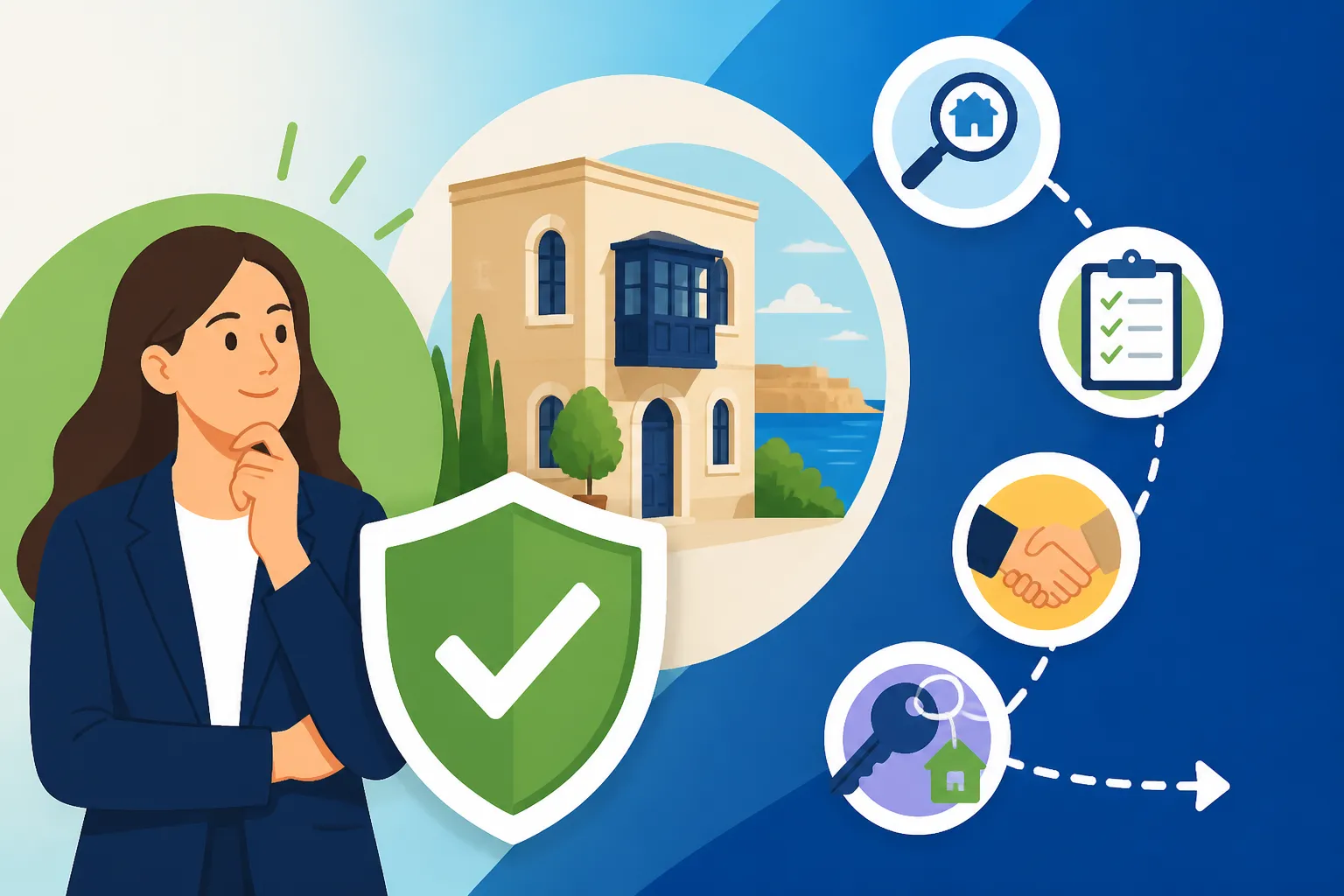
- Accommodation: If you haven't secured permanent accommodation, now is the time to finalise it. Many landlords are more comfortable signing a proper lease once they know you have AIP. Ensure your lease agreement is legitimate and covers the full address, landlord details, and your tenancy period. Remember, for non-EU nationals, your lease will often need to be "attested" by a notary and registered with the Housing Authority, a critical step that Identità will check. Our guide on What Is the Lease Agreement Attestation Form in Malta? explains this in detail.
- Travel: Book your flights. Consider arrival times, especially if you need to pick up keys or check into temporary accommodation.
- Removals: If you're bringing furniture or a large volume of personal effects, now is the time to activate your plans with a shipping company. Companies like Sirelo can help you compare options for international removals, ensuring your belongings arrive safely and efficiently. Planning this well in advance can save a lot of stress and unexpected costs.
- Temporary Living: Think about your first few days or weeks. Will you stay in an Airbnb, a hotel, or with friends? Ensure you have a comfortable base while you sort out the final paperwork.
- Budgeting: Your first few weeks will involve setup costs. Make sure you have access to funds for deposits (rental, utilities), initial groceries, transport, and any unexpected expenses.
Essential Documents to Prepare for Identità
This is not a repeat of your initial application documents. This is about providing original documents and specific proofs that Identità requires for the final issuance of your eResidence card. Be meticulous, as even minor discrepancies or missing documents can cause significant delays.
Here’s a general checklist of what you'll typically need to have ready in Malta:
- Original Passport: Valid for at least six months beyond your intended stay.
- D-Visa: If applicable, clearly stamped in your passport.
- AIP Letter: The original printout.
- Original Birth Certificate and Marriage Certificate (if applicable): These might need to be apostilled/legalised and translated into English by an approved translator, depending on their origin.
- Proof of Accommodation: Your fully signed and legally registered private residential lease agreement. This is crucial. If it's not registered, Identità won't accept it.
- Proof of Funds: Recent bank statements (Maltese or foreign, showing sufficient balance).
- Private Health Insurance Policy: Mandatory for many non-EU permit holders. The policy must cover your entire stay in Malta, with specific minimum coverage amounts (often €30,000). You'll typically need to provide a policy from a recognised insurer that explicitly states its validity in Malta. Reputable international providers like Cigna Global are often used by expats for this purpose. For more information, see our guide on Private Health Insurance Requirements for Non-EU Permit Holders in Malta.
- Police Conduct Certificate: An original certificate from your country of origin (and sometimes from Malta if you’ve been here before) issued within the last six months.
- Original Job Offer/Employment Contract: For Single Permit holders.
- Forms: Any additional forms Identità might send or require you to complete upon arrival.
- Passport Photos: Usually required again, ensure they meet Maltese specifications (recent, white background, specific size).
Make sure all non-English documents are accompanied by official English translations. It's often safer to get these done in Malta by an approved translator or by the relevant embassy/consulate. You can delve deeper into what's needed by reading What Documents Do I Need for a Maltese Residence Permit?.
The Final Stretch: Biometrics, eResidence Card, and Beyond
You've made it to Malta! The D-Visa is stamped, your apartment is waiting, and your documents are in hand. Now it's time for the final, personal interaction with Identità, followed by the anxious wait for your physical eResidence card – the golden ticket to truly settling in.
Booking and Attending Your Biometrics Appointment
This is the big one: your in-person visit to Identità. For most residence permits, you will need to book an appointment to submit your original documents and provide your biometric data (fingerprints and a digital photograph). This appointment is usually held at the Identità Agency offices in Msida.
Steps to Take:
- Book Online: Appointments are usually booked through the Identità online portal. Do this as soon as you have a confirmed arrival date, as slots can fill up quickly. Be aware that the system can be a bit… temperamental. Patience is key! Our guide on Booking Appointments and Submitting Documents to Identità can offer some tips.
- Arrive Prepared: On the day, arrive punctually with all your original documents and their copies. Organize them meticulously. A good tip is to have everything in a folder, clearly labelled. The staff will review your documents, verify them against your originals, and might ask for further clarification.
- Biometrics: After the document check, you’ll proceed to the biometric capture station. This involves having your fingerprints taken digitally and a photograph for your eResidence card.
- Confirmation: Once everything is submitted, you’ll receive a receipt or confirmation that your application is being processed. This document is important as proof that you’ve completed the in-person part of the process, especially if you need to access services before your card arrives.
Remember, the staff at Identità see hundreds of applicants, so being polite, patient, and organised goes a very long way. They are simply doing their job to ensure all requirements are met.
The Waiting Game: Receiving Your eResidence Card
After your biometrics appointment, the waiting game truly begins. Identità will process your application, perform final checks, and then send your details for the production of your eResidence card. This period can vary significantly, from a few weeks to a couple of months, depending on the type of permit, the time of year, and the current workload at Identità. This is a common point of frustration for many expats. You can monitor your application status online, but sometimes patience is the only real tool you have.
Realistic Timelines and What to Do If Delayed:
- Typical Range: For a Single Permit, it might be 4-8 weeks. For a Nomad Residence Permit, it could be similar. However, these are just estimates.
- Interim Proof: The receipt from your biometrics appointment, combined with your AIP letter, can sometimes serve as interim proof of your legal status if you need to do something urgent, like opening a bank account (though some banks might still insist on the physical card).
- Contacting Identità: If delays become excessive (e.g., beyond two months without any communication), you can try contacting Identità. However, direct contact often yields little specific information, and their standard response is usually "it's being processed." Our post on Understanding Identità Processing Times and Delays offers more insight into this common expat challenge.
- Collection: Once ready, you'll usually receive an SMS or email notification instructing you to collect your card from the Identità offices. This is the moment you’ve been waiting for! Ensure you bring your old receipt and your passport for verification. You can also refer to our guide on Where Do I Collect My eResidence Card in Malta? for specific details.
Activating Your Life in Malta
Once you have that eResidence card in your hand, congratulations, you are officially a resident of Malta! This card is your primary identification document and unlocks access to various essential services and facilities.
- Opening a Bank Account: This is often the first thing people do. With your eResidence card, opening a Maltese bank account becomes much smoother. Banks like BOV, HSBC, and APS are the main local players. Your eResidence card, along with your passport and proof of address, will usually be sufficient. See How to Open a Maltese Bank Account as a Newcomer for more detailed steps.
- Healthcare Access: Your eResidence card is crucial for registering with the public healthcare system, provided you are contributing to social security. It will contain your Maltese ID card number, which is your unique identifier for everything from health centres to government services. You can then look into Healthcare in Malta for Foreign Residents: The Complete System Guide (2027). If you are relying on private insurance, such as through Cigna Global, you will primarily use your insurance details, but the eResidence card confirms your legal stay.
- Social Security & Tax: If you're employed, your employer will register you for social security, and your eResidence card will be linked to your contributions. This entitles you to various benefits, including public healthcare and potentially sick pay.
- Other Services: From getting a library card to registering for free public transport with a Tallinja Card, your eResidence card is your key. It solidifies your identity and official status, making everyday life much simpler.
Summary of the Permit Process After AIP
Here’s a simplified table to help you visualise the post-AIP journey:
| Stage | Key Action | Required Documents (Key Examples) | Estimated Timeline (Post-AIP) |
|---|---|---|---|
| 1. AIP Notification Received | Review letter, confirm next steps | AIP Letter | Immediate |
| 2. D-Visa Application (if needed) | Apply at embassy/consulate | Passport, AIP letter, accommodation proof, funds proof | 2-6 weeks |
| 3. Travel to Malta | Book flights, arrange temporary stay | D-Visa (if applicable), flight tickets | Varies |
| 4. Biometrics Appointment | Book online, attend in person at Identità | Passport, AIP, original certificates, lease, insurance | Book within 2-4 weeks of arrival, appointment itself is 1 day |
| 5. eResidence Card Production | Wait for processing and card printing | (Internal Identità process) | 4-12 weeks |
| 6. Card Collection | Collect card from Identità | Passport, appointment receipt | Immediate upon notification |
| 7. Activation | Open bank account, register for services | eResidence Card, passport, proof of address | Ongoing |
This journey might seem daunting, but breaking it down into manageable steps makes it far less intimidating. You're almost there, and soon you'll be enjoying all that Malta has to offer!
Disclaimer
The information provided in this guide is for general informational purposes only and does not constitute legal, financial, or immigration advice. While we strive to keep the information up-to-date and accurate, regulations and procedures in Malta can change. It is always recommended to consult with official Maltese government sources, such as Identità (formerly Identity Malta), or seek professional advice from qualified legal and immigration experts for your specific situation.