What Accommodation Do I Need to Reunite My Family in Malta?
The dream of having your family join you in Malta is a powerful one, but the administrative maze of immigration can often turn that dream into a stressful uphill battle. One of the biggest hurdles many expats face when applying for family reunification is proving that you have suitable accommodation. It’s not just about having a roof over your head; Identità, the agency responsible for residence permits, has specific, often unwritten, expectations about where your family will live, and misunderstanding these can lead to frustrating delays or even rejections. This guide will walk you through exactly what kind of accommodation you need to secure your family's place in Malta, helping you navigate these critical requirements with confidence.
The Core Challenge: Accommodation for Family Reunification in Malta
Let's be honest, moving to a new country is tough enough on your own. When you're trying to bring your family over, the stakes feel even higher. The bureaucracy involved in family reunification applications can be incredibly daunting, and often, the requirement for "suitable accommodation" becomes a major sticking point for many. It's a phrase that sounds simple, but in Malta, it carries a lot of weight and often leads to confusion.
Why Accommodation Matters So Much for Identità
Identità isn't just looking for a mailing address; they want assurance that your family will have a stable, safe, and appropriate living environment. From their perspective, a suitable home demonstrates financial stability and a genuine intention for long-term integration into Maltese society. It’s part of a holistic assessment to ensure that new residents, especially dependants, won't become a burden on the state and can live comfortably.
For those of us who have gone through the immigration process, we know how frustrating it can be when seemingly straightforward requirements are actually quite opaque. You might think your tiny studio apartment in Sliema is perfectly fine for you, but add a spouse and two children, and suddenly, Identità views it very differently. They are concerned with living standards, public health, and the welfare of children. So, while it feels like another hoop to jump through, it's genuinely crucial for the success of your application. The last thing anyone wants is for their loved ones to arrive only to find their living situation is questioned, potentially jeopardizing their permit.
Understanding the "Suitable Accommodation" Clause
So, what exactly is "suitable accommodation" in the eyes of the Maltese authorities? It's generally understood to mean a dwelling that is legally occupied, safe, hygienic, and provides adequate space and facilities for all proposed occupants. This immediately rules out shared rooms in a house-share, informal sublets, or properties that are clearly too small for the number of people who will be living there.
Think of it this way: Identità wants to see that your family won't be cramped or living in conditions that could negatively impact their health or development. They're looking for independent living spaces – typically, a self-contained apartment or house – where your family can establish their home. This is often where foreigners relocating to Malta encounter their first big hurdle. Many start off in smaller, more temporary accommodation, but for family reunification, you need something much more permanent and demonstrably adequate. You can't just rely on a verbal agreement with a landlord; you need official, verifiable proof of your living arrangements. This means a registered lease agreement is paramount, a topic we've covered extensively in guides like Renting a Home in Malta: Contracts, Deposits, and Tenant Rights.
Practical Requirements for Your Family's Home
When you're trying to get your family reunited in Malta, the practicalities of your living situation become paramount. It's not just about finding a place; it's about finding the right place that satisfies the government's stringent, albeit sometimes vague, requirements.
Space and Room Requirements
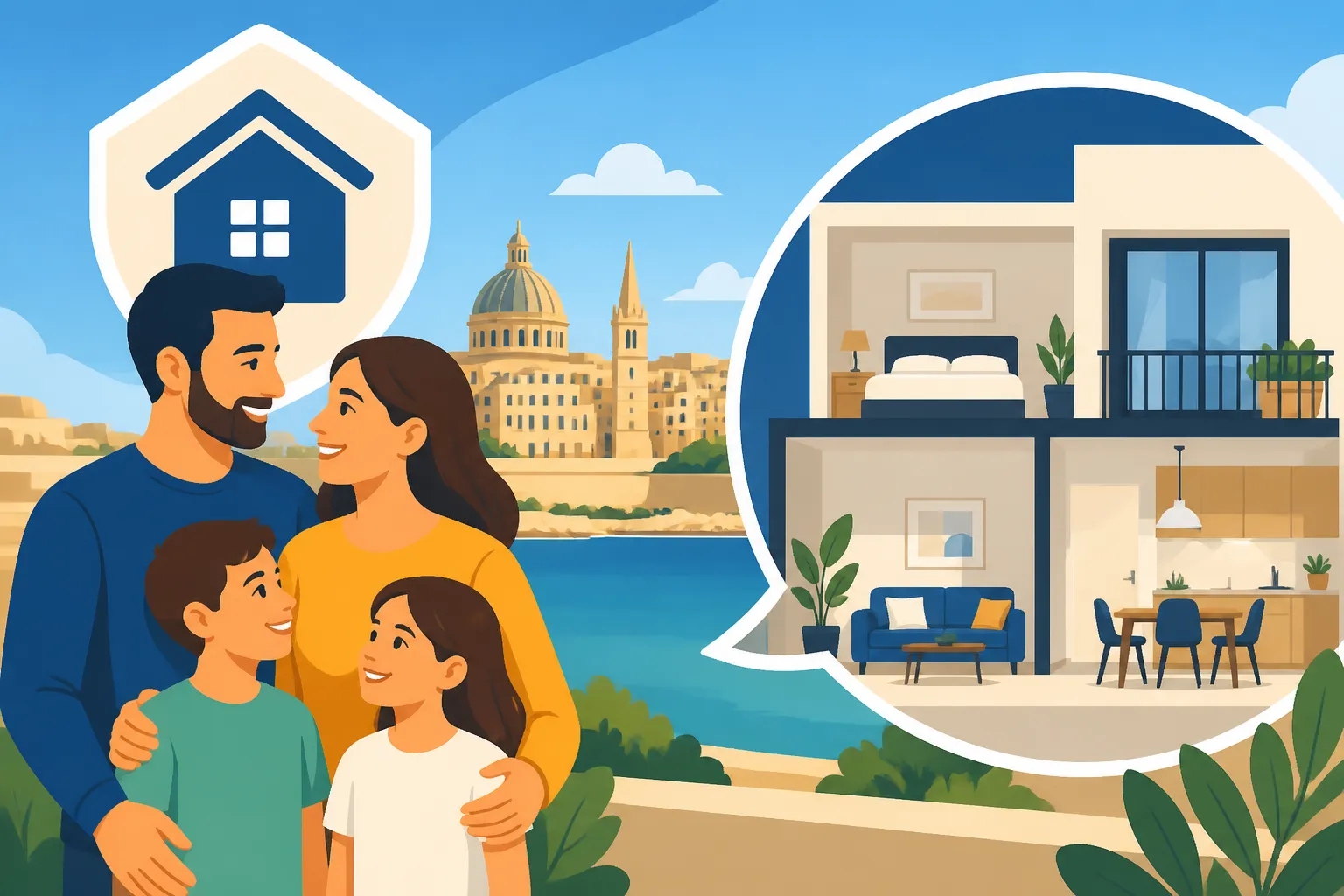
While Identità doesn't always publish exact square meterage requirements for every single scenario, they certainly have expectations. Generally speaking, a property should have enough bedrooms to comfortably accommodate the family without excessive overcrowding. For example, a couple with one or two small children will likely need at least two bedrooms. A larger family might need three or even four bedrooms.
The guidelines are typically based on avoiding overcrowded conditions. This means:
- A separate bedroom for parents.
- Separate bedrooms for children of different genders, especially once they reach a certain age (though for very young children, sharing is usually fine).
- Adequate living space beyond just bedrooms, including a kitchen, bathroom, and a communal living area.
Imagine a family of four – two parents and two children. They would ideally need a two-bedroom apartment or larger, where the children might share one room or each have their own, depending on their age and gender. A one-bedroom apartment, while suitable for a single person or a couple, would almost certainly be deemed insufficient for a family of four.
It’s about demonstrating a reasonable standard of living. Consider how the space would realistically function for your family day-to-day. Would it allow for privacy? Would children have space to play and study? These are the implicit questions Identità will be asking when reviewing your accommodation details. Finding such a place requires careful consideration, and sometimes, adjusting your budget for Cost of Living in Malta: Budgeting for the Real Numbers to accommodate a larger property.
Legal and Official Documentation
This is where many people trip up. It's not enough to have a suitable place; you need to prove it with official documentation that satisfies Identità.
The primary document you'll need is a valid lease agreement, if you are renting. This isn't just any piece of paper signed between you and your landlord; it must be registered with the Housing Authority. This is a legal requirement in Malta for all private residential leases, ensuring transparency and tenant rights. Identità will absolutely check for this registration. If your lease isn't registered, your application will very likely be rejected. For non-EU/EEA nationals, there's also the crucial The Lease Agreement Attestation Requirement for Non-EU Tenants in Malta, which means your landlord needs to go to Identità and formally attest to your lease. This is a big ask for some landlords, so it’s essential to clarify this requirement upfront.
If you own your property, you'll need to provide proof of ownership, usually through a copy of the final deed of sale. In both cases, the documents must clearly state:
- The address of the property.
- The names of the occupants (you, and soon, your family members).
- The term of the lease or proof of permanent ownership.
Furthermore, make sure the documentation reflects the current situation. If your lease is about to expire, it might raise questions. A long-term lease (e.g., one year minimum, but ideally longer for family reunification) offers better reassurance to Identità. It's a testament to your long-term commitment to living in Malta with your family, a key factor when considering Family Reunification in Malta: Bringing Your Loved Ones.
Navigating the Rental Market for Family-Friendly Homes
Finding a suitable family home in Malta, especially under the pressure of immigration requirements, can feel like a full-time job. The island's rental market can be competitive, and properties that meet family reunification standards often come at a premium.
Finding the Right Property Type
For family reunification, you'll typically be looking at apartments, maisonettes, or houses.
- Apartments are the most common type of rental property in Malta. You'll find everything from two-bedroom units to larger three-bedroom (or even four-bedroom penthouses, if your budget allows). The key is to ensure it has enough actual bedrooms and living space.
- Maisonettes are usually ground-floor or first-floor properties with their own private entrance, often with a small yard or roof access. They tend to offer more space than a typical apartment and can be excellent for families, especially those with younger children who might appreciate a bit of outdoor space.
- Houses, particularly terraced houses or villas, offer the most space but are also less common and significantly more expensive, often found in quieter residential areas rather than the bustling urban centres.
When considering location, families often gravitate towards areas known for their amenities, schools, and family-friendly atmosphere. Places like Attard, Balzan, Lija (often called the Three Villages) are popular for their larger homes and quieter streets. Further south, towns like Marsaskala or Birżebbuġa can offer more affordable, spacious options, often with easy access to the coast. For those who prefer a more central but still residential feel, parts of Swieqi or even certain quieter pockets of St. Julian's or Sliema might work, though space will be tighter and prices higher. Remember that your choice of location can greatly impact daily life, so it’s worth researching Choosing Where to Live in Malta: Towns, Regions, and Gozo.
Working with Real Estate Agents and Landlords
Navigating the rental market efficiently often means engaging with real estate agents. They have access to listings and can guide you. When contacting agents or landlords, be completely transparent about your family situation and your intention for family reunification. Tell them you need a property suitable for X number of people and that the lease must be registered with the Housing Authority and potentially attested by Identità. This immediately filters out properties or landlords who aren't willing or able to meet these specific requirements.
Some landlords, particularly those unfamiliar with the immigration process, might be hesitant about the attestation requirement. It’s a process that involves them taking time out of their day to visit Identità with you. Be prepared to explain why it's necessary and how it benefits them (e.g., a formal, legal tenant). This is why choosing a reputable agent can be beneficial; they often have landlords on their books who are accustomed to renting to expats and understand the system.
Be wary of anyone suggesting an "unofficial" lease or cash-only arrangements. These will not pass Identità's scrutiny and could leave your family in a precarious legal position. Always insist on a proper, registered lease. For guidance on finding reliable options, look into How to Find a Rental Property in Malta: Agents, Portals, and Groups and What Landlords in Malta Require Before They Rent to You. Companies like Sirelo, though primarily focused on moving services, can sometimes offer advice on reliable housing resources, or at least connect you with reputable local agents.
Here's a quick summary of key accommodation requirements for family reunification:
| Aspect | Requirement for Identità (General Guidance) | What to Look For |
|---|---|---|
| Type of Property | Self-contained dwelling (apartment, maisonette, house). | Avoid single rooms, shared houses (unless clearly separate units), or hostels. |
| Number of Rooms | Sufficient bedrooms for privacy and non-overcrowding. | Minimum 2 bedrooms for a couple + 1 child. 3+ for larger families. Separate living/kitchen. |
| Condition | Safe, hygienic, well-maintained, with basic amenities. | Functioning utilities, no visible damp, structural issues, or safety hazards. |
| Legal Status | Legally rented with a registered lease or owned property. | Registered lease with the Housing Authority. Attestation by landlord (non-EU). Deed of sale (owner). |
| Duration of Lease | Stable, long-term commitment. | Minimum 1-year lease, preferably longer, or indefinite ownership. |
| Documentation | Original or certified copies of lease agreement or deed. | Ensure all details match your application; clear address and occupants. |
Common Pitfalls and How to Avoid Them
Even with the best intentions, the path to family reunification in Malta is fraught with potential missteps, particularly when it comes to accommodation. Being forewarned is being forearmed!
Issues with Unregistered Leases or Informal Arrangements
This is, without a doubt, one of the most common reasons for rejection or significant delays in family reunification applications. Identità will not accept an unregistered lease or any informal rental agreement. Malta's Private Residential Leases Act mandates that all residential rental contracts must be registered with the Housing Authority within 10 days of coming into effect. This process ensures transparency, protects both tenants and landlords, and, crucially for you, provides an official record that Identità requires.
If your landlord suggests a cash-only deal or tells you there's "no need" to register the lease, run a mile! Not only are you foregoing your legal protections as a tenant, but you are also jeopardising your family's immigration application. Identità needs that official stamp of approval from the Housing Authority to confirm your living situation is legitimate and stable. It shows you're not just 'couch surfing' or in a temporary, unregulated arrangement. You'll want to ensure you follow all the steps outlined in Registering Your Lease with the Housing Authority in Malta.
Insufficient Space or Substandard Conditions
As discussed, it’s not just having a place, but having a suitable place. Identità and the Maltese authorities are very much aware of overcrowding issues and will scrutinise the size and condition of the property.
Examples of what might be deemed insufficient or substandard:
- Overcrowding: A two-bedroom apartment for a family of five will likely be rejected. Even if it technically fits everyone, if it means children of different genders sharing a room well into their teenage years, or multiple adults in one small room, it won't pass.
- Lack of basic amenities: A property without a fully functional kitchen, proper bathroom facilities, or consistent access to electricity and water would be deemed unsuitable.
- Poor state of repair: Visible damp, structural issues, health hazards, or generally dilapidated conditions will also lead to rejection. Identità is safeguarding the well-being of the family members being brought to Malta, particularly children.
- Non-residential properties: Trying to present a commercial property or a shared office space as a residence will, of course, be a non-starter.
Before committing to a property, thoroughly inspect it. Imagine your family living there. Does it genuinely offer enough space, light, and comfort? If you're unsure, it's better to seek a second opinion or look for an alternative. Remember, reputable insurance providers like Cigna Global will also want to ensure that your family has a safe and secure environment, even though their primary concern is health, it indirectly highlights the importance of decent living standards.
Changing Accommodation During the Application Process
This is an administrative headache you absolutely want to avoid. Identità applications already take time, and making significant changes while your application is under review can cause substantial delays, or even lead to a request to re-submit parts of your application.
If, for unforeseen circumstances, you must change your address after submitting your family reunification application, you need to inform Identità immediately. This will involve submitting new lease agreements (registered and attested, of course) and potentially other proofs of address. This can reset the clock on your application or at least add weeks, if not months, to the processing time. The best advice is to secure suitable, long-term accommodation before you even start the family reunification application process. This stability demonstrates commitment and forethought, which Identità appreciates. For more about general processing times, you can refer to Understanding Identità Processing Times and Delays.
Disclaimer
The information provided in this guide is for general informational purposes only and does not constitute legal advice. While we strive to provide accurate and up-to-date information, immigration laws and requirements in Malta can change. It is always recommended to consult with an immigration lawyer or directly with Identità (Malta's national agency for identity and citizenship) for the most current and specific advice pertaining to your individual circumstances.