Do EU Citizens Need a Residence Document to Live in Malta?
Oh, the age-old question that trips up so many of us who arrive here with visions of sun-drenched freedom and seamless EU integration! It’s a common misconception that as an EU citizen, you can simply pack your bags, hop on a plane to Malta, and settle in indefinitely without any administrative hoops. While the spirit of free movement is very much alive, the practicalities of living long-term in a new country, even within the EU, inevitably involve some paperwork. This guide will walk you through exactly why and how EU citizens need to register their residence in Malta, what that process entails, and why it's crucial for your smooth integration into island life.
The Reality of Free Movement: Why Registration Still Matters in Malta
Let's be honest, one of the biggest draws of moving within the European Union is that glorious principle of free movement. You might picture simply stepping off the plane, finding an apartment, and immediately immersing yourself in Maltese life. And for the first three months, that's largely true! You can come here, look for work, explore, and get a feel for the place. But if you're planning on building a life here, getting an eResidence document isn't just a suggestion; it's a legal requirement that unlocks pretty much everything you'll need.
Beyond the Initial 90 Days: When the Rules Change
That initial 90-day period, often referred to as the "tourist period," allows you to be in Malta without any formal registration. It's fantastic for exploring, job hunting, or even a short-term project. However, the moment your intent shifts from short-term visit to genuine long-term residence, the rules change. Many expats arrive, find a job, get excited, and then suddenly hit a wall when they try to open a bank account or access public healthcare, only to be told they need an eResidence card. It's a frustrating moment, often because the "freedom of movement" narrative can lead you to believe such things aren't necessary. But Malta, like any other EU member state, needs to know who is living within its borders, for how long, and under what conditions. It's not about hindering you; it's about orderly administration and ensuring you can properly access the services you're entitled to.
Think about it this way: if you're going to pay taxes, use the healthcare system, enroll your kids in school, or even get a local phone contract that isn't pay-as-you-go, the Maltese authorities need a formal record of your presence and your status. That initial 90 days is a grace period, a welcome mat. After that, you need to show you’re genuinely contributing or have the means to support yourself here.
The Purpose of Your eResidence Document
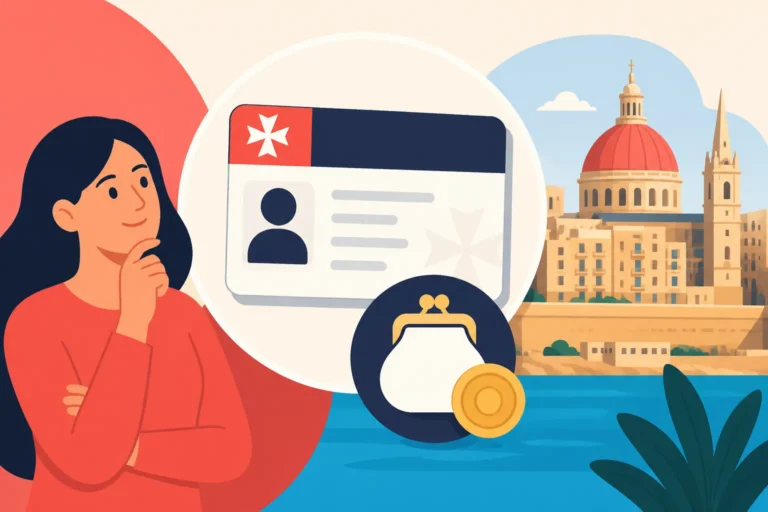
So, what exactly is this elusive eResidence document, and why is it such a lynchpin for life in Malta? In essence, your eResidence card isn't just another ID; it's your official proof of legal residence in Malta. It formalises your status as a resident EU/EEA national, confirming that you have the right to live here beyond the initial three months.
This card is crucial because it links you to the various administrative systems on the island. Without it, you’ll find yourself in a bureaucratic limbo, unable to fully participate in many aspects of Maltese society. For example, trying to register with a local health centre to get a GP, or applying for social security contributions, or even getting your utilities under a residential tariff, all hinge on having this document. It’s the key that unlocks many doors. It also helps the government with important statistical data – knowing how many people reside here, their demographics, and their reasons for being here – which is vital for planning public services and infrastructure. It's less about control and more about functioning as an organised state.
The Step-by-Step: How EU Citizens Register Their Residence in Malta
Alright, let's get down to brass tacks. You've decided Malta is home, or at least home for the foreseeable future. Now, how do you actually get this all-important eResidence card? The process primarily goes through Identità (formerly Identity Malta Agency), the government agency responsible for citizenship, identity, and residence matters. While it might feel like navigating a maze, breaking it down into steps makes it more manageable.
Gathering Your Documentation: What Identità Demands
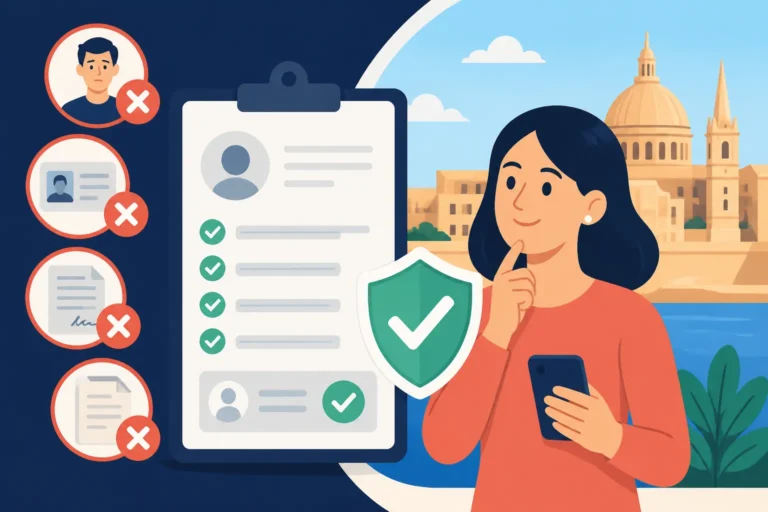
Before you even think about booking an appointment, you need to get your ducks in a row with your documents. Identità is notoriously strict about complete applications, and missing even one item can send you back to square one. Here's a general list of what you'll typically need as an EU/EEA citizen, but always, always check the latest requirements on the Identità website, as they can update:
- Valid Passport or National ID Card: This is your primary identification. Make sure it's valid for the entire period you intend to stay. You'll need the original and a photocopy.
- Proof of Accommodation: This is often a huge sticking point for newcomers. You need a valid rental agreement (private residential lease) registered with the Housing Authority, or proof of property ownership if you've bought a place. The lease needs to clearly show your name and the duration. If you're staying with friends or family, you might need a declaration of free accommodation from the homeowner, along with their ID and proof of their property ownership/rental.
- Proof of Financial Self-Sufficiency / Employment / Study: This is where your reason for residence comes in.
- If employed: An employment contract from a Maltese employer, along with an FS3 form (annual statement of earnings and tax paid) if you've been working for a while, or a Jobsplus engagement form. Your employer will usually assist with this.
- If self-employed: Your Maltese VAT registration certificate (if applicable), tax registration documents, and evidence of your business activity.
- If studying: An acceptance letter from a recognised educational institution in Malta and proof you can support yourself financially (e.g., bank statements).
- If financially self-sufficient: Proof of sufficient funds in a bank account (usually a minimum balance is specified, so check current amounts on the Identità site or relevant forms), and comprehensive private health insurance. This is common for retirees or those not working. A private health insurance policy like those offered by Cigna Global could be a good option here.
- Health Insurance: If you're employed and paying social security, your entitlement to public healthcare generally kicks in. However, for those who are self-sufficient or not yet paying social security, you'll need proof of comprehensive health insurance covering all risks in Malta, valid for at least one year. Even if you have an EHIC, that's usually only for temporary stays or unexpected emergencies, not as proof for long-term residency if you're not yet entitled to local public healthcare. For specific guidance, you might want to look into Transferring EU Health Rights to Malta with an S1 Form or EHIC.
- Application Forms: Download and complete the relevant application form from the Identità website. Make sure you use the correct form for EU/EEA/Swiss Nationals.
It's a lot, I know. My advice? Print everything out, make photocopies, and organise it meticulously. Some moving companies, like Sirelo, offer assistance or guides that can indirectly help you ensure your paperwork for your move is squared away, which in turn helps with proof of address.
Navigating the Application Process
Once your document folder is thicker than a Maltese pastizz, it’s time to tackle the application itself.
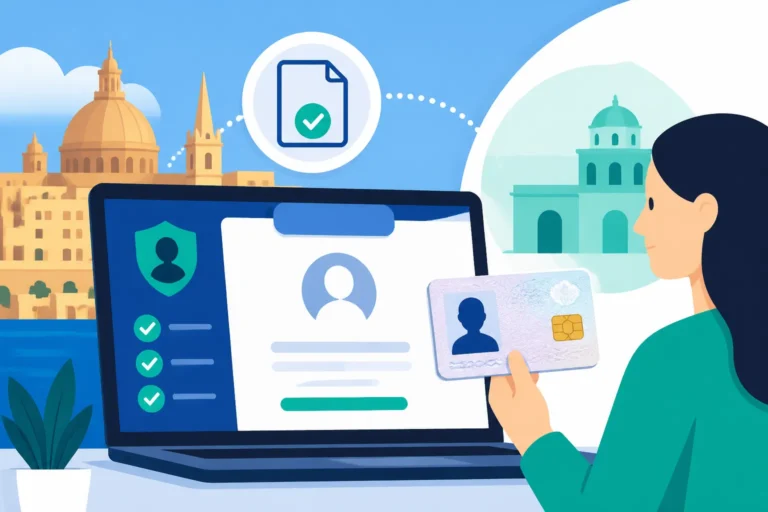
- Booking an Appointment: In the past, you could sometimes walk in, but these days, booking an appointment online through the Identità portal is highly recommended, if not mandatory. The system for booking can be a bit of a challenge, with slots filling up quickly, especially in peak seasons. Be patient and persistent. You'll likely need to select the "EU/EEA/Swiss Nationals" category. More details on this can be found in Applying for an eResidence Document Through the Identità Portal.
- The Submission: Head to the Identità offices in Marsa (or Gozo if you're applying there) on your appointment day. Arrive early, even if you have an appointment. There can still be queues, and you want to be calm and prepared. Present your meticulously organised documents to the case officer. They will review everything, and if anything is missing or incorrect, they will send you away to fix it. This is why preparation is key!
- Biometrics: Assuming your documents are in order, you'll then proceed to have your fingerprints taken and a digital photograph captured for your eResidence card. This is a standard part of the process for security and identification. Learn more about this in Biometrics and Collecting Your eResidence Card in Malta.
- The Waiting Game: After submission and biometrics, it’s a waiting game. Identità processing times can vary widely. Sometimes it’s a few weeks, sometimes a few months. You'll be given a receipt or reference number. This receipt can sometimes serve as temporary proof of application for things like getting a temporary tax number or starting employment, but it won't replace the physical card for everything. Keep it safe!
- Collection: Once your eResidence card is ready, Identità will typically notify you via SMS or email to come and collect it from their offices. This is the moment of triumph! You officially have your Maltese eResidence card. For details on collection, check out Getting Your Maltese eResidence Card and ID Number.
Throughout this process, remember that patience is a virtue, and politeness goes a long way. The staff at Identità deal with a huge volume of applications, and a friendly, prepared approach can make a difference.
The Benefits and Ramifications of Having (or Not Having) Your eResidence Card
Having that shiny eResidence card isn't just about ticking a box; it's about seamlessly integrating into life here and ensuring you don't hit unexpected hurdles. Conversely, not having it can turn simple tasks into monumental frustrations.
Unlocking Malta's Public Services and Integration
Once you have your eResidence card and, by extension, your Maltese ID card number, a whole new world of services and entitlements opens up.
- Healthcare: This is a big one. While EU citizens can use their EHIC for emergencies, for long-term living and accessing Malta's public healthcare system, you need to be properly registered. Your eResidence status, combined with paying social security contributions (if employed), entitles you to free or subsidised public healthcare. This allows you to Registering with a Health Centre and Choosing a GP in Malta, access Mater Dei Hospital services, and potentially benefit from the POYC (Pharmacy of Your Choice) scheme for free medicines. For a deeper dive into how this all works, see Healthcare in Malta for Foreign Residents: The Complete System Guide (2027).
- Banking: Opening a proper Maltese bank account with local banks like BOV, HSBC, or APS is notoriously challenging for newcomers, and a valid eResidence card is almost always a non-negotiable requirement. Without it, you might be stuck with international digital banks like Revolut, which are great but don't always cover all local banking needs, especially for things like mortgages or certain financial services. For more on this, refer to How to Open a Maltese Bank Account as a Newcomer.
- Social Security and Benefits: Your eResidence status is fundamental for registering for social security contributions, which are mandatory if you're working. These contributions don't just entitle you to healthcare; they also cover potential sickness benefits, maternity/paternity benefits, and contribute towards your future state pension. You can learn more about this in Social Security Contributions in Malta: Classes, Rates, and Benefits.
- Education: If you have children, enrolling them in Malta's state schools will require proof of your family's residence status.
- Taxation: While your employer will deduct tax at source (FSS), having your eResidence card simplifies getting your Maltese Tax Identification Number (TIN) and ensures you're correctly registered with the Commissioner for Revenue for things like filing annual tax returns. This is essential, especially if you have other income or need to claim deductions. Details on this are covered in Filing Your Maltese Tax Return: The CFR, FS3, and TA22/TA24.
- Travel: While you can travel within the Schengen Area with your passport, your eResidence card can sometimes expedite processes or act as supplementary ID when abroad within the EU.
Potential Issues Without Proper Registration
Living in Malta without formally registering your residence beyond the 90-day period can lead to significant headaches, even if it feels like you're "getting away with it" for a while.
- Legal Non-Compliance: After 90 days, you are technically in violation of Maltese immigration law if you haven't applied for residence. While enforcement might not be immediate or dramatic, it can cause problems if your status comes under scrutiny.
- Bureaucratic Roadblocks: You'll find it incredibly difficult to engage with any official services. Landlords might not be able to register your lease with the Housing Authority, making your rental agreement less secure. Utility providers (ARMS) might charge you at higher commercial rates instead of residential rates. Employers might face issues with Jobsplus if your documentation isn't complete, potentially affecting your employment.
- Healthcare Vulnerability: Relying solely on your EHIC for extended periods is risky. It's designed for temporary stays and medically necessary treatment, not as a substitute for being integrated into the local healthcare system. If you face a long-term illness or need ongoing specialist care, not having your proper entitlement could leave you with substantial bills. You can ask "Is Emergency Treatment at Mater Dei Free for Everyone in Malta?" but for ongoing care, it's not the same.
- Financial Complications: As mentioned, banking becomes a nightmare. Trying to get a local credit card, a loan, or even just direct debits set up can be impossible. This impacts your ability to manage your finances efficiently in Malta.
- Future Residence Applications: If you eventually want to apply for Long-Term Residence Status After Five Years in Malta, any periods of unregistered stay could complicate or delay your application, as you need to demonstrate continuous legal residence.
In short, while the idea of free movement is wonderful, respecting the administrative requirements of your chosen EU country is vital for your own peace of mind and practical living. Don't let the initial ease lull you into a false sense of security; get that eResidence card sorted!
Navigating the Renewal and Keeping Your Status Valid
Getting your first eResidence card is a significant step, but it’s not a one-and-done deal for most. These documents have expiry dates, and keeping your status valid is just as important as obtaining it initially. This involves understanding when and how to renew, and ensuring all your details remain up-to-date with Identità.
When and How to Renew Your Residence Document
Your eResidence card will have an expiry date, usually 5 years for most EU citizens. It's paramount that you initiate the renewal process before your current card expires. Don't leave it to the last minute; give yourself at least 2-3 months buffer, as processing times can be unpredictable, and you don't want to be caught in a limbo with an expired card.
The renewal process for EU citizens is largely similar to the initial application, but usually a bit smoother since Identità already has your initial records. You will typically need:
- Your expiring eResidence card.
- Your valid passport or national ID card.
- Updated proof of accommodation: A new rental agreement or proof of ownership if you’ve moved.
- Updated proof of financial means/employment/study: Recent employment contract, payslips, bank statements, or university enrolment letter, depending on your status.
- New application forms, downloaded from Identità’s website.
The procedure involves booking another appointment online, submitting your documents, undergoing biometrics again (fingerprints and photo), and then waiting for your new card. It’s essentially a re-validation of your eligibility to reside in Malta.
Life circumstances can change between renewals. If you’ve lost your job, moved houses, or changed your civil status, these changes will need to be reflected in your renewal application. For instance, if you’ve lost your job, you might need to show proof of sufficient funds to support yourself while you look for new employment. What happens to your permit if you lose your job in Malta is a serious consideration that Identità will assess during renewal. It’s always best to be transparent and provide all necessary supporting documentation.
Crucially, it is your responsibility to keep Identità informed of any significant changes to your circumstances. This includes moving to a new address. When you change residence, you must inform Identità and get your address updated on their system and, eventually, on your eResidence card. Failing to update your address and status with Identità in Malta could lead to delays or issues with future renewals or accessing services, as their records will be outdated. Staying proactive and organised will save you a lot of grief in the long run.
Disclaimer
The information provided in this guide is for general informational purposes only and does not constitute legal or immigration advice. While every effort has been made to ensure accuracy, regulations and procedures in Malta can change. Always consult the official websites of Identità and other relevant Maltese authorities, or seek professional legal or immigration advice, for the most up-to-date and specific information pertaining to your individual circumstances.