How Do I Register for Free Healthcare in Malta?
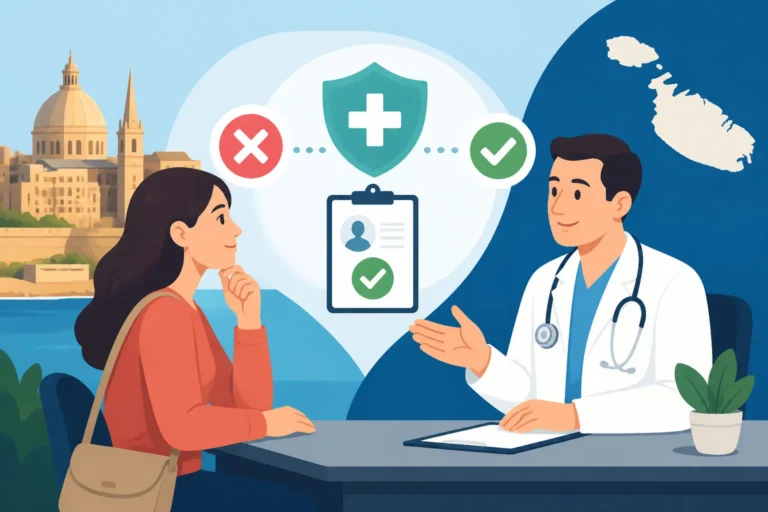
One of the most stressful parts of moving to Malta is that nagging "what if" in the back of your mind regarding getting sick before you are officially in the system. I remember sitting in my first apartment in Sliema, clutching a stack of papers and wondering if a sudden fever would cost me a month's rent. This guide solves the confusion by walking you through the exact steps to register for free public healthcare in Malta.
Understanding the Foundation of Your Health Rights
Before you start printing out forms, you have to understand that free healthcare in Malta is not based on your physical presence alone; it is almost entirely tied to your Social Security contributions. Whether you are an EU national or a Third Country National (TCN), the gatekeeper to the public wards of Mater Dei is the Social Security system. If you are employed by a Maltese company, your employer deducts a portion of your salary every month for "NI" (National Insurance). These contributions are what unlock the door to free GP visits at Health Centres and emergency care at the hospital.
For many newcomers, there is a dangerous misconception that simply having a residence card entitles you to free care. This isn't strictly true. You need to prove to the Entitlement Unit that you are an active contributor to the local economy or that you have transferred your rights from another EU member state. If you are a freelancer or working for a foreign company, the rules change slightly. You will likely be paying Class 2 contributions, which you must set up yourself through the Commissioner for Revenue. Understanding How Malta's Public Healthcare Works: Entitlement, Contributions, and Costs is the first step in realizing where you fit into this bureaucratic puzzle.
If you are an EU citizen who has retired to Malta, your path is slightly different. You will need the S1 form from your home country, which proves that your home nation will reimburse Malta for your care. Without this form, the Maltese authorities will expect you to have private coverage. It is a meticulous system, but once you are in, the level of care is remarkably high, provided you can navigate the initial paperwork mountain.
Navigating the Entitlement Unit and the eResidence Requirement
The real work happens at the Entitlement Unit, located on the grounds of St. Luke’s Hospital in Gwardamanġa. This isn't a place you just "stumble upon." You have to be intentional. Before you even think about visiting, you must have your Maltese ID card, commonly known as the eResidence card. In my experience, this is the biggest bottleneck. You cannot register for health entitlement without that ID number starting with a 'G' or 'L'.
While you are waiting for your ID card to be processed by Identità—which can sometimes take weeks or even months—you are essentially in a "health limbo." This is why many veteran expats recommend having a backup plan. I personally used SafetyWing during my first three months because the Maltese system simply doesn't recognize you until that plastic card is in your hand. It provides a necessary safety net for those "in-between" times when you are living in Malta but aren't yet "official."
Once you have your ID card, you need to gather your "Evidence of Entitlement." For workers, this is usually your recent payslips showing NI deductions or a letter from your employer. For those who are self-employed, you will need to show your registration with Jobsplus and your recent Social Security receipts. You can find more detail on this in the guide on How to Register for Health Entitlement with the Entitlement Unit in Malta. When you visit the office, be prepared for a wait. Bring a book, your patience, and every single document you think you might need. If you are missing one paper, they will likely send you home, and you’ll have to start the journey to Gwardamanġa all over again.
Essential Documentation for Different Residency Statuses
The list of required documents varies significantly depending on your specific situation. To make this easier, I have broken down the core requirements for the most common groups of expats. If you belong to a household, remember that your entitlement often extends to your family members, but they must be registered individually as dependents.
| Resident Category | Key Document Required | Authority to Visit |
|---|---|---|
| EU Employee | Latest FS3 or 3 months of payslips | Entitlement Unit |
| Non-EU Employee | Single Permit (Work/Residence Card) | Entitlement Unit |
| EU Retiree | S1 Form from home country | Entitlement Unit |
| Self-Employed | Jobsplus Registration & Social Security Receipts | CFR / Entitlement Unit |
| Students | Proof of Enrollment & Private Insurance | Identità |
| Digital Nomads | Proof of Remote Income | SafetyWing / Identità |
It is important to note that Getting Your Maltese ID Card Number: The Key to Accessing Healthcare is a non-negotiable first step. Even if you have been paying social security for months, the Entitlement Unit cannot link those payments to a health profile without that unique ID number. For those on the Nomad Residence Permit, the situation is unique. Because you aren't paying Maltese Social Security, you are generally not entitled to free public healthcare. For this group, SafetyWing is often the go-to solution because it fulfills the visa requirement for health insurance while providing the coverage you need at Mater Dei or private clinics like St. James.
Activating Your Access at Local Health Centres
After the Entitlement Unit stamps your papers and issues your Certificate of Entitlement, you might think you are done. Not quite. The next step is a more localized one. You need to "activate" your presence at your local Health Centre (known locally as a 'Berġa' or 'Ċentru tas-Saħħa'). Malta is divided into catchment areas, and you cannot simply walk into any health centre for non-emergency care. You must go to the one assigned to your town of residence.
When you go to the health centre for the first time, take your Certificate of Entitlement and your ID card. Ask the reception desk to register you in their system. This is where you will go for free GP consultations, blood tests, and basic nursing care. I highly recommend Registering with a Health Centre and Choosing a GP in Malta as soon as you get your papers. Do not wait until you are sick. If you show up with a 39-degree fever and you aren't in their local computer system, the administrative friction will be the last thing you want to deal with.
Once registered, you can start using the "myHealth" portal. This is a fantastic digital service that allows you to see your records, lab results, and appointments online. It is one of the more modern aspects of the Maltese system that often surprises expats. Setting this up early by Booking Appointments and Using myHealth Online in Malta will save you countless hours of sitting in waiting rooms just to ask for a result.
Specialist Referrals and the Public Hospital Path
The Maltese system operates on a "gatekeeper" model. This means you cannot simply book an appointment with a cardiologist or a dermatologist at Mater Dei hospital on your own. You must first see a GP at your local health centre. If the GP determines you need a specialist, they will write a referral. This referral is then sent to the central hospital system, and you will receive an appointment via mail.
Understanding How the Specialist Referral System Works in Malta's Public Hospitals is vital because the wait times can be significant. For non-urgent issues, you might wait several months for an appointment. This is why many expats choose a hybrid approach. They use the public system for emergencies and long-term chronic care but maintain a policy with a provider like SafetyWing to access private specialists when they need a consultation within days rather than months.
If you live in more remote areas or on the sister island, you should check Which Health Centre Do I Go to After Moving to Malta? to ensure you are heading to the right location. For those in Gozo, the process is similar but centered around the Gozo General Hospital in Victoria. The administrative loop of getting your entitlement confirmed remains the same; you just deal with a different set of local offices.
Covering Your Family and Dealing with Renewals
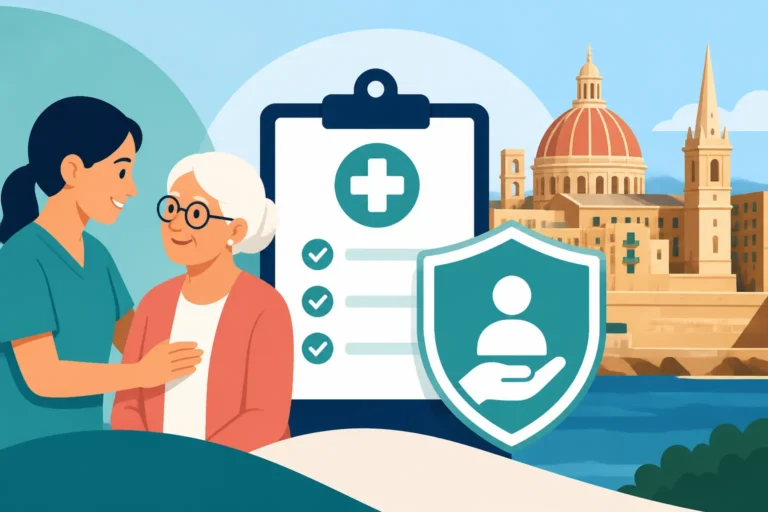
If you have moved to Malta with a spouse or children, you will naturally want to ensure they are covered too. If you are the primary breadwinner paying Social Security, your dependents are generally entitled to the same care. However, you must proactively register them. You will need marriage certificates and birth certificates (translated into English if necessary) to prove the relationship at the Entitlement Unit.
One thing that often catches people off guard is the expiry date of their health entitlement. Your access to free healthcare is usually tied to the validity of your residence permit. When you renew your permit, you often have to re-verify your entitlement. Many newcomers get a "bill" from Mater Dei because they forgot to update their records after their permit was renewed. Always check Can I Re-register for Healthcare After Renewing My Maltese Permit? to stay ahead of the deadlines.
For those who are self-employed, the burden of proof is higher. You must ensure your Social Security payments are up to date, as any gap in payment can lead to a suspension of your health rights. We dive deeper into this in our section on Do Self-Employed People Get Health Entitlement in Malta? to help you avoid any nasty surprises at the pharmacy or the clinic.
Managing Medications and the POYC Scheme
Once you are registered for free healthcare, you may also be eligible for free medications, but only for specific chronic conditions. This is handled through the "Pharmacy of Your Choice" (POYC) scheme. It isn't a "free-for-all" for any prescription; it is strictly for conditions listed under what the Maltese call "Schedule V" (the Yellow Card) or "Schedule II" (the Pink Card).
If you have a chronic condition like asthma, diabetes, or hypertension, your specialist at Mater Dei will help you apply for these cards. Once you have the card, you can pick up your medication for free at a local pharmacy near your home. It’s a brilliant system that saves residents thousands of euros, but it does require that initial specialist referral from the public system. If you are seeing a private doctor, they cannot directly enroll you in the POYC scheme; they must refer you into the public system first.
For newcomers who are still waiting for their POYC cards or whose medications aren't covered, the costs can add up. This is another reason why having flexible coverage is useful. While you are navigating the months-long process of getting a "Yellow Card," having a plan like SafetyWing can help bridge the gap, especially if your condition requires expensive maintenance drugs that aren't yet approved for you by the state.
Summary of the Registration Workflow
To keep your move as smooth as possible, follow this sequence:
- Apply for your eResidence card immediately upon arrival.
- Ensure your employer has registered you for Social Security (or do it yourself if self-employed).
- Gather your payslips and ID card and visit the Entitlement Unit in Gwardamanġa.
- Take your "Certificate of Entitlement" to your local Health Centre to register in their computer system.
- Sign up for the myHealth portal to manage your records digitally.
The bureaucracy in Malta can feel slow, and the "Island Time" factor is very real. You might find yourself frustrated by the lack of digital integration between different departments. Validating your frustrations is part of the process—everyone goes through it. Just remember that once the paperwork is done, you have access to one of the best-ranked healthcare systems in Europe.
Disclaimer on Medical and Legal Advice
This guide is intended for informational purposes only and is based on personal experiences and general knowledge of the Maltese administrative system. Healthcare regulations, entitlement criteria, and residency laws in Malta are subject to change. This content does not constitute professional medical or legal advice. You should always consult with the official Entitlement Unit, the Department of Health, or a qualified legal professional to verify your specific eligibility and requirements. The author and publisher are not responsible for any actions taken based on the information provided in this article.