How Do I Qualify for Free Chronic-Disease Medicines in Malta?
Moving to Malta with a lifelong health condition can feel like an administrative minefield when you are just trying to keep your prescription filled. I remember the panic of staring at my dwindling supply of insulin while navigating my first residence permit application, wondering if I would have to pay out of pocket forever. This guide breaks down exactly how to qualify for free chronic-disease medication through the Maltese public system, ensuring your health remains a priority without draining your bank account.
Understanding the Chronic Disease Landscape in Malta
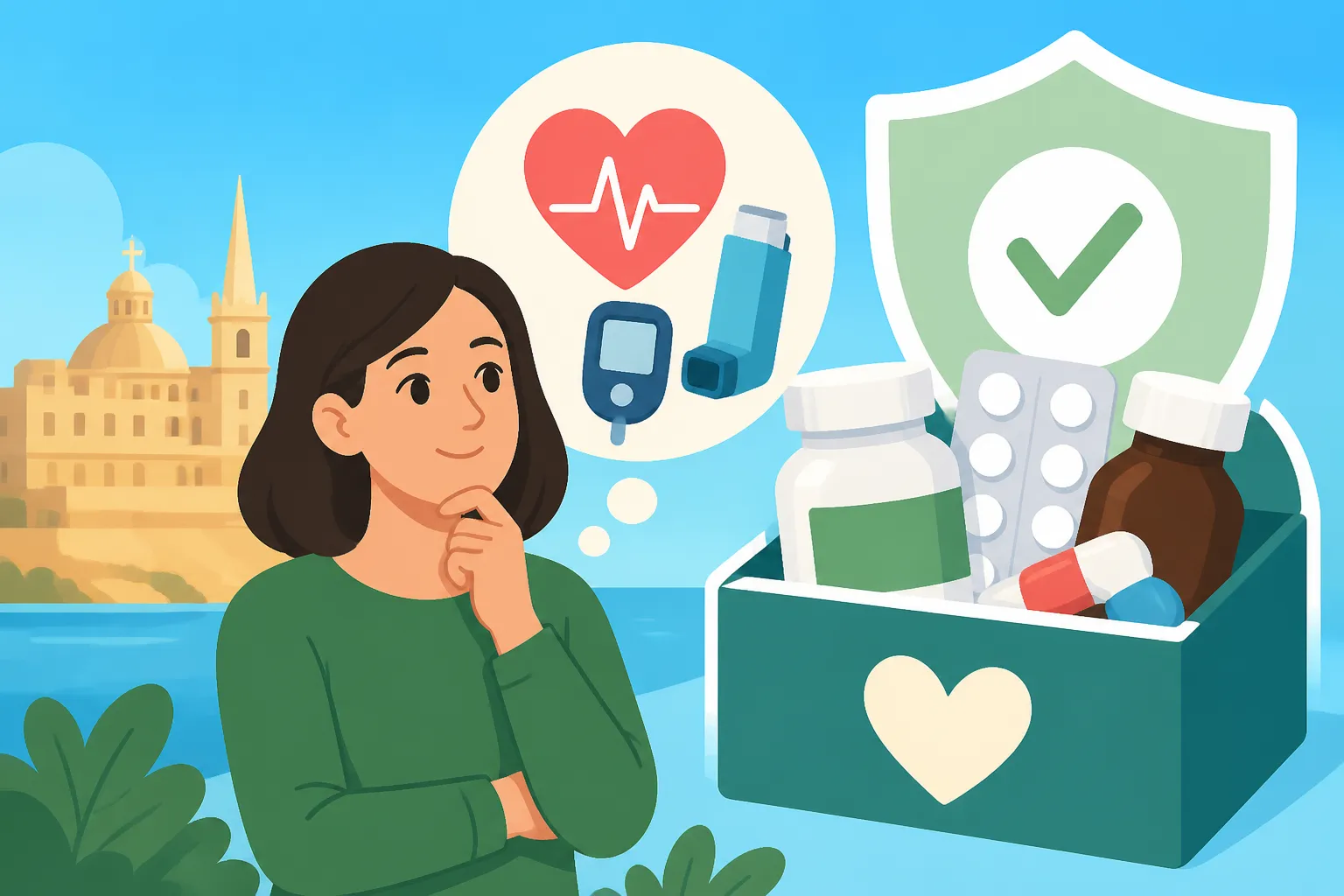
Malta operates a robust public healthcare system that, for many, is the envy of larger nations. However, it functions on a very specific set of rules regarding "entitlement." When we talk about free medicines for chronic conditions, we are usually talking about the "Schedule V" and "Schedule II" lists. These are legal frameworks that dictate which conditions are covered by the state, regardless of your income, and which are means-tested. For most expats, the "Yellow Card" (Schedule V) is the most relevant, as it covers a vast range of chronic illnesses from diabetes and hypertension to more complex neurological conditions.
The philosophy here is "free at the point of use," but that only kicks in once you have the physical card in your hand. Until then, you are essentially a guest in the system. The transition from being a newcomer to a registered patient is where most of the friction occurs. It is not enough to simply have a diagnosis from your home country; the Maltese health authorities require a local validation process that involves specific state-recognized consultants. This is why many people, especially digital nomads or those on shorter stays, often rely on international options like SafetyWing to bridge the gap while they wait for their local entitlement to be processed.
It is also vital to realize that "free" in Malta refers to the medicines listed on the government’s formulary. If you are used to a specific brand-name drug that isn't on the list, the state will offer you the generic equivalent or the closest therapeutic alternative. You can't always pick and choose the specific brand, but the quality of the generics provided is strictly regulated by EU standards. Understanding this early on will save you a lot of frustration at the pharmacy counter.
The Eligibility Criteria: Who Actually Qualifies
Qualifying for free chronic-disease medicines isn't just about being sick; it’s about your legal standing in the country. To even start the process, you must be a resident of Malta. This usually means you hold a valid eResidence card or, at the very least, have a formal application in progress with Identità. If you are an EU citizen, your path is slightly smoother, but if you are a Third Country National (TCN), your entitlement is almost always tied to your social security contributions.
You must be paying Class 1 or Class 2 social security contributions to unlock the full suite of public health benefits. To understand the nuances of this, it is worth reading about Health Entitlement in Malta: How Social Security Contributions Unlock Free Care. If you are working for a Maltese company, these are deducted from your salary automatically. If you are self-employed, you are responsible for paying them yourself every four months. Without these contributions, the state generally expects you to have private cover or pay the full "non-resident" rate for any treatment or medicine.
There are exceptions, of course. EU citizens might use an S1 form to transfer rights from their home country, particularly retirees. However, for the average working expat, the rule is simple: no NI (National Insurance) contributions usually means no free medicines. This is another reason why having a backup like SafetyWing is crucial during those first few months when your NI history is still being established and you haven't yet received your official entitlement letter. You should also ensure you have completed the basics of Getting Your Maltese ID Card Number: The Key to Accessing Healthcare before attempting to apply for a chronic disease card.
The Step-by-Step Application Process
The process of getting your "Yellow Card" (Schedule V) is a multi-stage journey that begins in a consultant's office and ends at your local pharmacy. You cannot simply take a prescription from your GP to the health center and expect free meds. The system requires a specialist’s signature.
Stage 1: The Consultant's Referral
First, you need to see a consultant who is registered with the Maltese public health system. You can get a referral from your local Health Centre GP to see a specialist at Mater Dei Hospital, or you can see a specialist privately. However, even if you see them privately, the consultant must fill out the specific "Schedule V" application form. They will document your diagnosis, your current treatment plan, and the specific medications you require. If you are wondering about the broader system, check out Healthcare in Malta for Foreign Residents: The Complete System Guide (2027).
Stage 2: Submission to the Entitlement Unit
Once you have the signed form from the consultant, you (or the consultant's clinic) must submit it to the Health Entitlement Unit. In many cases, the consultant at Mater Dei will handle the internal submission, but if you see a private specialist, you may need to take the paperwork to the Entitlement Unit yourself. This unit verifies your residency and your NI contributions. For more details on this specific office, see The Entitlement Unit: Sorting Out Your Right to Treatment in Malta.
Stage 3: The Waiting Game and The Card
After submission, there is usually a waiting period of several weeks. During this time, you will still need to pay for your medications privately. Once approved, you will receive a plastic card in the mail—yellow for Schedule V conditions or pink for Schedule II (means-tested) conditions. This card is your golden ticket. It lists exactly which medications you are entitled to receive for free. You must then take this card to a pharmacy that participates in the POYC scheme to register.
Using the POYC Scheme at Your Local Pharmacy
The Pharmacy of Your Choice (POYC) scheme is a brilliant piece of Maltese infrastructure. Instead of trekking to a central hospital pharmacy every month, you can collect your free chronic medications from a local pharmacy of your choosing. This makes life significantly easier, as you can pick a shop right next to your home or office.
To start, you take your new Yellow Card and your ID card to your preferred pharmacy. They will register you in their system. From that point on, the government "sends" your medicine to that specific pharmacy. You will usually be given a "voucher" or a digital entry that allows you to collect a certain amount of medicine periodically—typically every month or every two months. It is a very communal experience; you will get to know your local pharmacist well, and they often provide excellent advice on Managing a Chronic Condition in Malta: Schedule V Medicines and Care.
One thing to keep in mind is that the POYC scheme only covers what is on your card. If you get a sudden chest infection and need antibiotics, those are not "chronic" and you will likely have to pay for them unless you are currently an inpatient or meet very specific low-income criteria. For a deeper dive into how this all works, read The POYC Pharmacy of Your Choice Scheme: How to Collect Free Medicines.
Comparing Public Provision vs. Private Options
While the public system is excellent for long-term stability, it isn't always the fastest. If you are moving to Malta and need an immediate refill, the public system might not move fast enough to prevent a lapse in your treatment. This is where the private sector and international insurance come into play. Many expats choose to maintain private insurance, such as SafetyWing, to ensure they can see a specialist within days rather than months.
| Feature | Public System (Schedule V) | Private Healthcare / Insurance |
|---|---|---|
| Cost of Medicine | Free (for listed chronic conditions) | Paid out of pocket or reimbursed |
| Consultant Access | Can have long waiting lists | Usually within 24-72 hours |
| Brand Choice | Limited to government formulary | Full choice of available brands |
| Paperwork | Extensive local administrative steps | Standard claim forms |
| Coverage | Tied to NI contributions/residency | Tied to policy premiums |
If you have a complex condition that requires a very specific brand of medication not available on the public list, you might find yourself navigating Private Healthcare and Insurance in Malta: When You Need Cover. Even if you qualify for the Yellow Card, some people prefer the private route for the sheer speed of specialist access. Using a service like SafetyWing can provide peace of mind during the transition period or if you frequently travel outside of Malta, where your local entitlement won't follow you. It’s a bit like having a safety net while you wait for the government to finish weaving your permanent hammock.
Troubleshooting Common Hurdles for Expats
Even with a card in hand, things don't always go perfectly. The most common issue expats face is the "out of stock" scenario. Because Malta is a small island, supply chain issues can occasionally lead to shortages of certain medications. If your pharmacy tells you a medicine is out of stock, don't panic. Usually, the POYC department is aware and is working on a "central" supply. You might have to visit a different health center pharmacy or wait a few days for a new shipment. It is always wise to keep a two-week buffer of your meds if possible.
Another hurdle is permit renewal. Your health entitlement is often tied to the expiry date of your residence permit. When you renew your permit, you must often re-verify your status with the Entitlement Unit to ensure your card remains active. If you fail to do this, you might find your "free" status suspended. Always keep an eye on the dates and start your renewal process early. If you're wondering about costs during these gaps, check What Public Healthcare Costs in Malta: Free Services and Paid Extras.
Finally, if you are planning to move here, you should definitely read about Can I Bring My Regular Medication into Malta from Abroad? to ensure you have enough supply to last through the initial application phase. The bureaucracy moves at its own pace—often described as "island time"—so being prepared with your own supply and a solid insurance plan like SafetyWing is the smartest move you can make.
Practical Tips for Your First Six Months
The first few months are the most critical. You should arrive with at least three months of your current medication and a detailed letter from your home doctor. As soon as you get your social security number and your ID card application is submitted, book a private appointment with a consultant in Malta. This might cost you €60 to €100, but it gets the Schedule V paperwork started months earlier than waiting for a public Mater Dei appointment.
While you are waiting for the bureaucratic wheels to turn, don't forget to register with your local health center. Even if you don't have your Yellow Card yet, having a record in the system is vital. You can find more info on this at How Do I Register with a Health Centre in Malta?. By staying proactive and using a combination of the public system’s long-term benefits and the private sector’s immediate speed, you can manage your chronic condition with minimal stress.
Disclaimer
The information provided in this article is for educational and informational purposes only and does not constitute medical or legal advice. Healthcare regulations, entitlement criteria, and medication availability in Malta are subject to change. While we strive to provide accurate and up-to-date information, readers should always consult with the official Health Entitlement Unit, the POYC Department, or a qualified medical professional regarding their specific health needs and legal status in Malta. The author and publisher are not responsible for any actions taken based on the content of this guide.