Digital Banking and Money Apps in Malta: Revolut and Beyond
Moving to Malta often feels like stepping into a Mediterranean dream, until you encounter the administrative wall of opening a traditional bank account. For many expats, the weeks of waiting for appointments and the endless requests for certified documents are the first major hurdles of island life. This guide solves that frustration by detailing how digital banking and money apps provide an immediate, reliable alternative to help you hit the ground running.
The Frustrating Reality of Traditional Banking in Malta
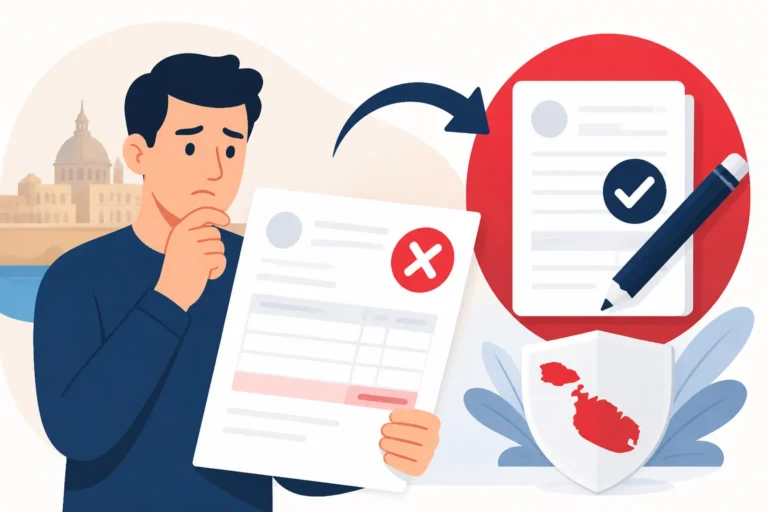
If you have just arrived in the Three Cities or the bustling hub of St. Julian’s, your first instinct is likely to walk into a local branch of Bank of Valletta (BOV) or HSBC. You expect a straightforward process, but the reality is often a bureaucratic marathon. Traditional banks in Malta are known for a rigorous and sometimes opaque onboarding process for foreign nationals. It is not uncommon to be told that the next available appointment for a "new account opening" is three or four weeks away. This is a significant problem when you need a local IBAN to receive your salary or to sign a lease for your new apartment.
The struggle doesn't end with the appointment. Even after you sit down with a representative, you might be asked for a reference letter from your previous bank, a formal work contract, and a valid eResidence card. For many newcomers, Opening a Bank Account in Malta: A Step-by-Step Guide reveals that without that physical ID card in hand, local banks might flatly refuse your application. This creates a "chicken and egg" scenario where you need a bank account to prove financial self-sufficiency for your residency, but you need residency to get the bank account.
The Documentation Overload
The sheer volume of paperwork required by Maltese retail banks is a frequent topic of conversation at expat meetups in Gzira or Sliema. You will likely be asked to provide proof of your professional background, the source of your wealth, and even utility bills from your previous country of residence. These documents often need to be translated or notarized, adding unexpected costs to your move. Why Maltese Banks Ask for So Much Documentation is often tied to Malta's strict compliance with EU anti-money laundering directives, which local banks implement with extreme caution.
Furthermore, the "Know Your Customer" (KYC) process can feel intrusive. You might find yourself explaining a small freelance payment from three years ago to a skeptical bank clerk. This level of scrutiny, while necessary from a regulatory standpoint, makes the process feel incredibly slow and unwelcoming for someone who simply wants to pay their rent and buy groceries. For those coming from countries with instant digital onboarding, this manual, paper-heavy approach is a genuine culture shock.
Why Expats Are Turning to Digital Alternatives
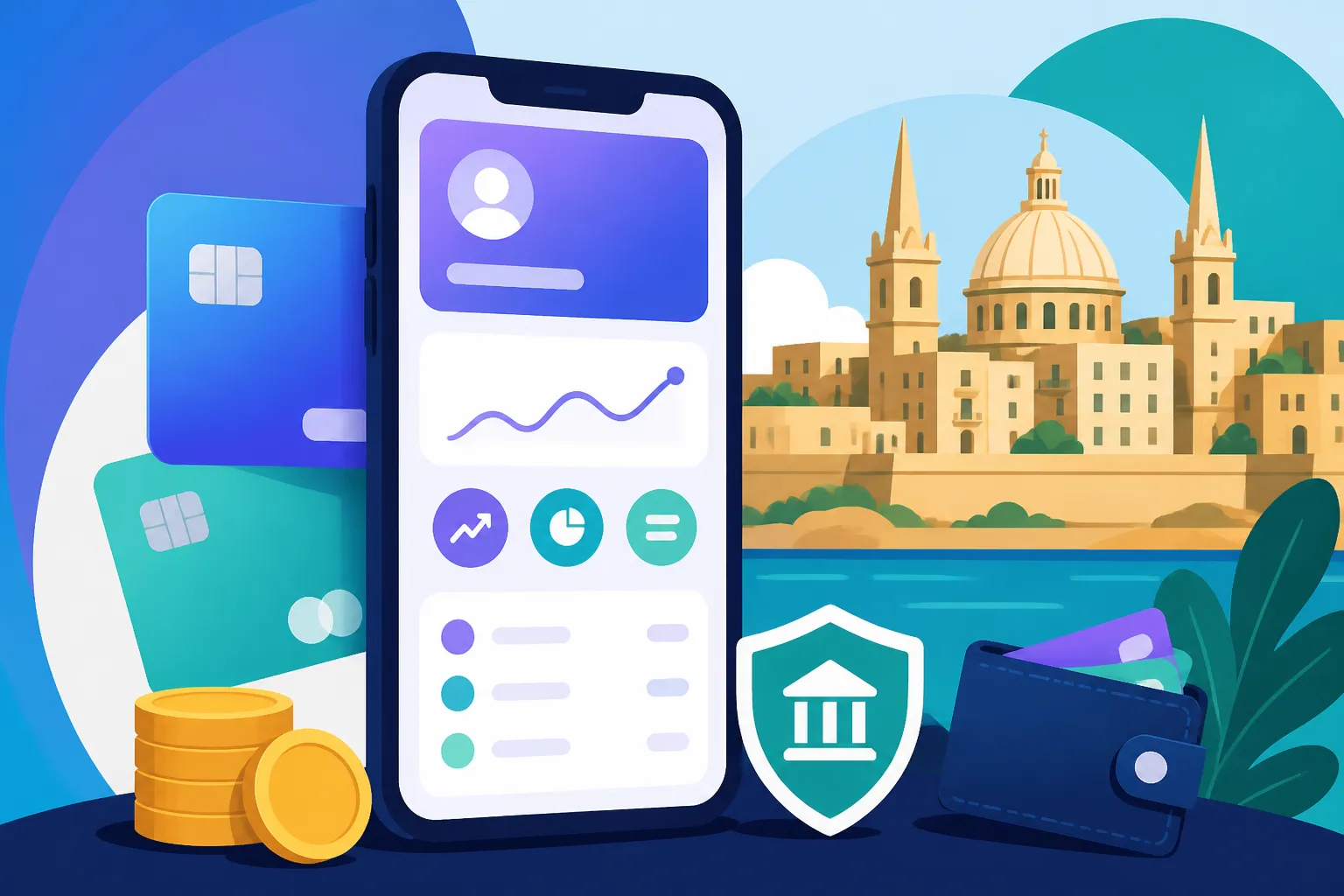
Because of these hurdles, almost every veteran expat in Malta will tell you the same thing: get a digital bank account before you even land at Luqa airport. Digital banks have revolutionized the "settling in" period. They allow you to bypass the physical branch visits and the weeks of waiting. With a smartphone and a passport, you can often have a functioning account with a European IBAN in less than ten minutes. This allows you to manage the Cost of Living in Malta: Budgeting for the Real Numbers from day one without carrying large amounts of cash.
The appeal of digital apps isn't just about the initial setup. The user interfaces are modern, the notifications are instant, and the ability to freeze a lost card with a single tap offers peace of mind that older Maltese banking systems are only just beginning to emulate. In an environment where administrative delays are the norm, having a financial tool that "just works" is an invaluable asset for your mental well-being during the move.
Revolut: The Unofficial Default Bank for Expats in Malta
In Malta, Revolut is so ubiquitous that it has almost become a verb. You will hear people say, "Just Revolut me the money for dinner," or "Do you have Revolut?" at Sunday markets and small cafes. While it is a Lithuanian-licensed bank, its popularity in Malta is unrivaled. For a new resident, it often serves as the primary bridge between their old life and their new Maltese financial identity. It provides a quick way to handle Cash, Cards, and Everyday Payments in Malta without the fees often associated with using a foreign-issued credit card at a local ATM.
Revolut's dominance in Malta is partly due to the speed of internal transfers. Because so many people on the island use it, sending money to a friend, a landlord, or even some small business owners is instantaneous and free. This "network effect" makes it an essential tool for social integration. If you are sharing a flat in Msida, your roommates will almost certainly expect you to split the utility bills via the app.
Why Everyone in Malta Asks for Your Revolut
The cultural integration of Revolut in Malta goes beyond just personal transfers. You will find that many small service providers, such as hair stylists, mechanics, or tutors, prefer being paid via the app because it avoids the high transaction fees associated with traditional point-of-sale (POS) terminals. It has effectively filled a gap in the market where traditional banking was too slow or too expensive for micro-transactions.
Additionally, the "Vaults" feature is widely used by expats to save for specific island goals, like a boat trip to Comino or a deposit on a future apartment. The ability to round up spare change from your daily Cisk or pastizzi purchases and put it into a savings pot is a simple but effective way to manage your budget. For many, it's the first time they feel they have real-time control over their spending in a new currency environment.
Instant Transfers and Local Utility Payments
One of the biggest wins for Revolut users in Malta is the ability to handle SEPA instant transfers. When you finally get your ARMS Utility Bills for electricity and water, you can often pay them via bank transfer directly from the app. While some older systems in Malta still prefer local bank checks or over-the-counter payments at MaltaPost, the shift towards digital acceptance is growing, fueled by the sheer volume of Revolut users.
Moreover, if you are working for a Maltese company, most employers are now comfortable sending salaries to a Revolut IBAN. Since Revolut migrated many of its users to local branches with specific European protections, the "stigma" of using a "travel card" for your main salary has largely disappeared. This means you can often bypass the need for a local bank account entirely for the first few months, or even years, of your residency.
The Pros and Cons of Going Fully Revolut
While the convenience is unmatched, there are risks to relying 100% on a single digital app. In the past, some users have experienced sudden account freezes due to automated compliance checks. While these are usually resolved, being stuck in Malta with no access to funds because an algorithm flagged a transfer can be a nightmare. This is why many expats choose to use Wise as a secondary backup, ensuring they have multiple ways to access their capital.
Another consideration is that while Revolut is great for daily spending, it doesn't offer the same depth of local integration for things like home loans or specialized insurance products. If you eventually decide to buy property, as discussed in How Big a Deposit Do I Need to Buy Property in Malta?, you will almost certainly need to establish a relationship with a traditional Maltese bank. Revolut is your "sprint" tool for arrival, but traditional banks are often your "marathon" partners for long-term stability.
Wise and Beyond: Diversifying Your Digital Wallet
While Revolut wins on social popularity, Wise (formerly TransferWise) is the gold standard for expats who need to move significant amounts of money across borders. If you are moving your life savings from the UK, the US, or Australia to fund your new life in the Mediterranean, using a traditional bank for the transfer is a costly mistake. Wise offers the mid-market exchange rate with transparent fees, saving you hundreds, if not thousands, of Euros compared to the "hidden" spreads used by retail banks.
Using Wise in conjunction with other apps allows you to build a robust financial "stack." You might use Wise to receive a foreign pension or freelance income, and then move smaller amounts to a daily spending card. This strategy is particularly effective for those who want to avoid high fees when Sending Money To and From Malta Without High Fees. It also provides a level of redundancy; if one app has a technical glitch, your entire financial life doesn't grind to a halt.
Wise for the International Mover
For those who are not yet tax residents of Malta, Wise provides a multi-currency account that is incredibly flexible. You can hold balances in over 40 currencies, which is a lifesaver if you are still paying a mortgage in your home country while earning in Euros. The ability to set up "Auto-conversions" when the exchange rate hits a certain target is a pro-level move for savvy expats who want to make their money go further in the local economy.
Furthermore, Wise is often praised for its "business" accounts. If you are arriving as a digital nomad or setting up as a freelancer, as detailed in How Do I Set Up as a Freelancer in Malta?, Wise Business is much easier to open than a local commercial account. It integrates seamlessly with accounting software, making the eventual tax season much less stressful.
N26 and Bunq: European Alternatives
While less common than Revolut, N26 and Bunq are excellent alternatives for those who want a more "traditional" digital banking experience. N26, based in Germany, offers a very clean, bank-like experience with a full European banking license. Many expats find their customer service to be slightly more responsive than Revolut's. Bunq, the Dutch challenger bank, is popular with the environmentally conscious, as they offer features like tree-planting for every Euro spent.
These apps are particularly useful if you find that a specific Maltese service provider’s system doesn't play well with a particular IBAN. Having an N26 account alongside a local option gives you a "Plan B" that is still within the SEPA zone. It is also worth noting that these banks often have better protection schemes for larger deposits, which is a consideration if you are keeping your house-buying fund in a digital account.
Integrating Digital Apps with Local Tax Obligations
A common mistake new arrivals make is assuming that because their money is in a "digital" or "foreign" app, the Maltese tax authorities (CFR) don't need to know about it. This is where professional services like Taxes for Expats become invaluable. Malta has specific rules about "remittance-based" taxation for non-domiciled residents. If you are bringing money into Malta via your Revolut or Wise card to pay for your daily life, that income may be taxable in Malta.
Understanding The Remittance Basis: Taxing Only What You Bring Into Malta is crucial. You should keep clear records of which funds were "clean capital" (money you earned before moving to Malta) and which are "income." Digital apps make this easier because of their searchable transaction histories, but you still need to be diligent. Using a service like Taxes for Expats ensures that you are reporting correctly and taking advantage of double taxation treaties, preventing you from being taxed twice on the same Euro.
Comparing Digital Banking vs. Local Maltese Banks
To make the best decision for your move, it is helpful to see how these options stack up against each other in the context of Maltese daily life. While digital banks win on speed, local banks like BOV, HSBC, APS, and Lombard still hold the keys to certain "institutional" doors in Malta.
| Feature | Digital Apps (Revolut/Wise) | Local Maltese Banks |
|---|---|---|
| Account Opening Time | 5-10 Minutes | 2-6 Weeks |
| Physical Branches | None | Numerous across Malta & Gozo |
| Customer Support | In-app Chat (Can be slow) | In-person / Phone |
| Monthly Fees | Often €0 for Basic | €0 to €10+ |
| Mortgages/Loans | Generally Not Available | Readily Available (subject to criteria) |
| Checkbooks | No | Yes (still used for some rent/deposits) |
| ATM Access | Free up to limits | Usually free at own bank's ATMs |
Fee Structures and Hidden Costs
One of the most significant differences lies in the fee transparency. Local banks in Malta often charge for "maintenance," or for basic services like internet banking tokens. While these fees are small (often a few Euros a month), they can feel annoying compared to the "forever free" tier of most digital apps. However, be wary of "fair usage" limits on digital cards. If you withdraw more than €200-€400 a month from an ATM in Valletta, your digital bank might start charging a 2% fee.
For the budget-conscious, Are There Monthly Fees on Maltese Bank Accounts? is a must-read. If you are an employee, your company might have a deal with a specific local bank that waives these fees. On the other hand, for international transfers, the "hidden" cost of a poor exchange rate at a local bank will almost always outweigh the monthly fee of a digital app's "Premium" or "Metal" plan.
Customer Support and Physical Presence
There is a specific comfort in being able to walk into a branch in Mosta or Victoria and speak to a human being when something goes wrong. If your card is swallowed by an ATM or if you suspect fraud, the digital app's chat-based support can sometimes feel impersonal and frustrating. Local banks offer a level of "accountability" that many people still value, especially when dealing with large sums of money.
However, the "physical presence" of local banks also means dealing with "island time." Opening hours are often restricted (many branches close at 1:30 PM or 2:00 PM), and queues can be long. For a busy professional working in the iGaming or Fintech sectors, taking a half-day off work just to update a physical address at a bank is a major inconvenience. Digital apps allow you to do all of this at midnight from your couch.
Safety, Regulation, and the Deposit Guarantee Scheme
Safety is the number one concern for most people. Local Maltese banks are covered by the Malta Depositor Compensation Scheme, which protects deposits up to €100,000. Digital banks like Revolut (with its European banking license) and N26 are covered by similar schemes in their respective headquarters (Lithuania and Germany). This means that from a purely regulatory standpoint, your money is just as safe in a licensed digital bank as it is in a local one.
However, Wise operates as an Electronic Money Institution (EMI) in many jurisdictions, which means they "safeguard" your money in separate accounts rather than participating in a traditional deposit guarantee scheme. While still very safe, the mechanism of protection is different. It is vital to understand What Your Maltese Social Security Contributions Pay For and how your financial residency status impacts your overall protection within the EU framework.
Managing Your Finances in Malta: Practical Tips for Newcomers
Once you have your digital accounts set up, the next step is integrating them into the Maltese "ecosystem." The first big challenge is usually utilities. If you are renting a property, your landlord will likely keep the utility account in their name initially. To get the "residential rate" (which is significantly cheaper), you need to be registered at the property.
You can learn How Do I Register as a Residential Utility User in Malta? to ensure you aren't overpaying. Once registered, you will receive bills from ARMS Ltd. While you can pay these at any MaltaPost outlet with cash, the most efficient way is to use your digital bank’s SEPA transfer feature. Just ensure you include the account number and invoice number in the reference field, or the payment might get "lost" in the ARMS system for weeks.
Setting Up Direct Debits for ARMS and Utilities
Setting up a direct debit in Malta can be surprisingly manual. You often have to fill out a paper form and send it to the utility company. Some digital banks struggle with the specific "Direct Debit Mandate" system used by ARMS. If you find your Revolut direct debit is rejected, don't panic. It is often easier to simply pay the bill manually each month via the "Bill Pay" or "Bank Transfer" section of your app.
Keeping a close eye on these bills is essential, as Why Is My Electricity Bill So High in Malta? is a frequent complaint. Sometimes, it’s a leak or a faulty air conditioning unit, but often it’s because the "number of residents" isn't updated on the bill. Use your digital app’s "analytics" or "spending" features to track your utility costs over time; a sudden spike is your first warning that something is wrong.
Handling Your Salary and Social Security
When you start your job, your HR department will ask for your IBAN. If you are using a non-Maltese IBAN (like one starting with LT from Revolut or BE from Wise), your employer is legally required by EU law (SEPA Regulation) to accept it. This is known as "IBAN discrimination" if they refuse. However, some older payroll systems in Malta are hard-coded to only accept "MT" IBANs.
If your employer insists on a local account, you might have to start the local bank application process. In the meantime, ensure you understand How Much Social Security Do I Pay as an Employee in Malta?. These contributions are deducted at source from your salary, and they are what eventually unlock your right to healthcare and other benefits. Seeing these deductions on your payslip and tracking the net amount into your digital app helps you verify that your employer is following the law.
Transitioning from Digital to Local (When and Why)
Most expats find a "hybrid" model works best. They use Revolut for daily spending and splitting bills, Wise for international transfers and savings, and eventually, a local account at a bank like BOV or APS for "official" things. A local account is often a requirement if you want a Maltese credit card, or if you are looking to get a "Life Insurance" policy which is a mandatory requirement for a Maltese mortgage.
Think of your digital apps as your "survival kit" for the first 12 months. They allow you to move, eat, and pay rent without stress. Once you have your eResidence card and a stable work history, the doors to local banks will open much more easily. You won't be a "risky newcomer" anymore; you'll be a resident with a track record.
The Long-Term Financial Outlook for Expats
As you settle into island life—perhaps moving from a temporary rental in Bugibba to a long-term home in the quiet lanes of Zebbug—your financial needs will evolve. You will start thinking about the future: pensions, investments, and perhaps buying a "House of Character." Digital apps are great for the "now," but the long-term requires a bit more structure.
One area where digital apps are still catching up is in building a "local" credit history. While Malta doesn't have a centralized "Credit Score" in the same way the US or UK does, local banks look at your internal history with them when deciding on a loan. If you have been with BOV for three years and they can see your salary coming in and your rent going out, they are much more likely to approve your home loan than if you show up with three years of Revolut statements.
Impact on Creditworthiness and Home Loans
If your dream is to own a piece of Malta, you need to start preparing early. How Do Maltese Banks Decide How Much I Can Borrow? involves a deep dive into your debt-to-income ratio. While you can provide statements from digital banks as proof of income, some traditional bank managers are still "old school" and prefer seeing the money flowing through their own system.
A good strategy is to open a local savings account once you have your ID card and transfer a small amount there every month. This "seeds" the relationship. It shows the bank that you are a serious resident who intends to stay. By the time you are ready to apply for a mortgage, you are already a known entity in their system, which can significantly speed up the approval process.
Preparing for Tax Season as a Digital Banker
As the sun sets on your first full calendar year in Malta, the "Tax Man" will come calling. Between April and June, you will need to think about your tax return. If you have used multiple digital apps and moved money between different currencies, your "paper trail" can look like a spiderweb. This is another moment where Taxes for Expats can save you from a massive headache.
They can help you reconcile your foreign accounts with your Maltese obligations. Remember, Do I Need to File a Tax Return If I'm an Employee in Malta? depends on whether you have additional income outside your salary. If you have a "Side Hustle" paid into your Revolut, or if you are earning interest on a Wise savings pot, you must declare it. Being proactive about this prevents the CFR from sending you an "Estimate" (which is usually much higher than what you actually owe) and charging you interest on the difference.
Final Recommendations for a Smooth Move
The "Digital Banking" route is not just a convenience; for many, it is a necessity to survive the first few months in Malta. Start by downloading Revolut and Wise before you even pack your bags. Use Wise to transfer your initial relocation fund into Euros to avoid being slaughtered by bank exchange rates. Once you land, use Revolut for your daily coffee, your bus fare (until you get your free Tallinja Card), and for splitting those first few dinners with your new expat friends.
Keep your documents organized. Even though you are "banking digitally," the Maltese authorities will still want to see your physical eResidence Card and your work contract. Store digital copies of everything in a secure cloud folder. Malta is a beautiful place to live, and once you have the "money" side of things automated, you can spend less time worrying about IBANs and more time enjoying the sunset over the Dingli Cliffs.
Disclaimer
This guide is provided for informational purposes only and does not constitute financial, legal, or tax advice. Banking regulations and app features in Malta can change frequently. You should always verify current terms and conditions with the respective financial institutions. For specific tax advice, especially regarding international income and the remittance basis of taxation, we strongly recommend consulting with a qualified professional or a specialized service such as Taxes for Expats. Information regarding deposit guarantee schemes is subject to EU and national legislation and may vary based on the specific license held by each digital platform.