What Your Maltese Social Security Contributions Pay For
Many expats landing in Malta experience a moment of mild shock when they receive their first Maltese payslip. You see a deduction labeled "NI" or "Social Security" and realize a decent chunk of your salary is gone before it even hits your bank account. This guide solves the mystery of those deductions by explaining exactly what your Maltese social security contributions pay for, how they unlock essential services, and why this "tax" is actually your most important safety net on the islands.
Understanding the Maltese Social Security System
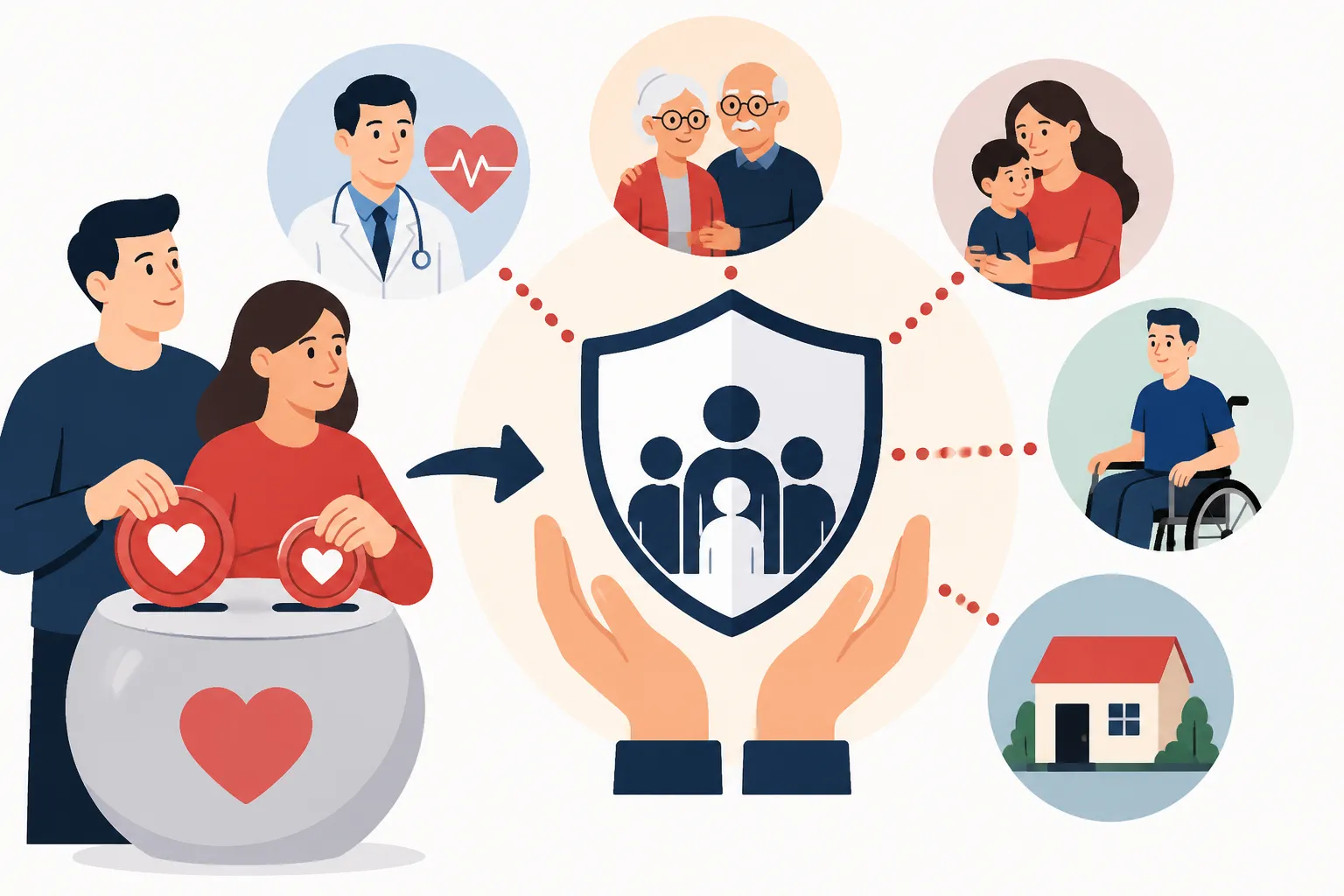
The Maltese social security system is built on a principle of solidarity. Unlike some countries where you might pay into a private pot that belongs only to you, the Maltese system is a "pay-as-you-go" structure. The money being deducted from your salary today is being used to fund the pensions of current retirees and the healthcare of the person sitting next to you in the waiting room at Mater Dei Hospital. In return, the system guarantees that when you need support—be it for a sudden illness, a new baby, or your own retirement—the funds will be there for you.
For a newcomer, the system can seem opaque. You are essentially paying an insurance premium to the state. This premium is mandatory for almost everyone working in Malta, regardless of whether you are an EU citizen or a third-country national. It is often the first step in your administrative journey, as your social security number is frequently the catalyst for obtaining other documents. Navigating this can be tricky, especially if you have complex tax obligations in your home country, which is why many expats consult specialists like Taxes for Expats to ensure their global income and local contributions are balanced correctly.
The Class 1 vs. Class 2 Distinction
In Malta, your contribution type is defined by your employment status. Class 1 contributions apply to employed persons. If you are working for a Maltese company, your employer is responsible for deducting your share (usually 10% of your basic salary, subject to a cap) and also paying an equivalent employer’s share. This is a "dual-pay" system that doubles the value entering the state coffers on your behalf. It’s important to check your payslip to ensure these are being recorded, as these weeks of contribution are what build your future entitlements.
Class 2 contributions are for the self-employed or "self-occupied" individuals. If you are freelancing or running your own business, you are responsible for the full 15% contribution yourself. This is often paid in three installments throughout the year (April, August, and December). Many freelancers moving to the island find this a bit of a hurdle, asking Do Self-Employed People Get Health Entitlement in Malta? to ensure they aren't paying into a void. The reality is that Class 2 contributors get almost all the same benefits as employees, with a few exceptions regarding unemployment benefits. For more granular detail on the rates, you can dive into Social Security Class 1 and Class 2 Contributions in Malta.
How Contributions Are Calculated and Capped
The amount you pay is not infinite. Malta uses a "bracket" system based on the year you were born and your current income. For those born after 1962, there is a maximum weekly contribution. Once your salary hits a certain threshold, the amount deducted for social security stops increasing. This is a relief for high earners in sectors like iGaming or Fintech, as it means their effective contribution rate actually drops as their salary rises.
However, you must be careful about "ghost" periods. If you move between jobs or take unpaid leave, you might have gaps in your contribution history. These gaps can come back to haunt you when you eventually apply for a pension or long-term benefits. If you are working remotely for a foreign firm while living here, the logic gets even more complex. Using a service like Wise to manage your incoming foreign currency while ensuring your local Maltese social security is paid via a local bank account is a common strategy to keep your finances clean and compliant.
Healthcare Entitlement and Medical Services
The most immediate benefit you receive for your contributions is access to the public healthcare system. Malta’s healthcare is consistently ranked among the best in Europe, and as a contributor, you are entitled to it for "free" at the point of use. I use quotes because, as we’ve established, you’ve already paid for it through your weekly NI deductions. This coverage is comprehensive, moving far beyond just emergency room visits.
When you start paying social security, you are effectively buying into a system that covers everything from routine GP visits at local health centres to complex surgeries at Mater Dei. For many expats, this is a massive weight off their shoulders, especially those coming from countries with expensive private insurance models. To understand the full scope of what is covered, you should look at How Malta's Public Healthcare Works: Entitlement, Contributions, and Costs. It explains the link between those payslip deductions and your right to walk into a clinic without a credit card in hand.
Unlocking Public Healthcare Access
Paying the money is the first step, but "unlocking" the service requires some legwork. You don't just show your payslip at the hospital. You usually need to register with the Entitlement Unit to confirm that your contributions are up to date. Once this is verified, your Maltese ID card becomes your "key" to the system. This process is essential for Getting Your Maltese ID Card Number: The Key to Accessing Healthcare, as the two systems—social security and identity—are deeply intertwined.
Once registered, you can access your local health centre. These centres are the backbone of Maltese communities. Whether you live in the bustling streets of Sliema or a quiet village in the South, there is a designated health centre for you. This is where you go for non-emergency issues, blood tests, and specialist referrals. For a smooth transition, it's worth Registering with a Health Centre and Choosing a GP in Malta as soon as you have your social security number and residence document in hand.
Sickness and Injury Benefits
What happens if you wake up with a flu or, worse, suffer an injury that keeps you away from your desk for weeks? This is where the Sickness Benefit kicks in. In Malta, the first three days of any sick leave are generally covered by your employer. From the fourth day onwards, the Social Security Department takes over a portion of the payment, provided you have enough contributions.
This is a vital safeguard. It ensures that an illness doesn't result in a total loss of income. However, the rates are fixed and may be lower than your actual daily wage, so many expats choose to maintain a "buffer" in their savings. When you are ill, you must obtain a "blue book" (a medical certificate) from a doctor. This certificate is the evidence the department needs to process your benefit. If you are worried about the specifics of your rights, check Am I Entitled to Sick Pay When I'm Ill in Malta? or read about the broader Sickness Benefit in Malta: Your Rights When You Can't Work.
The Long Game: Retirement and State Pensions
While retirement might feel like a lifetime away when you're just starting a new life in the Mediterranean sun, your social security contributions are quietly building your future. Malta operates a contributory pension scheme. To qualify for a full state pension, you need to have a specific number of "contribution weeks" accumulated over your working life.
For expats, the question is often: "What if I only stay for five or ten years?" Malta has bilateral agreements with many countries, and as part of the EU, your contribution years in Malta can often be "totalized" with years worked in other member states. This means your time in Malta isn't wasted; it adds to your global pension pot. If you are an American or a non-EU citizen, consulting with Taxes for Expats is highly recommended here, as they can explain how your Maltese NI payments interact with the Social Security system back home.
The Contributory Pension Scheme
The Maltese pension is calculated based on an average of your best earnings over a certain period. As long as you are paying your Class 1 or Class 2 contributions, you are earning "credits." Even if you don't stay in Malta until you are 65, those contributions remain on your record. If you have worked here for at least one year and have a total of ten years of contributions across the EU, you may be eligible for a pro-rata pension from Malta when you reach retirement age.
It is a common misconception that you lose everything if you leave. You can find more detail on this in Will I Get a Maltese State Pension If I Work Here a Few Years?. The system is designed to be fair to mobile workers, but it requires you to keep your records in order. Always save your FS3 forms (the annual summary of your pay and taxes) as they are the ultimate proof of your contributions should the government’s digital records ever have a hiccup.
Accumulating Credits for Later Life
In addition to the basic state pension, Malta has been encouraging the "Third Pillar"—private pensions. While your mandatory social security pays for the "First Pillar" (the state pension), the government often provides tax incentives for those who start their own private funds. This is part of a broader strategy to ensure the aging population remains financially stable.
If you are a high earner, the state pension alone might not sustain your current lifestyle in your later years. This is why many veteran expats view social security as the "floor" of their retirement, not the "ceiling." You can read more about the balance between state and private options in Pensions in Malta: The State Pension and Private Provision. Understanding this balance early can save you from a stressful realization in your 50s.
Family Support and Maternity Benefits
Malta is a very family-oriented society, and the social security system reflects this. A significant portion of the NI pot goes toward supporting parents and children. If you are planning to start a family on the island, the benefits are quite substantial, provided you have been contributing to the system for the required period before the birth.
These benefits aren't just for the mother; there are provisions for paternity leave and parental leave as well. The system aims to ensure that the joy of a new arrival isn't overshadowed by immediate financial panic. From the moment of pregnancy through to the child's eighteenth birthday, the social security department plays a role in your family's financial health.
Maternity and Paternity Leave Coverage
Maternity leave in Malta is a mix of employer and state responsibility. Usually, the first 14 weeks are paid by the employer, and the subsequent 4 weeks are paid by the government via social security. To claim this, you need to submit a specific application to the department. There is also a Maternity Grant, a one-time payment given to all mothers who are residents of Malta, intended to help with the initial costs of baby gear.
In recent years, paternity leave has also seen improvements, allowing fathers more time at home during those first critical weeks. These benefits are only accessible if your social security record is clean and up to date. For a step-by-step on how to access these funds, I recommend How Do I Claim the Maternity Benefit in Malta?. It’s one of those administrative tasks you’ll want to finish well before the baby arrives and "sleep" becomes a distant memory.
Children's Allowance and Parental Support
Once the baby is home, you move into the realm of Children’s Allowance. This is a recurring payment made to families to assist with the cost of raising a child. The amount is usually means-tested, meaning it depends on your household income, but almost every family gets a baseline amount. It is paid every three months and can be a helpful boost for school supplies or extracurricular activities.
Expats are often surprised to find they are eligible for this even if they aren't Maltese citizens, as long as they are living and paying social security here. It’s one of the ways the "solidarity" principle manifests in daily life. You can check the current rates and eligibility criteria in How Much Is Children's Allowance in Malta?.
| Benefit Category | Eligibility | Primary Purpose |
|---|---|---|
| Public Healthcare | All active NI contributors | Free hospital care, health centres, and specialist referrals. |
| Sickness Benefit | Contributors with >50 weeks NI | Daily income support during illness after the 3rd day. |
| Maternity Benefit | Mothers with recent contributions | Paid leave for the final weeks of maternity. |
| State Pension | Minimum 10 years of EU contributions | Monthly income after reaching retirement age. |
| Children's Allowance | Resident parents | Quarterly payments to help with child-rearing costs. |
| Unemployment Benefit | Class 1 contributors | Short-term financial aid while seeking a new job. |
Unemployment and Disability Safeguards
Life doesn't always go according to plan. Sometimes, through no fault of your own, you might find yourself without a job or facing a long-term disability. Social security acts as the ultimate safety net in these scenarios. For Class 1 employees, there is an unemployment benefit that provides a daily rate while you look for new work.
It’s important to note that this benefit is usually tied to your "stamps" (your contribution history). If you’ve only been in Malta for three months, your entitlement will be very different from someone who has been here for five years. This is a critical piece of information for those on work permits, as your right to stay in the country is often tied to your employment. Knowing What Happens to Your Permit If You Lose Your Job in Malta is essential for your peace of mind.
The Safety Net for Job Seekers
If you lose your job, your first stop is Jobsplus, the national employment agency. You must register as a job seeker to start the process for unemployment benefits. The amount is a fixed daily rate, which is not intended to replace a high salary but rather to cover basic living expenses while you transition to your next role.
For many expats, the stress of job loss is compounded by the fear of losing their residence status. While social security provides the money, your permit provides the right to stay. It is a dual-track system that requires careful management. Always ensure that your employer has properly "terminated" you on the Jobsplus system, as any delay there will delay your social security payments.
Invalidity and Disability Support
In the tragic event of a long-term disability or an injury that prevents you from ever returning to work, the system provides for an Invalidity Pension. This is a more permanent form of support than the temporary sickness benefit. Qualifying for this involves a rigorous medical board review, but it serves as a guarantee that those who have contributed to the system will not be abandoned if they lose their ability to earn.
There is also a "Disability Pension" for those who have a recognized disability from birth or an early age. The goal is to provide a basic standard of living and dignity to all members of society. While we all hope we never need these specific services, knowing they are funded by our weekly deductions makes the "loss" on our payslip feel a lot more like a "gain" in security.
Administrative Realities for Newcomers
Navigating the social security department (locally known as the "Social Security Office" or the Department of Social Security) can be a lesson in patience. Most of your interactions will now happen through the "mySocialSecurity" online portal, which is a massive improvement over the old days of queuing in Valletta. However, the initial setup still requires you to have a verified e-ID.
When you first arrive, you might be moving large sums of money for a rental deposit or a car. Using a service like Wise is a lifesaver here, as it allows you to hold and convert Euros at the mid-market rate, avoiding the often-predatory exchange rates of local high-street banks. This financial efficiency allows you to focus on the more complex tasks, like ensuring your social security record is correctly linked to your tax profile.
Managing Tax and Contributions Across Borders
One of the biggest mistakes expats make is assuming that Maltese social security is the "only" thing they need to worry about. If you have assets abroad or are a "Non-Dom" (non-domiciled) resident, your tax logic is different. Your NI contributions are a flat requirement, but your income tax might be subject to the remittance basis.
This is where the expertise of Taxes for Expats becomes invaluable. They can help you understand if your Maltese contributions can be used as a credit against taxes in your home country, or how to handle the "€5,000 minimum tax" rule that applies to some non-doms. To get a head start on the broader financial landscape, take a look at The Maltese Tax System Explained: Residence, Domicile, and Remittance.
The Role of International Transfers and Digital Banking
As you settle into your Maltese life, you’ll find that "Social Security" is just one part of a larger financial puzzle. You’ll need to pay your rent, your utility bills, and eventually, perhaps, a mortgage. Managing these in a new currency can be expensive if you aren't careful. We suggest newcomers use Wise for their international transfers to avoid hidden fees that banks love to tuck away in the exchange rate.
Efficiency in your banking also makes it easier to track your social security payments. When you can see every deduction clearly and have a digital trail of your income, dealing with government departments becomes much simpler. If you're looking for more tips on moving money without the headache, check out Sending Money To and From Malta Without High Fees. It’s all about keeping as much of your hard-earned money as possible, even after the state takes its fair share for the common good.
Disclaimer
This guide is intended for informational purposes only and does not constitute legal, financial, or professional tax advice. Social security regulations and contribution rates in Malta are subject to change by the government. Always consult with the Department of Social Security or a qualified professional regarding your specific circumstances.