Annual Leave, Public Holidays, and Sick Leave in Malta
Oh, the joys of navigating a new country's employment laws, eh? It's often one of those things that feels straightforward in your home country but becomes a tangled mess of "what ifs" and "how tos" when you're an expat. One minute you're dreaming of that idyllic Mediterranean life, the next you're staring at your payslip, wondering if you're actually getting the annual leave you're entitled to or what happens if you catch that notorious Maltese summer flu. This guide is here to untangle all those questions, helping you understand your rights regarding annual leave, public holidays, and sick leave in Malta so you can focus on enjoying your life here, rather than worrying about your time off.
Understanding Your Annual Leave Entitlements in Malta
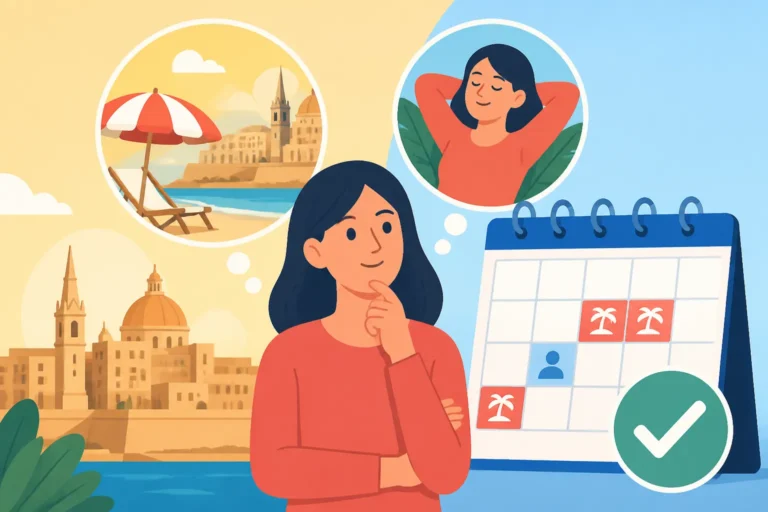
Let's talk about annual leave, because who doesn't love a good holiday? When you start working in Malta, whether full-time or part-time, you're entitled to paid time off. This isn't just a perk; it's a fundamental right enshrined in Maltese employment law. However, the exact amount and how it's calculated can sometimes feel a bit like trying to solve a Rubik's Cube with your eyes closed.
How Annual Leave is Calculated: Full-Time, Part-Time, and Pro-Rata
As of 2026, the statutory minimum annual leave entitlement for a full-time employee in Malta is 224 hours. Now, that's hours, not days, which is an important distinction. This typically translates to 28 working days based on a 40-hour work week, where each working day counts as 8 hours. If your contract stipulates a shorter working week, say 35 hours, your daily leave entitlement would be 7 hours. The crucial thing is that the hourly entitlement remains constant, ensuring fairness across different working patterns.
For part-time employees, the calculation shifts to a pro-rata basis. This means your annual leave entitlement is proportionate to the hours you work compared to a full-time employee in a similar role. So, if a full-time employee works 40 hours a week and gets 224 hours of leave, a part-timer working 20 hours a week would be entitled to 112 hours of annual leave. It's a fair system, but it's vital to ensure your contract clearly outlines your working hours and how your leave is calculated. Don't just assume it's half of a full-timer's; always do the maths. This pro-rata calculation also applies if you start or finish a job mid-year. You accrue leave for the months you actually work, so you won't get the full 224 hours if you only work, say, for six months. This is often where things can get confusing, especially if you're comparing notes with friends who have different contracts or start dates.
Public Holidays: What They Mean for Your Annual Leave
Malta has a generous number of public holidays, and these can sometimes intersect with your annual leave in peculiar ways. There are 14 public holidays annually in Malta. The law states that if a public holiday falls on a day that would normally be a working day for you, and you're not scheduled to work it, that day does not count towards your annual leave entitlement. This is a fantastic benefit, meaning you effectively get extra days off without dipping into your precious annual leave balance.
However, if a public holiday falls on a Saturday or Sunday, and that day isn't typically a working day for you, it also doesn't reduce your annual leave. Instead, the total hours of public holidays that fall on a weekend are added to your annual leave entitlement. For example, if there are two public holidays in a year that fall on a Saturday and Sunday respectively, then 16 hours (8 hours per day) would be added to your 224 hours, bringing your total entitlement to 240 hours. This is a brilliant nuance in Maltese law that often catches newcomers by surprise – a pleasant surprise, for sure! It’s important to keep track of the calendar, as this effectively gives you more flexibility to plan longer breaks. You can find out more about the specifics of Malta's public holidays in the section below, or by looking up official sources like Jobsplus.
Accruing and Taking Your Leave: Practicalities and Planning
Annual leave in Malta accrues monthly, meaning you build up your entitlement as you work. Typically, you'll accrue about 18.67 hours of leave for each full month you work. While this is the legal accrual, most employers will allow you to take leave throughout the year, even if you haven't technically accrued it all yet, as long as you're expected to accrue it by the end of your employment year. However, if you leave the company before accruing the leave you’ve taken, your employer has the right to deduct the unaccrued leave from your final paycheque. It's always best practice to communicate clearly with your employer about your leave plans.
When it comes to actually taking your leave, your employer has the right to approve or deny requests based on operational requirements. However, they cannot unreasonably refuse your requests. The law states that you should be given the opportunity to take your leave, with at least a portion of it being a continuous period. Usually, companies have policies requiring you to submit leave requests with a certain amount of notice, often two to four weeks, but this can vary. It’s also common for employers to close down during specific periods, like a week or two in August or around Christmas. In these cases, those days will typically be deducted from your annual leave entitlement. Always clarify these company-specific policies during your onboarding or check your employment contract. Good communication and planning are key to ensuring you get the time off you need without friction. Remember, your employer also has a responsibility to ensure you take your leave for your well-being.
Navigating Public Holidays in Malta
Malta is rich in history and culture, and this is reflected in its numerous public holidays, many of which are religious feast days. For expats, understanding these days isn't just about getting time off; it's also about understanding when businesses might be closed, when public transport schedules change, and when the whole island seems to come alive with festivities.
Official Public Holidays: A Full List and Their Significance
Malta celebrates 14 national public holidays throughout the year. These are:
- 1st January: New Year's Day (L-Ewwel tas-Sena)
- 10th February: Feast of St. Paul's Shipwreck (San Pawl Nawfragu) – Commemorates the shipwreck of St. Paul in Malta.
- 19th March: Feast of St. Joseph (San Ġużepp) – A religious feast day.
- 31st March: Freedom Day (Jum il-Ħelsien) – Marks the withdrawal of British troops and the Royal Navy from Malta in 1979.
- Good Friday: (Il-Ġimgħa l-Kbira) – Date varies each year, deeply significant religious day.
- 1st May: Worker's Day / May Day (Jum il-Ħaddiem) – Also a religious feast day of St. Joseph the Worker.
- 7th June: Sette Giugno (Sette Giugno) – Commemorates the 1919 riots against British rule.
- 29th June: Feast of St. Peter and St. Paul (L-Imnarja) – Another important religious feast day, especially celebrated with folk music and horse racing in Buskett.
- 15th August: Feast of the Assumption (Santa Marija) – A major religious feast day, with village festas happening across the island.
- 8th September: Victory Day (Jum il-Vitorja) – Commemorates the end of the Great Siege of Malta, the capitulation of the Italian fleet in WWII, and other victories.
- 21st September: Independence Day (Jum l-Indipendenza) – Marks Malta's independence from British rule in 1964.
- 8th December: Feast of the Immaculate Conception (Il-Kunċizzjoni) – A religious feast day.
- 13th December: Republic Day (Jum il-Repubblika) – Celebrates Malta becoming a republic in 1974.
- 25th December: Christmas Day (Il-Milied)
These days aren't just an excuse for a long weekend; they are deeply ingrained in the Maltese calendar, often accompanied by local village festas, parades, and religious ceremonies. As a newcomer, these are excellent opportunities to experience Maltese culture firsthand.
When Public Holidays Fall on Weekends or Mid-Week
As we touched upon earlier, Maltese law has a specific provision for public holidays falling on weekends. If a public holiday falls on a Saturday or a Sunday and these are not your normal working days, your annual leave entitlement is increased by the equivalent number of hours. This means you don't 'lose' the public holiday just because it didn't give you an extra day off from work. This is quite a unique and employee-friendly aspect of Maltese law, so make sure your employer correctly adjusts your leave balance if this happens.
When public holidays fall mid-week, they typically result in a day off for most employees. If your workplace is usually open on that day, you simply don't come in, and it's a paid day off that doesn't touch your annual leave. This can be fantastic for creating long weekends, especially if you strategically use a day or two of annual leave around them. For instance, if a public holiday falls on a Tuesday or a Thursday, taking Monday or Friday off respectively can give you a glorious four-day break, perfect for exploring more of Malta or even a quick trip to Sicily!
Working on a Public Holiday: What to Expect
Sometimes, due to the nature of your job (think hospitality, emergency services, or retail), you might be required to work on a public holiday. This isn't uncommon, especially in a tourist-driven economy like Malta's. However, the law provides for additional compensation for working on these days.
If you are required to work on a public holiday that falls on a normal working day for you, you are generally entitled to either an extra day's pay at your normal rate on top of your standard daily wage, or an extra day of paid leave instead. Your employment contract should clearly outline the terms for working on public holidays. It's crucial to check this, as some contracts might specify a different rate, such as double pay for the hours worked, which is often seen in sectors like retail or catering. Always be clear on your compensation before agreeing to work on a public holiday. Understanding these details helps avoid any unpleasant surprises and ensures you are fairly remunerated for your time.
The Ins and Outs of Sick Leave in Malta
Getting sick is never fun, especially in a new country where you might not yet have your GP sorted. But rest assured, Malta's employment laws provide for sick leave, ensuring you don't have to worry about losing pay if you're genuinely unwell.
Your Right to Paid Sick Leave: Entitlement and Conditions
In Malta, employees are entitled to paid sick leave. The amount of sick leave you're entitled to is linked to the national social security system. Employers are generally obliged to pay for the first three days of sick leave, and subsequent days are covered by social security benefits, provided certain conditions are met.
The statutory entitlement to paid sick leave is often calculated based on a fixed number of working days per year, usually around 2 weeks (or 120 hours for a 40-hour week), for which your employer will pay your full wage. Beyond this, your employer might pay a reduced amount, or you might become eligible for sickness benefit from the Department of Social Security. This system is designed to provide a safety net, but it means there's a distinction between what your employer covers and what the state covers. It's a bit different from some countries where your employer covers all sick days up to a certain limit. When you're new to Malta, understanding this distinction is key to managing your finances during periods of illness. To access public healthcare benefits or even register for social security and sick pay, you'll need to understand how to get your Maltese ID card number, which is a fundamental step for all residents.
Getting a Sick Certificate and Notifying Your Employer
If you're unable to work due to illness, you generally need to obtain a medical certificate from a registered doctor to prove your illness and entitlement to sick leave. For short absences, some employers might not require a certificate for the first day or two, but it's always best practice to get one, especially if you're taking more than one day off. The medical certificate should clearly state the period you are unfit for work.
You also have a responsibility to notify your employer about your illness as soon as reasonably possible. Most companies will have a policy detailing how and when to report sick leave (e.g., calling your manager or HR by a certain time on the first day of absence). Failure to provide a medical certificate or notify your employer could result in your absence being treated as unauthorised leave, which could lead to deductions from your pay or even disciplinary action. When you do see a doctor, they will issue you with a "blue medical certificate" (formerly pink), which is specifically designed for employment purposes and is typically given to your employer. If you're seeing a public health doctor, they will use a particular system to issue this. You can learn more about finding a doctor in Malta: GPs, Specialists, and the Referral System.
Sickness Benefit: When Public Funds Step In
As mentioned, after the first few days, your sick leave might be covered by sickness benefit provided by the Department of Social Security. To be eligible for this, you must have paid enough social security contributions. Sickness benefit is not usually paid at your full wage; it's a percentage of your average weekly earnings. This benefit aims to replace some of your lost income during prolonged periods of illness.
Applying for sickness benefit involves submitting your medical certificates and an application form to the Department of Social Security. Your doctor will often guide you on this process. It's a bureaucratic step, but it's there to support you. For those longer periods of illness, knowing that there's a safety net provided by the state can be a huge relief, though it does mean dealing with government departments, which can sometimes be slow. For further details on how this benefit works, you might find more information in our guide on Sickness Benefit in Malta: Your Rights When You Can't Work. This is where understanding your social security contributions really pays off. If you’ve been paying your dues, you're entitled to this support. Many expats also find it useful to consult with services like Taxes for Expats to ensure they are fully compliant with all their contributions and understand what benefits they might be entitled to.
Maternity, Paternity, and Parental Leave: Beyond the Basics
Malta, like many European countries, offers comprehensive leave provisions for new parents, recognising the importance of family time during these crucial periods.
Maternity Leave: Supporting New Mothers
Maternity leave in Malta is a significant entitlement for expectant mothers. As of 2026, eligible employees are entitled to 18 weeks (126 days) of maternity leave. The first 14 weeks are paid by the employer at the full rate, and the subsequent 4 weeks are paid by the Department of Social Security at a specific rate, provided the necessary social security contributions have been made. This split payment system is important to understand for financial planning.
Mothers typically start maternity leave four to six weeks before the expected date of confinement, but this can be flexible. The law also protects pregnant employees from dismissal and ensures they can return to their previous job or an equivalent position after their leave. It's a robust system designed to support new mothers in the workforce. You can delve deeper into this topic in our article, Maternity Care in Malta: Antenatal Visits, Birth, and the Maternity Benefit.
Paternity and Parental Leave: Shared Responsibilities
Fathers in Malta are also entitled to paternity leave, providing them with time off to support their partner and bond with their newborn. Currently, fathers are entitled to 10 working days of paternity leave, to be taken immediately after the birth or adoption of a child. This leave is fully paid by the employer.
Beyond maternity and paternity leave, Malta also provides for parental leave, which allows both parents to take unpaid time off to care for their children. Each parent is entitled to four months of parental leave per child, which can be taken until the child's eighth birthday. This leave can be taken in periods of one month at a time. While it is unpaid, the law guarantees job protection, meaning you can return to your job or a similar one after taking parental leave. These provisions demonstrate Malta's commitment to supporting work-life balance for families, ensuring both parents have the opportunity to participate actively in their child's early years. For families relocating to Malta, understanding these entitlements is crucial, and it’s always a good idea to clarify specific company policies on these types of leave.
Common Pitfalls and Key Considerations for Foreign Workers
Moving to a new country always comes with its unique set of challenges. When it comes to employment and leave, there are a few areas where foreign workers often get tripped up or need extra clarity.
Probationary Periods and Leave Entitlement
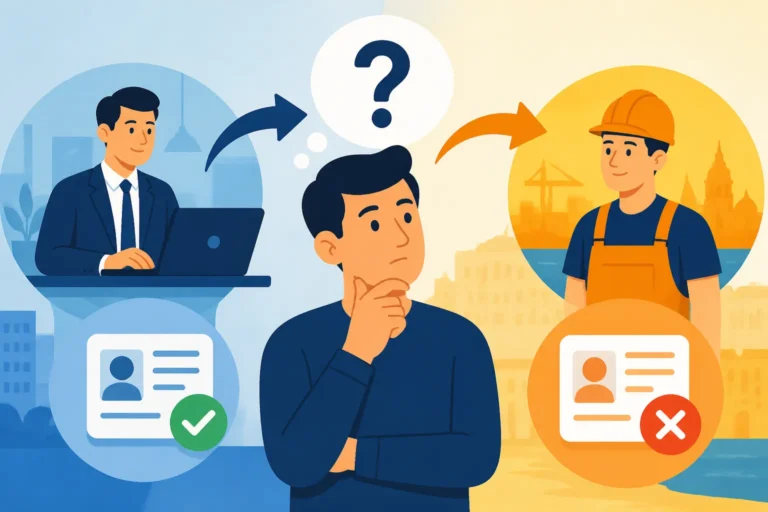
One common question is about leave during a probationary period. In Malta, the standard probationary period is six months, though it can be shorter or longer if specified in the contract, up to 12 months for managerial, technical, or executive positions. During probation, both the employer and employee can terminate the employment without cause and with only one week's notice if the probation period is longer than one month.
Crucially, employees are entitled to annual leave even during their probationary period. Your leave accrues from your very first day of employment, just like any other employee. However, employers might be less keen on granting extended periods of leave during probation, especially if you've just started and are still learning the ropes. It's often a balance between your entitlement and the practical needs of the business. If you anticipate needing time off during probation, it's wise to discuss this with your prospective employer during the interview stage or shortly after receiving a job offer. This transparency can prevent misunderstandings later on.
Leaving a Job: Unused Leave and Notice Periods
When you decide to move on from a job in Malta, or if your employment is terminated, understanding what happens to any unused annual leave is vital. If you have accrued annual leave that you haven't taken, your employer is legally obliged to pay you for those untaken hours in your final settlement. This is often calculated at your normal hourly rate. Conversely, if you have taken more leave than you have accrued by your termination date, your employer has the right to deduct the value of those excess hours from your final pay. This is why keeping track of your leave balance is important throughout the year.
Regarding notice periods, the length depends on how long you've been employed. During probation, it's typically one week's notice. After probation, it escalates based on your length of service:
- Less than 6 months: 1 week
- 6 months to 2 years: 2 weeks
- 2 years to 4 years: 4 weeks
- 4 years to 7 years: 8 weeks
- Over 7 years: usually increases further, up to 12 weeks.
Your contract may stipulate longer notice periods, especially for higher-level positions. It's essential to adhere to these notice periods, as failure to do so could result in a breach of contract and potential financial penalties. Many expats also find that brush-up language skills on platforms like iTalki can be invaluable for professional communication, particularly when discussing sensitive topics like resignations or leave entitlements with colleagues or HR who may prefer to communicate in Maltese for official matters.
Knowing Your Rights and Where to Seek Advice
The Maltese employment landscape, while largely aligned with EU standards, has its nuances. It's crucial for foreign workers to know their rights. Your primary resource for employment law information is Jobsplus, Malta's public employment service. They publish detailed guides and fact sheets on employment conditions. The Department of Industrial and Employment Relations (DIER) is another key authority, responsible for enforcing labour laws and offering advice. If you ever feel your rights are being infringed upon, these are the bodies you should contact.
Additionally, if you are part of a trade union (such as the General Workers' Union (GWU) or the Union Ħaddiema Magħqudin (UĦM)), they can provide invaluable support and advice. Many large companies also have internal HR departments that can clarify policies. Don't be afraid to ask questions; it's always better to be informed than to assume. Understanding your rights protects you and ensures a fair working environment during your time in Malta.
Here's a quick summary of the key leave entitlements:
| Leave Type | Standard Entitlement (Full-Time) | Payment Source | Key Conditions/Notes |
|---|---|---|---|
| Annual Leave | 224 hours (28 days) | Employer | Accrues monthly; public holidays on weekends add hours to entitlement. Employer must grant leave, not unreasonably refuse. |
| Public Holidays | 14 days per year | Paid by Employer | If falls on a normal working day, it's a paid day off, not deducted from annual leave. |
| Sick Leave | Employer pays first 3 days (approx. 120 hours total employer-paid) | Employer (first 3 days), Social Security (subsequent) | Medical certificate required. Eligibility for Sickness Benefit depends on Social Security contributions. |
| Maternity Leave | 18 weeks | Employer (first 14 weeks), Social Security (last 4 weeks) | Job protected; cannot be dismissed due to pregnancy. |
| Paternity Leave | 10 working days | Employer | Must be taken immediately after birth/adoption. |
| Parental Leave | 4 months per parent, per child | Unpaid | Can be taken until child is 8 years old, in 1-month blocks. Job protected. |
You can gain a deeper understanding of these entitlements by checking out related articles like Annual Leave, Public Holidays, and Sick Leave in Malta, or if you’re trying to budget, our guide on What Public Healthcare Costs in Malta: Free Services and Paid Extras might be helpful, especially in relation to sick leave. If you’re thinking about the bigger picture, Social Security Contributions and What They Fund in Malta also offers crucial insights into how these benefits are sustained. For those just starting their journey, understanding Employment Contracts and Conditions of Work in Malta is fundamental. And, if you’re concerned about your overall financial picture, perhaps The Maltese Tax System Explained: Residence, Domicile, and Remittance would offer some clarity, especially if you're dealing with different income streams. Lastly, knowing about Your Rights Under Malta's Employment and Industrial Relations Act can empower you to advocate for yourself effectively.
Disclaimer
Please remember that while this guide aims to provide accurate and comprehensive information based on current Maltese employment laws and practices, laws can change. This content is for informational purposes only and does not constitute legal advice. Always consult with a qualified legal professional or the relevant Maltese authorities (such as Jobsplus or the Department of Industrial and Employment Relations) for specific advice tailored to your individual situation.