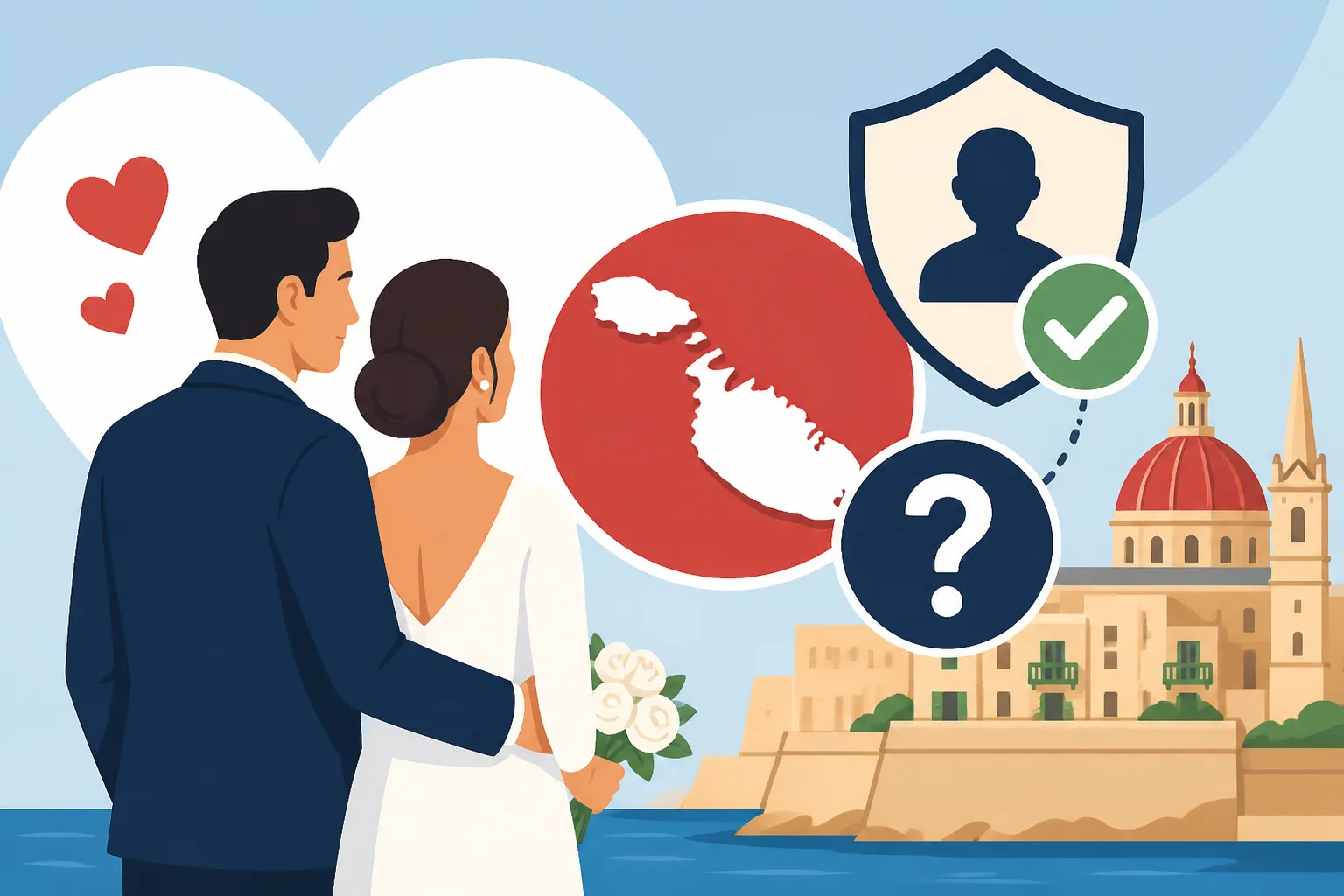
Can I Get Maltese Citizenship Through Marriage?
Ah, the age-old question that many expats, especially those who found love on these beautiful islands, ponder: "Can marrying a Maltese national fast-track my path to citizenship?" It’s a completely natural thought, filled with hope for a more settled future. But like many administrative processes here in Malta, the reality can be a bit more nuanced, often sprinkled with a dash of "hurry up and wait." This guide is here to untangle the specifics of acquiring Maltese citizenship through marriage, giving you the unvarnished truth and helping you navigate the requirements and expectations.
The Foundations of Citizenship by Marriage in Malta
Falling in love and getting married in a new country is a wonderful journey, but when it comes to citizenship, it's not simply a matter of saying "I do" and receiving a passport in the post. Malta, like most nations, has a clear set of criteria for those seeking citizenship through marital union, and it's less about expediting the process and more about establishing a long-term, genuine commitment.
The Basic Eligibility Criteria for Spouses
The primary eligibility criterion for citizenship through marriage in Malta revolves around a valid and subsisting marriage to a Maltese citizen. This isn't just a piece of paper; the authorities want to see evidence of a genuine, ongoing relationship. They're looking for bona fide marriages, not marriages of convenience entered into solely for immigration purposes. This scrutiny can sometimes feel intrusive, especially when you're genuinely in love, but it's a standard procedure to protect the integrity of the citizenship process.
Beyond the genuine nature of your union, you must have been married to a Maltese citizen for a specific period. Historically, this period was shorter, but it has been adjusted to ensure a robust connection to the country through your spouse. You also need to demonstrate that you have been genuinely cohabiting with your Maltese spouse for a significant duration in Malta itself. This means sharing a home, building a life together on the island, and integrating into the local community as a couple. It’s not enough to be married; you need to prove that Malta is truly your marital home.
Duration of Marriage and Residency Requirements
To be eligible to apply for Maltese citizenship through marriage, you must typically have been married to a Maltese citizen for at least five years. This is a crucial benchmark, and applications submitted before this threshold is met are generally not considered. The five-year period is counted from the date of your marriage, not from when you started living in Malta or from when your spouse became a Maltese citizen (if they weren't at the time of marriage).
Furthermore, it's not just about the length of your marriage; your residency in Malta also plays a critical role. You and your Maltese spouse must have cohabited in Malta for a substantial portion of this five-year period. Brief trips abroad for holidays or business are usually fine, but extended periods of living separately or residing outside Malta could raise questions about the genuine nature of your cohabitation and your commitment to establishing your life on the island. The Department for Citizenship and Expatriate Affairs, now under Identità, will be looking for continuous proof that you have established your marital home here.
For example, if you were married for five years but spent three of those years living in another country before moving to Malta, those initial three years of marriage might not count fully towards the residency requirement needed for this specific citizenship path. It's about demonstrating an active, sustained connection to Malta as a married couple. This can be a point of frustration for many, as life sometimes takes unexpected turns, but the authorities are firm on the requirement to demonstrate genuine integration into Maltese society alongside your spouse.
The Application Process: Navigating Identità and Paperwork
Once you meet the foundational criteria, the real administrative adventure begins: the application process itself. This involves compiling a mountain of documents, potentially undergoing interviews, and exercising a degree of patience that only life on an island can truly teach you.
Required Documentation: More Than Just a Marriage Certificate
The list of documents required for a Maltese citizenship application through marriage is extensive, and it goes far beyond just your marriage certificate. Identità aims to build a comprehensive picture of your life, your spouse's life, and your shared existence in Malta. You'll need original documents, copies, and sometimes certified translations into English or Maltese if your originals are in another language.
Here's a snapshot of what you can expect to gather:
- Your Passports and Birth Certificates: Originals and certified copies are usually needed. Ensure your passport has sufficient validity.
- Marriage Certificate: The official document registering your marriage, ideally an original Maltese one if you married here, or an officially apostilled/attested foreign one.
- Maltese Spouse's Documents: Their birth certificate, Maltese passport, and ID card.
- Police Conduct Certificates: You will need a police conduct certificate from Malta and from any other country where you have lived for more than six months over a specified period. This is a standard background check, but coordinating these from abroad can be a challenge. You can find more details on the general requirements for a Police Conduct Certificate and Document Requirements in Malta.
- Proof of Residence in Malta: This is where the "genuine cohabitation" really comes into play. Think utility bills (ARMS bills for water and electricity are excellent, especially if registered in both names), rental agreements (especially if Registering Your Lease with the Housing Authority in Malta was done correctly), property deeds, and even official correspondence addressed to both of you at your Maltese address.
- Proof of Financial Stability: While not as stringent as some other permit types, you'll need to show you can support yourselves financially without becoming a burden on the state. This could include employment contracts, payslips, bank statements, or proof of other income.
- Photographs: Passport-sized photos are a given, but sometimes they might ask for photos of your wedding, family events, or simply everyday life together to further cement the "genuine relationship" aspect.
It's vital to remember that What Documents Do I Need for a Maltese Residence Permit? might be slightly different than what's needed for citizenship, so always refer to the latest guidelines directly from Identità. Every piece of paper is a puzzle piece they use to verify your story.
| Document Category | Specific Examples | Notes |
|---|---|---|
| Personal Identity | Valid Passport, Birth Certificate | For both applicant and Maltese spouse. Must be original/certified copy. |
| Marital Status | Original Marriage Certificate | Foreign certificates need apostille/attestation and certified translation if not English/Maltese. |
| Maltese Spouse Proof | Maltese ID Card, Maltese Passport, Birth Certificate | To confirm their citizenship status. |
| Residency Proof | ARMS bills (jointly addressed), Lease Agreement/Property Deed, Bank Statements (joint) | Demonstrates continuous cohabitation in Malta. |
| Good Conduct | Maltese Police Conduct Certificate, Foreign Police Conducts | Required for any country lived in for > 6 months in the last 10 years. |
| Financial Stability | Employment Contracts, Payslips, Bank Statements | To show ability to support yourselves. |
| Relationship Proof | Joint bank accounts, Photos (wedding, family), Social media, letters, witness statements | Crucial for proving a genuine, ongoing relationship. |
Submission, Interview, and Waiting Times
Once your meticulously prepared dossier is complete, you'll need to submit it to Identità. This usually requires booking an appointment, which can sometimes feel like winning the lottery, given their busy schedules. Be prepared for a potentially long wait for the appointment itself.
After submission, your application will be thoroughly reviewed. It’s not uncommon for applicants to be called in for an interview, sometimes separately, to discuss their marriage, their life together, and their connection to Malta. These interviews are designed to ensure the marriage is genuine. Questions can range from "How did you meet?" to "What's your spouse's favourite food?" or "Where do you spend your public holidays?". It can feel like an interrogation, but try to remain calm and honest, as consistency in your answers is key.
Then comes the waiting game. Oh, the waiting game in Malta. Processing times for citizenship applications through marriage can be notoriously long, often extending to several years. It's a period that tests the patience of many, leaving you in a state of limbo. While you're waiting, it’s absolutely crucial to keep your existing Renewing Your Maltese Residence Permit Before It Expires valid. Do not let it expire, as this could jeopardise your citizenship application. You can track your application status to some extent, but don't expect daily updates – How Long Does Identità Take to Decide a Residence Permit? and How Do I Track My Application with Identità? are common frustrations for many.
Beyond the Basics: Important Considerations and Potential Hurdles
The path to citizenship through marriage isn't always straightforward. There are other legalities and practical aspects that you need to consider, from your nationality's stance on dual citizenship to the ongoing need to prove the authenticity of your relationship.
Dual Citizenship: Is It Allowed?
One of the significant advantages of Maltese citizenship is that Malta generally permits dual citizenship. This means that if you acquire Maltese citizenship through marriage, you typically will not be required to renounce your original nationality. This policy has been in place since 2000 and is a welcome relief for many who wish to maintain ties to their home country. However, and this is a big "however," while Malta allows it, your country of origin might not.
It is absolutely vital that you check the citizenship laws of your home country before you apply for Maltese citizenship. Some countries have strict rules against holding multiple citizenships and might automatically revoke your original nationality upon acquiring another. This is not something Malta can control or advise on, so the onus is entirely on you to understand the implications for your original citizenship. You can explore more on Malta's stance on this in Dual Citizenship in Malta: What's Allowed.
This is a point where many people can get caught out, thinking that because Malta allows it, everyone does. Always verify with your national authorities to avoid any unwelcome surprises down the line.
Maintaining Your Status During the Application
During the long wait for your citizenship application to be processed, you are essentially still a foreign resident. This means you must continue to maintain your legal residence status in Malta, usually through a separate residence permit. For many, this would be a permit based on family reunification or employment. It's easy to assume that because you've applied for citizenship, your current permit status becomes less important, but this is a dangerous assumption.
You must diligently apply for renewals of your existing residence permit as they come due. Letting your residence permit expire could lead to serious issues, including being considered an irregular resident, which would undoubtedly have a negative impact on your citizenship application. Imagine waiting years for a decision, only to have it jeopardized because you forgot to renew your eResidence card! Identità will continue to expect you to follow all immigration laws as a resident until your citizenship is officially granted. For many non-EU spouses, this will mean ensuring continuous health insurance coverage, often through private providers like Cigna Global, until full entitlement through Malta's social security system is confirmed.
Travel while your citizenship application is pending can also be a bit tricky. While you might hold a valid residence permit, the citizenship application itself doesn't grant any special travel rights. Always ensure you have your valid eResidence card and passport when travelling, and be aware of any potential complications if your permit is nearing expiry or if you're awaiting a renewal. If you're wondering What Happens If My Maltese Permit Expires Before I Renew It?, it's best to seek clarification from Identità or an immigration lawyer well in advance.
The "Genuine Relationship" Scrutiny
The term "genuine relationship" is the bedrock of citizenship by marriage applications in Malta, and the authorities take it very seriously. They are actively trying to prevent sham marriages – unions entered into purely for immigration benefits rather than genuine love and commitment. While this is understandable, it can feel incredibly invasive and even insulting to couples who genuinely love each other and are building a life together.
You might be asked for a wide array of evidence to prove your genuine relationship. This can include:
- Financial Commingling: Joint bank accounts, shared investments, proof of shared expenses (like rent, utilities, household bills).
- Shared Accommodation: Lease agreements in both names, utility bills addressed to both, or property deeds if you own a home together.
- Social Proof: Photographs from your wedding, holidays, family gatherings, and everyday life. Shared social media posts (though this can be tricky for privacy).
- Communication Records: While less common now, in some cases, evidence of ongoing communication (e.g., if one spouse travelled for an extended period) might be requested.
- Witness Statements: Letters from friends, family, or neighbours who can attest to the genuineness and longevity of your relationship.
The interview process, as mentioned, is another key tool for this scrutiny. Be prepared to answer personal questions about your relationship, daily life, and future plans. Consistency between your answers and those of your spouse is critical. It's not about memorizing facts, but about openly and honestly sharing your shared life. It's an emotionally taxing part of the process, but approaching it with transparency is always the best strategy. If Identità asks for What Should I Do If Identità Asks for More Documents?, provide them promptly and thoroughly, as this shows your cooperation.
What Citizenship Brings and Where to Find Support
Finally, after navigating the complexities, gathering the documents, enduring the interviews, and mastering the art of patience, what does Maltese citizenship through marriage actually bring? And where can you turn if the path feels too daunting to walk alone?
Rights and Responsibilities of Maltese Citizenship
Becoming a Maltese citizen by marriage is a significant milestone that grants you the same rights and responsibilities as any other Maltese citizen, whether by birth or descent. The most prominent benefits include:
- European Union Citizenship: Malta is a full member of the EU, meaning you gain the right to live, work, and study freely in any of the 27 EU member states, as well as in Iceland, Liechtenstein, Norway, and Switzerland (the EEA/EFTA countries). This opens up immense opportunities for personal and professional growth across the continent.
- Maltese Passport: You will be eligible for a Maltese passport, a highly respected travel document that grants visa-free or visa-on-arrival access to a vast number of countries worldwide.
- Voting Rights: You gain the right to vote in national (general elections), local (local council elections), and European Parliament elections in Malta.
- Full Social Security and Healthcare Entitlements: You will be fully integrated into Malta's social security system, granting you access to public healthcare services, pension entitlements, and other social benefits, aligning with information like How Maltese Health Entitlement Fits with Social Security Contributions.
- Ability to Hold Public Office: As a citizen, you can hold public office in Malta.
However, alongside these rights come responsibilities. You are expected to uphold Maltese laws, contribute to society, and potentially serve on a jury if called upon. It’s about becoming a full member of the Maltese community, with all the benefits and duties that entails.
Seeking Professional Guidance
Let's be real: navigating immigration and citizenship processes in any country, let alone one with its own unique bureaucratic quirks, can be incredibly stressful and confusing. While this guide aims to provide a comprehensive overview, it cannot replace professional, tailored advice.
If your case is particularly complex, if you have gaps in your residency, or if you're struggling with the sheer volume of documentation and the nuances of proving a "genuine relationship," it's highly advisable to seek assistance from an immigration lawyer or a reputable immigration consultant in Malta. They can provide expert advice, help you prepare your application, represent you, and ensure you're aware of any specific challenges or requirements relevant to your situation. This can save you immense stress, time, and potential heartache in the long run.
Beyond legal advice, remember that there are many expat groups and communities in Malta. Sharing experiences and asking questions (while being mindful of personal data) can provide invaluable moral support and practical tips from others who have walked a similar path. When you first made the big move to Malta, perhaps using a service like Sirelo to help with your belongings, you were already seeking support for your new life, and this is no different. You're not alone in this journey.
Disclaimer
Please note that this guide provides general information based on current regulations and common experiences for 2026. Immigration laws and procedures in Malta are subject to change. It is always advisable to consult the official government websites, specifically Identità (formerly Identity Malta Agency), and seek professional legal advice for your specific situation. This information should not be considered legal counsel.