How Do I Find Out If I’m Entitled to Free Care in Malta?
Navigating the bureaucracy of a new country is often more exhausting than the move itself, especially when you are trying to figure out if a sudden fever will result in a heavy medical bill. I remember the sheer anxiety of sitting in a waiting room during my first month here, wondering if my contribution history was "active" enough to avoid paying out of pocket. This guide settles the confusion by explaining exactly who qualifies for free care in Malta and how to verify your status before an emergency strikes.
The Foundation of Healthcare Entitlement in Malta
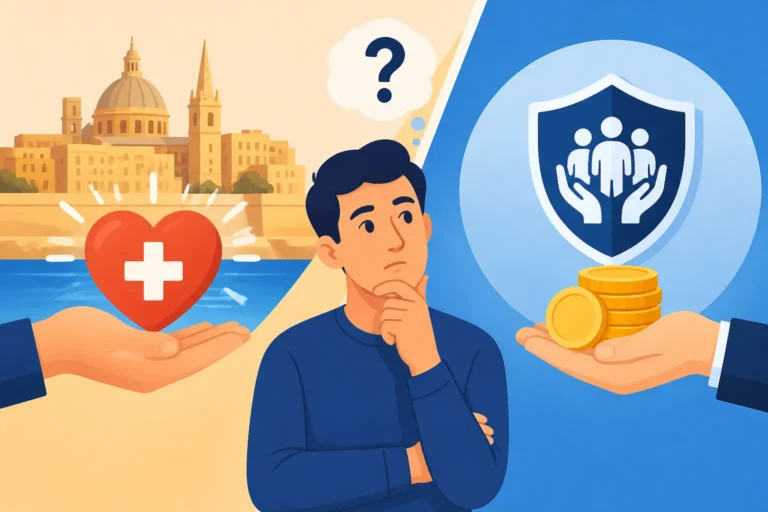
Malta operates a dual healthcare system consisting of a robust public sector and a thriving private sector. The public system, primarily centered around the state-of-the-art Mater Dei Hospital, provides comprehensive care ranging from GP consultations at local health centers to complex surgeries. However, "public" does not automatically mean "free for everyone." Entitlement is strictly tied to your residency status and, most importantly, your social security contributions.
If you are a resident who is gainfully employed or self-employed in Malta, you are likely paying Class 1 or Class 2 social security contributions. These payments are the "key" that unlocks the public health system. Many newcomers assume that simply having a lease agreement or a residency card is enough, but without those contributions being logged against your tax profile, the system may still flag you as a "paying patient." It is vital to understand How Malta's Public Healthcare Works: Entitlement, Contributions, and Costs to avoid any surprises when you check in at a health center.
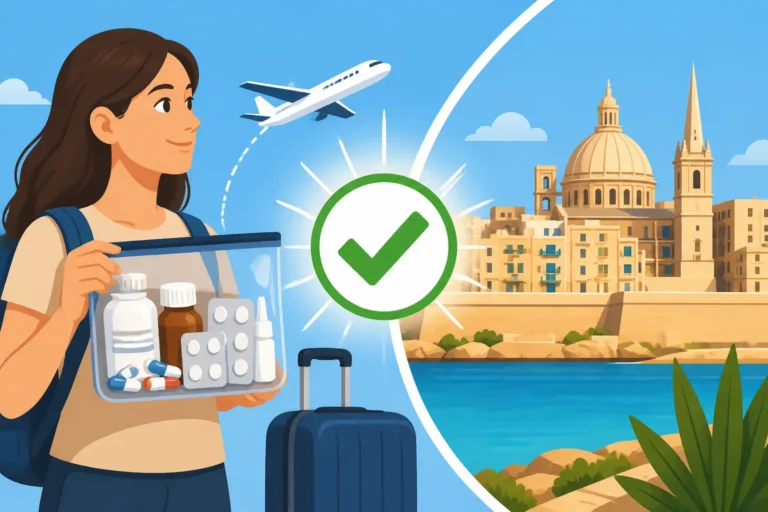
For those who are not yet working—perhaps you are still in the process of a job hunt or are waiting for your Single Permit to be issued—you technically fall into a grey area. During this transitional period, many expats opt for a flexible insurance solution like SafetyWing to ensure they have coverage for accidents or unforeseen illnesses. This is particularly useful because the Maltese authorities often require proof of "full' coverage before they even issue the residence card that eventually leads to state entitlement.
Categorizing Your Right to Care
Entitlement is not a one-size-fits-all concept in Malta. Your country of origin and the type of residence permit you hold dictate your path to free care. The system distinguishes between EU/EEA nationals, third-country nationals (TCNs), and those covered under specific reciprocal agreements.
EU, EEA, and Swiss Nationals
If you are a citizen of an EU member state, your transition into the Maltese health system is generally smoother, but it still requires paperwork. Initially, you can use your European Health Insurance Card (EHIC) for "unplanned" or emergency care. However, once you become an official resident, the EHIC is no longer the correct tool for long-term care. You will eventually need to look into Transferring EU Health Rights to Malta with an S1 Form or EHIC if you are a pensioner or a posted worker. For most EU workers, once the first few weeks of social security are paid, the right to care becomes automatic, provided you have registered your residency with Identità.
Non-EU Workers and the Single Permit
For those arriving from outside the EU, the process is tied directly to the Single Permit. This permit combines your right to work and your right to reside. As long as you are employed and your employer is deducting social security from your paycheck, you are entitled to the same care as a Maltese national. The hurdle newcomers often run into is the "waiting period" between arriving in Malta and the actual issuance of the physical eResidence card. During this time, you may be asked to pay for services and then claim the money back later, which is a massive headache. Having a backup like SafetyWing can provide peace of mind while you wait for the bureaucratic wheels to turn and your Health Entitlement in Malta: How Social Security Contributions Unlock Free Care to be formally recognized.
Reciprocal Agreement Holders
Malta has long-standing reciprocal health agreements with countries like Australia and the United Kingdom. These agreements are a lifesaver for many. For instance, British citizens who were resident in Malta before Brexit continue to enjoy certain rights, and new arrivals may still benefit from specific arrangements. However, these agreements often cover "urgent" care rather than elective procedures or long-term chronic management. It is always best to verify your specific situation with the Entitlement Unit to see if you need to register for a specific "RHA" card.
Step-by-Step Guide to Verifying Your Entitlement
You should never wait until you are sick to find out if you are in the system. The verification process is manual and requires a visit (physical or digital) to the Entitlement Unit, which is currently located at the Ground Floor of St. Luke’s Hospital in Gwardamanġa.
- Check Your Payslip: Look for the "NI" (National Insurance) deduction. If this is present, you are contributing to the system.
- Locate Your ID Card: You cannot verify entitlement without a Maltese ID card number (ending in M, G, L, H, or P). If you haven't received yours yet, read up on Getting Your Maltese ID Card Number: The Key to Accessing Healthcare to speed up the process.
- Contact the Entitlement Unit: You can email them at entitlement.health@gov.mt. You will need to provide your ID number and, if you are a TCN, a copy of your work contract and your latest payslip.
- Request a Certificate of Entitlement: This is a document that proves you are entitled to free care. While not always strictly necessary for every GP visit, having a digital copy on your phone can resolve disputes at the hospital reception instantly.
If you find out that you are not entitled—perhaps because you are on a Nomad Residence Permit or your employer has not yet registered you—you must take immediate action. Digital nomads, in particular, are often excluded from free public care because they do not pay local social security. For this group, SafetyWing is often the go-to choice because it meets the specific insurance requirements for the permit while covering the gaps that the public system leaves open. It is a much safer bet than assuming Healthcare on a Visa-Based Permit in Malta: Nomads, Retirees, and Investors will be free.
Entitlement Comparison Table
| Category | Basis of Entitlement | Documentation Needed | Coverage Scope |
|---|---|---|---|
| Maltese/EU Worker | Social Security Contributions | ID Card / Payslip | Full Public Access |
| Non-EU Worker | Single Permit / NI Payments | eResidence Card / FS3 Form | Full Public Access |
| Digital Nomad | Private Insurance Requirement | Valid Policy (e.g., SafetyWing) | Private Only (Emergency Public) |
| UK/AU Citizen | Reciprocal Agreement | Passport / RHA Card | Urgent/Necessary Care |
| EU Pensioner | S1 Form | S1 Certificate | Full Public Access |
| Unemployed TCN | None (Unless on specific visa) | Private Insurance | None (Private Only) |
The Role of the Entitlement Unit
The Entitlement Unit is the gatekeeper of the Maltese National Health Service. They are the ones who decide whether you pay the "Standard Rate" or the "Maltese Rate" (which is zero) for hospital services. I’ve spent many mornings navigating the halls of St. Luke's, and the staff there are generally very helpful, but they are strict about documentation.
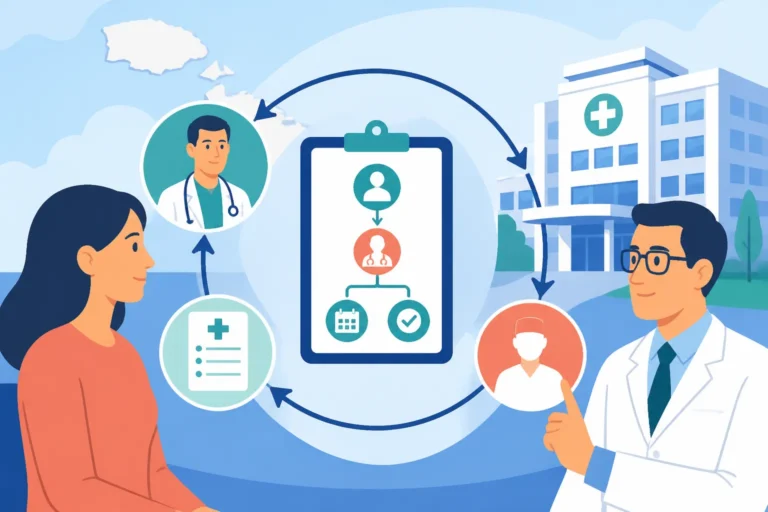
If you are a new resident, you may be asked to fill out an application for a "Certificate of Entitlement." This is especially common for those who are not working but are family members of someone who is. For instance, if you are a spouse of a worker, you don't automatically "inherit" their entitlement without a formal link being established in the government database. You can learn more about this by visiting The Entitlement Unit: Sorting Out Your Right to Treatment in Malta to see exactly which forms apply to your family situation.
One thing to keep in mind is that "entitlement" often only covers the person, not necessarily every single medicine. While the consultation and hospital stay might be free, you may still need to pay for prescriptions unless you qualify for the "Pink Card" or "Yellow Card" schemes for chronic illnesses. Understanding How the POYC Pharmacy of Your Choice Scheme: How to Collect Free Medicines works is the next logical step once you’ve confirmed your basic entitlement.
Dealing with the "Processing Gap"
There is a notorious "Processing Gap" in Malta. This is the period between when you start your job and when the government systems actually recognize your contributions. This gap can last anywhere from three weeks to three months. If you fall ill during this window, the hospital may charge you as a "non-resident" because their computer system hasn't updated yet.
To protect yourself during this time, three things are worth doing:
- Keep every single payslip as physical proof of your contributions.
- Keep a copy of your work contract.
- Ensure you have a bridge insurance policy like SafetyWing.
I’ve had friends who were billed hundreds of Euros for an ER visit at Mater Dei because their permit was "pending." Having private backup doesn't just fulfill a legal requirement; it prevents a single health scare from draining your relocation savings. Once your status is updated, you can eventually navigate the system more freely, but that initial month is high-risk. You should also check Do I Get Free Healthcare in Malta If I Pay Social Security? to understand how to claim back any money paid during this transition.
Chronic Conditions and Special Entitlement
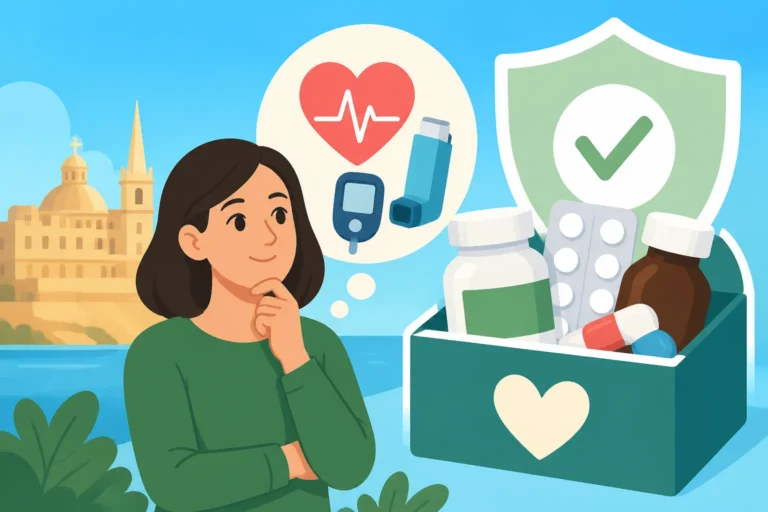
If you suffer from a chronic condition, such as diabetes, asthma, or hypertension, your entitlement goes a level deeper. In Malta, the "Schedule V" (the Yellow Card) allows residents to receive specific medications for these conditions free of charge, regardless of their income, provided they are entitled to the basic health system.
To find out if you qualify for this, you must first be confirmed as "entitled" by the Entitlement Unit. After that, a specialist at Mater Dei must sign off on your condition. This is a separate layer of bureaucracy that often catches expats off guard. You can’t just walk into a pharmacy with a foreign prescription and expect it to be free. You must go through the local referral system. For more details on this, see What Is the Schedule V (Pink Card) Scheme in Malta? to understand the long-term benefits available to you.
Summary of Key Actions
If you are still unsure where you stand, take these immediate steps. First, check if your residency is registered. Without that eResidence card or at least the "Blue Paper" (receipt of application), the health system will treat you as a tourist. Second, confirm that your social security contributions are being paid correctly. You can check this by logging into the myHealth portal once you have your e-ID.
Lastly, always have a backup plan. The Maltese public system is excellent, but it is a bureaucratic machine that moves at its own pace. Whether it’s Private Healthcare and Insurance in Malta: When You Need Cover or a global plan like SafetyWing, having a safety net ensures that your health is never dependent on how fast a government clerk can process your file. Finding out How to Register for Health Entitlement with the Entitlement Unit in Malta is your best defense against the stress of moving to this beautiful Mediterranean island.
Disclaimer
The information provided in this guide is for educational and informational purposes only and does not constitute legal or professional medical advice. Healthcare regulations, social security rates, and entitlement criteria in Malta are subject to change by the Ministry for Health and Identità. While we strive to keep this information up to date, always verify your specific status directly with the Entitlement Unit or a qualified legal professional. The author is not responsible for any costs incurred or denied care based on the contents of this article.