Is the 112 Emergency Line in Malta Free to Call?
When you are staring at a medical crisis in a new country, the last thing you want to worry about is whether your phone has enough credit to dial for help. I remember my first month in Sliema, panicking when a neighbor collapsed and wondering if 112 was actually universal or if I needed a local SIM to reach an operator. This guide solves the confusion around emergency costs, the 112 system, and what happens when the ambulance arrives.
The Cost of Dialing 112 in Malta
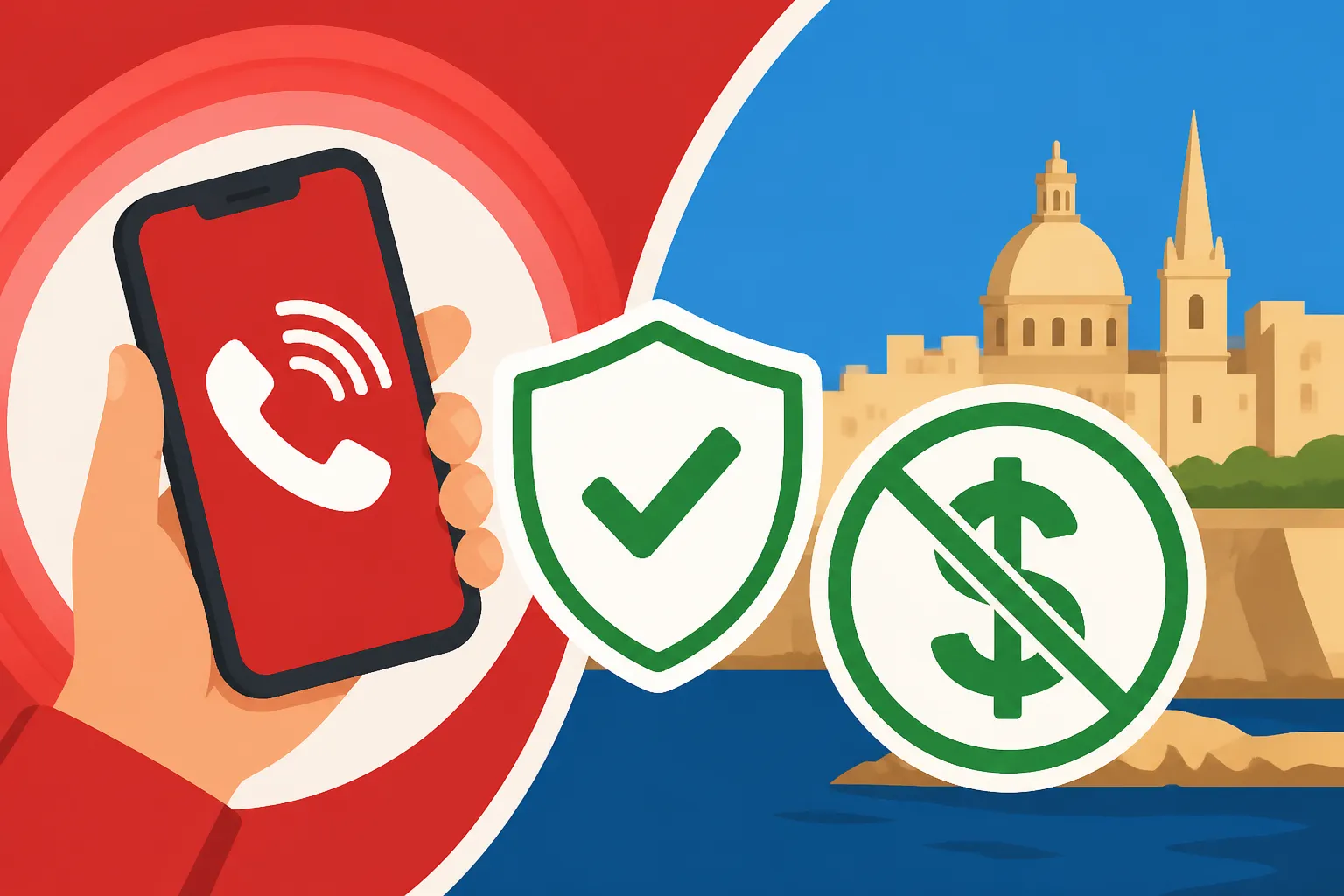
Let us get the most urgent question out of the way immediately. Yes, the 112 emergency line in Malta is absolutely free to call. This applies regardless of whether you are calling from a local Maltese mobile number, a foreign SIM card roaming on a local network, a landline, or even a public payphone if you can still find one. You do not need to have a positive balance or "credit" on your prepaid phone to reach the emergency services.
The Maltese government and telecommunications providers adhere to European Union regulations that ensure emergency access is a fundamental right. In my experience, even if your phone service has been barred for non-payment, most devices are programmed to allow emergency calls to go through. It is a vital safety net that works exactly as it should.
However, while the call itself is free, it is important to distinguish between the phone call and the medical services that follow. While you won't be billed for the minutes spent talking to the operator, your eligibility for the actual medical treatment and ambulance transport depends on your residency status and insurance coverage. If you are a new arrival and haven't sorted your paperwork yet, having a policy from SafetyWing can be a literal lifesaver, ensuring that any subsequent hospital bills are covered even if the 112 call didn't cost a cent.
How the 112 System Operates in Malta
When you dial 112, you are connected to a centralized emergency dispatch hub. This hub handles all types of emergencies, not just medical ones. In Malta, the 112 operators are trained to coordinate responses between the Police, the Fire Department (Civil Protection Department), and the Emergency Medical Services (Ambulance).
Multi-Lingual Support and Communication
One of the biggest fears for expats is the language barrier during a high-stress moment. You will be relieved to know that English and Maltese are both official languages in Malta, and every 112 operator is fluent in both. I have never encountered an operator who couldn't communicate clearly in English. If you speak another major European language, they can sometimes patch in a translator, but English is the standard for almost all interactions.
Information the Operator Will Request
The dispatchers follow a strict protocol to ensure the right help gets to you as fast as possible. When you call, be prepared to provide the following:
- The exact nature of the emergency (Is it a car accident, a heart attack, or a fire?).
- The location (This is the hardest part in Malta—more on this below).
- The number of people involved.
- A contact phone number in case the ambulance driver gets lost.
Knowing What Number Do I Call for an Ambulance in Malta? is step one, but being able to describe where you are is step two. Malta’s streets can be incredibly narrow, and many houses have names rather than numbers, which can lead to confusion for the dispatch team.
The Reality of Ambulance Transport Costs
This is where the "free" aspect of the 112 call starts to get a bit more complex for foreigners. If the operator determines that your situation is a life-threatening emergency, they will dispatch an ambulance from Mater Dei Hospital or one of the regional hubs.
For Maltese citizens and those who are covered under the national health system through social security contributions, the ambulance ride and the subsequent treatment at the Accident and Emergency (A&E) department are free at the point of use. You can read more about how this works in our guide on How Malta's Public Healthcare Works: Entitlement, Contributions, and Costs.
However, if you are a tourist, a non-EU nomad, or a new resident who hasn't yet received an eResidence card, you might eventually receive a bill for the ambulance transport and hospital care. The ambulance service itself can cost several hundred euros for non-entitled persons. This is precisely why most veteran expats recommend maintaining private coverage, like SafetyWing, during your first few months on the island to bridge the gap before your public entitlement is processed.
Emergency Medical Care at Mater Dei Hospital
Once the ambulance picks you up, you will almost certainly be taken to Mater Dei Hospital in Msida. This is Malta's primary acute care facility. The A&E department is modern and well-equipped, but it is also very busy.
Triage and Waiting Times
When you arrive via ambulance, you are not necessarily seen before people who walked in. Everything depends on the triage system. A nurse will assess the severity of your condition. If you are having a heart attack, you go in immediately. If you have a broken arm, you might wait several hours.
Is Treatment Free for Everyone?
There is a common misconception that emergency care is free for everyone regardless of status. While the hospital will never refuse life-saving treatment, they will check your ID. If you cannot prove entitlement, the billing department will follow up. For a deep dive into these potential costs, check out Is Emergency Treatment at Mater Dei Free for Everyone in Malta?. Generally, EU citizens with a valid EHIC (European Health Insurance Card) are covered for "necessary" care, but non-EU nationals often find themselves facing significant invoices if they aren't paying social security in Malta.
| Category | 112 Call Cost | Ambulance Ride Cost | A&E Treatment Cost |
|---|---|---|---|
| Maltese Citizens | Free | Free | Free |
| EU Tourists (with EHIC) | Free | Usually Free | Usually Free |
| Non-EU Tourists | Free | Paid | Paid |
| Expats (Paying NI) | Free | Free | Free |
| Digital Nomads | Free | Paid (unless insured) | Paid (unless insured) |
Navigating Emergencies on Gozo
If you are spending time on Malta's sister island, Gozo, the 112 system works the same way, but the logistics are different. Gozo has its own hospital, the Gozo General Hospital in Victoria.
Gozo General Hospital vs. Mater Dei
For most emergencies, the ambulance will take you to the Gozo General Hospital. They have an excellent A&E department, but for highly specialized cardiac or neurological emergencies, patients often need to be transferred to Mater Dei on the main island.
Inter-Island Transfers
In extreme cases, this transfer happens via helicopter. It is a fast and efficient service, but again, the costs can be staggering if you are not covered by the public system or a private policy. Understanding How Does the Air Ambulance Between Gozo and Malta Work? is essential if you plan to live in Gozo full-time. Even for nomads, having SafetyWing ensures that these high-cost medical evacuations don't result in personal financial ruin.
When Not to Call 112
In Malta, there is a tendency for the 112 line to get clogged with non-emergency queries. It is a pet peeve of the local authorities, and for good reason. If your situation is not life-threatening, there are other avenues you should take to keep the 112 lines open for those in genuine peril.
Health Centres and GPs
Malta has a network of public health centres (known locally as "Polyclinics") that offer urgent care services. If you have a high fever, a minor cut that needs stitches, or a suspected sprain, go to a health centre instead of calling 112. Many of these are open 24/7. You can find more details on Emergency Medical Care in Malta: 112, A&E, and Urgent Help to see which facility is closest to your town.
Sunday Pharmacy Roster
If you just need a pharmacist, do not call 112. Every Sunday and on public holidays, a specific selection of pharmacies across the island opens on a "roster" basis. You can find this list in local newspapers or online. It is a unique Maltese system that ensures you can always get medicine, even when everything else is closed.
Insurance Requirements for Different Permit Holders
Your right to free emergency care is tied directly to your residency permit. Malta has become a hub for various types of residents, each with different health requirements.
Digital Nomads and Investors
If you are in Malta on a Nomad Residence Permit, the government specifically requires you to have health insurance because you are not typically paying the social security contributions that fund the public system. For these residents, a provider like SafetyWing is often the go-to choice because it meets the permit requirements while providing the necessary emergency coverage. You can read more about this in Healthcare on a Visa-Based Permit in Malta: Nomads, Retirees, and Investors.
Employees and the Self-Employed
If you are legally employed by a Maltese company, your employer deducts National Insurance (NI) from your paycheck. This NI payment is your "ticket" to the public health system. Once you have your social security number and eResidence card, you can register for full entitlement. This process is explained in detail in Health Entitlement in Malta: How Social Security Contributions Unlock Free Care.
Practical Tips for Your First Emergency Call in Malta
I hope you never have to dial those three digits, but if you do, here are some hard-won tips from someone who has lived here through several "panics."
- Learn Your House Name: If you live in a house called "Dar ir-Rebbieha" on a street with no numbers, make sure you can pronounce it. If you can't, find a landmark nearby (like a specific chapel or a well-known shop).
- Keep Your eResidence Card Handy: Even in an emergency, having your ID ready helps the hospital staff process you faster and determines your billing status immediately.
- Know the A&E Locations: There is only one main A&E in Malta (Mater Dei) and one in Gozo. Do not go to a regional health centre if you suspect a heart attack or major trauma; they will just end up calling an ambulance to take you to Mater Dei anyway.
- Check Your Insurance: If you are a new resident, ensure you have a "bridge" policy. Some people have been hit with €2,000 bills for a two-day stay because they thought their NI started the day they signed their contract. It doesn't; it takes time to process.
For those who want to be extra prepared, I highly recommend checking out Do New Arrivals Pay for Hospital Care in Malta? to understand the specific window of time where you are most at risk financially.
Dealing with Language and Culture in Crisis
While the 112 operators are professional, the scene at an accident in Malta can often feel chaotic. Locals are incredibly helpful and will often swarm an accident scene to offer assistance, shout directions, or comfort the victim. This can be overwhelming if you are used to a more "stand-back" approach.
Don't be afraid to take charge of your own communication with the 112 operator. If you have private insurance like SafetyWing, tell the hospital staff early on. It can sometimes give you the option to be transferred to a private facility like St. James Hospital once you are stabilized, where the environment is much quieter and waiting times for follow-up care are shorter. You can compare these options in our guide on Private Healthcare and Insurance in Malta: When You Need Cover.
Finally, remember that the public healthcare system in Malta is world-class in terms of medical expertise. Mater Dei consistently ranks high in European health outcomes. The "hurdles" are usually administrative and related to the high volume of patients. If you are entitled to care, you will receive some of the best treatment in the Mediterranean without paying a cent—all starting with that free 112 call.
Important Emergency Numbers in Malta
While 112 is the primary number, there are a few others that are helpful to have saved in your phone.
- 112: General Emergency (Police, Fire, Ambulance).
- 119: Local Police (for non-emergencies like reporting a minor theft or a noise complaint).
- 196: Direct Ambulance line (though 112 is the preferred modern standard).
- 153: General Government Information (useful for finding out which health centre is open).
If you are a non-EU citizen or still waiting for your paperwork, make sure you have your What Public Healthcare Costs in Malta: Free Services and Paid Extras guide bookmarked. It will help you budget for any surprises if you don't have your coverage sorted out yet.
Medical Disclaimer
The information provided in this guide is for general informational purposes only and does not constitute professional medical or legal advice. While every effort has been made to ensure the accuracy of the details regarding Malta's emergency services and healthcare system as of 2026, regulations and costs can change. Always consult with the official Maltese Health Authorities or Identità for the most current information regarding residency and health entitlement. In a life-threatening emergency, always dial 112 immediately regardless of your insurance or residency status.