Can I Get Public Care in Malta Without Paying Social Security?
One of the most jarring moments for a new expat in Malta is standing at a Health Centre reception, feeling quite unwell, only to be told you aren't in the system because your Social Security hasn't kicked in yet. I remember my first month in Sliema, clutching a feverish forehead and realizing my "free" healthcare dream was actually a complex web of contributions. This guide clarifies exactly who can access public care without paying into the pot.
The Vital Link Between Social Security and Health Entitlement
In Malta, the public healthcare system is not a universal right based solely on residency; it is primarily a "contributory" system. This means that, for the vast majority of foreigners, the gatekeeper to the corridors of Mater Dei Hospital is your National Insurance (NI) contribution. If you are working and your employer is deducting Social Security from your payslip, you are building your right to care. But what happens if you aren't in that bracket?
The fundamental rule is that Health Entitlement in Malta: How Social Security Contributions Unlock Free Care is the standard pathway. When you pay these contributions, you are essentially buying into a massive national insurance scheme. This fund pays for the doctors, the state-of-the-art equipment at Mater Dei, and the local Health Centres (known as ic-centru tas-sahha). If you are not paying into this fund—perhaps because you are living on savings, working remotely for a foreign company, or are still in the process of finding a job—the state generally views you as a private patient.
This is a bitter pill to swallow for many who move from countries with purely tax-funded or residency-based systems. Many expats have assumed their lease agreement or their mere presence on the island was enough. It isn't. Without that contribution history or a specific legal exemption, the "free" system will issue you a bill for everything from a simple GP consultation to a multi-day hospital stay.
The Role of the Entitlement Unit
Even if you are paying Social Security, you aren't "automatically" in the system the moment you sign a contract. You have to prove it. This is where the Entitlement Unit comes into play. Located in the old St Luke’s Hospital grounds in Gwardamanġa, this office is the nervous system of Maltese healthcare access. They are the ones who issue the paperwork—like the "Certificate of Entitlement"—that tells the Health Centres you are "one of the covered ones."
If you haven't visited this office or submitted your application online, the hospital computer system might still show you as "ineligible." This is a common administrative hurdle that leaves many newcomers frustrated. You might be paying your dues every month, but until the Entitlement Unit validates your status, you are effectively "without public care" in the eyes of a triage nurse.
Exceptions for EU Citizens and the EHIC System
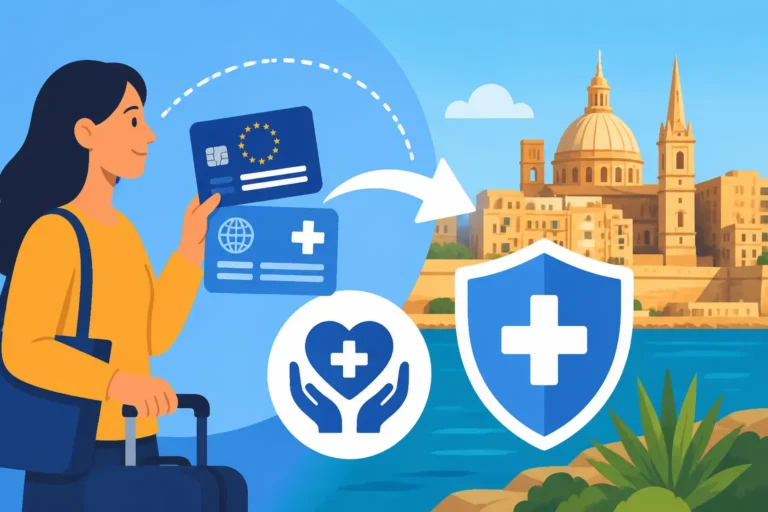
If you are an EU, EEA, or Swiss national, there is a significant loophole to the "must pay Social Security" rule, but it is often misunderstood as a permanent solution. The European Health Insurance Card (EHIC) allows you to access How Malta's Public Healthcare Works: Entitlement, Contributions, and Costs on the same terms as a local, but only for "unforeseen" medical needs.
Using the EHIC as a Temporary Bridge
When you first arrive, your EHIC from your home country is your best friend. It covers you for emergencies, sudden illnesses, or accidents. However—and this is a huge "however"—it is not intended for long-term residents. Once you become a resident of Malta (usually after 183 days, or once you get your eResidence card), you are technically supposed to transition into the Maltese system.
Some people try to use an old EHIC from Germany or France two years after moving to Gzira. If the hospital realizes you are a settled resident and not a visitor, they can and will reject the card. The EHIC is a bridge, not a permanent pier. For those in this "in-between" stage where they haven't started paying Maltese Social Security but are no longer covered by their home country, a plan from a provider like SafetyWing can be a lifesaver to cover the gaps that the EHIC might not reach, especially for non-emergency but necessary care.
The S1 Form for Retirees
There is a specific group of people who never have to pay a cent of Social Security in Malta but still get full, permanent access to the public system: EU retirees. If you receive a state pension from another EU country, you can request an S1 form from your home country's health authorities. You register this form with the Maltese Entitlement Unit, and "presto," you are fully covered.
Malta then bills your home country for your care behind the scenes. This is a fantastic arrangement for the many retirees in St. Paul's Bay and Mellieħa, allowing them to enjoy the public system without having ever worked a day on the island.
Reciprocal Health Agreements with Non-EU Countries
Malta has spent decades forging specific bilateral treaties that allow citizens of certain countries to walk into Mater Dei without paying local Social Security. These are called Reciprocal Health Agreements (RHA), and they are the only reason some non-EU expats can breathe easy.
The United Kingdom and Australia
The most famous of these is the UK-Malta agreement. Despite Brexit, the two nations maintained a strong health pact. If you are a UK national "ordinarily resident" in Malta, you may be entitled to certain levels of care. However, the rules changed slightly post-Brexit, and you now often need to prove you are covered by the UK's Social Security system or meet specific criteria.
Australia also has a long-standing agreement with Malta. If you are an Australian citizen visiting or living in Malta, you can often access Emergency Medical Care in Malta: 112, A&E, and Urgent Help and some necessary treatments for free or at a reduced cost for a limited period (usually up to six months).
Limitations of Reciprocal Agreements
It is vital to understand that these agreements rarely cover "everything." They often exclude:
- Long-term chronic care.
- Certain expensive medications under The POYC Pharmacy of Your Choice Scheme: How to Collect Free Medicines.
- Medical repatriation.
- Non-urgent elective surgeries with long waiting lists.
If you are relying on a reciprocal agreement, you are often living on a "basic" version of healthcare. For comprehensive peace of mind, especially regarding chronic issues or private specialist access, many expats still opt for private coverage.
When Emergency Care is Free for Everyone
There is a common saying in Malta: "They won't let you die on the sidewalk." This is true. In a life-or-death emergency, Mater Dei’s Accident & Emergency (A&E) department will treat anyone, regardless of their Social Security status or nationality. If you are in a car accident on the Coast Road or have a heart attack in Valletta, the ambulance will come, and the doctors will stabilize you.
The Bill After the Crisis
The catch—and there is always a catch—is what happens once you are stable. If you are not entitled to free healthcare through Social Security, an EHIC, or a reciprocal agreement, the hospital’s finance department will eventually catch up with you. I have known expats who received bills for thousands of Euros after a week-long stay in the intensive care unit.
The state provides the care first because it is a humanitarian obligation, but it treats the cost as a debt if you aren't a contributor. This is why having at least a basic "nomad" or "traveler" insurance like SafetyWing is so critical for those not yet in the system; it covers those massive hospital bills that can otherwise bankrupt a new arrival.
| Category | Public Care Access (No SS) | Documentation Required |
|---|---|---|
| EU Tourist | Yes (Emergency/Necessary) | Valid EHIC Card |
| EU Resident (Not Working) | No (Generally) | Private Insurance / S1 Form |
| Non-EU Tourist | No (Billable) | Private Travel Insurance |
| Digital Nomad | No (Generally) | Private Insurance (e.g. SafetyWing) |
| UK/AU Citizen | Partial (Reciprocal) | Passport / RHA Card |
| Asylum Seekers | Yes | Humanitarian ID |
Specific Residence Permits and Health Requirements
For many non-EU citizens, the question of "Can I get public care without paying Social Security?" is answered during the visa application process. Malta is very strict: if you aren't going to be paying into the system, you must prove you won't be a burden on it.
The Nomad Residence Permit
If you are in Malta on a Nomad Residence Permit, you are technically not allowed to pay into the Maltese Social Security system because your employment is foreign. Because you aren't a contributor, you have zero access to free public healthcare. This is why a core requirement for the permit is having a health insurance policy that covers you in Malta. Many nomads find SafetyWing to be the most flexible option here because it meets the Identità (the residency agency) requirements while being affordable. For more on this, check out Why Nomad Residence Permit Holders Need Private Insurance in Malta.
The Self-Sufficient Route
Some people move to Malta under the "Permanent Residency" or "Self-Sufficiency" schemes. These are individuals with high net worth or stable foreign pensions who aren't working locally. Because they don't pay NI, they must rely entirely on Private Healthcare and Insurance in Malta: When You Need Cover. For these residents, the public system is only available if they pay the full, unsubsidized "private" rate for services, which can be significantly higher than what you might pay at a private clinic like St. James Hospital or DaVinci Healthcare.
The Reality of Healthcare Costs for Non-Contributors
If you find yourself in the "gap"—not yet paying Social Security and without a reciprocal agreement—what does it actually cost to use the public system? It’s not as expensive as the US, but it’s certainly not cheap.
A visit to a GP at a local Health Centre might cost a non-entitled person around €20 to €30, but that is just the consultation. Any blood tests, X-rays, or prescriptions will be billed at a "non-resident" rate. If you need to see a specialist at Mater Dei, the cost jumps. If you are admitted to a ward, the daily rate for the bed alone (excluding medicines and surgeries) can exceed €200-€400.
The Prescription Problem
One of the biggest shocks is the cost of medicine. Entitled residents often get "Yellow Cards" or "Pink Cards" for chronic conditions, giving them free life-saving medication. If you aren't paying Social Security, you pay the full market price for every pill. In a country where some specialized medications are imported in small batches, these costs can add up to hundreds of euros a month. This is a major reason why Managing a Chronic Condition in Malta: Schedule V Medicines and Care is so much easier once your Social Security is sorted.
Moving Between Jobs and the "Gap" Period
A common administrative trap happens when an expat changes jobs. If there is a break in your employment, there is a break in your Social Security contributions. Technically, your health entitlement is linked to your "active" status.
While the system usually has a small grace period, a prolonged gap in work can lead to a "red flag" in the healthcare database. It is wise for anyone resigning to ensure they have a transition plan. During these career pivots, having a flexible insurance like SafetyWing ensures you are covered if you trip and break an ankle while "between" Maltese employers. It’s the safety net that the state doesn't provide during your "fun-employment" weeks.
Practical Steps to Take If You Aren't Paying Social Security
If you’ve realized you aren't currently entitled to free care, don't panic. There are ways to navigate this without living in constant fear of a sneeze.
- Check your EHIC status: If you are from the EU, ensure your card is valid and understand its limits.
- Register with the Entitlement Unit immediately: If you think you might be eligible through a spouse or a reciprocal agreement, go to Gwardamanġa. Don't wait until you are sick. See How to Register for Health Entitlement with the Entitlement Unit in Malta for the steps.
- Secure Private Coverage: If you are a Nomad, a job-seeker, or waiting for paperwork, get insurance. SafetyWing is a standard choice for the expat community here because of its ease of use.
- Use Private GPs for minor issues: Often, a private GP in a local pharmacy (like those in Mosta or Birkirkara) will charge you €15-€20. It’s often faster and simpler than trying to navigate the public system as a "paying" non-resident.
- Keep your FS3s: These are your end-of-year tax documents. They are your ultimate proof that you have paid into the system if the hospital ever questions your status.
Getting your Maltese ID Card Number: The Key to Accessing Healthcare is the first real step to permanence. Once that number is in the system and linked to your NI contributions, the doors of the Maltese healthcare world truly open. Until then, you are a guest in the system, and guests are usually expected to bring their own "insurance" to the party.
Important Disclaimer
The information provided in this article is for general informational purposes only and does not constitute legal or professional medical advice. Healthcare regulations and Social Security laws in Malta are subject to change. While we strive to keep this information up to date, always consult with the official Entitlement Unit or Identità for the latest requirements regarding your specific residency status and health coverage.
Finding a Doctor in Malta: GPs, Specialists, and the Referral System
Private Hospitals and Clinics in Malta: Faster Specialist Access
What Public Healthcare Costs in Malta: Free Services and Paid Extras
Healthcare on a Visa-Based Permit in Malta: Nomads, Retirees, and Investors
The Entitlement Unit: Sorting Out Your Right to Treatment in Malta
Can I See a Doctor in Malta Before My Health Entitlement Is Approved?