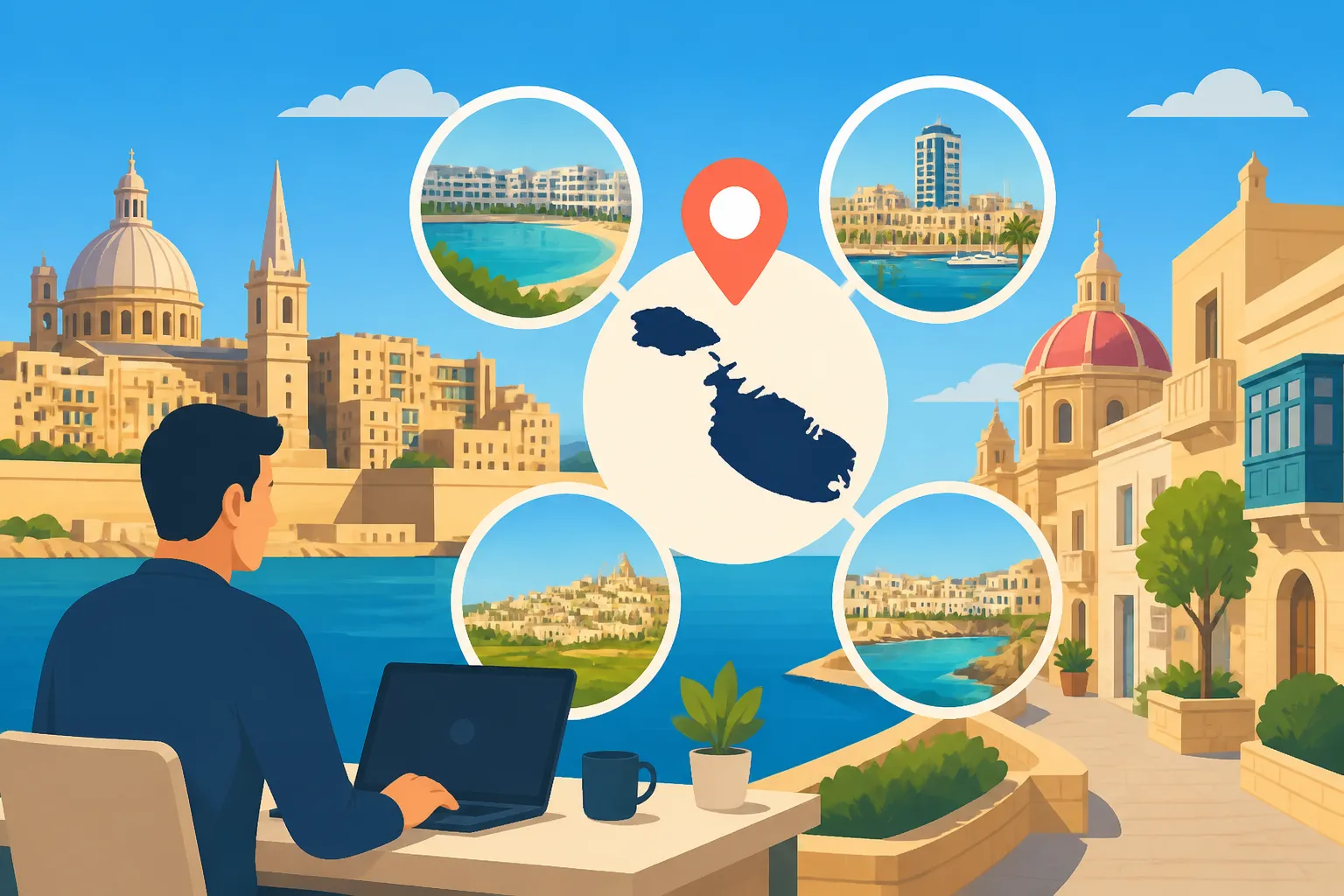
What Are the Best Towns to Be Based In for Work in Malta?
Navigating the Maltese rental market while trying to balance proximity to work is a notorious headache for newcomers. Many expats mistakenly choose a village based on a map, only to discover that a five-kilometer commute can take over an hour in peak traffic. This guide identifies the best towns to be based in for work in Malta to help you sync your lifestyle with your career.
The Strategic Choice: Living Close to Your Industry Hub
One of the first mistakes I see people make when they move here is thinking that because the island is tiny, they can live anywhere and just "pop over" to the office. In reality, Malta is a collection of micro-hubs. If you are working in iGaming, for instance, you will likely find your office in the Sliema, St. Julian's, or Gżira area. Living in a beautiful farmhouse in the southern village of Żurrieq might sound idyllic and affordable, but your daily commute through the Marsa junction will quickly drain your enthusiasm. When considering Which Sectors Are Hiring Foreign Workers in Malta?, you have to look at the geographical footprint of those industries.
Most professional services, including legal and audit firms, are centered around Valletta, Floriana, and the emerging business district of Mrieħel (now officially known as Central Business District). If you land a job in one of these sectors, you want to look at towns with direct bus routes or easy ferry access. The traffic in Malta isn't just about the volume of cars; it is about the bottleneck nature of the roads. Choosing a home on the wrong side of a major bypass can add thirty minutes to your morning routine.
Before you sign a lease, I highly recommend doing a "dry run" of the commute at 8:00 AM. You might find that living in a slightly more expensive area like Msida is worth it because you can walk to work, saving you the cost and stress of owning a car. If you are coming from abroad and feel the language barrier might be an issue in more traditional villages, using a service like iTalki to pick up basic Maltese phrases can help you feel more comfortable in areas outside the main expat bubbles. This is especially useful if you are looking for local insights on How Big Is the iGaming Job Market in Malta? or other niche sectors that might have smaller offices scattered in unexpected locations.
Top Town Recommendations for Professionals
For the vast majority of expats, Sliema and St. Julian’s are the default choices. There is a reason for this: they are the commercial heart of the island. If you work in tech or gaming, you will be surrounded by your peers. The social life is vibrant, and almost everyone speaks English. However, the rents here are the highest on the island. You have to decide if the convenience of being able to walk to a waterfront office is worth the premium. When weighing your options, consider Sliema or St Julian's Better for Newcomers to Malta? as the vibes of these two neighboring towns are actually quite different. Sliema is slightly more residential and "posh," while St. Julian's is the nightlife and entertainment capital.
If your workplace is in Valletta or Floriana, it is worth looking at the Three Cities (Senglea, Cospicua, and Vittoriosa). These towns have seen a massive renovation in recent years and are connected to Valletta by a fast, affordable ferry. It is one of the most scenic commutes in the world. On the other hand, if you are looking for something more budget-friendly but still central, Msida and Birkirkara are excellent choices. Msida is a hub for the university and many tech startups, while Birkirkara is a sprawling town that offers a more "authentic" Maltese experience without being too far from the Mrieħel business district.
For those working in the maritime or manufacturing sectors, the South of Malta is the place to be. Towns like Birżebbuġa and Marsaxlokk offer a slower pace of life and much lower rents. However, you must be prepared for a lifestyle that is less "cosmopolitan" than the Sliema area. People often ask, Is It Cheaper to Live in the South of Malta?, and the answer is a resounding yes, but it comes with a trade-off in terms of nightlife and the number of other expats you will encounter. If you are an American or a TCN working for a multinational, you might also need to keep an eye on your global tax obligations; consulting with Taxes for Expats early on can help you understand how your Maltese salary and your choice of residence might impact your net take-home pay.
Logistics and the Reality of the Maltese Commute
Let’s talk about the elephant in the room: the traffic. Unless you are working remotely on a Nomad Residence Permit, the commute will be a defining part of your life. Public transport is a mixed bag. While the buses are modern and the service is free for residents with a Tallinja card, the sheer volume of traffic means that "express" buses are rarely express. When researching How Reliable Are the Buses in Malta?, you will find that the experience varies wildly depending on which town you choose. Living in a "hub" like Valletta or Victoria (in Gozo) gives you more options because all routes lead to these centers.
Parking is another nightmare. If you choose to live in Sliema, Gżira, or St. Paul's Bay, do not even think about buying a car unless your apartment comes with a dedicated garage space. You will spend forty minutes every evening circling the blocks looking for a white-lined space. Many expats find that an e-bike or a small scooter is the ultimate "cheat code" for Maltese life. It allows you to bypass the queues and park almost anywhere. However, the driving style here is aggressive, so it’s not for the faint of heart.
If you are trying to decide Do I Need a Car to Live in Malta?, consider your grocery shopping and weekend plans. If you live in a central town like Sliema, everything is walkable. If you choose a more remote village for the peace and quiet, a car becomes a necessity rather than a luxury. This logistical balance is something every newcomer struggles with in their first six months. I always tell people to stay in a short-term rental for the first few weeks while they visit different towns at different times of the day to see which one "clicks" with their personality and work schedule.
Cost versus Convenience: Finding the Sweet Spot
Finding the right town is ultimately a financial calculation. You need to look at your base salary and subtract the "cost of convenience." A flat in Gżira might be €1,200 a month, while a similar flat in Mosta might be €850. If the Mosta flat requires you to buy a car, pay for fuel, and spend ten hours a week in traffic, the Gżira flat might actually be the cheaper option in the long run. When you are looking for Where Should Young Professionals Live in Malta?, don't just look at the rent price; look at the total "lifestyle cost."
Below is a comparison of some of the most popular towns for working expats to give you a sense of what to expect:
| Town | Primary Industries | Commute Vibe | Expat Density | Cost Level |
|---|---|---|---|---|
| Sliema | iGaming, Tech, Retail | Walkable/High Traffic | Very High | Premium |
| Gżira | iGaming, Small Business | Walkable to Sliema | High | Mid-High |
| Valletta | Law, Finance, Gov | Ferry/Bus Hub | Moderate | High |
| Msida | Tech, Education | Central/Congested | High (Students) | Mid-Range |
| Birkirkara | Finance (Mrieħel), Admin | Busy/Central | Moderate | Mid-Range |
| St. Paul’s Bay | Tourism, Remote Work | Long Commute/Bus | High | Affordable |
| Marsascala | Maritime, Remote Work | Scenic/Quiet | Low-Moderate | Affordable |
As you can see, each town serves a different purpose. If you are working for one of the Which Companies Are the Biggest Employers in Malta?, check where their headquarters are located. Many of the bigger iGaming firms offer shuttle buses for their employees, which can significantly expand your list of potential towns.
Once you have settled on a town and started your job, the administrative side of Maltese life begins. You will need to handle your tax registration and social security. This is another area where services like Taxes for Expats can be a lifesaver, especially if you are earning income from multiple sources or have assets back in your home country. Understanding the Cost of Living in Malta: Budgeting for the Real Numbers is only half the battle; the other half is ensuring you are compliant with the local authorities while maximizing your savings.
Don't forget to keep your social life in mind. Malta is a very social island, and much of your professional networking will happen over a Cisk (the local beer) in a village square or a cocktail bar in St. Julian's. If you live too far away from the "action," you might find it harder to integrate into the professional community. For those who want to blend in faster, taking a few lessons on iTalki to understand the nuances of Maltese social etiquette can go a long way. Maltese people are incredibly friendly, but showing an interest in their language and culture will open doors that remain closed to those who stay strictly within the expat "bubble."
Disclaimer Regarding Professional Advice
The information provided in this article is for educational and informational purposes only. While I strive to provide accurate and up-to-date details regarding life and work in Malta, the rental market, traffic conditions, and legal requirements are subject to change. This guide does not constitute legal, financial, or tax advice. Readers are encouraged to consult with qualified professionals, such as certified tax accountants or relocation specialists, before making significant financial commitments or moving decisions. Always verify the latest regulations with official government sources such as Identità and the Commissioner for Revenue.