Importing or Exchanging Your Driving Licence in Malta
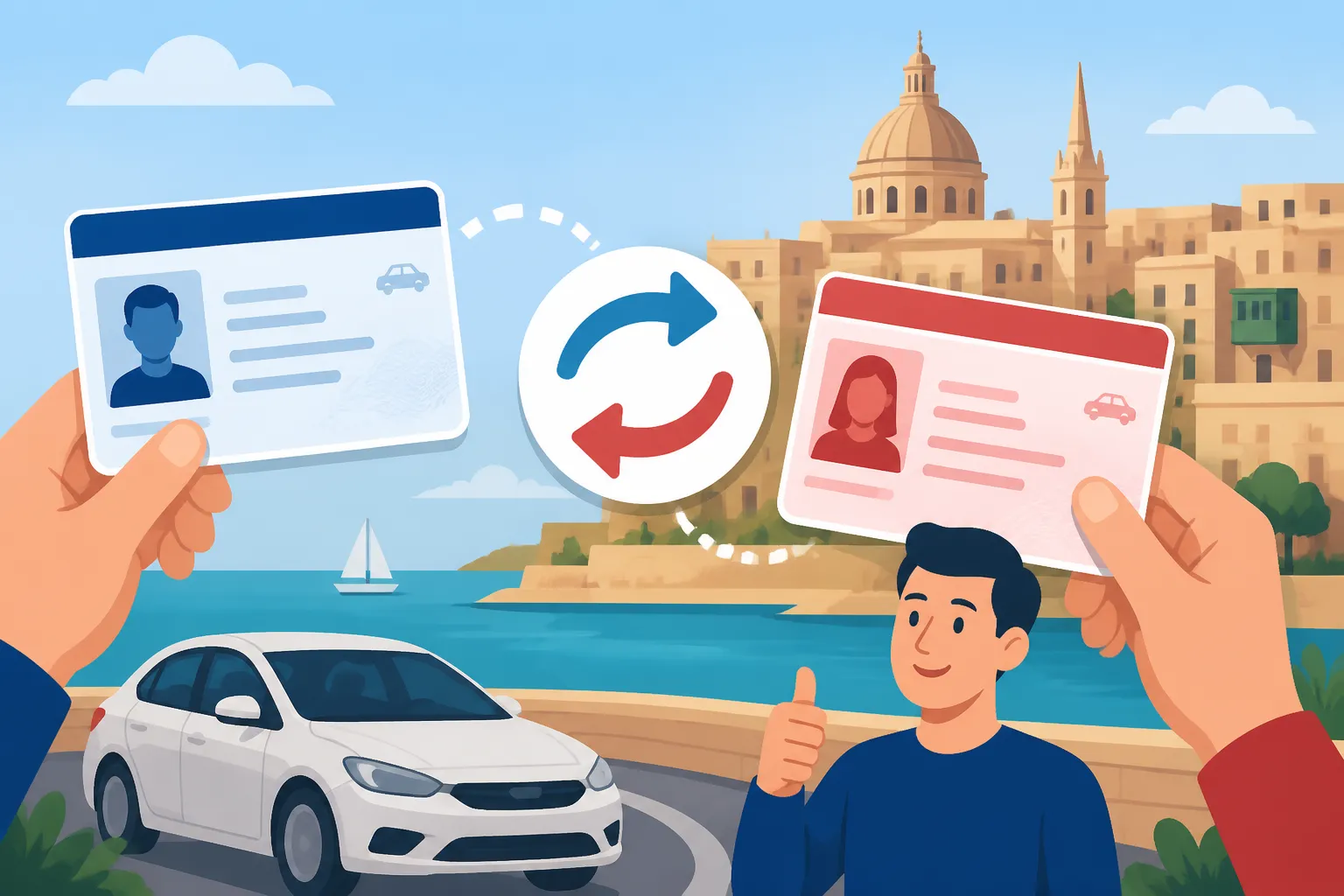
Oh, the joy of Maltese bureaucracy! You've just landed, perhaps found a cozy apartment in Sliema, and you're dreaming of cruising along the coastal roads or popping over to Gozo for the weekend. Then it hits you: your trusty foreign driving licence. Is it valid? Do you need to exchange it? How long do you have? This is a question that throws a spanner in the works for countless expats and newcomers, and trust me, navigating the rules around importing or exchanging your driving licence in Malta can feel like driving through a Gozo rush hour – confusing and a bit slow. But don't fret! This comprehensive guide is here to untangle the web of regulations, shed light on the process, and help you get your Maltese driving credentials sorted so you can hit the road legally and without a headache.
Understanding the Maltese Driving Licence System for Foreign Residents
Let's face it, when you move to a new country, figuring out something as seemingly simple as driving can quickly become a complicated administrative task. Malta, being a sovereign nation with its own set of rules, has specific requirements for foreign driving licence holders, and these requirements vary significantly based on where your original licence was issued. It's not a one-size-fits-all scenario, and getting it wrong can lead to some rather inconvenient (and expensive) surprises, like hefty fines or invalid insurance.
Why Your Foreign Licence Matters or Doesn't
When you first arrive, your foreign licence likely holds some weight, but it's crucial to understand that this validity is often temporary. For many, especially those from outside the EU/EEA, there's a strict grace period. Imagine you've just moved into your new place in St Julian's, unpacked your bags, and are ready to explore. You might be able to drive for a few months on your existing licence, but this window closes sooner than you think. After this initial period, your foreign licence effectively "doesn't matter" in the eyes of Maltese law – meaning you're technically driving without a valid permit, which is a big no-no.
The legal requirement to exchange or import your licence isn't just about ticking a box; it’s about ensuring that all drivers on Malta’s roads meet local standards and are properly documented. It also ties into insurance, which is a whole other kettle of fish you don't want to complicate further. If you're involved in an accident and your licence isn't legally recognised, your insurance policy might not cover you, leaving you in a very difficult position. So, while it might feel like another hurdle, getting your licence sorted is fundamental for your safety and legal standing here.
Who Needs to Exchange, and Who Can Just 'Keep Driving' (for a while)
This is where the distinction based on your licence's origin really kicks in. The rules are different for EU/EEA licence holders compared to those from the UK or other 'third countries'.
If you hold a driving licence issued by an EU/EEA member state, you're generally in a more straightforward position. You can typically continue to use your original licence in Malta for as long as it's valid, right up until its expiry date. There's no mandatory rush to exchange it within a specific period after becoming a resident. However, while not legally compelled to exchange it immediately, many EU/EEA citizens still opt to do so. Why? Because having a Maltese licence can simplify things. For instance, if your licence needs renewing, you’ll find it much easier to renew it through Transport Malta rather than having to deal with the authorities in your home country while living abroad. It also makes police checks smoother, as local officers are immediately familiar with the document.
On the other hand, if your licence was issued by a third country (meaning any country outside the EU/EEA, which, post-Brexit, now includes the United Kingdom for new residents), the situation is much more stringent. You are generally allowed to drive in Malta for a maximum period of 12 months from the date you establish your ordinary residence in Malta. This is a critical timeframe to note. Once those 12 months are up, your foreign licence is no longer considered valid for driving here, and you must exchange it for a Maltese one. If you fail to do so, you'll be driving illegally, which can lead to fines, points on your (non-existent Maltese) licence, and severe insurance complications. For those needing a clear understanding of establishing residency, our guide on Visas and Immigration to Malta: The Complete Guide for Foreigners (2027) can offer some clarity.
Temporary solutions like an International Driving Permit (IDP) are often misunderstood. An IDP is not a standalone licence; it's a translation of your existing foreign licence and is only valid when presented alongside your actual driving licence. While it can be useful for the initial grace period, it doesn't extend the 12-month limit for third-country nationals, nor does it negate the eventual need to exchange your licence. It's essentially a helpful accessory for the beginning of your journey, but not a long-term solution.
The Process for EU/EEA & UK Licence Holders
Even for those whose licences are generally recognised, there are specific steps and nuances to consider. What might seem like a simple exchange can involve some paperwork and patience.
Exchanging Your EU/EEA Licence for a Maltese One
As mentioned, if your licence hails from an EU/EEA member state, you don't have to rush to exchange it immediately upon becoming a resident. You can continue to use it until it expires. However, many find that getting a Maltese licence simplifies administrative life. If your licence is due to expire in the next few years, or if you simply prefer the convenience of having a local document, exchanging it is a relatively straightforward process.
The key is to apply to Transport Malta. You'll need to fill out a specific application form, which can usually be downloaded from their website or picked up in person. Alongside this, you'll need to gather a few essential documents:
- Your Maltese e-residence card or ID card. This is your proof of residency. If you're still waiting for yours, our article on Getting Your Maltese eResidence Card and ID Number will walk you through it.
- Your original, valid EU/EEA driving licence.
- Recent passport-sized photos.
- In some cases, particularly if you are over a certain age (e.g., 70 years old), or if your existing licence has specific medical restrictions, you might be asked to provide a medical certificate from a Maltese doctor confirming your fitness to drive. This isn't usually required for younger drivers with standard car licences, but it's good to be aware.
Once you’ve submitted everything to Transport Malta, they will process your application. They will typically retain your original EU/EEA licence and issue you with a brand-new Maltese one. The new licence will usually carry the same categories and endorsements as your old one and will be valid for the standard Maltese period (typically 10 years, unless age dictates a shorter period).
The Post-Brexit Reality for UK Citizens in Malta
Ah, Brexit. It's certainly added a layer of complexity to many aspects of expat life, and driving licences are no exception. For new UK citizens establishing residence in Malta after 1st January 2021, your UK driving licence is generally treated as a 'third-country' licence. This means the 12-month rule applies to you. You can use your UK licence for up to a year from the date your ordinary residence in Malta began, after which you are legally required to exchange it for a Maltese one.
However, there was an important nuance for those who were already residing in Malta before 1st January 2021 and held a UK licence. These individuals often had a grace period or specific arrangements that allowed them to exchange their UK licence for a Maltese one without needing to take a driving test, provided they did so by a certain deadline. If you fall into this category and haven't exchanged it yet, you should urgently check with Transport Malta as those deadlines have likely passed.
For those new UK arrivals, the exchange process is more involved than for EU/EEA citizens, often mirroring the requirements for other third-country nationals (which we’ll detail next). You'll definitely need:
- Your original UK driving licence.
- Your Maltese e-residence card or ID card.
- A recent medical certificate from a Maltese doctor.
- A police conduct certificate, obtained from the Maltese police. This is a standard document required for many official applications here.
- Passport-sized photos.
While UK licences are in English, making a separate translation unnecessary, the overall process requires more supporting documentation and is a stricter conversion than a simple EU exchange. It’s a good example of how what was once straightforward has become a bit more of a journey due to international policy changes.
The Mandatory Exchange for Third-Country Nationals
For anyone arriving from outside the EU/EEA (and now, for new UK residents), the process isn't just a recommendation; it's a legal obligation with a strict deadline. This section aims to prepare you for this essential administrative task.
The 12-Month Rule and Beyond
This is perhaps the most critical piece of information for third-country nationals: you have exactly 12 months from the date you establish ordinary residence in Malta to exchange your foreign driving licence for a Maltese one. Let's make this crystal clear: if you arrived in Malta on, say, January 15th, 2025, your foreign licence will only be valid for driving here until January 14th, 2026. After that date, if you haven't completed the exchange, you are driving illegally.
The consequences of ignoring this rule are significant. You could face substantial fines if stopped by the police. More importantly, your vehicle insurance could be deemed invalid, leaving you personally liable for damages in the event of an accident. Imagine the nightmare scenario: a fender bender, and suddenly you're facing legal action and huge costs because your licence wasn't valid. It's a risk simply not worth taking. This deadline applies even if your foreign licence itself is valid for many more years in your home country. Malta’s rules supersede that for residents. Many newcomers underestimate the time it takes for administrative processes in Malta, so it’s wise to start this process well before the 12-month mark.
Step-by-Step: Converting Your Third-Country Licence
Converting a third-country licence often feels like a mini-quest, but breaking it down into manageable steps makes it less daunting.
Step 1: Obtain a Medical Certificate. You'll need to visit a Maltese General Practitioner (GP) and ask for a medical certificate for a driving licence application. This is typically a standard form where the doctor confirms you are medically fit to drive. They will check basic things like your eyesight (you might need to read an eye chart) and overall health to ensure there are no conditions that would impair your driving ability. It's a relatively quick appointment, but make sure to inform the receptionist exactly what you need when booking.
Step 2: Get a Police Conduct Certificate. This is a common requirement for many official processes in Malta, essentially proving you have a clean criminal record. You can apply for this at the Malta Police Force Headquarters in Floriana or through specific police stations. You will need your e-residence card and possibly your passport. The certificate can take a few weeks to be issued, so factor this into your timeline.
Step 3: Secure an Official Translation (if necessary). If your driving licence is not in English or Maltese, you will need an official translation. This isn't just any translation; it must be done by a sworn translator registered in Malta. Transport Malta can provide a list of recognised translators, or you can often find them through reputable legal or immigration service providers. Don't skip this step or try a DIY translation, as it will be rejected.
Step 4: Fill Out the Transport Malta Application Form. This form, usually available online or at Transport Malta offices, requires your personal details, residency information, and details about your current driving licence. Be meticulous in filling it out to avoid delays.
Step 5: Gather All Your Documents. This will typically include:
- Your original foreign driving licence (which Transport Malta will retain).
- Your Maltese e-residence card and passport (original and copies).
- The medical certificate from your Maltese GP.
- The police conduct certificate.
- The official translation of your licence (if applicable).
- Two recent passport-sized photos.
Step 6: Submit Your Application to Transport Malta. You'll need to visit their offices, usually in Paola. It’s highly recommended to book an appointment in advance, as walk-ins can mean long waiting times. This is where patience truly becomes a virtue.
Reciprocity Agreements: The Game Changer
Now, here’s the crucial element that can either make your life significantly easier or much more complicated: reciprocity agreements. A reciprocity agreement is a formal arrangement between Malta and another country that allows for the direct exchange of driving licences without the need for the applicant to retake a driving test (theory or practical).
For example, if Malta has a reciprocity agreement with your home country, you follow the steps above, submit your documents, and typically, after processing, you’ll receive your Maltese licence without having to prove your driving skills all over again. This is a massive relief for many, as taking a driving test in a foreign country, possibly in a different language, with unfamiliar road rules, is quite a hurdle.
Malta has such agreements with various countries, including certain states in the USA, Australia, South Africa, and others. However, this list can change, and it’s absolutely imperative that you check the most current list on the Transport Malta website. Do not rely on old information or hearsay. What applied to your friend five years ago might not apply to you today. Some agreements might only cover specific licence categories or have other conditions.
If your country does not have a reciprocity agreement with Malta, then I’m afraid you will have to undergo the full Maltese driving test process. This means you will need to apply for a learner's permit, sit for the Maltese theory test, and then take practical driving lessons with a registered Maltese instructor before you can sit for the practical driving test. This is significantly more time-consuming, expensive, and stressful. It’s a major point to consider when planning your move, especially if driving is essential for your daily life.
Practicalities, Costs, and Common Hurdles
Beyond the step-by-step instructions, there are practical considerations and potential stumbling blocks that every expat should be aware of. The more prepared you are, the smoother the journey.
Documents, Translations, and Medical Certificates
Let's dive a little deeper into these recurring document requirements, as they are often sources of minor delays.
The medical certificate from a Maltese GP is fairly standard. When you go, be clear you need it for a driving licence exchange. The doctor will likely perform a basic check-up, review your medical history, and assess your vision and general physical capabilities to ensure you're fit to drive. It's usually not an in-depth physical, but more of a tick-box exercise to meet the administrative requirements. You'll typically pay a small fee directly to the GP for this service.
The police conduct certificate is also a staple for many official dealings in Malta. You apply for it at the Police General Headquarters in Floriana, or sometimes at district police stations. You'll need your e-residence card, and they'll take your fingerprints. The processing time can vary from a few days to a few weeks, so don't leave this until the last minute. This certificate is vital for proving your good standing in the community, a common requirement when interacting with local authorities. Our broader guide on Settling In: ID Cards, Registration, and Everyday Admin in Malta touches on similar document processes.
As for translations, if your licence isn't in English or Maltese, you simply cannot use an unofficial translation. Transport Malta requires translations from sworn, registered translators. It's an additional cost and another item on your to-do list, but there's no way around it. Make sure the translator is indeed recognised by Maltese authorities. Don't be tempted to use online translation services, as these will not be accepted.
Fees, Processing Times, and Validity Periods
The financial outlay for exchanging your licence is usually manageable, but it’s a cumulative cost. You’ll have:
- An application fee paid to Transport Malta (currently around €80, but this can change).
- The medical certificate fee for your GP (typically €15-€30).
- The police conduct certificate fee (a few euros).
- Translation fees (if applicable, these can be around €20-€50 depending on the translator).
- Passport photos (a few euros for a set).
So, you're looking at a total cost that could range from €100 to €200, depending on your situation.
Processing times are where many expats hit a snag. Maltese bureaucracy isn't known for its lightning speed. While some cases might be resolved quickly, it's more realistic to expect a waiting period of several weeks, possibly even a few months, especially if there are any discrepancies in your application or if you apply during peak times. This is why starting the process early, well within your 12-month grace period, is absolutely paramount. Don't wait until month 11!
Once issued, a Maltese driving licence is typically valid for 10 years for standard car (Category B) licences. For drivers over 70 years of age, the validity period is shorter (often 3-5 years) and requires more frequent medical checks. Keep an eye on the expiry date of your new Maltese licence, as renewal procedures will then apply.
What if You Have to Take a Driving Test?
This is the scenario many third-country nationals dread, especially if their home country doesn’t have a reciprocity agreement with Malta. If you fall into this category, you are essentially starting from scratch, as if you were a brand-new driver.
First, you'll need to apply for a learner's permit (Provisional Licence). This allows you to drive, but only under the supervision of a licensed driving instructor or a qualified Maltese licence holder.
Next, you must pass the Maltese theory test. This exam covers local road signs, traffic regulations, and general driving rules. While many rules are universal, there are local specificities you need to learn. You'll need to study the Maltese Highway Code.
After passing the theory test, you'll need to take practical driving lessons with a registered Maltese driving instructor. They will familiarise you with local driving conditions, common test routes, and what the examiners look for. The number of lessons you need will depend on your experience and confidence, but it's often recommended to take a decent number to ensure you're fully prepared.
Finally, you will sit for the practical driving test. This is conducted by a Transport Malta examiner and will assess your ability to safely and competently drive on Maltese roads. Passing this test means you've officially earned your Maltese driving stripes!
This entire process—from learner’s permit to passing the practical test—can be time-consuming and expensive. You’ll have fees for the learner’s permit, theory test, practical test, and, most significantly, the driving lessons. For some, especially if they are accustomed to driving in a completely different environment, this can be a genuine challenge. It might even lead some to seriously consider if owning and driving a car in Malta is truly necessary, especially with the increasingly comprehensive (and free for residents) public transport system. For more on getting around the islands, check out Public Transport in Malta: Free Bus Travel and the Tallinja Card.
| Licence Origin | Initial Validity Period | Mandatory Exchange? | Reciprocity Agreement Needed? | Driving Test Required? | Key Documents |
|---|---|---|---|---|---|
| EU/EEA | Until Expiry | No (Optional) | Not Applicable | No | e-ID, Original Licence, Photos |
| UK (New Residents Post-2020) | 12 Months | Yes | Yes (check status) | Potentially (if no agreement) | e-ID, Original Licence, Medical Cert, Police Conduct, Photos |
| Third-Country National | 12 Months | Yes | Yes (check status) | Potentially (if no agreement) | e-ID, Original Licence, Medical Cert, Police Conduct, Translation (if needed), Photos |
Why Bother? The Benefits of a Maltese Licence
After all that talk of bureaucracy and potential tests, you might be asking, "Is it really worth the hassle?" The short answer is yes, absolutely. A Maltese driving licence provides tangible benefits and peace of mind that make the administrative effort worthwhile.
Insurance, Police, and Legal Compliance
One of the biggest headaches that can arise from not having a valid Maltese driving licence is with your car insurance. While some insurers might initially cover you on a foreign licence during your grace period, many will insist on a Maltese licence for long-term coverage. Even if they do provide coverage, claims can be complicated or even rejected if your licence isn't legally recognised in Malta at the time of an incident. Getting your licence exchanged removes this significant risk, ensuring that your insurance policy is fully valid and will respond as expected in the unfortunate event of an accident.
Beyond insurance, legal compliance is key. Driving with an expired or unexchanged foreign licence is illegal. When stopped by the police, presenting a Maltese driving licence simplifies the interaction, as it's the standard document they expect. It avoids potential fines, a trip to the police station, or worse, having your vehicle impounded. Having a proper Maltese licence means you're operating fully within the local legal framework, which offers invaluable peace of mind when navigating Malta's often-busy roads. This also applies to other aspects of your life here; from shipping your belongings to understanding your new life, tools like Sirelo offer invaluable support for expats, but some things, like your driving licence, require direct engagement with local authorities.
Renewals, International Travel, and Your Maltese ID
Once you have your Maltese driving licence, future renewals become much simpler. You'll deal directly with Transport Malta, avoiding the complexities of renewing a foreign licence from abroad. This is particularly advantageous for EU/EEA citizens who might find it easier to renew locally than through their home country's system while living here.
Your Maltese driving licence also serves as a commonly accepted form of identification within Malta. While your e-residence card is your primary official ID, the driving licence is often sufficient for day-to-day interactions where ID is required, such as picking up parcels or certain age-restricted purchases. While it's primarily for driving within Malta and the EU, it can sometimes be used as a supplementary ID when travelling within the Schengen Area, though a passport is always the safest bet for international travel.
In essence, obtaining a Maltese driving licence integrates you more fully into the administrative and social fabric of the island. It's a crucial step in ensuring your personal mobility and protecting yourself from unnecessary complications as you build your life here. Make sure your phone is topped up, perhaps with an eSIM from a provider like Airalo, so you can easily call Transport Malta or your GP for appointments and clarifications during this process.
Ultimately, while the process of exchanging or importing your driving licence to Malta can feel like a bit of a marathon, the benefits of legal compliance, smooth insurance dealings, and local convenience far outweigh the initial administrative hurdles. So, arm yourself with patience, gather your documents, and soon you'll be confidently driving the Maltese roads with a valid, locally recognised licence.
Disclaimer
The information provided in this guide is intended for general informational purposes only and does not constitute legal advice. While we strive to keep the information accurate and up-to-date, regulations regarding driving licences, immigration, and related administrative processes in Malta can change. It is always recommended to consult the official websites of Transport Malta and Identità (Malta's agency for identity, citizenship, and permits), or seek advice from a qualified legal or immigration professional for the most current and specific guidance pertaining to your individual circumstances. We cannot be held responsible for any decisions made based on the information presented here.