How Do I Join a Library in Malta?
When you first arrive in Malta, surrounded by the sun and the sea, it’s easy to overlook the simple comforts that make a place feel like home – like a quiet library. Many expats, myself included, assume that navigating a new country’s public services, especially something as seemingly straightforward as joining a library, will be a bureaucratic maze. This guide is here to tell you that while there are a few steps, accessing Malta’s public library system is entirely possible and a wonderfully underrated way to connect with the island's culture and community, and yes, find plenty of English books too!
Navigating Malta's Library Landscape as an Expat
Malta might be small, but it boasts a surprisingly robust and historically rich library system. It's not just about dusty old tomes; these are places for learning, community engagement, and even a bit of quiet solitude when the island's hustle and bustle get a bit much. Understanding the different types of libraries will help you figure out where you’ll get the most value.
The National Library of Malta: More Than Just Books
First, let's talk about the big one: the National Library of Malta, or as it's known locally, Bibliotheca. Located right in the heart of Valletta, in a magnificent building designed by Stefano Ittar, this isn't your typical lending library. Think of it more as a treasure trove of national heritage. Its primary role is to act as a repository for all publications printed in Malta, and to collect significant foreign works relating to the islands.
For expats, the National Library is an incredible resource if you're keen on Maltese history, culture, or undertaking academic research. You'll find ancient manuscripts, rare books, and extensive newspaper archives dating back centuries. It’s an indispensable hub for researchers and historians, or simply for those who appreciate the sheer weight of history. However, it’s largely a reference library, meaning most materials are for use on-site only. You won't be checking out the latest thriller here, but you can certainly spend hours immersed in Malta's past, enjoying the quiet grandeur of the reading rooms. Access to its collections generally requires registration, often involving an application form and proof of identification.
Public Libraries Across the Islands: Your Local Community Hubs
While the National Library serves a specific research function, the network of public libraries is where most expats will want to focus their attention for everyday reading and community connection. Malta Libraries, the agency responsible for running the public library service, manages a central library in Floriana (the Central Public Library) and numerous branch libraries scattered across Malta and Gozo.
These local libraries are fantastic community resources. You'll find them in most major towns and villages, from Sliema and Mosta to Rabat and Qormi, and of course, Victoria (Rabat) in Gozo. They are designed for general public use, offering a wide selection of fiction and non-fiction books for adults, young adults, and children. Crucially for expats, almost all public libraries have a substantial collection of books in English, alongside Maltese titles. They are often quiet havens, providing a space for reading, studying, or simply escaping the heat of a Maltese summer afternoon. Many branches also offer free internet access, which can be a real lifesaver when you’re first Setting Up Your Home in Malta: Utilities, Internet, and Insurance and your own internet isn't quite sorted.
The Nitty-Gritty: How to Actually Join a Library
So, you're ready to get your hands on some books without shelling out cash at a bookstore. Great decision! The process of joining a public library in Malta is surprisingly straightforward, designed to be accessible to residents, including us foreigners. Don't let the idea of bureaucracy scare you; it's genuinely one of the smoother administrative tasks you'll encounter here.
Eligibility and Required Documents
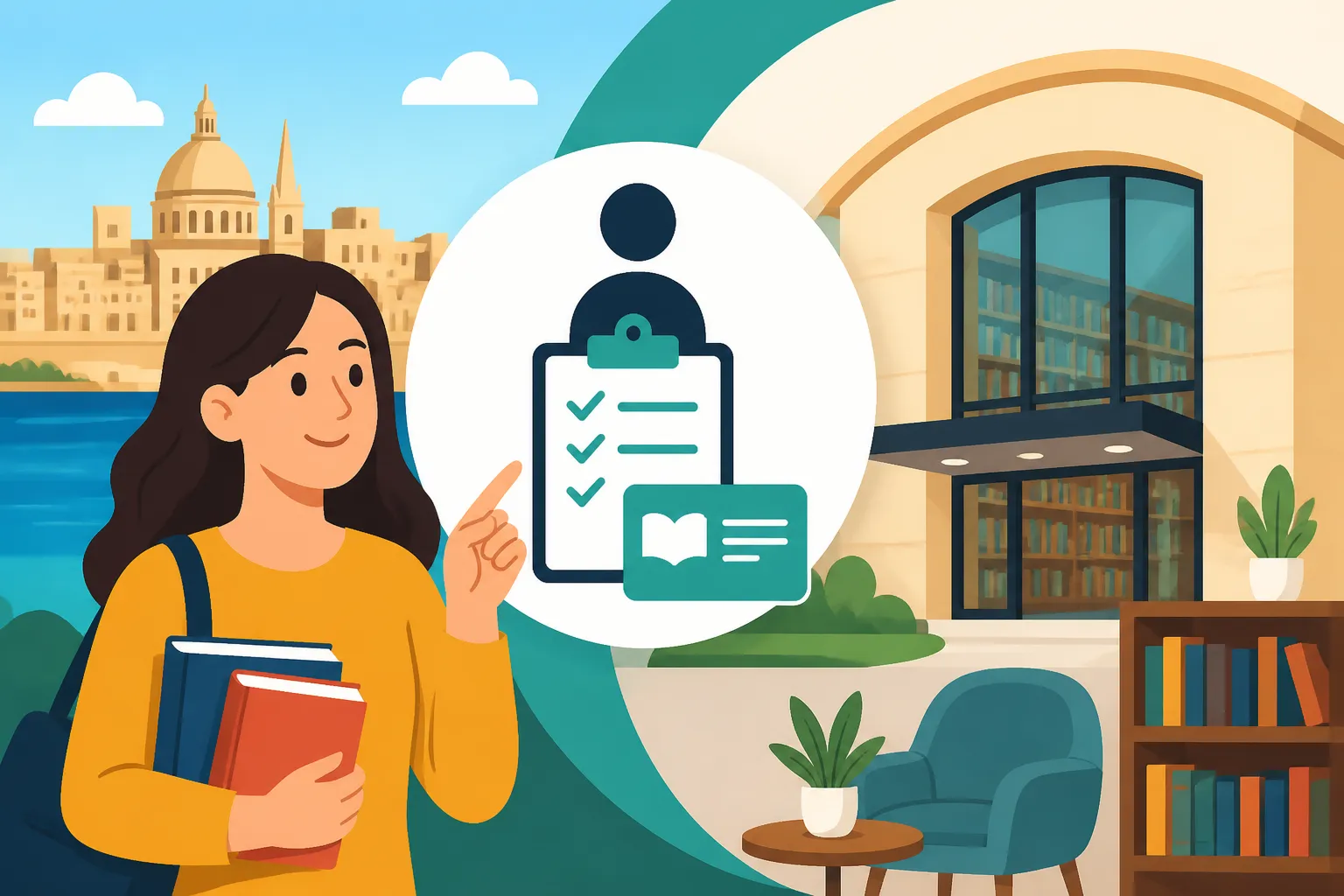
To become a member of Malta Libraries and get your very own library card, you’ll generally need to prove two things: who you are and where you live.
-
Who can join? Anyone who is a resident of Malta or Gozo, regardless of their nationality, can usually join. This includes EU citizens and third-country nationals with valid residence permits. There are sometimes provisions for non-residents (e.g., long-term tourists or students on short courses) but it’s always best to check with your local branch as rules can vary slightly or involve a nominal fee. Children are, of course, welcome to join and often have their own dedicated sections and activities, making it a wonderful resource for expat families.
-
What documents are needed? This is where your official documents come in handy. You’ll typically need:
- Valid Identification: Your How Do I Get a Maltese eResidence Card? is the gold standard here. If you haven't received it yet, your passport along with proof of your residence permit application might suffice. The key is a photo ID that proves your identity.
- Proof of Address: This is crucial. A recent utility bill (water/electricity from ARMS, internet, or even a mobile phone bill with your name and Maltese address on it) is usually accepted. Your rental agreement might also work, especially if you’ve just moved in. This ensures they know where to send overdue notices (hopefully not!).
- Application Form: You'll fill this out at the library. It asks for basic personal details, contact information, and your How Do I Get My Maltese ID Card Number?.
It’s always a good idea to bring originals and a photocopy of everything, just in case. And if you're planning a big move to Malta, services like Sirelo can help you keep track of all the documents you'll need for various registrations, including joining the library.
The Application Process: Step-by-Step
Ready to dive in? Here’s what the typical application process looks like:
- Choose Your Branch: You can generally join at any public library branch. While you can borrow and return books to any branch once you're a member, it often makes sense to register at the library closest to your home. For example, if you live in Sliema, head to the Sliema Public Library.
- Visit the Library: Go during opening hours. Library staff are generally very friendly and used to assisting foreigners. Don't be shy about asking questions if you're unsure about anything.
- Fill Out the Form: The staff will provide you with a membership application form. Fill it out completely and accurately, ensuring your name and address match your supporting documents.
- Present Your Documents: Hand over your ID and proof of address. The staff will verify your details.
- Pay Any Fees (If Applicable): For most residents, joining is free. However, if you fall into a category requiring a fee (e.g., temporary residents, specific circumstances), you’ll pay it at this point. It’s usually a nominal annual fee, if anything.
- Get Your Card: Once everything is processed, you'll be issued with your shiny new library card! This usually happens on the spot. This card is your key to accessing all the resources of Malta Libraries.
And that’s it! You're now a registered library member in Malta. You can now start borrowing immediately, opening up a world of literature, learning, and local information right at your fingertips. It’s one of those small victories that make Malta feel a little more like home.
Making the Most of Your Maltese Library Membership
Once you have that library card in your hand, you're not just getting access to physical books. Malta's public libraries offer a range of services that can significantly enhance your life as an expat, from practical resources to community engagement.
Borrowing, Renewing, and Returning Books
The core service of any public library is, of course, borrowing books. Malta Libraries generally has a clear system for this:
- Loan Periods: Most books are typically loaned out for a period of two to three weeks. You’ll be told the exact return date when you borrow them. Keep an eye on that date to avoid any late fees!
- Borrowing Limits: There's usually a limit to how many items you can borrow at once – often around 3-5 books per person. This allows for fair access to the collection for everyone.
- Renewing: Life happens, and sometimes you need a little more time with a book. You can usually renew your borrowed items, provided no one else has reserved them. This can often be done online through the Malta Libraries catalogue portal, or by calling or visiting your local branch. It’s a convenient feature that saves you a trip and avoids penalties.
- Returning: Books can generally be returned to any public library branch within the Malta Libraries network, not just the one you borrowed them from. This flexibility is a huge convenience, especially if you're often on the go between different towns or visiting Gozo.
Beyond traditional books, many libraries also stock magazines, audiobooks (on CD), and sometimes even DVDs. It’s worth exploring the shelves to see what treasures you can find.
Beyond Books: Services and Resources for Newcomers
Malta’s public libraries are much more than just places to pick up a novel. For newcomers, they can be invaluable hubs:
- Internet Access and Wi-Fi: Many branches offer free public computers with internet access, and often complimentary Wi-Fi. This can be incredibly useful if you need to print a document, check emails, or research something important, especially during your initial settling-in period when home internet might not be fully established.
- Study Spaces: If you're a student, a remote worker, or just someone who needs a quiet environment away from the distractions of home, the libraries provide excellent study areas. It’s a calm atmosphere, often air-conditioned in summer, perfect for concentration.
- Children's Activities: This is a fantastic benefit for expat families. Many libraries host regular storytelling sessions, craft workshops, and reading programmes for children. These events are not only educational but also a brilliant way for your children to Make Friends as a Newcomer in Malta and integrate into the local community, and for you to meet other parents.
- Language Learning Resources: Interested in picking up some Maltese? Your local library likely has introductory language books, phrasebooks, and perhaps even audio courses. It’s a great free resource to help you get started with the local language.
- Community Information: Libraries often serve as informal information centres. You might find local event notices, flyers for community groups, or even simply get advice from friendly staff about local services or happenings. It’s another way to feel more connected to Everyday Living in Malta: Shopping, Climate, and Local Customs.
Digital Resources and Online Access
In today’s digital age, physical libraries have also expanded their reach online. Malta Libraries is no exception, offering digital services that you can access from the comfort of your home:
- Online Catalogue: The Malta Libraries website features a comprehensive online catalogue where you can search for books, check their availability, and see which branch holds them. This is incredibly useful for planning your library visits.
- e-books and Audiobooks: While specific platforms can change, Malta Libraries does provide access to digital resources like e-books and audiobooks. You’ll usually need your library card number to log in to platforms like OverDrive or Libby. This means you can borrow digital titles directly to your e-reader, tablet, or smartphone, enjoying new reads without even leaving your apartment.
- Databases and Journals: For more serious research or learning, the library might offer access to various online databases and academic journals, which can be a goldmine for students and professionals alike.
Accessing these digital services means your library card isn't just for physical books; it's a gateway to a wealth of information available 24/7. This is particularly convenient if you're in a more remote area of Malta or Gozo, or simply prefer the convenience of digital reading.
Common Challenges and Tips for Expats
While joining and using a Maltese library is generally straightforward, it's normal to encounter a few minor quirks or have questions as a newcomer. Having lived here for a while, I've picked up on some common points of interest for expats.
Language Barriers and Finding English Materials
One of the biggest worries for expats new to any non-English-speaking country is the language barrier. In Malta, this is generally less of an issue than you might imagine, especially in urban areas, due to the prevalence of English.
- English is Widespread: You'll be relieved to know that English is an official language in Malta, and most library staff are perfectly fluent. So, asking for help, filling out forms, or enquiring about specific books in English will not be a problem. You won’t feel like you're trying to Get Care If I Don't Speak Maltese?.
- Extensive English Collections: Public libraries, particularly the larger ones like the Central Public Library in Floriana, and branches in expat-heavy areas like Sliema or St. Julian's, boast extensive collections of English-language books. You’ll find popular fiction, classic literature, non-fiction, and children's books. Don't worry about only finding books in Maltese; there’s plenty for everyone.
- Searching the Catalogue: When using the online catalogue, you can usually filter by language or simply search for English titles directly. If you're looking for a specific author or genre, just type it in, and chances are you’ll find something. If a book is only in Maltese, it will be clearly indicated.
- Children's Books: For families, rest assured that the children's sections are well-stocked with English picture books, chapter books, and educational materials. This can be a huge help in ensuring your children have access to engaging stories and maintain their English literacy.
Understanding the System and Local Etiquette
Like any public service, there's a certain way things operate, and a bit of local etiquette can go a long way.
- Patience is a Virtue: While the process is efficient, sometimes things can move at a slightly slower pace than you might be used to in other countries. Embrace the piano, piano (slowly, slowly) approach and be prepared for a relaxed atmosphere.
- Ask for Help: Don't hesitate to ask library staff if you can't find a book, need help with the catalogue, or have questions about services. They are generally very helpful and keen to assist. This goes for anything from finding a specific author to figuring out how to print documents.
- The Library as a Community Space: Think of your local library not just as a place for books but as a community hub. It's a great spot for peaceful reading, studying, or even attending events. For those wondering How Do I Find Other Expats in Malta?, community event boards in libraries can sometimes provide leads.
- Quiet Please: Maltese libraries, like most worldwide, uphold a sense of quiet. Be mindful of others who are reading or studying, and keep noise levels down. If you need to take a call, step outside.
- Take Advantage of Programming: Especially if you have children, look out for special events. These are often advertised on the library’s website, social media, or on notice boards within the branch. It's a wonderful way to engage with the local community and make friends.
- Updating Information: If you change your address or phone number, remember to Update Your Address with Identità in Malta and also notify the library so their records are accurate. This ensures you continue to receive any communications they might send.
Joining a library in Malta is one of those simple, yet incredibly rewarding, steps you can take to truly settle into island life. It provides not just entertainment and knowledge, but also a connection to your new community. So grab your documents, head to your nearest branch, and get ready to enjoy a fantastic, free resource!
Disclaimer
The information provided in this guide is intended for general informational purposes only and does not constitute legal, financial, or professional advice. While we strive to provide accurate and up-to-date information, regulations and procedures in Malta can change. It is always recommended to verify specific requirements with the official Malta Libraries website, local library branches, or other relevant authorities. We accept no responsibility for any loss or inconvenience caused by reliance on this information.