How Do I Get Care If I Don’t Speak Maltese?
Moving to a new country involves a thousand small anxieties, but nothing quite matches the sheer dread of sitting in a waiting room, rehearsing how to describe a stabbing pain in a language you don't speak. I remember standing in a pharmacy in Sliema during my first week, desperately trying to gesture "sinus infection" because I was too nervous to speak. This guide solves that fear by walking you through exactly how the Maltese healthcare system operates in English and how to ensure you are understood.
The Reality of English as an Official Language in Maltese Healthcare
One of the greatest sighs of relief for any expat moving to these islands is realizing that Malta is officially bilingual. English isn't just a "tourist language" here; it is a co-official language enshrined in the constitution. In the medical field, this is even more pronounced because the vast majority of medical textbooks, research, and training in Malta are conducted entirely in English.
When you walk into a public health centre or the main hospital, Mater Dei, the default language for documentation, signage, and professional communication is English. You will find that nearly every doctor, nurse, and specialist has attained a level of English proficiency that is indistinguishable from a native speaker. In fact, many Maltese doctors spend part of their residency or specialist training in the UK or Ireland, bringing back a very familiar clinical vocabulary. This is a core reason why Healthcare in Malta for Foreign Residents: The Complete System Guide (2027) is so accessible compared to other Mediterranean destinations.
However, it is important to manage expectations regarding support staff. While the medical professionals are fluent, you might occasionally encounter older receptionists or maintenance staff who are more comfortable in Maltese. In these rare instances, a simple "Hello, do you speak English?" is never met with hostility. The culture here is incredibly accommodating to foreigners, and they will almost always find a colleague who can assist you immediately. This bilingualism is a pillar of the system and ensures that even if you don't know a word of the local tongue, your clinical care remains uncompromised.
Navigating Public Health Centres and Mater Dei without Maltese
The public system is where most residents receive their primary care. If you are feeling unwell, your first stop is usually one of the regional health centres. I’ve spent many hours in these waiting rooms, and I can tell you that the process is remarkably English-friendly. When you arrive, you will usually find a reception desk where you must present your ID or residence document.
The forms you are asked to fill out, whether for a routine check-up or an urgent matter, are almost always printed in both Maltese and English. If you ever find a form that is only in Maltese—which is becoming increasingly rare—the staff will happily translate it for you line-by-line. If you are still in the process of getting your paperwork in order, you might be wondering Which Health Centre Do I Go to After Moving to Malta? depending on your locality. Each locality is tied to a specific centre, and they all operate under the same bilingual standards.
At Mater Dei, the national hospital, the environment is even more international. Because Malta is a hub for specialists, the staff is a melting pot of Maltese and international professionals. You are just as likely to be treated by a specialist from Italy, Pakistan, or the UK as you are by a local. In this environment, English acts as the "lingua franca" that keeps the hospital running. All your discharge summaries, blood test results, and prescriptions will be issued in English. This is particularly helpful if you need to share your records with doctors back in your home country or if you use a flexible insurance provider like SafetyWing to cover gaps in your public entitlement.
Communicating with Triage Nurses
In an emergency or a walk-in scenario, the triage nurse is your first point of contact. Their job is to assess the severity of your condition. Even if they are speaking Maltese to a colleague when you walk up, they will switch to English the moment they address you. To make this smoother, it helps to carry a written list of your symptoms and any medications you are currently taking. This removes the "brain fog" that often happens when you're feeling ill and trying to communicate in a high-pressure environment.
Using myHealth for Digital Clarity
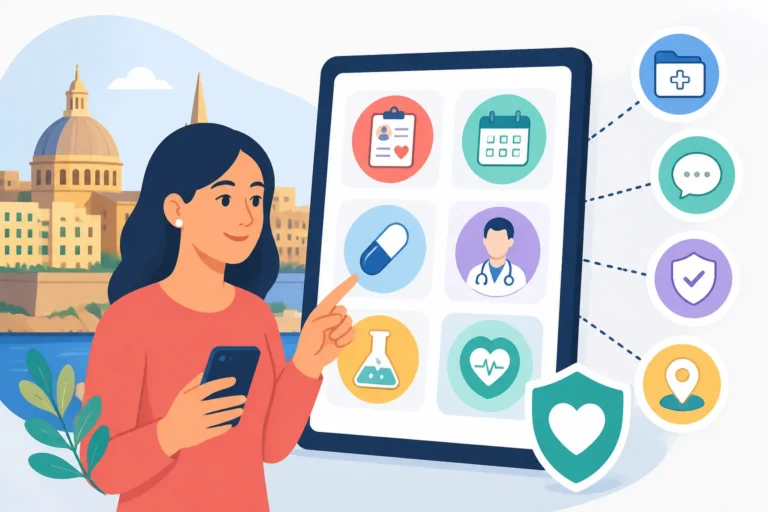
Malta has made great strides in digital health. One of the best ways to bypass any potential verbal confusion is to use the online portal. By Booking Appointments and Using myHealth Online in Malta, you can select your preferred services and see your records in black and white. This portal is fully available in English, allowing you to review what the doctor wrote about your visit without worrying that you misheard a term during the consultation. Knowing exactly What Can I Do on Malta's myHealth Online Service? can save you a lot of unnecessary trips to the health centre just to ask for clarification.
Private Clinics and Pharmacies: The English-Speaking Advantage
For many expats, the first point of medical contact is a private GP located in a pharmacy. This is a very Maltese quirk: most pharmacies have a small consultation room in the back where a doctor sits for a few hours a day. These doctors are often the same ones who work in the public hospitals, but in a private setting, they can often give you more time and immediate attention.
In these private settings, English is the absolute standard. Pharmacies in Sliema, St. Julian's, and Swieqi are so accustomed to the expat community that you will rarely hear Maltese spoken at all. The pharmacists themselves are highly educated professionals who can explain the side effects of your medication in perfect English. If you are waiting for your public healthcare rights to kick in, Private Healthcare and Insurance in Malta: When You Need Cover is a common route. During this transition, using a global travel medical insurance like SafetyWing can provide a safety net, allowing you to visit these private clinics without worrying about the upfront costs while you navigate the local bureaucracy.
Finding a Private Specialist
If you need more than a GP, the private sector offers fast access to consultants. When Finding a Doctor in Malta: GPs, Specialists, and the Referral System, you can often browse profiles online or through hospital websites like St. James or DaVinci. These sites are in English, and you can even call the reception to specifically ask if the doctor has experience working with international patients. In my experience, they almost always do.
Getting Your Prescriptions Right
Maltese pharmacies are a wealth of information. If you are under the public system, you will eventually become familiar with the "Pharmacy of Your Choice" scheme. This is how the government distributes free chronic medication. When you are Pharmacies and the POYC Scheme: Getting Medicines in Malta, the pharmacist will walk you through the dosage and the "Pink" or "Yellow" card system in English. Having a brand like SafetyWing in your corner can also be useful here if you need to purchase non-entitlement medicines and want to keep track of your medical spending for potential claims.
Overcoming Cultural Nuances and "Maltenglish"
While the language is English, the way it is spoken can sometimes be a bit different than what you might hear in London or New York. There is a local dialect of English often jokingly called "Maltenglish." Understanding a few cultural nuances will make your medical interactions much smoother.
The most common word you will hear is "Mela." It essentially means "So," "Well," or "Of course." If a doctor says, "Mela, let's look at your blood tests," they aren't using a medical term; they are just transitioning the conversation. Don't let the local rhythm of speech confuse you. Maltese people can be very expressive and loud—this doesn't mean they are angry or that your condition is dire. It’s just the Mediterranean way of communicating.
Another thing to watch for is the "referral" culture. In Malta, the system relies heavily on the GP being the gatekeeper. Even if you speak perfect English, you might feel frustrated if a doctor won't immediately send you to a specialist. It’s not a language barrier; it’s just the protocol. Knowing How Do I Get a Referral to a Specialist in Malta? is vital. Always be firm but polite about your symptoms. If you feel that Can I See a Doctor in English in Malta? is your primary concern, rest assured that the answer is a resounding yes, but the medical culture might still require a little patience and persistence.
Language Accessibility Comparison: Public vs. Private
| Feature | Public Healthcare (Mater Dei/Health Centres) | Private Healthcare (Clinics/Pharmacies) |
|---|---|---|
| Primary Language | English & Maltese (Bilingual) | Predominantly English |
| Medical Records | English (Digital & Paper) | English |
| Reception Staff | Mostly Bilingual; some Maltese-first | English-first in expat areas |
| Specialist Fluency | Near-native English | Near-native English |
| Official Forms | Bilingual (Dual-language) | English |
| Signage | Primarily English | English |
| Wait Times | Can be long; verbal updates in English | Short; clear communication |
Practical Steps for Language-Barrier-Free Care
To ensure you never have a "lost in translation" moment, I recommend following these steps whenever you seek medical help in Malta:
- Bring Your Passport or eResidence Card: The first hurdle isn't language; it's identification. Everything in the Maltese system is tied to your ID number. You can find more on this in the guide on How Maltese Health Entitlement Fits with Social Security Contributions.
- Write Down the Timeline: Instead of trying to remember when your fever started, have a note on your phone. "Tuesday: 38.5C fever. Wednesday: Dry cough." This is a universal language that any doctor appreciates.
- Ask for the "Discharge Summary": If you are treated at a health centre or hospital, always ask for a printed summary in English. This is your insurance against any verbal misunderstandings.
- Confirm the Dosage: Before leaving a pharmacy, ask the pharmacist to write the instructions on the box in English (e.g., "One pill, twice a day, after food").
- Use a Translator App for Niche Terms: While doctors speak English, specific names for certain local herbs or over-the-counter remedies might be in Maltese. An app can help you bridge that tiny gap if you're looking for something very specific in the pharmacy aisles.
If you are a digital nomad or a frequent traveler, having a plan like SafetyWing can significantly reduce the stress of these interactions. It allows you to choose private providers where English is the absolute priority, giving you a "soft landing" as you get used to how things work on the island. Over time, you'll realize that the language barrier in Malta is almost non-existent for English speakers, making it one of the safest and most comfortable places for expats to manage their health.
Disclaimer
This guide is intended for informational purposes only and is based on personal experience and current local standards as of 2026. Medical systems and language policies can change. Always consult with a qualified medical professional or the Maltese Ministry for Health for official advice and emergency procedures. Access to public healthcare depends on your specific residency status and social security contributions.