Can My Family Work or Study on a Family Permit in Malta?
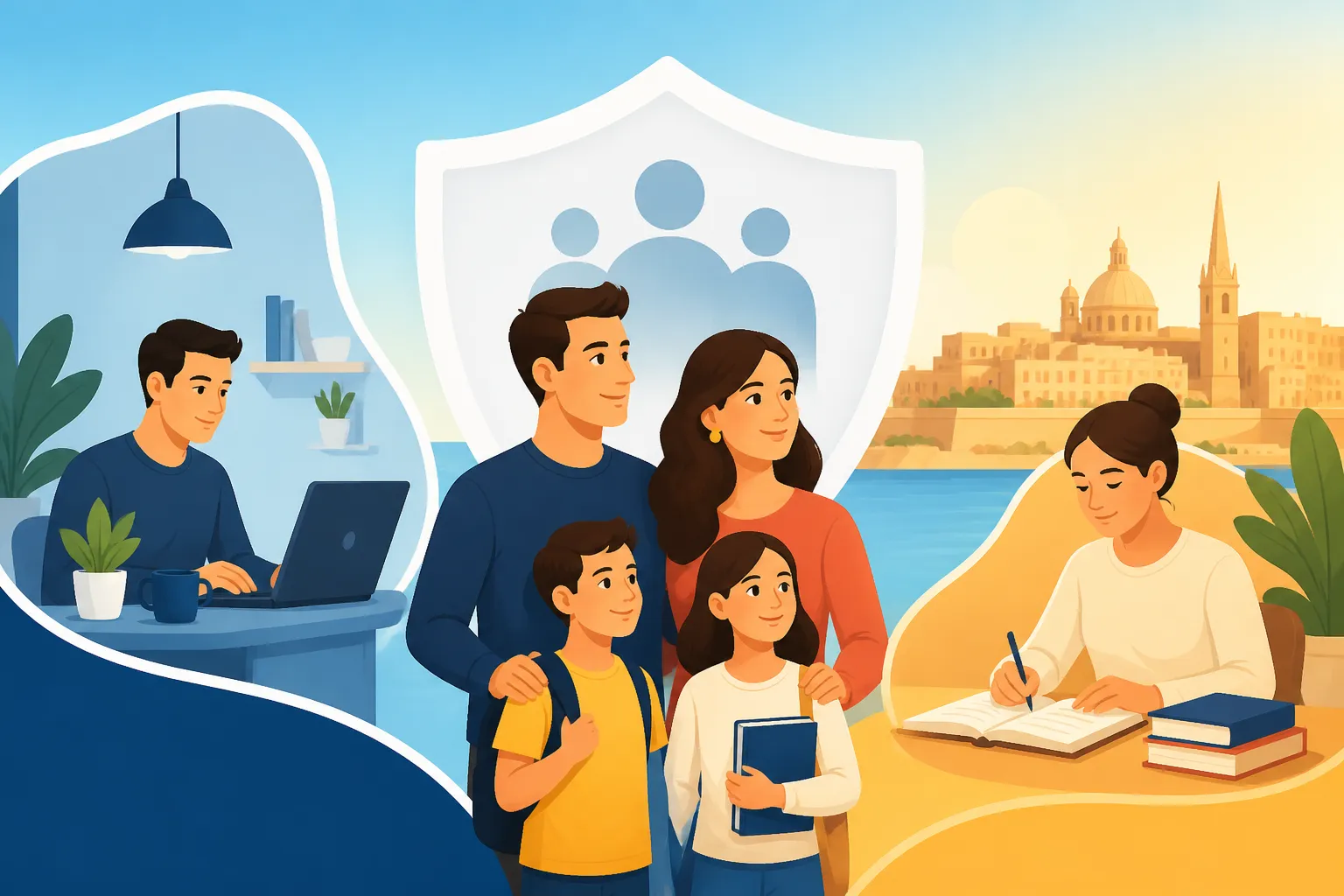
Ah, the big question when you’re planning to bring your family over to Malta – or even after they’ve arrived and settled in a bit! It’s natural to wonder if your spouse can pick up a job or if your kids can dive straight into the local education system on a family permit. This isn’t just about putting food on the table; it’s about integration, feeling useful, and building a life. The good news is, for the most part, the answer is a resounding yes, but like everything bureaucratic in Malta, it comes with a few conditions and processes you need to understand. Let’s unravel how family permits work for employment and education here on the islands.
Navigating Family Reunification in Malta: The Basics of Your Permit
First things first, let’s talk about what a family reunification permit actually is. When you, as the primary resident in Malta (often referred to as the 'sponsor' or 'main applicant'), get your own residence permit – usually a work permit, highly skilled permit, or even a Nomad Residence Permit – you gain the right to apply for family reunification for certain close relatives. Identità (the agency formerly known as Identity Malta) issues these permits, allowing your family members to reside legally with you. This is a massive step, as it means you’re not just an individual living here, but a family unit.
Generally, the family members who qualify for reunification include your spouse (or registered partner), and your minor children (under 18 years of age). In some very specific cases, and often with stricter criteria regarding dependency and financial stability, adult dependent children or even dependent parents might qualify, but these are less common for standard family reunification processes. The permit they receive is tied to your status; if your permit is withdrawn or expires, theirs is generally affected too. So, while it grants them residency, it doesn’t automatically bestow the same rights as your own primary permit. This distinction is crucial when we talk about work and study.
The primary permit holder, yourself, carries a significant responsibility. You need to demonstrate sufficient and stable financial resources to support your entire family without relying on Malta’s social assistance. You also need suitable accommodation that meets the size requirements for your family. Often, people underestimate these requirements, only to face delays. Make sure your finances are in order and your rental agreement is solid. Planning ahead, perhaps even coordinating your move with specialist companies like Sirelo, can help ensure all your domestic arrangements are in place before your family arrives, preventing hiccups with their permits.
Unlocking Opportunities: Working in Malta on a Family Permit
Now for the burning question: can your family members actually work? The answer, particularly for non-EU/EEA nationals, is often yes, but with an additional step.
Work Authorisation for Non-EU/EEA Family Members
If your family members are non-EU/EEA nationals, holding a family reunification permit doesn't automatically grant them the right to work. They will typically need to obtain a separate work permit or an employment licence through Jobsplus, Malta's public employment service. This can feel like yet another hoop to jump through, but it’s a standard procedure to regulate the labour market.
Here’s how it usually plays out:
- Job Offer is Key: Just like any other non-EU national seeking employment, your family member will need a job offer from a Maltese employer first. The employer is usually responsible for initiating the application for the employment licence. This means your spouse needs to actively look for work, interview, and secure an offer before they can apply for the right to work.
- Jobsplus Application: Once a job offer is secured, the employer submits the employment licence application to Jobsplus. This application will require various documents, including copies of the family reunification permit, passport, the job contract, and usually a police conduct certificate from both Malta and their country of origin.
- Labour Market Test: For many roles, Jobsplus will conduct a 'labour market test.' This means the employer needs to demonstrate that no suitable Maltese or EU/EEA candidate could be found for the position. They usually do this by advertising the position for a certain period. While this process is often expedited or waived for certain highly skilled roles or in sectors with known shortages, for general positions, it can add time and complexity.
- Processing Times: Be prepared for processing times. While some applications might be quicker, others can take several weeks or even months. It’s a frustrating waiting game, especially when your family member is eager to contribute and integrate. During this time, they are generally not permitted to start working. For more details on the general process, you might find our guide on "Working in Malta as a Foreigner: The Complete Guide (2027)" helpful.
Differences for EU/EEA Family Members
If your family members are EU/EEA nationals, the situation is much simpler. As EU citizens, they generally have the right to work in Malta without needing a separate employment licence. Once they have registered their residency in Malta (which they would do as part of their family reunification process anyway), they are free to seek and take up employment. This is a significant advantage and often leads to much smoother integration into the Maltese workforce. They would still register with Jobsplus as jobseekers if they need assistance finding work, but the bureaucratic barrier for permission to work is essentially non-existent.
Common Challenges and Realities of the Job Market
The Maltese job market, especially for accompanying spouses, can present a few challenges:
- Job Availability: While Malta has a dynamic economy, especially in sectors like iGaming, finance, and tourism, finding suitable employment can still take time. Some roles require specific qualifications or experience.
- Qualifications Recognition: If your family member has professional qualifications obtained outside Malta, they might need to get them recognised by the Malta Qualifications Recognition Information Centre (MQRIC). This can be a lengthy process. Our guide on "Recognising Foreign Qualifications in Malta Through the MQRIC" provides a comprehensive breakdown.
- Language: While English is an official language and widely spoken, some client-facing roles or specific local businesses might prefer or require Maltese. However, many international companies operate entirely in English.
- The 'Skills Pass': As of 2026, Malta is implementing the Skills Pass for certain categories of non-EU third-country nationals. While typically aimed at primary applicants, it's worth checking if it might apply to dependants seeking employment in specific sectors. This pass ensures a basic level of English and vocational skills.
It's a realistic expectation that securing employment for a non-EU family member might not be instant. Encourage them to network, explore volunteer opportunities, or even consider further education to boost their local marketability while waiting for job offers.
Opening Doors: Studying and Education for Family Members in Malta
Educational opportunities in Malta are generally quite open for family permit holders, especially children. This aspect of family reunification is often less complex than navigating the work permit system.
Education for Children on Family Permits
Children on family permits have relatively straightforward access to Malta’s education system.
- State Schools: All children residing legally in Malta, including those on family reunification permits, are entitled to attend state schools free of charge. This is a huge relief for many expat families. The process usually involves registering your child at the local education department, which then allocates them a school based on your residential address. Be aware that school years start in September, and while mid-year enrolment is possible, it’s smoother to plan for the start of an academic year.
- Church Schools: Malta also has a strong tradition of Church schools, which are publicly funded but privately run. These schools generally do not charge tuition fees but often have an application lottery system or specific criteria for admission, which can be competitive.
- Independent Schools: For those seeking a specific curriculum (e.g., British, International Baccalaureate), there are several excellent independent and international schools in Malta. These are fee-paying. They cater to a diverse student body, often including a high percentage of expat children. Examples include Verdala International School or St. Michael’s School.
- Early Childhood Education: For younger children, Malta offers a 'Free Childcare Scheme' for working or studying parents. Children on family permits are typically eligible if the parents meet the scheme's requirements, which includes being engaged in employment or education themselves. This can be a massive support for parents looking to work or study. For a detailed look at the education system, consider our article "Children's Health in Malta: Well-Baby Clinics, Vaccinations, and School Health" which touches upon aspects of child well-being and school health.
Adult Education and Higher Learning for Spouses and Other Adults
For adult family members, pursuing education is also very much an option.
- University of Malta and MCAST: Spouses or adult children on family permits can apply to higher education institutions like the University of Malta or the Malta College of Arts, Science & Technology (MCAST). They will generally be treated as international students for tuition fee purposes if they are non-EU/EEA nationals, meaning they pay international rates, which are higher than those for Maltese or EU citizens. However, if they are EU/EEA nationals, they will benefit from EU tuition rates, which are often significantly lower or even free at state institutions. Our detailed guide, "Studying in Malta: A Complete Guide for International Students (2027)", can provide more insights into application processes, courses, and tuition.
- Private Colleges and Vocational Training: Beyond the main institutions, there are numerous private colleges offering a range of courses, from language learning to professional certifications. These are excellent pathways for upskilling or retraining and are accessible to family permit holders.
- Language Courses: Many adult family members choose to start with English language courses, even if they are already proficient, to acclimatise and meet new people. This can be a great first step towards further study or employment.
In most cases, the family permit itself covers the right to reside in Malta, and access to education flows from that. You don't usually need a separate "study permit" on top of a family reunification permit.
Practicalities and Pitfalls: Ensuring a Smooth Transition for Your Family
Bringing your family to Malta is an exciting venture, but the administrative side can be a maze. Being prepared makes all the difference.
Applying for Work Authorisation: A Closer Look
When your non-EU family member finds a job, remember that the Jobsplus application for an employment licence needs to be robust.
- Required Documentation: This typically includes a copy of their valid passport, their family reunification e-Residence card, the full job description, the employment contract, a police conduct certificate from their home country (and potentially Malta if they’ve been here long enough), and sometimes even educational certificates. Ensure all non-English documents are officially translated.
- The Employer's Role: Your family member's prospective employer plays a crucial role. They must be willing and able to navigate the Jobsplus application on behalf of the family member. Some smaller companies might be less familiar with the process for non-EU hires, which can lead to delays.
- During the Wait: It's tough, but during the application processing period, your family member cannot legally start working. This means careful financial planning is essential for the family during this interim period.
Enrolling in Education: What to Expect
- For Children: When enrolling children in state schools, you’ll typically need their birth certificate, vaccination records, a copy of their e-Residence card, and proof of address. It’s always best to contact the Education Department or the school directly for the most up-to-date requirements and to understand catchment areas.
- For Adults: For higher education, application processes are generally online. You'll need academic transcripts, proof of English language proficiency (e.g., IELTS or TOEFL for non-native speakers), and copies of your e-Residence card and passport. Deadlines are important, especially for university admissions, so plan well in advance.
Financial and Healthcare Implications
While family reunification allows your loved ones to live with you, it doesn't automatically mean free access to everything.
- Financial Stability: The primary permit holder must consistently demonstrate sufficient funds to support the entire family. If your family member gets a job, their income will contribute to this, but the initial burden falls on you.
- Healthcare Access: Healthcare entitlement for family members can be complex. If they are non-EU nationals and not working (i.e., not paying social security contributions), they might not be fully covered by the public healthcare system automatically. Many non-EU residence permits, including family reunification, often require comprehensive private health insurance. Companies like Cigna Global offer tailored plans for expats, which can be a lifeline for ensuring your family has access to quality medical care without unexpected costs. Once a non-EU family member starts working and contributing to social security, they generally become entitled to public healthcare, similar to the primary applicant. You can find more detailed information in our "Healthcare in Malta for Foreign Residents: The Complete System Guide (2027)".
- Social Security Contributions: If your family member starts working, they will also begin paying Social Security contributions, just like any other employee. This then grants them access to various benefits, including sickness benefit and contributions towards a future state pension. For more on this, check out "Social Security Contributions in Malta: Classes, Rates, and Benefits".
Table: Rights Summary for Family Permit Holders
To make things a bit clearer, here’s a simplified overview of typical rights for family permit holders:
| Family Member Status | Primary Applicant Origin | Work Rights | Study Rights (Children) | Study Rights (Adults) | Healthcare (Pre-Work/Study) |
|---|---|---|---|---|---|
| Spouse / Dependent Child | EU/EEA Citizen | Generally automatic (no separate permit needed) | State/Church schools: Free | University/MCAST: EU Rates | Generally covered via primary's entitlement or EHIC/S1 if applicable |
| Spouse / Dependent Child | Non-EU/EEA Citizen | Requires Employment Licence from Jobsplus | State/Church schools: Free | University/MCAST: International Rates | Often requires private health insurance (e.g. Cigna Global) |
Note: This table provides a general overview. Specific conditions, especially for non-EU nationals, can vary based on permit type and individual circumstances. Always confirm with Identità and Jobsplus for the latest regulations.
Accommodation and Everyday Life
Don't forget the practical aspects of living. When your family arrives, ensuring you have adequate housing is paramount. Your family reunification application likely required proof of suitable accommodation, and this remains a continuous requirement. Whether you're renting in a bustling town like Sliema or seeking a quieter life in Gozo, make sure your home is comfortable for everyone. You can explore more about finding a place to live in "Housing and Living in Malta: The Complete Newcomer's Guide (2027)".
Remember, integrating into a new country takes time. Encourage your family members to engage with local communities, join clubs or groups, and explore the beautiful islands. These social connections are invaluable for mental well-being and a sense of belonging.
The journey of bringing your family to Malta and helping them establish their own lives here is incredibly rewarding. While the paperwork might feel endless at times, the opportunities for work and study are definitely there. With patience, persistence, and proper planning, your family can absolutely thrive and contribute to your new Maltese life.
Disclaimer
The information provided in this guide is for general informational purposes only and does not constitute legal, financial, or immigration advice. While we strive to keep the information up-to-date and accurate, regulations and procedures in Malta can change. It is essential to consult with official Maltese government entities such as Identità (formerly Identity Malta), Jobsplus, and relevant educational institutions, or seek professional advice from qualified immigration lawyers or consultants for your specific situation. We are not responsible for any actions taken based on the information provided herein.