Children’s Health in Malta: Well-Baby Clinics, Vaccinations, and School Health
Navigating a foreign healthcare system with a sick child in tow is one of the most stressful experiences you can face as an expat. I remember the panic of my daughter’s first high fever in our Sliema apartment, staring at a list of health centres and wondering which one wouldn't turn us away because our residency cards hadn't arrived yet. This guide solves that uncertainty by detailing exactly how Well-Baby Clinics, vaccinations, and school health services function in Malta.
The Foundation of Child Healthcare in Malta Well-Baby Clinics
When you first arrive in Malta with an infant or a young child, the Well-Baby Clinic system will be your primary point of contact for routine care. These clinics are part of the primary healthcare department and are located within the various regional health centres across the islands. They are designed specifically for children from birth up to the age of five, focusing on preventive care rather than treating acute illnesses. If your child has a cough or a rash, you go to the GP clinic; if it is time for a developmental milestone check, you go to the Well-Baby Clinic.
What are Well-Baby Clinics
The Well-Baby Clinics are staffed by dedicated doctors and nurses who specialise in early childhood development. Their main goal is to monitor the growth and progress of your child through a series of scheduled appointments. During these visits, the staff will weigh your child, measure their length and head circumference, and plot these on growth charts. This is also the time when doctors perform physical examinations to check for hip dysplasia, heart murmurs, or other developmental issues that might need early intervention.
In my experience, these clinics are also a great place to ask those "is this normal?" questions that keep parents up at night. The nurses are generally very experienced with the local context, such as how to manage prickly heat during a Maltese July or which local formula brands are most similar to what you used back home. They provide a vital safety net for new parents who might not have their extended family nearby for advice. You can learn more about the specifics of these visits in our guide on How Do Well-Baby Clinics Work in Malta?.
Registering and First Appointments
Registering for these services can feel like a bit of a bureaucratic hurdle, especially if you are still waiting for your eResidence card. Usually, if your child was born in Malta at Mater Dei Hospital, the registration happens almost automatically, and you will receive your first appointment by post. However, for those of us who moved here with children already born abroad, you need to proactively register at your local health centre. You will typically need your child’s birth certificate (translated into English if necessary), your own ID or passport, and proof of your right to healthcare.
If you are in the "in-between" phase—where you have applied for your permit but haven't received the physical card—accessing these public services can sometimes be tricky. This is exactly why many families I know use SafetyWing during their first few months. Having that bridge of coverage ensures you can see a private paediatrician while you wait for the public system to recognise your entitlement. Once registered, you will be assigned to a specific health centre based on your locality, such as the one in Floriana, Gzira, or Mosta. Understanding Which Health Centre Do I Go to After Moving to Malta? is essential for getting this right from day one.
Routine Developmental Checks
The schedule for developmental checks in Malta is quite rigorous. There are key examinations at six weeks, eight months, eighteen months, and then again at three and five years of age. The eighteen-month check is particularly detailed, often involving a review of the child's language development and social interaction. I found the staff to be incredibly thorough, often picking up on minor issues that I hadn't even noticed, such as slight hearing imbalances or walking posture.
If a doctor at the Well-Baby Clinic identifies a potential delay or a physical concern, they will issue a referral to a specialist. This is the gateway to the broader public health system. It is important to keep your "Yellow Book"—the national child health record—up to date, as every measurement and observation is recorded there. This book becomes a vital document when you eventually enrol your child in school or if you ever need to see a specialist at Mater Dei.
Protecting Your Little Ones The National Immunisation Schedule
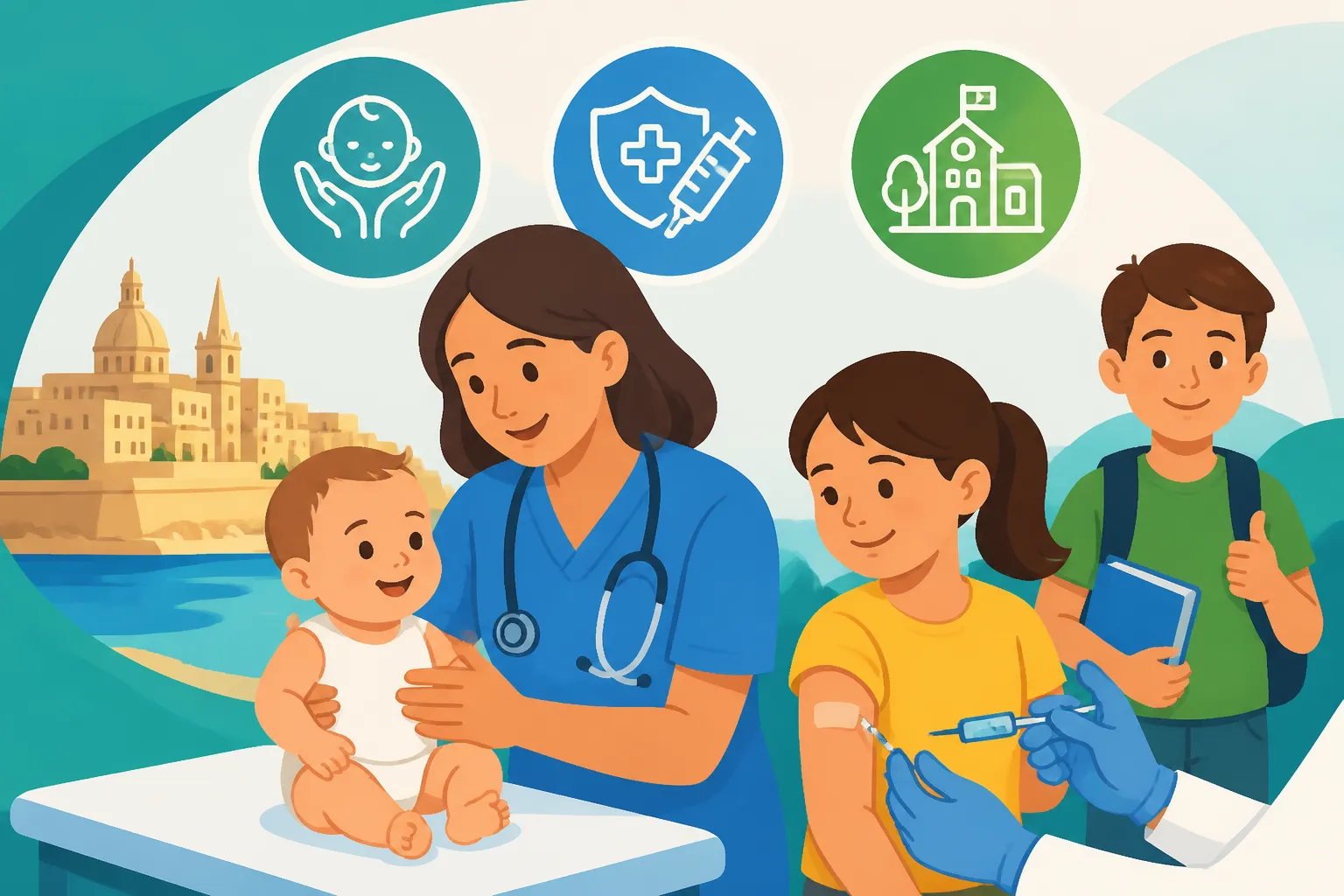
Vaccination is a high priority in the Maltese healthcare system. The National Immunisation Schedule is designed to protect children from a wide range of infectious diseases, and the services provided by the National Immunisation Service (NIS) are free for all children who are entitled to public healthcare. Malta maintains very high vaccination rates, and the system is remarkably efficient once you are in the loop.
The Mandatory and Recommended Vaccines
The Maltese schedule covers the standard range of vaccinations, including Diphtheria, Tetanus, Pertussis, Polio, Hib, and Hepatitis B (often given as a 6-in-1 vaccine). It also includes the MMR (Measles, Mumps, and Rubella) and the PCV (Pneumococcal Conjugate Vaccine). In recent years, the Meningococcal ACWY and B vaccines have also been integrated into the routine schedule, which is a massive relief for parents, as these were previously only available privately at a significant cost.
It is worth noting that while these vaccines are provided for free, there are others that are "recommended" but might still require a private purchase at a pharmacy, though the nurse at the health centre can often still administer them. For example, the chickenpox vaccine or certain travel-specific immunisations might fall outside the standard free list. You can find the full, updated list of what is covered in our detailed post on The National Immunisation Schedule for Children in Malta.
How to Access Vaccinations in Malta
Vaccinations are usually administered at the Immunisation Clinics within the health centres. Unlike the Well-Baby Clinics, which are often by appointment, some immunisation clinics have "walk-in" hours, though it is always better to check beforehand. When you go, you must bring the child's "Yellow Book." If you’ve moved from abroad, bring your child’s original vaccination records from your home country. The nurses will review these and "bridge" the schedule, identifying any doses your child might have missed or which need to be repeated to align with Maltese standards.
I remember being worried that my son’s vaccinations from the UK wouldn’t be recognised, but the nurses were very familiar with international schedules. They simply mapped his previous doses onto the Maltese system and told us exactly when to come back for his next booster. If you are ever unsure about eligibility or costs during your move, checking What Public Healthcare Costs in Malta: Free Services and Paid Extras can clarify where vaccinations fit into the budget.
Tracking Records and the Yellow Book
The "Yellow Book" is the unofficial name for the Child Health Record. It is a small, bright yellow booklet that you will be given at the hospital or your first clinic visit. Do not lose this book. It is the primary record of every vaccine your child receives in Malta. Schools will ask for a copy of it during the registration process, and if you ever travel and need to prove your child’s immunisation status, this is the document you will use.
In addition to the physical book, the health authorities maintain an electronic database. However, the manual entry in the yellow book is often the fastest way for a doctor to see a child's history during a consultation. If you find yourself needing a private consultation because the public clinic wait times are too long, having this book ensures the private doctor knows exactly what has been administered. For those using a flexible plan like SafetyWing, you can often get reimbursed for these private visits if they are part of a larger medical necessity, making the transition between public and private care much smoother.
Health in the Classroom The School Health Service
Once your child reaches school age, a new layer of healthcare kicks in: the School Health Service. This is a multidisciplinary team that visits schools—both state and private—to conduct routine screenings. It ensures that health issues don't interfere with a child's ability to learn and thrive in an educational environment.
Routine Screenings in State and Private Schools
The School Health Service performs regular check-ups at various stages of a child's school career. These usually occur in Year 1, Year 4, Year 9, and Year 11. The screenings are quite comprehensive and include measurements of height and weight to monitor for issues like childhood obesity or growth stunting. They also check the child's spine for scoliosis, which is particularly common during adolescent growth spurts.
Parents are always notified before these screenings take place, and you are usually required to sign a consent form. I found it very reassuring that the same level of care was provided whether my children were in a local state school or a private international academy. The school nurses are often the first to notice if a child is struggling, whether it’s a physical issue or something related to their general well-being. For more information on the educational side of things, see How Do I Enrol My Child in School in Malta?.
Dental and Vision Checks in Schools
One of the most valuable aspects of the school health system is the focus on sensory and oral health. Vision and hearing screenings are conducted early on, as undiagnosed sight or hearing problems are a major cause of learning difficulties. If a child fails a school screening, they are referred to the ophthalmology or audiology departments at Mater Dei or a regional hub for a more formal assessment.
Dental health is also monitored. While the school doesn't perform dental work, they do conduct inspections and provide referrals to the dental clinic at the health centres. It is a great system for catching cavities early. Many parents wonder, Is Dental Care Free for Children in Malta?, and the answer is largely yes for basic preventive care and extractions within the public system, though most expats still choose to use private dentists for routine cleaning and fillings to avoid the long waiting lists.
Managing Chronic Conditions at School
If your child has a chronic condition like asthma, diabetes, or a severe allergy, the school health service plays a critical role in creating a "Care Plan." This involves the school nurse, the teachers, and the parents working together to ensure the child can safely manage their condition during school hours. For example, if your child needs an EpiPen or an inhaler, the school will have a protocol for where these are stored and who is trained to administer them.
The Maltese system is generally very supportive of children with additional needs. There is a strong emphasis on inclusion, and the school health team ensures that medical needs are not a barrier to participation in physical education or school outings. If you are moving to Malta with a child who has an existing condition, it is a good idea to read up on Managing a Chronic Condition in Malta: Schedule V Medicines and Care to understand how to get the necessary medications for free.
Specialist Care and Hospital Services for Children
While the clinics and school services handle the routine, there will inevitably be times when you need more specialised medical attention. Malta has a robust paediatric department, centred primarily at Mater Dei Hospital in Msida, but there are several routes to accessing this care.
Accessing Paediatricians in Malta
In Malta, you generally don't "register" with a specific paediatrician in the public system in the same way you might have a family doctor elsewhere. Instead, you see the doctor on duty at the health centre, or you are referred to a specialist at the hospital. However, many expat families (and locals) choose to have a "private" paediatrician whom they see regularly. These doctors often work out of pharmacies—yes, in Malta, most pharmacies have a small clinic in the back where specialists see patients.
This "pharmacy clinic" culture is unique and very convenient. You can usually book an appointment with a highly qualified paediatrician just a few blocks from your house. The cost is typically between €20 and €50 per visit. If you have a plan like SafetyWing, these costs are easily managed, providing a faster alternative to the health centre for non-emergency issues like ear infections or persistent coughs. If you’re looking for a specific recommendation, check out How Do I Find a Paediatrician for My Baby in Malta?.
Mater Dei’s Paediatric Emergency and Wards
For serious emergencies, you head straight to Mater Dei. There is a dedicated Paediatric Emergency Department (NPICU and Disneyland Ward are the names you might hear—yes, the children’s ward is actually called Disneyland). The care here is excellent. The doctors and nurses are used to dealing with a diverse population and almost all speak perfect English.
When we had to take our son to the emergency room after a bad fall, the wait was significantly shorter than the adult A&E. They have a triage system that prioritises the youngest and most urgent cases. The wards are designed to be child-friendly, which helps take some of the sting out of a hospital stay. You can find more details on what to expect in What to Expect as a Patient at Mater Dei Hospital.
Community Health Centres vs. Private Paediatricians
Choosing between the public health centre and a private paediatrician often comes down to a balance of time and cost. The health centres are free (if you are entitled) but can have long wait times and you won't always see the same doctor. Private paediatricians offer continuity of care and quicker appointments, but you pay out of pocket.
| Service | Public Health Centre | Private Paediatrician |
|---|---|---|
| Cost | Free (for entitled residents) | €20 – €70 per visit |
| Wait Time | Can be several hours for walk-ins | Usually by appointment; minimal wait |
| Continuity | See whichever doctor is on duty | See the same doctor every time |
| Specialist Access | Requires referral for Mater Dei | Can provide private referrals or advice |
| Prescriptions | Can issue free medicine vouchers | Private prescriptions (you pay full price) |
For routine things like a common cold, the health centre is fine. For ongoing developmental concerns or if you want someone who knows your child's full history, many find the private route more satisfying. If you are still navigating the bureaucracy, Can I See a Doctor in Malta Before My Health Entitlement Is Approved? is a must-read.
Practical Advice for Expat Parents Navigating the System
Living in Malta as an expat means dealing with specific administrative requirements that locals might take for granted. Ensuring your child is legally covered and physically healthy requires a bit of foresight.
Documentation and eResidence Requirements
Your child's access to free healthcare is tied to your own residency status and social security contributions. If you are working in Malta and paying Class 1 or Class 2 contributions, your children are generally covered as your dependents. However, the system needs proof. You will need to provide birth certificates that prove the relationship and your own eResidence card.
I cannot stress enough how important it is to keep digital copies of all these documents. When you go to the Entitlement Unit to sort out your family’s rights, having everything organised will save you hours of frustration. The process is explained step-by-step in our guide on How Do I Register My Family Members for Health Entitlement in Malta?. Don't wait until your child is sick to figure this out; do it as soon as you have your lease and work contract in hand.
The Role of Private Insurance for Children
While public healthcare is great for emergencies, private insurance is often a requirement for certain residence permits (like the Nomad Residence Permit). Even if it’s not required, many families keep it for the peace of mind it provides. Private insurance allows you to bypass public waiting lists for non-urgent surgeries or specialist consultations.
For digital nomads or those moving frequently, SafetyWing is a popular choice because it’s flexible and covers children at a very reasonable rate. It’s particularly useful for that initial three-to-six-month gap when you are "resident" but not yet "entitled" to the full suite of Maltese public services. This ensures that a trip to a private clinic for a childhood illness won't break the bank. You can compare options in Private Healthcare and Insurance in Malta: When You Need Cover.
Dealing with Summer Heat and Mediterranean Ailments
Malta’s climate is beautiful, but it can be harsh on little ones. The summer heat (July and August) often brings temperatures above 35°C with high humidity. Dehydration and heatstroke are real risks. Maltese doctors will tell you to keep children indoors between 11:00 AM and 4:00 PM and to be obsessive about sunscreen.
We also have "sandfly season." Sandflies can carry Leishmaniasis, which while more common in dogs, is something to be aware of. Using insect repellent and mosquito nets is standard practice here. If your child develops a mysterious fever or a bite that won't heal, don't hesitate to see a doctor. For more on staying healthy in the sun, check How Do I Cope with the Summer Heat and My Health in Malta?.
Support Beyond Physical Health Mental Health and Development
Children’s health isn't just about vaccines and broken bones. Malta has been significantly expanding its support for child development and mental health in recent years, though the system can be complex to navigate.
Child Development Assessment Unit (CDAU)
The CDAU is the main body responsible for assessing children with potential developmental disabilities, such as Autism Spectrum Disorder (ASD), ADHD, or global developmental delay. If a doctor at a Well-Baby Clinic or a school nurse suspects a child needs extra support, they will refer them here. The CDAU provides a multidisciplinary assessment involving paediatricians, psychologists, and therapists.
The wait times for the CDAU can be notoriously long—sometimes over a year for an initial assessment. Many expat parents choose to get a private assessment first to start interventions early, and then move into the public system once their turn comes up. This is a common strategy to ensure the child doesn't lose valuable time. If you’re looking for more info on this, see Mental Health Support in Malta: Services, Therapy, and Mount Carmel Hospital.
Accessing Speech and Occupational Therapy
Speech and Language Pathology (SLP) and Occupational Therapy (OT) are available through the public health system. These services are often delivered at the health centres or specialized clinics. For children who are bilingual—common in the expat community—the SLPs in Malta are generally very good at distinguishing between a true speech delay and the normal process of language acquisition.
If you are looking for these services privately, there are many clinics across the island, particularly in the central areas like Birkirkara and Naxxar. Many private schools also have visiting therapists. Again, having a flexible plan like SafetyWing can sometimes help with the initial consultations. You can find more on public routes in How Do I Get Physiotherapy on the Public System in Malta?.
Mental Health Support for Adolescents
For older children and teenagers, mental health support is provided through the Child and Adolescent Mental Health Services (CAMHS). They deal with issues like anxiety, depression, and eating disorders. The service is based at Mt. Carmel Hospital, but they have outpatient clinics that are much more approachable.
The culture around mental health is changing in Malta, with less stigma and more resources being allocated to youth services. Schools also play a big part, with guidance counsellors and school psychologists available to help students. For immediate crises, knowing How Do I Access Mental Health Crisis Support in Malta? is vital for every parent.
Detailed Comparison of Child Health Services in Malta
| Feature | Well-Baby Clinics | School Health Service | Paediatric Emergency (Mater Dei) |
|---|---|---|---|
| Target Age | 0 – 5 years | 5 – 16 years | 0 – 16 years |
| Focus | Growth & Development | Screenings & Inclusion | Acute & Emergency Care |
| Location | Local Health Centres | Within the School | Mater Dei Hospital |
| Access | By Appointment | Automatic/Scheduled | Walk-in / Ambulance |
| Cost | Free (with entitlement) | Free | Free |
Disclaimer
The information provided in this article is for general informational purposes only and does not constitute medical or legal advice. Healthcare regulations and entitlement rules in Malta can change; always consult with the relevant Maltese health authorities, your GP, or a legal professional regarding your specific circumstances.