Can I See a Doctor in Malta Before My Health Entitlement Is Approved?
One of the most stressful parts of moving to Malta is the "administrative limbo" that occurs between the day you land and the day you finally hold that plastic residency card in your hand. I remember my second week in Sliema, fighting a fever while staring at my stack of pending Identità forms, terrified that a trip to the doctor would cost a fortune or be flat-out refused. This guide solves the mystery of accessing medical care during that gap, ensuring you aren't left sufferring while the bureaucrats do their work.
Understanding the Gap: Why Entitlement Isn't Instant
The Maltese healthcare system is fantastic once you are in it, but it is not an "automatic" right the moment you step off the plane at Luqa. Whether you are an EU citizen, a Third Country National (TCN) on a work permit, or a digital nomad, there is always a lag. This lag exists because the Entitlement Unit, which is the branch of the Health Ministry that decides if you get free care, requires proof of your residency and, in most cases, proof that you are paying into the Maltese Social Security system.
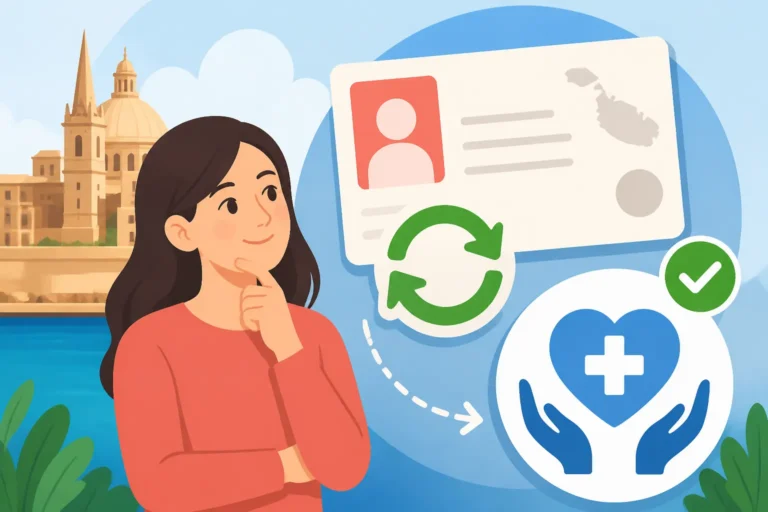
When you first arrive, you are essentially a "visitor" in the eyes of the health system. Even if you have signed a job contract and started working, your employer might not have processed your first paycheck yet, meaning your Social Security contributions haven't "pinged" in the government database. Furthermore, getting your official eResidence card can take anywhere from a few weeks to several months. Since the ID card is the primary key for the public system, being without one feels like being locked out of the house. You can find more about this in our guide on Getting Your Maltese ID Card Number: The Key to Accessing Healthcare.
During this period, you are technically liable for the full cost of any public health services you use. This is the "gap" that catches many newcomers off guard. You might assume that because you are "here" and "working," the hospital will just treat you for free. In reality, until you have your letter from the Entitlement Unit, the billing department at Mater Dei or your local health centre will likely treat you as a private, paying patient.
Can You See a Doctor? The Short Answer is Yes
The good news is that you can absolutely see a doctor in Malta before your entitlement is approved. Malta has a very accessible network of General Practitioners (GPs), and they will not turn you away simply because your paperwork is still sitting in an inbox in Valletta. However, the way you see them and the cost associated with that visit will change depending on your status.
In Malta, the "front line" of healthcare isn't always the government health centre. For most of us expats, the front line is the local pharmacy. Almost every pharmacy in towns like Msida, Gzira, St. Julian's, and Birkirkara has a small doctor’s clinic tucked away in the back or on the second floor. These are private GPs. You do not need a Maltese ID card, a residence permit, or a health entitlement letter to see these doctors. You simply walk in, ask what time the doctor is "in" (usually there are set morning and evening hours), and wait your turn.
For many of us, this is actually the preferred way to get care even after we get our entitlement. It's fast, convenient, and you can usually See a Doctor in English in Malta without any language barrier issues. The doctor will see you, write a prescription, and you pay a small fee at the pharmacy counter on your way out. It is the most realistic solution for minor illnesses like chest infections, skin rashes, or the inevitable "Malta flu" that hits every newcomer during their first winter.
Using Public Health Centres as a Non-Entitled Patient
If you prefer to use the public system—perhaps because you are closer to a regional Health Centre than a pharmacy—you can still walk in. Malta’s Health Centres (like those in Floriana, Paola, or Mosta) are open 24/7 for urgent cases. When you arrive at the reception desk, they will ask for your ID card. If you don't have one yet, you should present your passport.
The staff will register you as a "non-entitled" patient. This means you will be treated, but you will be handed a bill at the end. It is a common misconception that public care is always free for everyone. You can read more details on this in the article Is Healthcare Really Free at the Point of Use in Malta?. If you haven't yet received your official "OK" from The Entitlement Unit: Sorting Out Your Right to Treatment in Malta, you are expected to pay the government rate for the consultation.
Fortunately, these rates are usually regulated and relatively affordable compared to private hospital costs in the US or Northern Europe, but they are still higher than the "free" service residents enjoy. If you find yourself in this situation, keep every single receipt. If your entitlement is eventually backdated to your arrival date (which sometimes happens for certain EU workers), you might be able to claim a refund, though the process is notoriously tedious.
Financial Realities: Costs for Newcomers
To help you budget for that first month or two, here is a breakdown of what you can expect to pay out of pocket before your entitlement is active. Note that prices can vary slightly by location—clinics in Sliema might be a few euros more than those in the South.
| Service Type | Estimated Cost (Private/Non-Entitled) | Documentation Needed |
|---|---|---|
| Private GP (at a pharmacy) | €15 – €25 | None (Passport recommended) |
| Public Health Centre GP | €25 – €45 | Passport |
| Private Specialist (Consultation) | €60 – €100 | None |
| Mater Dei A&E (Emergency) | €120 – €600+ | Passport |
| Standard Blood Tests (Private) | €30 – €80 | GP Referral |
| X-Ray (Private Clinic) | €50 – €90 | GP Referral |
As you can see, a simple GP visit isn't going to break the bank. However, if you have an accident or a more serious health scare that requires a trip to Mater Dei, the costs can escalate quickly. This is why many expats choose to carry a flexible insurance policy during their move. For example, SafetyWing is a popular choice for digital nomads and new arrivals because it covers those unexpected "gap" periods when you're no longer covered by your home country's plan but aren't yet fully integrated into the Maltese system. Having SafetyWing can provide peace of mind if you end up needing more than just a quick prescription for antibiotics.
Navigating the Public Hospital: Mater Dei
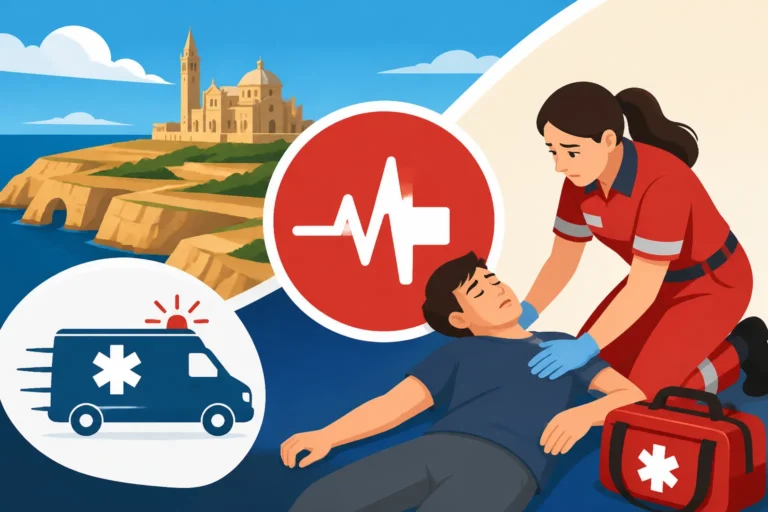
If your situation is more serious than a cold, you will likely head to Mater Dei, the main state hospital. Even if you are not yet "entitled," the Emergency Department (A&E) will never refuse life-saving treatment. They operate on a "treat first, bill later" basis for emergencies.
However, be prepared for the administrative side. If you are admitted, a clerk will eventually visit your bedside to discuss your status. If you cannot prove your entitlement—usually by showing a valid Maltese ID Card Number or a specific entitlement letter—you will be billed as a private patient. For TCNs, this can be quite expensive, as the rates are based on the full cost of the medical resources used.
If you are an EU citizen, your European Health Insurance Card (EHIC) is your best friend here. While you are waiting for your residency to be processed, your EHIC allows you to access necessary care under the same terms as a local. You can find more on this in Can EU Citizens Use Maltese Healthcare with an EHIC Card?. But be careful: the EHIC is for temporary stays. If you've already started working and paying social security in Malta, the authorities might expect you to move onto the Maltese system rather than relying on your EHIC indefinitely.
The Role of Private Insurance as a Bridge
For many of us who moved here from countries with 100% free healthcare, the idea of paying €20 for a doctor feels strange. But until your paperwork is settled, that is the reality. If you are a Non-EU citizen, you are actually required to have private insurance as part of your residency application anyway. You can check the specific requirements in Private Health Insurance Requirements for Non-EU Permit Holders in Malta.
Even for those who aren't legally required to have it, a bridge policy like SafetyWing is highly recommended. Newcomers who move here can get a bad case of food poisoning or a sports injury in their first month, and end up with a €400 bill from the public hospital because their "entitlement" was still three weeks away from being approved. SafetyWing is designed for exactly this kind of transition, offering a safety net that local Maltese "private" plans sometimes make difficult to get without a local ID card.
Once you have your private insurance, you can also look into Private Hospitals and Clinics in Malta: Faster Specialist Access to bypass the longer waiting times in the public system. Often, seeing a specialist privately is the only way to get an appointment within a week, rather than waiting months through the public referral system.
Handling Chronic Conditions and Regular Medication
If you arrive in Malta with a chronic condition—such as diabetes, asthma, or hypertension—the "gap" period requires extra planning. You cannot simply walk into a pharmacy and ask for your regular meds; you need a Maltese prescription.
Before your entitlement is approved, a private GP at a pharmacy can write you a "Private Prescription." You will have to pay the full market price for the medication at the pharmacy. Some medications are quite cheap in Malta, but others can be surprisingly expensive.
Once your health entitlement is fully approved, you may be eligible for The POYC Pharmacy of Your Choice Scheme: How to Collect Free Medicines. This is for people with chronic conditions listed under "Schedule V" (the famous "Pink Card" or "Yellow Card" system). However, you cannot access this scheme until your entitlement is 100% finalized. My advice? Bring at least two to three months' worth of your regular medication from your home country to cover the duration of the paperwork trail.
Action Steps While You Wait for Approval
If you need a doctor today and your entitlement isn't ready, follow these steps:
- Don't Panic: You will get care. The system is efficient; it’s just the "free" part that takes time to click in.
- Find a Pharmacy Clinic: Use Google Maps to find the nearest "Pharmacy" and check their "Doctor" hours. Most are open 9:00 AM – 11:00 AM and 4:00 PM – 7:00 PM.
- Bring Your Passport: Until you have a Maltese ID, your passport is your primary identification.
- Use Private Insurance: If you have a policy like SafetyWing, check their portal to see if you need to visit a specific clinic or if you can simply pay and claim back later. Usually, for small GP visits, you pay upfront and keep the receipt.
- Keep the Paperwork: Every time you see a doctor or buy medicine, keep the "Fiscal Receipt." This is a specific type of receipt from a government-regulated cash register. You might need it for insurance claims or future tax deductions.
While you are waiting, make sure you are also looking into How Do I Register with a Health Centre in Malta? so that the moment your ID card arrives, you can finalize your registration and stop paying those out-of-pocket fees.
Summary of Options for Newcomers
| Situation | Recommended Action | Cost Level |
|---|---|---|
| Mild Illness (Flu, Infection) | Visit a Private GP at a local Pharmacy | Low (€15-€25) |
| Minor Injury / Urgent Care | Visit a Regional Public Health Centre | Medium (€25-€50) |
| Chronic Med Refill | Private GP for a prescription; pay full price | Variable |
| Life-Threatening Emergency | Call 112 or go to Mater Dei A&E | High (If not entitled) |
| Specialist Consultation | Book at a private clinic (e.g., St. James, DaVinci) | Medium-High (€60+) |
Remember, moving to a new country is a marathon, not a sprint. The "health gap" is just one of the hurdles. By using local pharmacy clinics and having a backup plan like SafetyWing, you can navigate your first few months in Malta without worrying that a simple cough will ruin your relocation budget. Once your Health Entitlement in Malta: How Social Security Contributions Unlock Free Care status is confirmed, the whole process becomes much simpler and cheaper.
Disclaimer
This article provides general information for educational purposes and reflects the typical experiences of expats in Malta as of 2026. Medical regulations and government fees can change. Always consult with the Maltese Health Ministry, the Entitlement Unit, or a qualified legal professional regarding your specific residency and healthcare rights. If you are experiencing a medical emergency, dial 112 immediately.