Can I Open a Maltese Bank Account Before I Get My Residence Permit?
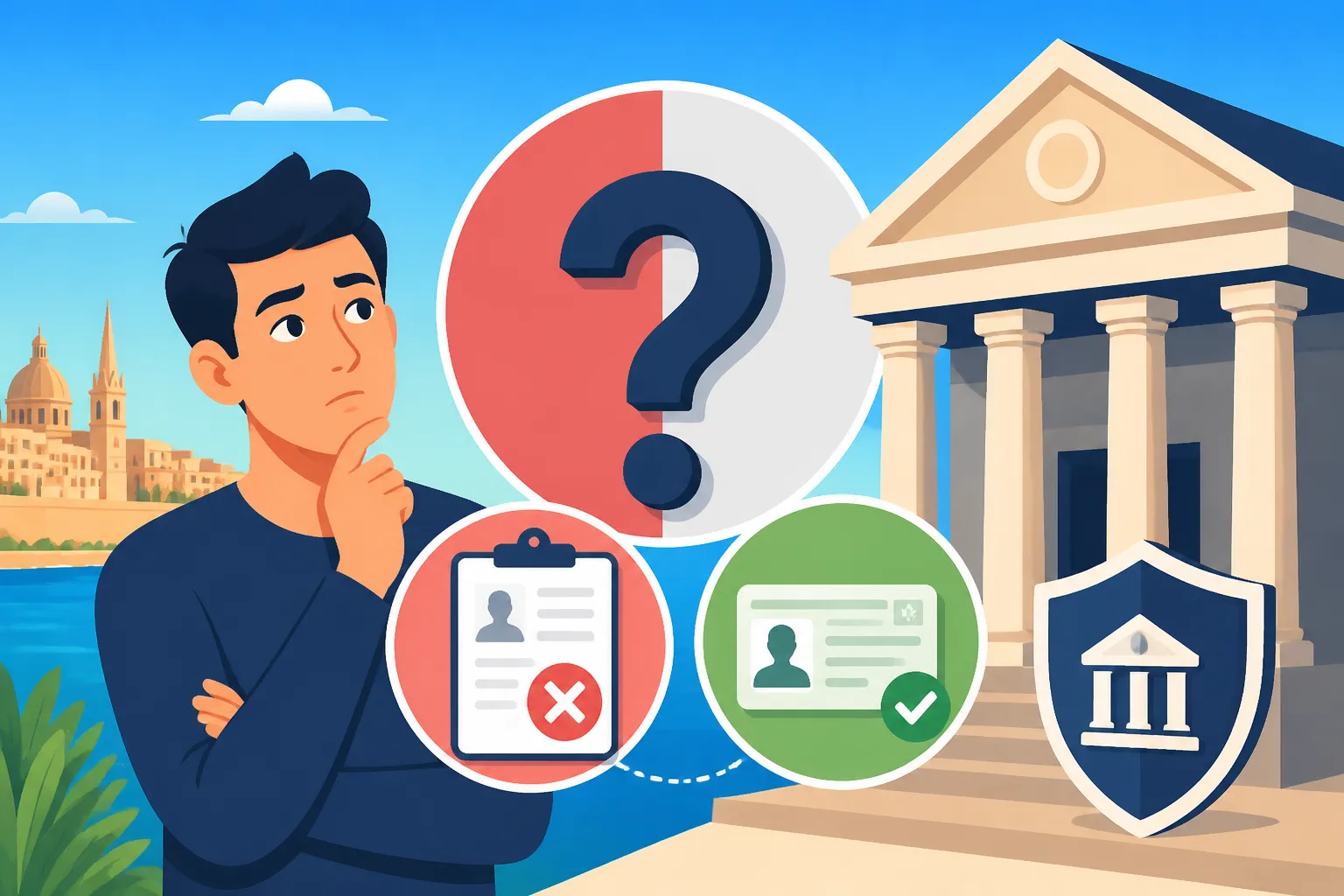
Ah, the classic expat Catch-22 in Malta: you need a residence permit to open a proper bank account, but sometimes you feel like you need a bank account to even get truly settled enough for that permit! Many newcomers sigh in exasperation at this stage, clutching a stack of documents only to be met with a polite "not quite yet" from a bank teller. It's a frustrating loop, but this guide is here to walk you through the realistic options for managing your finances when you first land in Malta, especially before that coveted eResidence card is in your hand.
The Residence Permit Paradox: Why Banks Are So Strict
When you first arrive in Malta, you're bursting with plans – new job, new home, new life! But then reality hits when you try to do something as fundamental as open a bank account. Most traditional Maltese banks, like BOV or HSBC Malta, will look at you kindly, then ask for your Maltese eResidence card or, at the very least, an official lease agreement registered with the Housing Authority, along with a valid Maltese Tax Identification Number (TIN).
Why are they so stringent, you ask? It's not just to make your life difficult, although it certainly feels that way sometimes. It boils down to international anti-money laundering (AML) and Know Your Customer (KYC) regulations. Banks need to verify your identity, your source of funds, and your legitimate ties to Malta. Your passport might prove who you are, but without a residence permit or a properly registered long-term address, you're technically still a visitor in their system, even if you're planning to stay permanently. This is a hurdle many new arrivals face, and it often feels like you’re expected to have everything sorted before you can even start sorting things. It’s a truly maddening part of the settling-in process here.
Traditional Maltese Banks: The Uphill Battle Without a Permit
Trying to open an account at a traditional bank like APS Bank or Lombard Bank without your residence permit or official proof of address in Malta is, more often than not, an exercise in futility. They operate under strict guidelines, and for good reason, but it leaves new expats in a bind.
What Traditional Banks Typically Require
When you finally do approach a branch, perhaps with an appointment you had to book weeks in advance, you'll be asked for a comprehensive list of documents. This usually includes your passport, proof of income (like an employment contract or a letter from your employer stating your salary), your Maltese Tax Identification Number (TIN), and crucially, proof of your residential address in Malta. For this last one, they typically insist on seeing a valid eResidence card, or at minimum, a private residential lease agreement that has been officially registered with the Housing Authority.
This is where the major stumbling block often lies. Many expats initially stay in short-term rentals, Airbnb, or temporary accommodation while they scout for a more permanent place. These temporary arrangements rarely come with a Housing Authority-registered lease, and without it, banks simply won't proceed. Even if you have a job offer, or a hefty savings account, their hands are tied by their internal compliance policies. You can bring every document under the sun, but if that "proof of solid, long-term Maltese address" isn't present in the right format, you'll likely be shown the door with a polite apology. It truly adds to the stress of those first few weeks. If you're wondering Why Maltese Banks Ask for So Much Documentation, you're not alone; it’s a question every expat asks!
Realistic Scenarios and Expectations
Imagine this: you've just landed, secured a job, and found a temporary flat in Sliema. You head to a bank branch, hopeful. You present your passport, your new employment contract, and perhaps a printout of your temporary rental agreement. The bank officer reviews your documents, nods along, and then asks for your eResidence card number or a registered lease. When you explain you're still waiting for your residence permit application to process and your current lease isn't registered yet (which most short-term ones aren't), the smile fades. You might be told to come back once your Getting Your Maltese eResidence Card and ID Number process is complete, or once your landlord registers your long-term lease.
This isn't a rare occurrence; it's the norm. It means that while you’re paying social security contributions and theoretically integrating into the Maltese system, accessing basic banking services can be incredibly difficult. The banks are simply not set up to accommodate the limbo period many foreigners experience. For a full breakdown of the general process, our guide on How to Open a Maltese Bank Account as a Newcomer has more details, but it assumes you have the core residence documents in place.
Digital Solutions: Your Best Bet for Early Banking in Malta
Given the hurdles with traditional banks, many new arrivals, including seasoned expats like myself, have learned to embrace digital banking solutions. These platforms often provide a lifeline when you’re navigating the initial administrative maze in Malta.
The Rise of Fintech: A Game Changer for Expats
Digital banks and fintech companies have, frankly, revolutionised how expats manage their money when first moving to a new country. They operate primarily online or through mobile apps, with less reliance on physical branches and often with more flexible onboarding processes that cater to individuals who haven't yet secured full residence status in their new host country.
One of the standout players in this space that many expats in Malta, myself included, have found invaluable is Wise (formerly TransferWise). What makes Wise so appealing is its ability to offer multi-currency accounts with local bank details in various countries, including the Eurozone. This means you can quickly open an account, get a Euro IBAN, and start receiving money (like your salary!) without needing a Maltese residence permit right away. All you generally need is your passport and proof of address from your home country or a recent utility bill to verify your identity. This can be a godsend when you're desperate to get paid and pay bills in Malta but are still stuck in the residence permit queue. Wise makes international transfers significantly smoother and cheaper too, which is a massive plus.
Another popular choice among the expat community is Revolut. While we have a whole guide dedicated to Is Revolut a Good Option for New Arrivals in Malta?, it’s worth noting that these digital options have transformed the early days of expat life. They offer quick setup, often within minutes, once you've uploaded your ID and done a quick verification selfie. You receive a debit card that you can use immediately for everyday transactions, online shopping, and cash withdrawals from ATMs across Malta. These apps also provide excellent budgeting tools, instant notifications for spending, and competitive exchange rates, which is especially useful if you’re still receiving funds from a non-Euro account. You can think of them as your financial bridge while you wait for your official documents. They help you avoid the common pitfall of having substantial sums of cash on hand or relying solely on foreign cards, which can incur fees.
Bridging the Gap: How Digital Banks Serve New Arrivals
For new expats in Malta, these digital platforms aren't just a convenience; they’re often a necessity. You can use your Wise or Revolut account to:
- Receive your salary: Once you start working and get your employment contract, your employer can usually pay your salary directly into your Euro-denominated digital bank account. This is a huge relief, as waiting for a traditional bank account can delay your first paycheck.
- Pay local bills: Many digital banks offer features to make SEPA transfers, which are standard for paying rent, utility bills, and other expenses in Malta.
- Everyday spending: Their debit cards are widely accepted across Malta, from supermarkets like PAVI and PAMA to local shops and restaurants. This eliminates the need to carry large amounts of cash or suffer through foreign transaction fees on your home country's bank card.
- Manage international finances: If you're still dealing with income or expenses in other currencies, digital banks like Wise are particularly adept at handling multiple currencies with low fees, helping you manage money across borders efficiently. This functionality is often superior to what traditional banks offer, especially for expats.
It's important to remember that while these digital options are excellent stop-gap solutions, some formal transactions (like securing a home loan down the line or certain government services) might still eventually require a traditional Maltese bank account. However, for those crucial first few months, they are undeniably the easiest and most practical path forward. For a broader look at available options, check out our piece on Digital Banking and Money Apps in Malta: Revolut and Beyond.
Practical Steps and Important Considerations
Getting set up financially in a new country, especially when administrative processes move at their own Maltese pace, requires a pragmatic approach. Here are some actionable steps and key things to keep in mind.
Proving Identity and Address (The Workaround)
Even with digital banks, you’ll still need to verify your identity and, sometimes, your address. For digital banks like Wise or Revolut, a valid passport or national ID card is usually sufficient for identity verification. For address, they are generally more lenient than traditional banks. They might accept:
- Proof of address from your home country: A bank statement, utility bill (electricity, gas, water, internet) from your previous residence, or a government-issued document showing your address, all typically dated within the last three months.
- Initial rental agreements in Malta: While a non-registered temporary lease won't fly with a local Maltese bank, some digital platforms might accept it if it clearly shows your name and address, though this is less common and depends on their specific policies. It’s always best to try with your home country address first.
The key here is understanding that their verification processes are designed for a global, mobile user base, rather than being rigidly tied to the physical residence permit of a single country. This flexibility is what makes them indispensable for new arrivals. However, be prepared for some back and forth, and ensure any documents you submit are clear, up-to-date, and in English or officially translated.
Understanding Tax Implications
Once you start earning and living in Malta, you will eventually become a tax resident. This has significant implications for how your income and assets are treated. While digital banks provide immediate financial access, they don't exempt you from your tax obligations. It's crucial to understand when you become a tax resident in Malta, which generally happens if you spend more than 183 days in the country in a calendar year.
Even if you're using a digital bank, your salary is being paid, and your financial activity is traceable. Once you receive your Maltese Tax Identification Number (TIN), you'll need to report your income to the Maltese tax authorities. This can feel daunting, especially if your financial situation is complex. For instance, if you have foreign income or assets, understanding how these are treated under Malta's tax system (which operates on a remittance basis for non-domiciled residents) is vital. Services like Taxes for Expats can be incredibly helpful in navigating these complexities, ensuring you're compliant and optimising your tax position. It's a critical step that often gets overlooked in the rush to simply get any bank account open. You can find more specific guidance on this in our article When Do I Become a Tax Resident in Malta? or How Do I Get a Tax Number (TIN) in Malta?.
Temporary vs. Long-Term Strategy
Think of your digital banking solution as your trusted companion for the first few months. It's fantastic for day-to-day transactions, receiving your salary, and setting up direct debits for immediate bills. However, once you have your eResidence card and a Housing Authority-registered lease in hand, it's wise to revisit the idea of opening an account with a traditional Maltese bank.
Why? While digital banks are excellent, traditional banks offer certain services that might become important in the long run. This could include:
- Mortgages and loans: Local banks are the primary providers of home loans and other significant credit facilities in Malta.
- Investment products: They may offer a broader range of local investment options.
- In-person support: While less common for everyday needs, having a physical branch can be reassuring for complex issues.
- Certain official requirements: Some government departments or service providers might still prefer or require a traditional Maltese bank account for specific transactions.
The best strategy is often a hybrid one: start with a digital bank for immediate needs, and then, once settled, open a traditional account for long-term financial integration. This way, you get the best of both worlds – immediate functionality and long-term stability. Managing your finances effectively can significantly impact your Cost of Living in Malta: Budgeting for the Real Numbers.
Navigating the Maze: Tips and What to Expect
Let's face it, moving to a new country is a whirlwind, and the administrative side of things in Malta can feel like a particularly twisty maze. Setting up your banking is a crucial piece of this puzzle, and a little foreknowledge can save you a lot of grief.
Documents You'll Definitely Need (Eventually)
While digital banks offer flexibility, it’s still wise to start gathering all the documents you’ll eventually need for traditional banking in Malta. Having these ready will streamline the process once your residence permit is sorted. This list is fairly standard across all banks:
- Valid Passport/National ID Card: Your primary identification. Make sure it has plenty of validity left.
- Maltese eResidence Card: This is the golden ticket. It proves your legal residence and your Maltese ID number.
- Maltese Tax Identification Number (TIN): Essential for all financial transactions and tax reporting.
- Proof of Address in Malta: This is usually a rental contract registered with the Housing Authority, or a utility bill (ARMS bill) in your name once you’re registered as a resident for utilities.
- Proof of Income/Employment: An employment contract, recent payslips, or a letter from your employer confirming your employment status and salary.
- Bank Statements from your home country: Often required to show your financial history and source of funds.
- CV/Resume: Sometimes requested to understand your professional background, especially for high-value accounts.
It might feel like a lot, but this is the standard expectation. For a detailed rundown, our post What Documents Do I Need to Open a Maltese Bank Account? is a great resource.
Bank Staff Demeanor: Patience is a Virtue
One thing you'll quickly learn about Maltese administration is that patience is not just a virtue, it's a survival skill. You might encounter conflicting information from different bank branches or even different tellers within the same branch. Some staff might be incredibly helpful and go out of their way to explain things, while others might stick rigidly to the rulebook, even if it seems nonsensical for a new arrival.
My advice? Always remain polite and persistent. If you're told no at one branch, try another. Keep detailed notes of who you spoke to and what they said. It can be frustrating, but maintaining a calm demean demeanour often yields better results. Remember, they are following procedures, but sometimes there's a slight variation in interpretation.
Keeping Funds Accessible
Until you have a fully operational Maltese bank account, whether digital or traditional, it's vital to have access to your funds. Don't put all your eggs in one basket. Keep your home country debit/credit cards active and easily accessible. Be aware of any foreign transaction fees your home bank might charge for using your card in Malta. Using a platform like Wise to transfer larger sums to your digital Euro account can be much cheaper than traditional bank wires, saving you a good chunk of money in fees and unfavourable exchange rates.
When you're transferring money from your home country, especially during those early days, using services that offer transparent rates and low fees is paramount. It helps stretch your initial budget further while you're still getting your bearings. Our guide on Sending Money To and From Malta Without High Fees might offer more practical advice here.
Ultimately, the journey of getting your finances settled in Malta is one of sequential steps. Embrace the digital solutions as your immediate aid, steadily gather your official documents, and be prepared for a bit of a wait. You'll get there, just like countless expats before you!
Comparing Banking Options for New Arrivals
To give you a clearer picture, here's a simplified comparison of traditional Maltese banks versus digital banking solutions for new arrivals without a residence permit:
| Feature | Traditional Maltese Banks (e.g., BOV, HSBC Malta) | Digital Banking Solutions (e.g., Wise, Revolut) |
|---|---|---|
| Setup Speed | Very Slow (weeks/months) | Very Fast (minutes/hours) |
| Residence Permit Required? | Almost Always (eResidence Card or registered lease) | Not initially (often accepts foreign address proof) |
| Proof of Address Accepted | Registered Maltese lease, utility bill in your name | Foreign utility bill, bank statement from home country |
| Initial Documents | Passport, TIN, Registered Lease, Employment Proof | Passport/National ID, possibly foreign address proof |
| Euro IBAN Provided | Yes, once account is open | Yes, usually immediately upon verification |
| Physical Branches | Yes, extensive network | No, entirely online/app-based |
| International Transfers | Can be slow & costly, traditional SWIFT | Fast, low-fee, transparent exchange rates |
| Everyday Spending | Debit/credit cards widely accepted | Debit cards widely accepted |
| Credit/Loans | Primary providers (after full integration) | Limited to none (usually not for new users) |
| Long-Term Suitability | Essential for full financial integration | Excellent as a temporary or supplementary solution |
| KYC/AML Requirements | Very strict, often requiring in-person verification | Strict, but digital & adaptable to foreign residents |
As you can see, the digital route offers a significant advantage for those critical initial weeks and months when you're still waiting for your formal Maltese residence status to be approved.
Disclaimer
Please remember that I am an expat blogger sharing personal experiences and general advice. While I strive to provide accurate and up-to-date information, banking and immigration regulations in Malta can change. It's always crucial to verify information with official sources, such as the specific banks, Identità (Malta's agency for identity, citizenship, and residence), or a qualified legal or financial advisor, before making any decisions. This guide is for informational purposes only and should not be considered professional financial or legal advice.