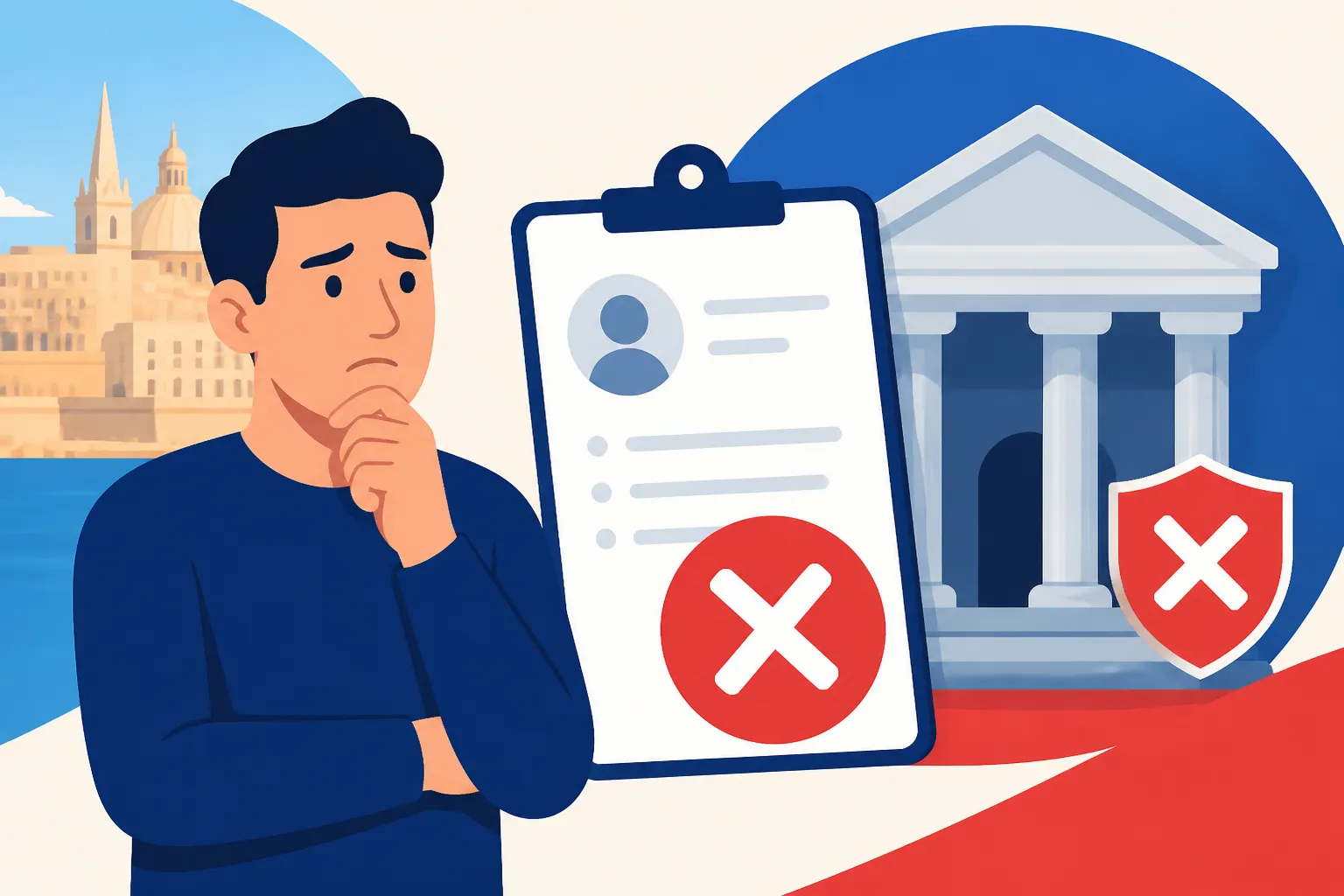
Why Was My Maltese Bank Account Application Refused?
It's incredibly frustrating, isn't it? You've just moved to a new country, you're trying to set up your life, and then you hit this wall: your bank account application gets rejected. In Malta, this isn't an uncommon scenario for foreign residents, and it can leave you feeling confused, unwelcome, and utterly stuck. This comprehensive guide is here to shed light on why your Maltese bank account application might have been refused and what steps you can take to overcome these hurdles.
The Reality of Opening a Bank Account in Malta as a Foreigner
Let's be honest, the process of opening a bank account in Malta as an expat can feel like a gauntlet. Many newcomers arrive with stories of multiple rejections, endless requests for documents, and a general sense of being treated with suspicion. It’s not personal, but it certainly feels that way when you’re facing it. The truth is, Maltese banks operate under stringent anti-money laundering (AML) and 'Know Your Customer' (KYC) regulations, driven by both local and international financial compliance standards. These regulations have tightened significantly over the years, making the onboarding process for non-Maltese residents particularly rigorous.
The Maltese Banking Landscape and Regulatory Environment
Malta, like any reputable financial jurisdiction, is under immense pressure to prevent financial crime. This means that banks, by law, have to be incredibly thorough when verifying the identity, source of funds, and financial activities of their clients, especially those coming from other countries. The island's status as an international financial hub, coupled with past scrutiny, has only amplified this vigilance. Banks like HSBC Malta, Bank of Valletta (BOV), APS Bank, and Lombard Bank are all subject to these rules, and they take them very seriously.
This regulatory environment often translates into a bureaucratic maze for foreigners. While you might walk into a bank in your home country and open an account with just a passport and proof of address, Malta demands a much deeper dive into your personal and financial history. This isn't unique to Malta; many small European nations with strong financial sectors have similar requirements. The goal is to ensure that anyone opening an account is legitimate, their funds are legally obtained, and their financial activities align with their profile.
Common Reasons for Rejection
So, what are the specific tripwires that often lead to a 'no' from Maltese banks? It's usually a combination of factors related to the intensity of their due diligence processes.
- The "Know Your Customer" (KYC) Bottleneck: This is arguably the biggest hurdle. Banks need to be absolutely certain who you are, where your money comes from, and why you need a bank account in Malta. If there's any ambiguity in your documentation or answers, they'll err on the side of caution. For more details on what they're looking for, check out our guide on Why Maltese Banks Ask for So Much Documentation.
- Lack of Local Ties: This is a big one. If you've just arrived, perhaps on a visa or a preliminary permit, and haven't yet established concrete ties to the island – like a stable job, a long-term rental contract, or a Maltese ID card – banks might see you as a higher risk. They want to see genuine connections to Malta, not just a transient presence.
- Insufficient or Inconsistent Documentation: You might think you have all the papers, but banks are incredibly specific. A utility bill that's too old, a rental contract not registered with the Housing Authority, or a bank statement that doesn't clearly show your income source can all lead to rejection. Even minor inconsistencies between documents can raise red flags.
- Source of Funds and Wealth (SOF/SOW): This is perhaps the most invasive but critical part of the process. Banks need to understand where your money came from – your salary, savings, investments, property sales, inheritance, etc. If you can't provide clear, verifiable evidence, they won't proceed. This often catches out individuals with complex financial histories or those who deal predominantly in cash.
- High-Risk Jurisdictions: If your previous financial activities or source of funds are linked to countries deemed high-risk for money laundering or terrorism financing, your application will face intense scrutiny, and likely rejection.
- Sanctions and PEP Status: Being on a sanctions list or being a Politically Exposed Person (PEP) or related to one automatically triggers enhanced due diligence. While not common for most expats, it's a reason for automatic rejection if flagged.
- Incomplete or Unclear Application: Sometimes, it’s as simple as not filling out the form completely, misunderstanding a question, or providing vague answers. Banks don't have the time to chase every detail if your initial application is sloppy.
It’s a lot to contend with, and it's easy to feel defeated when faced with these complexities. Remember, the banks are simply adhering to strict rules, even if those rules make life incredibly difficult for legitimate new residents.
What Banks Are Looking For: The KYC Deep Dive
To increase your chances of success, you need to understand the "why" behind every document request. Banks aren't just ticking boxes; they're building a comprehensive risk profile of you. Think of it as painting a detailed financial portrait that leaves no shadows.
Proof of Identity and Address
Beyond your passport, which is a given, banks will want strong evidence of your physical presence in Malta.
- Valid Passport/National ID: This is your primary identification document. Ensure it's valid for at least six months and in good condition.
- Maltese eResidence Card: This is gold. Having your actual eResidence card, with your Maltese ID number, is a huge step. It proves your legal right to reside in Malta and is often the first thing banks look for. Until you have it, proving your address and residency can be a nightmare. Our guide on Getting Your Maltese eResidence Card and ID Number can help you understand this crucial step.
- Proof of Address: This typically means a utility bill (electricity/water from ARMS Ltd.) in your name, not older than three to six months. If you’re renting, a copy of your registered rental agreement with the Housing Authority is vital. A signed declaration from your landlord might not cut it, as banks prefer official, verifiable documents. The lease agreement should clearly state your full name and the address.
Consider a scenario: you've just arrived and are staying in temporary accommodation or a short-term rental. Getting a utility bill in your name might be impossible. This is precisely where the "lack of local ties" becomes a major issue for banks. They need definitive proof you're living here legitimately.
Source of Funds and Wealth
This is often where applications hit a snag, especially for those with savings accrued over many years or through non-traditional means. Banks need to ascertain that your money comes from legitimate sources.
- Employment Contract and Payslips: If you're employed in Malta, a copy of your employment contract and recent payslips (typically 3-6 months) showing your Maltese income will be required. This proves a consistent, local source of income. If you've just started, your contract might be enough, but they'll want to see your first payslips soon after.
- Previous Bank Statements: Banks will likely ask for bank statements from your previous country of residence, often covering a period of 6-12 months. These statements should clearly show your salary deposits and regular financial activity, aligning with your declared income.
- Proof of Savings/Investments: If you're planning to bring over substantial savings, you'll need documents explaining their origin. This could include:
- Statements from investment portfolios.
- Certificates of property sales (along with conveyancing documents).
- Inheritance documents (probate, will, lawyer’s letter).
- Official letters from previous employers detailing accumulated bonuses or severance packages.
- For self-employed individuals, documented proof of business income, tax returns, and client invoices are crucial.
- Tax Information: Banks might ask for your Maltese Tax Identification Number (TIN) and proof of tax filings, particularly if you've been in Malta for a while. For clarity on your tax obligations, especially if you're a non-domiciled resident, understanding The Maltese Tax System Explained: Residence, Domicile, and Remittance is paramount. They want to ensure your financial dealings are transparent to the tax authorities.
The bank's objective is to understand your entire financial ecosystem. Any large, unexplained deposits or transfers will raise questions. They are looking for a clear, unbroken audit trail for your money.
Ties to Malta
This goes beyond just having a rental agreement. Banks want to see a commitment to living and integrating into the Maltese economy and society.
- Residence Permit Type: The type of permit you hold can influence how a bank perceives you. A Single Permit in Malta: Combined Work and Residence, Step by Step for employment, for example, signals a clear economic purpose for your stay. A student permit might be viewed differently in terms of long-term financial stability.
- Employment: As mentioned, a stable job contract with a Maltese employer is a strong indicator of local ties.
- Utility Bills and Services: Having ARMS bills in your name, and even an internet and mobile phone contract, demonstrates you are setting up permanent roots.
- Tax Residency: Establishing your tax residency in Malta, especially after passing the 183-day rule, further solidifies your ties. Our guide on Tax Residency in Malta: The 183-Day Rule Explained delves into this.
- Children's Schooling: If you have children enrolled in Maltese schools, this is another strong indicator of your long-term plans.
Expected Account Activity
Banks also need to understand what you intend to use the account for. This helps them assess risk and monitor for unusual activity once the account is open.
- Purpose of the Account: Will it be for receiving salary, paying bills, or savings? Be clear and concise.
- Expected Transaction Volume and Value: Give realistic estimates of how much money will pass through the account monthly. Don't wildly overestimate or underestimate.
- International Transfers: If you anticipate frequent international transfers, be prepared to explain the nature and purpose of these transactions. For instance, if you're regularly sending money to family abroad or receiving funds from foreign investments.
Navigating a Rejection: Your Next Steps and Alternatives
So, you've been rejected. Take a deep breath. It's not the end of the world, though it certainly feels like it in the moment. The key is to understand why, and then strategize your next move.
Understanding the Bank's Decision (or Lack Thereof)
One of the most frustrating aspects for rejected applicants is the lack of specific feedback. Banks are often hesitant to provide detailed reasons for rejection due to compliance regulations and to avoid giving "tips" to potential illicit actors. You might just get a generic letter stating that "due to internal policy" or "due to regulatory requirements," your application cannot proceed.
This vagueness is incredibly difficult to deal with. If possible, try to speak with the bank representative you dealt with. While they might not be able to give you specific details, they might offer subtle hints or suggest which category of documentation was weakest. Did they ask for more proof of address repeatedly? Was your source of funds documentation deemed insufficient? Pay attention to these cues.
Reapplying and Addressing Specific Issues
If you believe the rejection was due to missing documents or a misunderstanding, you might consider reapplying to the same bank, but only after you’ve substantially improved your application.
- Review Your Documentation: Go through every single document you submitted. Is anything expired? Is the name or address slightly different on any document? Is anything missing a signature or stamp?
- Strengthen Local Ties: If you're still waiting for your eResidence card, focus on securing that. If you're in temporary accommodation, try to find a long-term rental and ensure the lease is registered.
- Revisit Source of Funds: This is crucial. If this was a weak point, gather more comprehensive evidence. Don't just send bank statements; send contracts, invoices, tax returns, or official letters that verify the origin of large sums. If you have complex finances, consider consulting with a financial advisor or a firm like Taxes for Expats to help you articulate your financial story clearly and compliantly.
- Be Proactive: If you know a particular aspect of your financial history is complex, prepare a cover letter explaining it in advance, backed up by documents. For example, if you inherited a large sum, include the will, probate documents, and bank statements showing the transfer.
It's tempting to apply to another traditional Maltese bank immediately, but without addressing the root cause of the first rejection, you're likely to face the same outcome. Take the time to refine your application. The process of How to Open a Maltese Bank Account as a Newcomer is challenging, so thorough preparation is your best weapon.
Exploring Alternative Banking Solutions
While physical bank accounts are often preferred, especially for things like setting up direct debits for utilities, digital banks have become a lifeline for many expats in Malta.
- Digital Banks (e-Money Institutions): Companies like Revolut and Wise have transformed international banking. They allow you to open an account quickly, often with less stringent initial KYC requirements than traditional banks, and manage multiple currencies. Our article Is Revolut a Good Option for New Arrivals in Malta? explores one popular option.
- Wise (formerly TransferWise): This brand offers multi-currency accounts that come with local account details for several countries, including Eurozone countries. This means you can receive payments in EUR and conduct transactions as if you have a local EU bank account, even before your Maltese traditional bank account is fully set up. It’s excellent for receiving salaries from foreign employers, making international transfers, and day-to-day spending. You can also get a debit card for easy local purchases.
- Revolut: Similar to Wise, Revolut provides a multi-currency account and a debit card, making it incredibly convenient for daily spending, money transfers, and managing finances while you're still navigating the traditional banking system.
- Advantages of Digital Banks:
- Speed: Accounts can often be opened within days, sometimes even hours, compared to weeks or months for traditional banks.
- Accessibility: KYC is often simpler, relying more on digital verification.
- International Use: Great for managing funds across borders without exorbitant fees.
- Limitations: While fantastic for daily transactions, digital banks typically don't offer complex services like home loans or extensive investment products. Some employers or utility providers might also prefer a traditional IBAN, though this is becoming less of an issue. For your long-term financial stability in Malta, particularly when it comes to setting up utilities and receiving your Maltese salary, a local bank account remains essential. However, digital alternatives provide an excellent stop-gap.
Seeking Professional Assistance
If you've gone through the process, been rejected, and feel completely lost, it might be time to bring in professional help.
- Financial Advisors/Accountants: Firms specializing in expat finances can help you compile your financial documentation, understand Maltese regulations, and present your case more effectively to a bank. They can help you structure your information for clarity, especially concerning complex source of funds queries.
- Immigration Lawyers: If your bank account rejection is tied to issues with your residence permit or immigration status, an immigration lawyer might be able to help clarify your legal standing, which could then support your bank application.
- Tax Consultants: If your financial background is complicated by international tax residency or a history of foreign income, a tax consultant can help you ensure your financial declarations align with Maltese tax law. For instance, Taxes for Expats are experts in navigating international tax complexities and can help ensure your financial affairs are in impeccable order, which can indirectly strengthen your bank application by demonstrating compliance. They can advise on proper declaration of foreign income when you're working towards Filing Your Maltese Tax Return: The CFR, FS3, and TA22/TA24.
Remember, there’s no shame in seeking expert help when dealing with the intricacies of a new country’s financial system. It can save you a lot of time and heartache.
Avoiding Future Pitfalls and Preparing Your Application
The best offense is a good defense. Proactive preparation is critical when approaching Maltese banks. Don't wait until you're rejected; anticipate their demands.
Pre-Emptive Documentation Gathering
Start collecting and organising your documents well before you even step foot into a bank.
- Certified Copies: Have several certified copies of your passport, birth certificate, marriage certificate (if applicable), and any other official identification.
- Proof of Income: Gather payslips, employment contracts, and tax returns from your home country for at least the past year.
- Bank Statements: Collect statements from your previous bank(s) covering at least the last 6-12 months. Ensure they clearly show income and major transactions.
- Source of Funds Documents: If you have significant savings, gather all supporting documents – property sale agreements, investment statements, inheritance papers, etc.
- Reference Letters: A letter of good standing from your previous bank, confirming you've been a reliable customer, can sometimes help.
- Maltese Documents: Prioritise getting your Maltese eResidence card and a registered rental agreement as quickly as possible. These are non-negotiable for many banks. Remember, you might not be able to open a bank account until you have these foundational Maltese documents in hand. The article Money and Finance in Malta: A Complete Guide for Foreigners (2027) provides a great overview of what to expect.
Building Your Financial Profile in Malta
It takes time to build a robust financial profile in a new country.
- Start Small: Use a digital bank like Wise or Revolut for immediate needs. This allows you to conduct daily transactions and even receive initial payments while you're waiting for a traditional account.
- Register for Everything: Ensure your rental agreement is registered, your utilities are in your name, and you've applied for your eResidence card. Every official document linking you to Malta strengthens your case.
- Get a Jobsplus Registration: If you're employed, your employer will register you with Jobsplus and for Social Security contributions. This further solidifies your official presence in Malta.
- Pay Your Taxes: Once you’re working and earning, ensure you understand your tax obligations and are filing your tax returns correctly. A clear tax record demonstrates financial responsibility.
Understanding Maltese Bureaucracy: Patience and Persistence
The administrative processes in Malta can be slow and require a level of patience that many expats aren't accustomed to. Forms might need to be submitted multiple times, and waiting times can be long. This is just part of the landscape.
- Follow Up Politely: Don't be afraid to follow up on your application, but always do so politely and respectfully. Persistence, combined with comprehensive documentation, is often key.
- Keep Copies of Everything: Maintain an organised file of every document you submit and every communication you have with the bank.
- Manage Expectations: Understand that opening a bank account might take longer than you expect. Don't leave it until the last minute. Start the process as soon as you have your essential Maltese documents.
Here's a quick summary to help you:
| Common Rejection Reason | What Banks Are Looking For | How to Prepare/Mitigate |
|---|---|---|
| Lack of Local Ties | Registered long-term address, Maltese ID, employment in Malta. | Secure eResidence card, registered lease, job contract. |
| Insufficient ID/Address Proof | Valid passport, eResidence card, recent utility bill in your name. | Get eResidence, switch utility bills to your name, register lease. |
| Unclear Source of Funds/Wealth (SOF/SOW) | Verifiable origin of all significant funds (salary, savings, investments). | Provide payslips, tax returns, previous bank statements, sale documents. |
| Complex Financial History | Clear, documented explanation for all financial activities. | Prepare a cover letter, support with official documents, consider professional help. |
| Inconsistent Information | All submitted details match across documents. | Double-check all names, addresses, and dates for accuracy. |
| Previous High-Risk Jurisdictions | Enhanced due diligence required. | Be transparent, provide detailed explanations, ensure strong local ties. |
| Incomplete Application | Every section of the application form filled completely and accurately. | Review thoroughly, ask questions, use a checklist. |
Opening a bank account in Malta can be a challenging rite of passage for many foreign residents. While the reasons for refusal are often rooted in strict regulatory compliance, understanding these reasons and meticulously preparing your application can significantly improve your chances of success. Patience, persistence, and thorough documentation are your best allies in navigating Malta's banking landscape.
Disclaimer
The information provided in this guide is for general informational purposes only and does not constitute financial, legal, or immigration advice. While we strive to provide accurate and up-to-date information, regulations and procedures in Malta can change. Always consult with a qualified professional or the relevant Maltese authorities (such as Identità or individual banks) for advice tailored to your specific situation.