Citizenship by Descent and Marriage in Malta
It’s a common dream for many expats and those with family ties to Malta: to officially become a citizen of this beautiful island nation. But let’s be honest, navigating the labyrinthine corridors of immigration and citizenship in a foreign country can feel like trying to solve a Rubik's Cube while blindfolded. You've heard stories, perhaps, of people reclaiming their ancestral heritage or joining their loved ones, but the practicalities often seem shrouded in mystery and endless paperwork. This guide is here to shed light on two of the most personal and meaningful pathways to Maltese citizenship: through descent, honouring your family's legacy, and through marriage, solidifying your future with a Maltese spouse. We’ll demystify the processes, outline what you genuinely need, and prepare you for the journey ahead.
Citizenship by Descent: Reconnecting with Your Maltese Roots
For many, the desire to obtain Maltese citizenship by descent isn't just about a passport; it's a deep-seated longing to reconnect with their heritage, to honour their grandparents or great-grandparents who may have left Malta for new horizons. It’s a powerful pull, but the path to reclaiming that connection can often feel complex, especially with different rules applying depending on when your ancestors left and when you were born.
The Legal Framework and Key Principles
Malta's citizenship laws have evolved significantly over the years, most notably with the introduction of provisions for dual citizenship, which wasn't always the case. Before 2000, anyone who acquired foreign citizenship automatically lost their Maltese citizenship. This historical context is crucial because it affects many claims today, particularly for those whose parents or grandparents emigrated long ago. The core principle now is that Malta generally allows for dual or multiple citizenships. This means that if you qualify for Maltese citizenship by descent, you typically won't be required to renounce your current citizenship, which is a massive relief for many applicants.
The primary law governing these applications is the Maltese Citizenship Act. It outlines the various routes, including naturalisation, registration, and descent. For descent cases, the relevant sections focus on individuals born outside Malta to Maltese parents or grandparents. The legal framework aims to ensure that the chain of Maltese nationality is unbroken, even if generations have lived abroad. However, this chain can sometimes be fragile, especially if an ancestor lost their Maltese citizenship due to past laws. Understanding these nuances is vital, and sometimes, it requires delving into family history with a fine-tooth comb and potentially seeking legal advice from specialists in Maltese citizenship law.
Eligibility Criteria for Descent Applicants
This is where it gets a bit fiddly, so let's break down the main scenarios for eligibility, as they heavily depend on dates.
Born Before August 1, 1989, to a Maltese Father
If your father was born in Malta, or became a Maltese citizen, and you were born before August 1, 1989, you are likely eligible for Maltese citizenship by descent. The law prior to this date generally passed citizenship through the paternal line. The key here is proving your father's Maltese citizenship and your direct lineal descent from him. This is often relatively straightforward if you have birth certificates, marriage certificates, and your father's Maltese passport or ID card. The challenge arises if your father had lost his Maltese citizenship before you were born due to old dual citizenship rules, making your claim more complicated.
Born After August 1, 1989, to a Maltese Parent
For those born after August 1, 1989, the law became more gender-neutral. If either your mother or your father was a Maltese citizen at the time of your birth, you are generally eligible for Maltese citizenship. This broadened the scope significantly, allowing many more individuals to claim their heritage. Again, the crux is proving your parent's Maltese citizenship and your direct link. This usually involves birth certificates showing parental details and documentation proving the parent's Maltese nationality at the time of your birth.
Citizenship by Double Descent (Grandparent Route)
This is probably the most common route for many looking to reconnect. You can claim Maltese citizenship if you were born outside Malta, and one of your grandparents was born in Malta, and that grandparent became a Maltese citizen by birth. The crucial part here is that your parent (the child of the Maltese-born grandparent) must have been eligible to apply for Maltese citizenship themselves at some point, even if they never actually did. This route specifically addresses the scenario where the immediate parent was born outside Malta but could have claimed citizenship.
Let’s illustrate this: your maternal grandmother was born in Malta. She had a daughter (your mother) outside Malta. Your mother, even if she lived her whole life abroad, was eligible for Maltese citizenship through her mother. Because your mother was eligible, you, as her child, can now claim citizenship through "double descent."
The Maltese government introduced specific provisions, sometimes referred to as 'amendments,' to allow for this. It's truly a pathway for those whose connection might seem a bit further removed. To demonstrate eligibility, you’ll need:
- Your birth certificate.
- Your parent’s birth certificate (showing the Maltese-born grandparent as a parent).
- Your Maltese-born grandparent’s birth certificate.
- Evidence that your Maltese-born grandparent was a citizen (e.g., their birth certificate in Malta is usually sufficient proof that they were Maltese by birth).
- Proof that your parent (the child of the Maltese-born grandparent) was eligible to become a citizen. This is often inferred from the dates and the fact that their parent was Maltese-born.
The Application Process for Descent
So, you’ve checked the eligibility boxes. What next? The application process is generally handled by Identità, the agency responsible for citizenship, passports, and identification cards in Malta. They operate the public registry.
- Gathering Documents: This is probably the most time-consuming part. You’ll need original documents or certified copies of birth certificates, marriage certificates, and potentially death certificates, stretching back to your Maltese ancestor. Any documents not in English or Maltese must be translated by a certified translator. This is a critical step; remember that Do My Documents Need Certified English Translations for Malta? is a real concern and absolutely necessary.
- Completing the Application Forms: Identità provides specific forms for citizenship by descent (often labelled as 'Registration' applications). These forms require detailed personal information, family history, and declarations. Fill them out carefully, leaving no blanks.
- Submission: Applications can typically be submitted in person at Identità offices in Malta or, for those living abroad, through Maltese embassies or high commissions in their country of residence. Submitting in person in Malta might be quicker for some aspects, but flying over just for submission isn't always feasible.
- Verification and Processing: Once submitted, Identità will verify all documents and information. This can take time as they cross-reference with the Public Registry records. Don’t expect a speedy turnaround; government processes rarely are. Patience is truly a virtue here.
- Police Conduct Certificate: You will likely need to provide a police conduct certificate from your country of residence and any country where you've lived for significant periods. This is a standard background check for citizenship applications. More details can be found on The Police Conduct Certificate and Document Requirements in Malta.
- Oath of Allegiance: If your application is successful, you will be invited to take an Oath of Allegiance to the Republic of Malta. This is a formal, but significant, step in the process, solidifying your commitment to your new (or re-claimed) nationality.
- Certificate of Citizenship: After taking the oath, you'll be issued a Certificate of Maltese Citizenship. This is your official proof of nationality. With this in hand, you can then apply for a Maltese passport.
It’s worth considering the logistics of obtaining these documents if you're not in Malta. Shipping important, sensitive documents can be nerve-wracking. If you need to send parcels or documents internationally, services like Sirelo can help you find reliable international moving and shipping companies, ensuring your precious paperwork reaches its destination safely.
Essential Documentation for Descent Applications
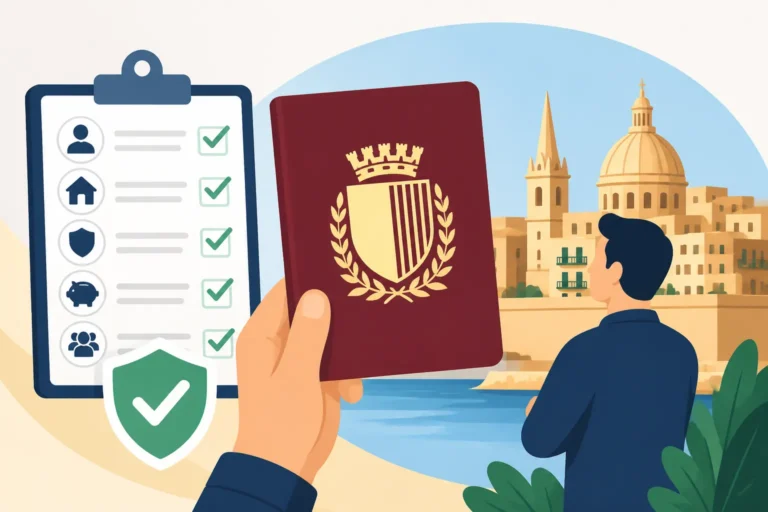
To ensure your application doesn’t hit a snag, meticulous documentation is key. Here’s a detailed list:
- Your Original Birth Certificate: Full version, showing parents' names.
- Your Parent(s)’ Original Birth Certificate(s): Connecting you to your Maltese lineage.
- Your Maltese-Born Grandparent(s)’ Original Birth Certificate(s): This is crucial for the double descent route.
- Marriage Certificate(s): For your parents and grandparents, if applicable, to show legal name changes and relationships.
- Proof of Identity: Your valid passport from your current nationality.
- Proof of Residence: Utility bills, bank statements, etc.
- Police Conduct Certificates: As mentioned, from your current country of residence and any other countries you've lived in for substantial periods.
- Application Forms: Duly completed and signed.
- Passport Photos: Recent, compliant with Maltese passport photo standards.
- Translations: Any document not in English or Maltese must be officially translated and legalised if required by Identità.
Sometimes, proving "eligibility" for your parent (the child of the Maltese-born grandparent) can be tricky if they never lived in Malta or held a Maltese passport. In these cases, a detailed affidavit outlining the family history and the chain of eligibility, sometimes supported by legal counsel, might be required. The key is to demonstrate that at the moment your parent was born, they had the right to Maltese citizenship, even if they didn't exercise it.
Citizenship by Marriage: Uniting with Your Maltese Spouse
For those who have found love and built a life with a Maltese national, obtaining citizenship by marriage is a logical next step. It’s a testament to your commitment to your spouse and to Malta itself. However, it's not simply a matter of saying "I do" and getting a passport; there's a period of demonstrated commitment and genuine integration that the Maltese authorities look for.
Understanding the Marriage-Based Citizenship Route
Malta’s legal framework for citizenship by marriage is designed to ensure that applicants are genuinely integrated into Maltese society and that the marriage is legitimate, not merely a means to obtain citizenship. It’s formally known as citizenship by "registration" under the Citizenship Act. This route acknowledges the significant contribution and commitment of foreign spouses to Maltese families and communities.
Unlike some countries where citizenship might be granted after a relatively short period, Malta requires a substantial duration of marriage and residency. This reflects a desire to see a true marital bond and a genuine intention to make Malta your permanent home. The process is administered by Identità, just like other citizenship applications. They scrutinize applications to prevent sham marriages and ensure the integrity of the citizenship process. You’ll be asked to provide extensive proof of your relationship, not just your marriage certificate.
Eligibility Requirements for Marriage Applicants
To be eligible for Maltese citizenship through marriage, you must meet several strict criteria:
- Marital Status: You must be legally married to a Maltese citizen.
- Duration of Marriage: You must have been married for at least five years. This is a non-negotiable minimum period. A marriage of four years and eleven months simply won't cut it.
- Residency: During these five years of marriage, you must have resided in Malta for at least three of those years. This means cumulative physical presence, not necessarily continuous. Identità will look for proof of your address, utility bills, tax records, and social security contributions to verify your residency. This can be complex if you travel frequently or have moved around within Malta. You'll need to demonstrate your presence convincingly.
- Continuity of Marriage: The marriage must still be subsisting at the time of application. If you are separated or divorced, you will not be eligible under this route.
- Good Conduct: You must be of good character and not have a criminal record. A police conduct certificate will be required.
It’s not just about the numbers; it’s about the spirit of the law. The authorities want to see a stable, genuine relationship and a commitment to living in Malta. While the duration and residency requirements are explicit, the underlying expectation is that you are truly settling down here.
The Application Process for Marriage
The application for citizenship by marriage follows a structured path designed to verify your eligibility and the authenticity of your relationship.
- Document Compilation: This is the first and often most laborious step. You'll need an array of personal and marital documents, most of which will need to be originals or certified true copies.
- Application Forms: Complete the specific application forms for citizenship by registration (marriage). These forms are extensive and require detailed information about your marriage, residency, and personal history.
- Proof of Relationship: Beyond the marriage certificate, you'll need to provide evidence of your genuine and subsisting relationship over the years. This could include:
- Joint utility bills, bank statements, and rental agreements or property deeds.
- Photographs of you and your spouse together over time, at family events, holidays, etc.
- Travel itineraries for holidays taken together.
- Letters or testimonies from friends and family affirming your relationship.
- Proof of any children born from the marriage.
This step is vital; it helps caseworkers understand the true nature of your union.
- Submission: Applications are submitted to Identità. Again, you can typically submit in person. Booking an appointment with Identità is often necessary, and processing times for appointments can vary significantly. Be prepared for queues and potential delays.
- Verification and Interview: Identità will thoroughly check all provided documents. It is common for applicants for citizenship by marriage to be called for an interview, either individually or with their spouse, to discuss their relationship and life in Malta. This is where you can genuinely convey the legitimacy of your marriage and your commitment to your life here.
- Police Conduct Certificate: As with all citizenship applications, a recent police conduct certificate is required from your current and previous countries of residence. This shows you are of good standing. You can find more information on The Police Conduct Certificate and Document Requirements in Malta.
- Oath of Allegiance and Certificate: If successful, you will be invited to take the Oath of Allegiance and will then be issued your Certificate of Maltese Citizenship.
As you embark on this journey, remember that proving your residency and genuine connection might sometimes feel intrusive. It's not personal; it's due diligence. Many expats face similar challenges when registering their residence or dealing with other administrative tasks, which are often discussed in our guide on Dealing with Identità: Applications, Biometrics, and the eResidence Card.
Crucial Documentation for Marriage Applications
Being prepared with the right paperwork will save you a lot of grief. Here’s what you’ll likely need:
- Your Valid Passport and Birth Certificate.
- Your Maltese Spouse's Valid Passport/ID Card and Birth Certificate.
- Original Marriage Certificate: Issued by the Public Registry in Malta, or recognised by Maltese authorities if married abroad.
- Evidence of Residency in Malta for at least 3 years:
- Utility bills in both your names or showing your address.
- Rental contracts or property deeds.
- Tax returns (FS3s from employers, or personal income tax returns).
- Social Security contribution statements.
- Bank statements.
- eResidence cards and their renewal history.
- Evidence of Subsisting Marriage:
- Joint bank statements, insurance policies, property ownership.
- Photographs (wedding, holidays, family gatherings) with dates if possible.
- Proof of shared social and domestic life.
- Birth certificates of any children born to the marriage.
- Police Conduct Certificate: For yourself, from all relevant countries.
- Completed Application Forms: Signed and dated.
- Passport-sized Photos: Recent and adhering to specifications.
- Affidavits: In certain cases, supporting affidavits from witnesses may be requested.
- Translations: All non-English/Maltese documents must be officially translated.
It can feel overwhelming to pull all this together. Many couples choose to live together for a good period before getting married and then for several years after, building up this kind of evidence naturally. For those needing private health cover during their initial residency in Malta, especially before they potentially qualify for full public healthcare, considering options like Cigna Global can provide peace of mind.
The Journey: What to Expect During Processing
Applying for citizenship, whether by descent or marriage, is a significant administrative process that requires patience. It's not a quick fix, and understanding the steps and potential hurdles can help manage expectations.
Interviews and Due Diligence
For both descent and marriage applications, especially marriage, an interview with an Identità official might be part of the process. For descent, this could be to clarify your family tree or resolve discrepancies in documents. For marriage, it's a crucial step to assess the genuineness of your relationship and your integration into Maltese society.
During a marriage interview, expect questions about:
- How you met.
- Details of your wedding.
- Your daily life together: where you live, who does what chores, shared hobbies.
- Your spouse's family and your relationship with them.
- Your plans for the future in Malta.
- Proof of your shared residency and financial arrangements.
It's not an interrogation, but a fact-finding mission. Be honest, consistent, and provide clear details. Sometimes, individual interviews might be conducted to check for consistency between spouses. This is all part of the due diligence to maintain the integrity of Maltese citizenship.
Common Pitfalls and Delays
Applicants often face delays, which can be incredibly frustrating. Here are some common reasons:
- Incomplete or Incorrect Documentation: The most frequent cause. Missing a signature, an uncertified copy, or an expired document can send your application back to square one.
- Translation Issues: Documents not professionally translated or properly legalised.
- Proving Legitimacy of Marriage: Insufficient evidence of a genuine and subsisting relationship for marriage applications.
- Historical Records: For descent applications, tracking down old records from the Public Registry or overseas can be challenging and time-consuming.
- Backlogs at Identità: Like any government agency, Identità can experience high volumes of applications, leading to processing delays beyond their control.
- Security Checks: Background checks, including police conduct certificates, often take the longest.
My advice? Always double-check every single document before submission. Make copies for yourself. And while you can't rush the system, providing a complete, accurate, and well-organised application upfront is the best way to avoid unnecessary delays. Many of the general challenges with Identità processing times and updates are echoed in topics like How Long Does Identità Take to Decide a Residence Permit?.
The Oath of Allegiance and Certificate of Citizenship
Once your application has been processed and approved, you'll receive notification to attend an Oath of Allegiance ceremony. This is a formal, yet often moving, occasion. You will swear an oath to be faithful and bear true allegiance to the President and the people of Malta, to observe the laws, and to uphold the Constitution. It’s a symbolic act, signifying your commitment to the country.
Following the oath, you will be presented with your Certificate of Maltese Citizenship. This document is your official proof of becoming a Maltese citizen. Keep it safe! With this certificate, you are then eligible to apply for a Maltese passport, which is your travel document and a tangible sign of your new nationality. This is often the moment many applicants have eagerly awaited, as it truly makes the whole journey feel real.
Navigating Dual Citizenship in Malta
One of the most significant changes in Maltese citizenship law, and a massive relief for many, is the acceptance of dual citizenship. This wasn't always the case, and older generations often had to make difficult choices.
Malta's Stance on Multiple Nationalities
Since the amendments to the Maltese Citizenship Act in 2000, Malta generally allows its citizens to hold citizenship of another country (or multiple countries) concurrently. This means that if you become a Maltese citizen by descent or marriage, you typically won't be required to renounce your original citizenship. This is fantastic news for those who wish to maintain ties to their birth country while fully embracing their Maltese identity.
However, it's crucial to understand that while Malta permits dual citizenship, your original country of citizenship might have different rules. Some countries do not permit their citizens to hold another nationality and may revoke your original citizenship if you acquire Maltese citizenship. Always check the laws of your other country (or countries) before proceeding with your Maltese application to avoid any unintended consequences. This is a nuanced area, and our detailed guide on Dual Citizenship in Malta: What's Allowed delves deeper into these specific considerations.
Implications for Existing Citizenships
The implications of acquiring Maltese citizenship while retaining another largely depend on the laws of your other nationality.
- If your other country allows dual citizenship: Great! You can enjoy the benefits of both. This includes the right to reside, work, and vote in both countries, as well as easier travel between them (especially if one is an EU member and the other is not).
- If your other country does NOT allow dual citizenship: You might face a choice. Acquiring Maltese citizenship could automatically trigger the loss of your original citizenship. In such cases, you need to weigh the benefits and drawbacks carefully.
For example, if you are a US citizen, the US generally permits dual citizenship, so acquiring Maltese citizenship would not affect your US status. However, if you are from a country that strictly adheres to single nationality, you might have a more complex decision to make. Always seek advice from the relevant authorities or legal experts in your home country regarding their specific laws on dual nationality.
Beyond Citizenship: Living and Working in Malta
Obtaining Maltese citizenship is a significant milestone, but it's often just one part of a broader journey of making Malta your home. With citizenship, many of the hurdles related to residence permits and work authorisation disappear, opening up new possibilities.
Integrating into Maltese Society
Becoming a citizen means you are now fully part of the Maltese fabric. This comes with rights and responsibilities. You can vote in national and local elections, enjoy unrestricted access to the labour market, and benefit from all public services without the need for additional permits.
Integration goes beyond legal status, though. It’s about becoming part of the community. This can involve:
- Learning Maltese: While English is an official language and widely spoken, picking up some Maltese phrases will definitely endear you to locals and deepen your cultural understanding. Our article on Is It Worth Learning Maltese as a Foreign Worker? explores this further.
- Participating in local life: Engage with village feasts, cultural events, and local traditions.
- Volunteering: A great way to meet people and contribute to your new home.
- Connecting with fellow expats and locals: Malta has a vibrant expat community, and many groups exist to help newcomers settle in and make friends.
Embracing the local lifestyle, from the relaxed pace to the rich history and delicious food, is what truly makes Malta feel like home.
Planning Your Move and Settling In
For those who applied for citizenship from abroad and are now planning a move to Malta, the process is similar to that of any newcomer, but with the added ease of being a citizen. You won't need to worry about Visas and Immigration to Malta: The Complete Guide for Foreigners (2027) or specific Residence Permits in Malta: Types, Requirements, and How to Apply.
However, practicalities remain:
- Housing: You'll need to find a place to live, whether renting or buying. Our guide on Renting a Home in Malta: Contracts, Deposits, and Tenant Rights is a great starting point.
- Utilities: Setting up electricity, water, and internet will be essential.
- Banking: Opening a local bank account is crucial for everyday finances.
- Healthcare: As a Maltese citizen, you are entitled to the public healthcare system. You can explore Healthcare in Malta for Foreign Residents: The Complete System Guide (2027) to understand how it works.
- Taxation: You'll be subject to the Maltese tax system, so understanding concepts like tax residence and domicile is important. Our The Maltese Tax System Explained: Residence, Domicile, and Remittance provides comprehensive details.
If you’re relocating your entire life, remember to factor in shipping your belongings. This is where companies found via platforms like Sirelo can be invaluable, helping you compare quotes for international movers and ensuring a smoother transition. Settling in takes time, but with your citizenship secured, you have a solid foundation for your future in Malta.
Citizenship by Descent vs. Marriage: A Quick Comparison
To help you visualise the differences, here's a handy comparison table:
| Feature | Citizenship by Descent | Citizenship by Marriage |
|---|---|---|
| Eligibility Basis | Direct lineal connection to a Maltese citizen (parent/grandparent born in Malta). | Legal marriage to a Maltese citizen. |
| Minimum Marriage Duration | Not applicable. | At least 5 years. |
| Minimum Residency in Malta | Not explicitly required (can apply from abroad) unless part of specific rules. | At least 3 years of residence in Malta during the 5-year marriage period. |
| Key Proof Required | Birth certificates, marriage certificates, proof of ancestor's Maltese citizenship. | Marriage certificate, proof of spouse's Maltese citizenship, extensive proof of subsisting marriage, shared residency. |
| Dual Citizenship | Generally permitted by Malta. | Generally permitted by Malta. |
| Primary Authority | Identità. | Identità. |
| Complexity | Can be complex due to historical citizenship laws and tracing ancestry. | Requires strong proof of genuine, subsisting marriage and residency. |
| Interview Requirement | Possible, especially for clarifications. | Highly probable to verify relationship authenticity. |
Disclaimer
The information provided in this guide is intended for general informational purposes only and does not constitute legal advice. While every effort has been made to ensure accuracy, immigration and citizenship laws can change rapidly. It is highly recommended to consult with Identità, a qualified immigration lawyer, or a legal professional specialising in Maltese citizenship for personalised advice regarding your specific situation. Reliance on any information provided in this article is solely at your own risk.