Do I Need a Visa to Visit Malta as a Tourist?
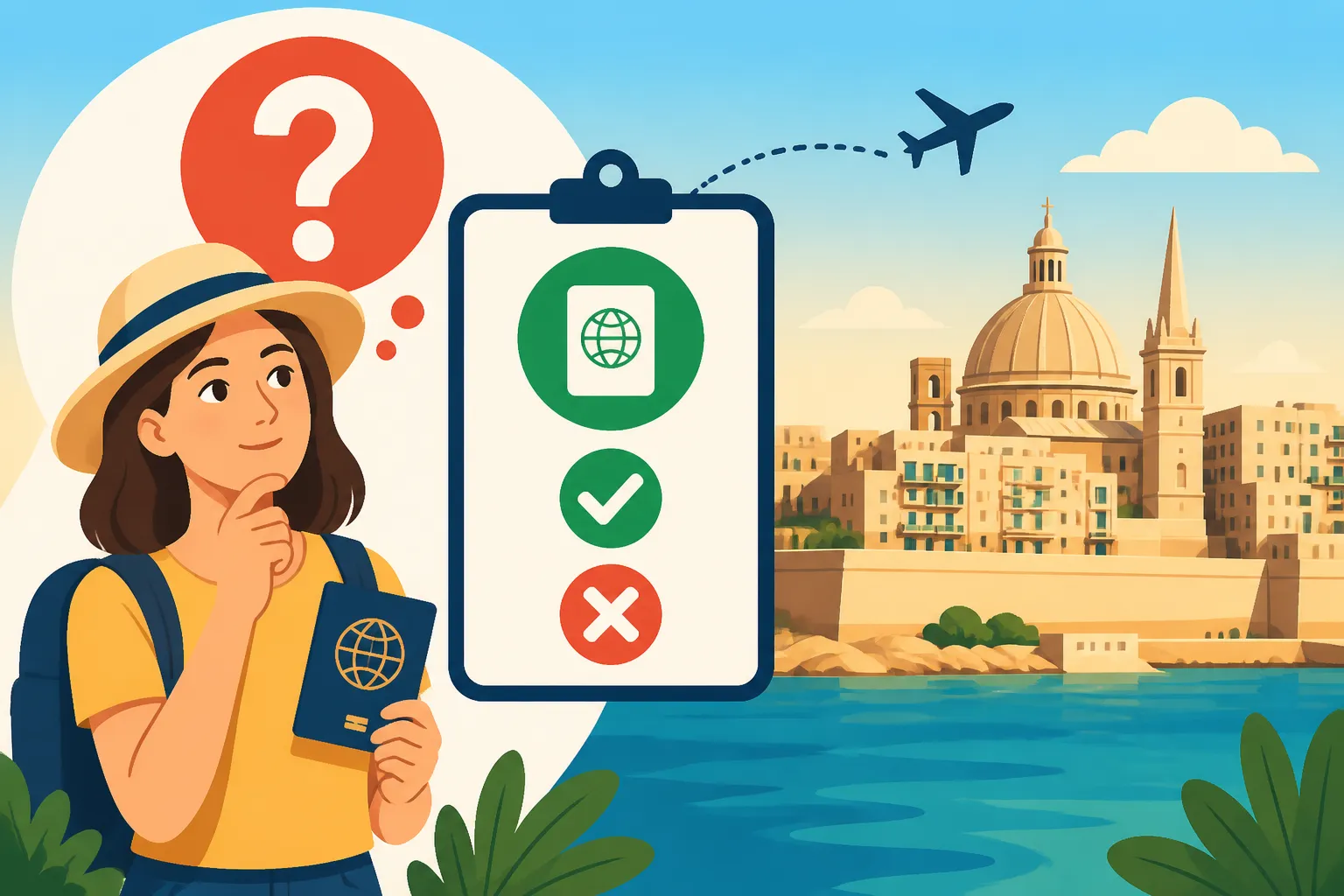
Ah, the dream of a Maltese getaway! But before you can picture yourself sipping a Cisk by the Mediterranean, navigating the sometimes-confusing world of visas and entry requirements can feel like an unexpected administrative hurdle. It’s a common worry for many foreigners looking to visit, especially if you’re not from the EU. This guide is here to clear up the confusion about whether you need a visa to visit Malta as a tourist, ensuring your journey from planning to poolside is as smooth as possible.
The Schengen Zone and Malta's Role in Tourist Visas
Malta, like many of its European neighbours, is part of the Schengen Area. This means that for short stays, the visa rules are harmonised across 29 European countries. Once you enter the Schengen Area through any of these countries, you are generally free to travel within the entire zone without further border checks for the duration of your authorised stay. This is a huge convenience, but it also comes with a specific set of rules, particularly regarding who needs a visa and how long they can stay.
Who Needs a Schengen Visa for Malta?
If you're planning a holiday in Malta and you’re a national from a country outside the Schengen Area and a select list of visa-exempt nations, then yes, you will most likely need a Schengen short-stay visa. This applies to citizens from a vast number of countries across the globe, including but not limited to, India, China, South Africa, and many nations in the Middle East and Southeast Asia. The list is dynamic and can change, so it’s always crucial to check the most up-to-date requirements from official Maltese authorities or the embassy/consulate in your home country.
A Schengen visa allows you to stay in the Schengen Area for up to 90 days within any 180-day period. This period starts from your first entry into any Schengen country. So, if you fly into Paris, spend a week there, then travel to Malta for two weeks, those 21 days all count towards your 90-day limit. It’s not 90 days per country, but 90 days for the entire zone, which is a common misconception that can lead to sticky situations. For a deeper dive into these rules, you might find our guide on Short-Stay Schengen Visas and the 90-Day Rule for Malta incredibly useful.
The process typically involves submitting an application, along with a stack of documents, to the Maltese embassy or consulate (or a designated visa application centre like VFS Global) in your country of residence. They want to see that you have a legitimate reason for visiting, sufficient funds, and a clear intention to return home, rather than overstaying. It can feel like a lot of hoops to jump through for a holiday, but it's all part of ensuring the security and integrity of the Schengen zone.
Who Is Exempt from a Schengen Visa for Malta?
Now, for the good news! If you are a citizen of an EU/EEA member state or Switzerland, you are completely exempt from needing a visa to visit Malta, and you can stay for as long as you like. This is one of the fantastic benefits of free movement within Europe. Just hop on a plane and enjoy!
Beyond the EU/EEA, there's also a significant list of non-EU countries whose citizens do not require a Schengen visa for short stays of up to 90 days within a 180-day period. This includes citizens of countries like the United States, Canada, Australia, New Zealand, the United Kingdom (post-Brexit, still within the 90/180-day limit for tourism), Japan, South Korea, and many Latin American nations. If you hold a passport from one of these countries, you can simply book your flight, pack your bags, and head to Malta without the need for a prior visa application.
However, even if you’re visa-exempt, you’ll still need a valid passport that is generally valid for at least three months beyond your intended departure date from the Schengen Area and has been issued within the last 10 years. Border officials may also ask for proof of onward travel, accommodation bookings, and sufficient funds for your stay. So, while the visa hurdle is gone, it’s always wise to have your ducks in a row. You can find more comprehensive details about general entry conditions in our article, Visiting Malta: Entry Rules, Visas, and Permitted Stays.
Understanding the 90/180-Day Rule for Short Stays
This rule is probably the most confusing aspect for many non-EU/EEA visitors, even those who are visa-exempt. It's often misunderstood, leading to accidental overstays and potential issues. Let me try to break it down in plain language, because trust me, you don't want to get this wrong.
How the 90/180-Day Rule Works in Practice
The rule states that you can stay for a maximum of 90 days within any 180-day period in the Schengen Area. The "180-day period" isn't a fixed block of time that resets on a specific date; it's a rolling window. This means that on any given day, you must look back 180 days to count your total days spent in the Schengen Area. If that total exceeds 90 days, you’re overstaying.
Let’s use an example:
Imagine you first entered the Schengen Area on January 1st and stayed for 30 days. You then left. On March 1st, you return and stay for another 45 days. You leave again. Now, it’s July 1st, and you want to visit Malta for a quick holiday. To figure out if you can, you look back 180 days from July 1st (which would take you back to early January). Within that window, you count your previous stays: 30 days in January + 45 days in March/April = 75 days. Since 75 is less than 90, you still have 15 days left within that rolling 180-day window. If you then visit Malta for those 15 days, you'd hit your 90-day limit.
The crucial part is that every day, the 180-day window slides forward. This calculation can get complicated, especially if you're making multiple short trips in and out of the Schengen Area. There are online calculators available that can help you track your days, and I strongly recommend using one if you plan multiple visits. It’s far better to be safe than sorry, as the consequences of getting this wrong can be severe. Our detailed guide, How Does the Schengen 90/180 Rule Apply to Malta?, explains this with further scenarios.
Consequences of Overstaying Your Tourist Visa in Malta
Okay, let's talk about the not-so-fun part: what happens if you overstay. This isn't just a slap on the wrist; overstaying your Schengen visa or your visa-exempt 90-day limit can lead to serious problems that impact your future travel plans to Malta and the entire Schengen Area. Maltese authorities, like those across the Schengen zone, take these rules very seriously.
The immediate consequences can include fines, which can range from a few hundred to several thousand euros, depending on the length of your overstay and the discretion of the authorities. More significantly, you could face an entry ban from the Schengen Area for a certain period, typically ranging from a few months to several years. This means no more holidays in Malta, or Italy, or France, or anywhere in the Schengen zone, for that matter, until the ban expires. Imagine having to cancel future travel plans because of an unintentional miscalculation.
In the most severe cases, overstayers can be detained and deported. This is a traumatic and expensive experience, and it will almost certainly result in a long-term entry ban. Moreover, having an overstay record can complicate future visa applications for other countries, not just those in the Schengen Area, as it signals a disregard for immigration laws. So, while Malta is a beautiful place to visit, always keep a close eye on your allowed duration of stay. If you’re ever unsure, seek clarification from the Maltese immigration authorities. This detailed information about the pitfalls is further elaborated in What Happens If I Overstay My Permit in Malta?.
Applying for a Schengen Tourist Visa for Malta
If you've determined that your nationality requires a Schengen visa to visit Malta, don't fret! While it requires some planning and paperwork, it's a standard process for millions of travellers worldwide. The key is to be organised, gather all the necessary documents, and apply well in advance of your intended travel date.
Required Documents and Application Process
The list of documents required for a Schengen tourist visa can feel daunting, but each item serves a purpose: to prove your identity, your purpose of visit, your financial stability, and your intention to return to your home country. Here's a general checklist of what you can expect to need:
- Schengen Visa Application Form: Filled out completely and accurately.
- Valid Passport: Must be valid for at least three months beyond your intended departure from the Schengen Area and have been issued within the last 10 years, with at least two blank pages.
- Passport-Sized Photos: Meeting Schengen photo requirements (usually recent, colour, white background).
- Travel Itinerary: Flight reservations (round trip), hotel bookings, or a letter of invitation if staying with friends/family in Malta. This demonstrates your planned stay.
- Proof of Funds: Bank statements, salary slips, or a sponsorship letter to show you can support yourself financially during your trip. The amount required varies but should cover accommodation, food, and activities.
- Travel Medical Insurance: This is mandatory for a Schengen visa. It must cover medical emergencies, hospitalisation, and repatriation with a minimum coverage of €30,000, valid throughout the entire Schengen Area for the duration of your stay. When looking for reliable cover, providers like Cigna Global are often recommended for their comprehensive plans tailored for international travel.
- Proof of Accommodation: Hotel reservations, rental agreements, or a formal invitation from a host in Malta, along with a copy of their ID and proof of address.
- Proof of Employment/Ties to Home Country:
- If employed: Letter from your employer stating your position, salary, and approved leave dates, along with recent pay slips.
- If self-employed: Business registration documents and recent bank statements.
- If a student: Letter from your educational institution confirming enrolment and approved leave.
- If retired: Proof of pension or other income.
- This is crucial to show you have strong reasons to return home.
- Previous Schengen Visas: Copies of any past Schengen visas.
The application process typically involves submitting these documents to the Maltese embassy or consulate in your country, or to a third-party visa application centre like VFS Global, which handles applications on behalf of Malta. You’ll usually need to book an appointment, attend an interview, and provide your biometric data (fingerprints and a digital photo). It’s a lot of paper and steps, but completely manageable if you prepare in advance. For a broad understanding of documentation, our article What Documents Do I Need for a Maltese Residence Permit? can provide additional context, though specific visa requirements might differ slightly.
| Document Type | Purpose | Specific Requirement |
|---|---|---|
| Passport | Identity & Travel Eligibility | Valid 3 months beyond stay, issued within 10 years, 2+ blank pages |
| Application Form | Formal Request for Visa | Fully completed, signed |
| Photos | Identification | Recent, passport-sized, colour, white background (Schengen spec) |
| Itinerary | Proof of Travel Plan | Round-trip flight booking, hotel reservations, or invitation letter |
| Proof of Funds | Financial Capability | Bank statements, salary slips (showing sufficient funds for stay) |
| Travel Insurance | Medical Coverage | Minimum €30,000 cover, valid Schengen-wide for duration of stay, includes repatriation |
| Accommodation | Where You'll Stay | Hotel bookings, rental agreement, or detailed invitation from host |
| Proof of Ties | Assurance of Return | Employer letter, school enrolment, business registration, property deeds, family details |
Tips for a Smooth Visa Application
Having helped countless people navigate various bureaucracies here in Malta, I’ve learned a few things that can make this process a little less painful. A smooth visa application isn't just about having all the documents; it's about presenting a clear, consistent, and convincing case to the visa officers.
First and foremost, apply early. Don’t leave it until the last minute. Processing times can vary greatly, from a couple of weeks to over a month, especially during peak travel seasons. Giving yourself ample time (at least 3-4 months ahead of your trip) means you won’t be stressed about delays and will have time to address any requests for additional information.
Secondly, accuracy and consistency are key. Ensure all information on your application form matches the details in your supporting documents. Any discrepancies, no matter how minor, can raise red flags and lead to delays or even refusal. Double-check names, dates, and passport numbers.
Third, clearly demonstrate your ties to your home country. Visa officers want to be convinced that you have every intention of returning. A stable job, property ownership, family commitments, or ongoing studies are strong indicators. The more evidence you can provide that firmly anchors you back home, the better your chances.
Finally, ensure your proof of funds is robust. Show enough money to comfortably cover your trip, and ensure the statements are recent and clearly indicate the source of income. If someone else is sponsoring your trip, their sponsorship letter and financial documents must be equally solid. Many visa applications face delays due to incomplete or unclear documentation, a point often seen with residence permits too, as highlighted in Why Do Permit Applications Get Delayed in Malta?. Getting it right the first time will save you a lot of grief.
Important Considerations for Tourists
Beyond the visa itself, there are other practicalities that every tourist visiting Malta should keep in mind to ensure a hassle-free and enjoyable experience. These range from staying healthy to understanding potential future moves.
Travel Insurance and Healthcare for Tourists
Even if you’re from a visa-exempt country and aren’t mandated to have travel insurance, I cannot stress enough how vital it is for everyone visiting Malta. Malta has excellent healthcare, but it comes with costs, especially if you need private care or an emergency transfer. Public healthcare for tourists, if you're not an EU/EEA citizen with an EHIC, is generally not free, even for emergencies.
Imagine slipping on a cobbled street in Valletta and needing an X-ray, or picking up a nasty stomach bug from an unfamiliar dish. Without insurance, those medical bills can quickly add up and put a significant dampener on your holiday budget. Comprehensive travel insurance should cover medical emergencies, emergency evacuation, trip cancellation/interruption, and lost luggage. As mentioned earlier, providers like Cigna Global are renowned for offering robust international travel insurance policies that can give you peace of mind while exploring Malta. Knowing you’re covered means you can focus on enjoying your trip without worrying about unforeseen circumstances. For urgent medical situations, remember that Malta's emergency services are accessible via 112, as detailed in Emergency Medical Care in Malta: 112, A&E, and Urgent Help.
Planning Your Move Beyond a Tourist Stay
Perhaps you’ve visited Malta as a tourist, fallen in love with its charm, and now you’re thinking, “Could I actually live here?” This is a common story, but it’s crucial to understand that a tourist visa or visa-exempt status does not permit you to stay long-term or to work. If your intention changes from visiting to residing, you must apply for the appropriate residence permit.
Attempting to transition from a tourist stay to a long-term residence permit while still in Malta can be complex and, in some cases, not permissible depending on your nationality and the type of permit you seek. Generally, it’s advisable to return to your home country and apply for the correct visa or permit from there. Malta offers various residence permits, including work permits (Single Permits), student permits, and even the Nomad Residence Permit for digital nomads. Each has specific eligibility criteria and application processes. For example, the Nomad Residence Permit, which allows non-EU/EEA nationals to live and work remotely from Malta, has particular income thresholds and conditions.
If you are considering such a move, start researching the requirements early. Our guides on Can I Apply for a Residence Permit While Visiting Malta? and The Nomad Residence Permit and Residence Programmes in Malta provide excellent starting points for understanding your options. And when you decide to take the plunge and relocate, resources like Sirelo can be incredibly helpful for managing the logistics of moving your belongings to your new island home. Don’t try to bend the rules; a proper application will save you future headaches.
Entry Requirements at the Border
Even if you have your visa in hand or are from a visa-exempt country, the final decision on entry rests with the border control officer upon your arrival in Malta (or any Schengen port of entry). They are within their rights to ask for additional documentation or clarification about your visit.
To ensure a smooth entry, always have the following readily available, even if not explicitly asked for:
- Your passport: Valid for the required period.
- Your visa (if applicable): Make sure it's correct and valid.
- Return or onward ticket: Proof that you intend to leave the Schengen Area.
- Proof of accommodation: Hotel bookings, hostel reservations, or a letter from your host.
- Proof of sufficient funds: Bank statements or cash.
- Travel insurance: Especially if it was a visa requirement.
Being polite, clear, and having all your documents organised can make the process quick and painless. Remember, the officer's job is to ensure that everyone entering the country complies with immigration laws, so being prepared shows that you respect their procedures. This is all part of the standard Visiting Malta: Entry Rules, Visas, and Permitted Stays protocol.
Disclaimer
The information provided in this guide is for general informational purposes only and does not constitute legal or immigration advice. Visa and immigration regulations are subject to change and depend on individual circumstances. Readers are strongly advised to consult the official websites of Identità (Malta's agency for identity, citizenship, and residence), the Maltese Ministry for Foreign and European Affairs and Trade, or the nearest Maltese embassy or consulate for the most accurate and up-to-date information relevant to their specific situation before making any travel or relocation decisions.