Raising Children in Malta: Childcare, Schools, and Family Life
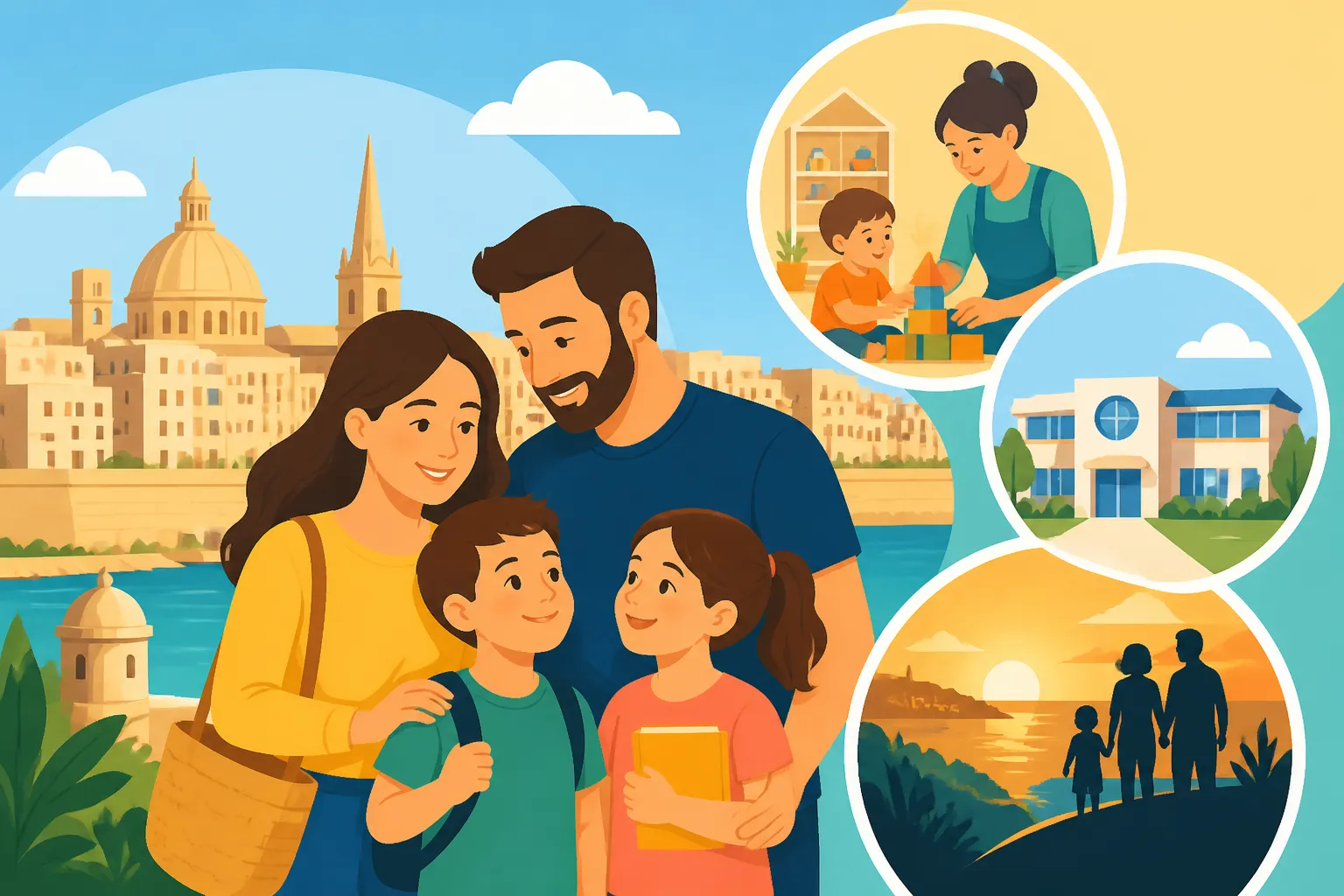
Moving to a new country with children can feel like juggling flaming swords while riding a unicycle – exhilarating, perhaps, but undeniably stressful. You’re not just packing boxes; you’re uprooting entire routines, searching for new schools, childcare, and doctors, all while trying to make new friends and establish a sense of normalcy. This guide is here to walk you through the specifics of raising children in Malta, covering everything from finding suitable childcare and navigating the school system to embracing local family life and connecting with other parents.
Navigating Childcare Options in Malta
Finding the right childcare is often one of the first and most pressing concerns for expat parents arriving in Malta. Whether you're planning to work, study, or simply need some time to settle in, understanding the local options can make a world of difference. Malta offers a mix of public and private choices, each with its own advantages and enrolment processes.
The Free Childcare Scheme: Eligibility and How It Works
Malta introduced a fantastic Free Childcare Scheme years ago, and it's been a game-changer for many working parents. The core idea is that if both parents (or a single parent) are employed or pursuing further education, they can be eligible for free childcare services. This isn't just a token gesture; it covers a substantial number of hours, aligning with typical working weeks. The scheme aims to support parents in balancing work-life commitments and boosting labour market participation, especially for women.
Eligibility isn't automatic, though, and like most things administrative in Malta, it requires a bit of paperwork and patience. You'll need to be registered for employment with Jobsplus, and your children must be between 3 months and 3 years of age. Some private centres also participate, broadening your choice. It's crucial to understand that while the scheme is free, there might be additional costs for extra hours outside the subsidised ones, or for specific activities that the centre offers. Don't just assume everything is covered. Parents can get caught out by these "extras," so always clarify the full cost breakdown with any potential provider. If you're wondering how to get your child into the scheme, start by looking up the official guidelines, typically managed by the Foundation for Educational Services (FES) in conjunction with Jobsplus. For more specific details on the process, you might find our guide on How Do I Get My Child into the Free Childcare Scheme in Malta? helpful.
Private Childcare and Nurseries: What to Expect
Even with the Free Childcare Scheme, private nurseries and childcare centres remain very popular, particularly for those who might not meet the strict eligibility criteria or prefer specific facilities. These centres cater to a wide age range, often from babies as young as three months up to school-aged children with after-school programmes. The quality and facilities can vary quite a bit, so visiting several options is highly recommended. You'll find everything from small, homely nurseries to larger, purpose-built centres with extensive outdoor play areas and structured curricula.
Expect to pay a monthly fee, which can range significantly depending on the location, facilities, and the number of hours your child attends. Some parents opt for private care even if eligible for the free scheme, perhaps because a particular centre's philosophy aligns better with their values, or because they need more flexible hours than the subsidised scheme offers. When considering private options, always ask about staff-to-child ratios, their educational approach, daily routines, meal provisions, and emergency procedures. Many private nurseries are also part of the free childcare scheme for eligible parents, meaning you might get the best of both worlds – your preferred centre with subsidised hours. It's worth noting that securing a spot, especially for infants, can sometimes involve waiting lists in popular areas like Sliema or St. Julian's, so start looking early. For a clearer picture of the financial commitment, check out our article on How Much Does Childcare Cost in Malta?.
Finding Au Pairs and Nannies: Alternatives for Flexible Care
For some families, traditional nurseries just don't fit the bill. Perhaps you have irregular working hours, multiple children of different ages, or simply prefer one-on-one care in your home environment. In these cases, exploring options like au pairs or nannies becomes a viable alternative. Au pairs are typically younger individuals from abroad who come to Malta to improve their English, experience the culture, and live with a host family in exchange for childcare duties and light housework, receiving pocket money and accommodation. They offer immense flexibility and a cultural exchange component that many families cherish.
Nannies, on the other hand, are professional childcare providers, often with qualifications and extensive experience. They usually command a higher salary and may work either live-in or live-out. The benefit here is tailored care, often following your family's routines and specific needs, which can be invaluable, especially for families with special requirements or very young infants. Finding a reliable au pair or nanny often involves using online agencies, word-of-mouth recommendations, or dedicated Facebook groups for expat families in Malta. Always conduct thorough interviews, check references, and ensure all legal aspects, such as visa requirements (if applicable) and employment contracts, are properly handled. For non-EU nationals, specific permits may be required. While there’s no specific guide on au pair costs, the general article How Much Does Childcare Cost in Malta? gives context to the overall market.
Understanding the Maltese Education System
Malta's education system is broadly divided into three sectors: state, church, and independent (private) schools. Each has its own enrolment process, ethos, and curriculum, and understanding these differences is key to choosing the right fit for your child. The system is generally well-regarded, with English widely used, especially in secondary and higher education.
State Schools: Enrolment, Curriculum, and Support for Expats
State schools in Malta are free and are typically assigned based on your residential address, falling under specific 'colleges' that cover a number of schools in a region. The curriculum generally follows the national syllabus, preparing students for SEC (Secondary Education Certificate) exams at age 16. For expat children, especially those arriving mid-year or with limited English (or Maltese), state schools often have support systems in place, such as specific language support classes, to help them integrate. However, it's worth noting that the primary language of instruction can vary. While English is used extensively, Maltese is also a core subject and often the primary language in the earlier years, particularly in more rural schools.
Enrolment usually happens at specific times of the year, typically early in the calendar year for the following academic year starting in September. As a newcomer, you should contact the Directorate for Educational Services (DES) or the specific college your address falls under as soon as possible to understand the process for new registrations. You'll need documents like your child's birth certificate, your ID cards, and proof of address. Be prepared for a bit of back-and-forth, as bureaucracy is a fact of life here. While state schools are free, you will be expected to pay for uniforms, school supplies, and possibly some extracurricular activities. They offer a solid education and a fantastic opportunity for children to integrate fully into Maltese society. Our detailed article on How Do I Enrol My Child in School in Malta? provides practical steps.
Church Schools: Applications, Ethos, and Demand
Church schools are another popular option in Malta, offering a faith-based education (predominantly Catholic) at no tuition cost, although donations are often expected or contributions towards specific school funds. These schools are highly sought after, with demand far outstripping the number of available places. Admission is typically managed through a ballot system, often with specific criteria that give preference to children from families already involved with the school, or siblings of current students. The application process usually starts quite early in the year for the following September intake, sometimes even a year or two in advance, especially for kindergarten entry.
The curriculum generally mirrors that of state schools, also preparing students for SEC exams, but with a strong emphasis on religious and moral education. English is widely used as a language of instruction, particularly in secondary education. Parents often choose church schools for their strong sense of community, discipline, and perceived academic standards. If you're considering a church school, start researching the specific schools in your desired area well in advance, understand their individual admission criteria, and prepare for the lottery system. It can be a very competitive process, and many expat parents find themselves navigating this unique system for the first time. For a broad comparison, you might find our guide on What Is the Difference Between State, Church, and Private Schools in Malta? useful.
Independent and International Schools: Curricula and Costs
For many expat families, independent schools (often referred to as private schools) and international schools offer a familiar educational environment, particularly if they anticipate further international moves or prefer a specific curriculum. Malta hosts several well-regarded international schools, such as Verdala International School, QSI International School of Malta, and St. Edward's College, each offering different curricula like the International Baccalaureate (IB), British, or American systems. These schools typically have smaller class sizes, extensive extracurricular programmes, and a very diverse student body, which can be a huge benefit for children adapting to life abroad.
The main difference with these options, of course, is the cost. Tuition fees can be substantial, often ranging from several thousand euros per year, and there may be additional costs for enrolment, uniforms, books, and trips. Entry requirements typically involve assessments, interviews, and a review of previous school reports. It’s advisable to contact these schools directly for their admissions policies, fee structures, and availability, as places can be limited, particularly in popular year groups. These schools are designed to cater to an international cohort, so they are generally well-equipped to support children transitioning from different educational backgrounds and offer a strong English-speaking environment. If you are exploring this route, our article on Are There International Schools in Malta? delves deeper into specific options.
Healthcare for Children in Malta
Ensuring your children have access to good healthcare is paramount for any parent, and for expats in Malta, understanding the system is crucial. Malta offers both public and private healthcare services, with public services generally free at the point of use for those contributing to social security.
Well-Baby Clinics and Vaccinations: Essential Early Care
For infants and young children, Malta's public health system provides excellent preventive care through its network of Well-Baby Clinics. These clinics, usually located within local health centres, offer regular check-ups, growth monitoring, and crucial immunisations according to the national schedule. They are an invaluable resource for new parents, offering a direct line to health professionals for advice on feeding, development, and general child welfare. Attending these clinics also means your child stays up-to-date with their vaccinations, which are vital for their health and often a requirement for school entry.
When you arrive in Malta and register for your health entitlement, make sure to ask about the nearest Well-Baby Clinic and how to register your child. It’s usually a straightforward process, requiring your child’s birth certificate and your eResidence card. Nurses and doctors at these clinics are generally very helpful and accustomed to assisting expat families. Keeping track of your child's health records from your home country is vital, as this will help the Maltese health professionals ensure continuity of care. This initial step in engaging with local healthcare is often reassuring for parents, establishing a baseline of support for their children's well-being. More details can be found in our comprehensive guide on Children's Health in Malta: Well-Baby Clinics, Vaccinations, and School Health.
Paediatricians and General Practitioners: Finding the Right Doctor
As your children grow, you’ll primarily interact with either a General Practitioner (GP) at a local health centre or a private paediatrician. GPs at health centres are your first point of contact for most common ailments, routine check-ups, and referrals to specialists within the public system. When you register with a health centre, you'll typically be assigned a GP, or you might be able to choose one. Many GPs in Malta are fluent in English, which eases communication for expat parents.
For more specialised care, or if you prefer a consistent, private doctor for your child, engaging a private paediatrician is a common choice among expats. While this comes with a consultation fee, it often means shorter waiting times for appointments and a dedicated specialist who can get to know your child over time. You can find private paediatricians through recommendations from other parents, online directories, or by asking your GP for private referrals. The choice between public GP and private paediatrician often comes down to personal preference, budget, and the specific health needs of your child. Rest assured, whether public or private, competent medical care is readily available. For those looking for a specialist, our guide on How Do I Find a Paediatrician for My Baby in Malta? will be particularly useful.
Emergency and Specialist Care: When You Need More Support
In the unfortunate event of a medical emergency, Malta's main public hospital, Mater Dei Hospital, offers a comprehensive Accident & Emergency (A&E) department that is accessible to everyone, regardless of health entitlement status. For urgent, life-threatening situations, call 112 for an ambulance. While emergency care is typically free at the point of use, subsequent specialist care or hospital stays might incur charges if you're not fully registered for public health entitlement. It’s always best to have your eResidence card and any health insurance details readily available.
For non-urgent specialist care, such as seeing an ENT (Ear, Nose, and Throat) specialist or an orthopaedic surgeon, you typically need a referral from your GP if you're using the public system. Waiting lists for public specialists can sometimes be long, which is a common frustration for many. This is where private healthcare often comes into play. Many private clinics house specialists who can see your child much faster, though at a cost. Having private health insurance can significantly offset these expenses. Understanding these pathways is crucial for peace of mind, knowing that whatever your child's medical needs, there are avenues for support. Our more general guide Are My Children Covered by Maltese Healthcare Through Me? helps clarify entitlement for families.
Activities and Family Fun Across the Islands
Malta, with its mild climate and numerous attractions, offers a fantastic backdrop for family life. Keeping children entertained and engaged is rarely a challenge, with a variety of outdoor and indoor activities available year-round.
Playgrounds, Parks, and Outdoor Spaces: Making the Most of Malta's Climate
One of the great joys of raising children in Malta is the abundance of opportunities for outdoor play. From the sprawling Ta' Qali National Park with its adventure playground and open spaces to countless smaller, modern playgrounds dotted across towns and villages, there's always somewhere for kids to burn off energy. Most local councils maintain public playgrounds, many of which have been recently upgraded with safe, colourful equipment suitable for various age groups. Places like the Splash & Fun Water Park (seasonal) or the numerous sandy beaches also provide endless entertainment, especially during the warmer months.
Beyond formal playgrounds, the island's many promenades, like those in Sliema, St. Julian's, and Marsaskala, are perfect for family strolls, scooting, or cycling, offering stunning sea views. Exploring Malta's historical sites, like the walled city of Mdina or the ancient temples, can also be surprisingly engaging for older children, turning history into an adventure. Don't forget the quieter, greener spots like Buskett Gardens, which offers a respite from urban areas and a chance to connect with nature. Encourage your kids to explore, get a bit muddy, and embrace the outdoor lifestyle Malta affords. It's a fantastic way to bond as a family and connect with the local environment.
Indoor Activities and Educational Fun: Rainy Day Solutions
While Malta is famous for its sunshine, there are always those occasional rainy or excessively hot days when indoor activities become essential. Thankfully, the island has plenty to offer to keep children entertained and stimulated indoors. Play cafes and soft play areas are popular choices for younger children, providing safe spaces for climbing, sliding, and socialising. Larger shopping malls, such as The Point in Sliema, often have dedicated children’s play zones.
For educational fun, consider visiting the Esplora Interactive Science Centre in Kalkara, which offers hands-on exhibits that are both entertaining and informative for all ages. The Malta National Aquarium in Qawra is another hit, allowing children to discover marine life from the Mediterranean and beyond. Many local councils and private entities also organise workshops, art classes, and storytelling sessions, especially during school holidays. Libraries throughout the island often have children's sections and sometimes host events. Keep an eye on local community boards and social media groups for expat families, as these are excellent sources for discovering upcoming events and activities, ensuring your children are never bored, come rain or shine.
Family-Friendly Events and Community Groups: Connecting with Others
Building a support network is incredibly important for expat families, and Malta makes it relatively easy to connect with others through a variety of family-friendly events and community groups. Throughout the year, there are numerous festivals, village feasts (festas), and cultural events that are open to families. These events often feature bouncy castles, food stalls, live music, and traditional celebrations, providing a vibrant glimpse into Maltese culture while offering entertainment for children. Many of these are free to attend.
Beyond these larger events, several online groups, particularly on Facebook, serve as hubs for expat parents in Malta. These groups are invaluable for asking questions, sharing recommendations, organising playdates, and finding support. Organisations like the Malta Parents Network or various school parent-teacher associations also host events and provide platforms for connection. Participating in local sports clubs, dance classes, or scouts/guides groups can also help your children, and by extension, you, forge friendships within the community. Don't underestimate the power of these connections; they can truly enrich your family's experience of living in Malta and provide a vital social lifeline.
Adapting to Maltese Family Life and Culture
Moving to a new country means adapting to new social norms, and family life in Malta has its own unique flavour. Understanding and embracing these cultural nuances can help your children settle in more smoothly and allow your family to feel truly at home.
The Importance of Family: Integrating into Local Traditions
Family is undeniably at the heart of Maltese culture. Extended families often live close by, and it’s common to see multiple generations gather for Sunday lunches, religious holidays, and informal get-togethers. This strong family bond often translates into a very child-friendly environment where children are welcomed and cherished in almost all social settings. Don’t be surprised if strangers coo over your baby or offer a kind word to your toddler – it's a genuine expression of affection in Maltese society.
For expat families, this can be a wonderfully warm and inclusive experience. While you might not have your own extended family on the island, you'll often find that Maltese neighbours and friends treat your children almost like their own. Embrace the village festa culture, participate in local events, and engage with the community; these are excellent ways to integrate and allow your children to experience the richness of Maltese traditions firsthand. It’s a culture where children are seen as a blessing, and this pervasive attitude makes Malta a genuinely lovely place to raise a family. This cultural aspect is often what newcomers appreciate most, a stark contrast to more individualistic societies.
Language and Communication: English, Maltese, and Beyond
One of Malta’s unique advantages for expat families is its bilingual nature. Both Maltese and English are official languages, and English is widely spoken across the islands, particularly in business, education, and tourism. This means that as an expat parent, you’ll generally find it easy to communicate with teachers, doctors, and service providers. Your children will likely find their school curriculum delivered largely in English, especially at higher levels or in international schools.
However, Maltese is the national language and plays a significant role in daily life, especially outside the main tourist hubs. While not strictly necessary for daily functioning, encouraging your children to pick up some Maltese can be incredibly beneficial for their integration and cultural understanding. Many state schools will teach Maltese, and your children might pick it up surprisingly quickly through their local friends and environment. It’s a fantastic opportunity for them to become truly bilingual. For younger children, exposure to Maltese through playgroups or local friends can be seamless. For older children, formal lessons are available. It's truly a gift to give them two languages, and Malta provides a natural setting for it. You can explore more about language in Malta in our article Does My Child Need to Learn Maltese at School?.
Safety, Lifestyle, and Daily Routines: What's Different
Malta generally boasts a low crime rate, contributing to a sense of safety and community that many expat families appreciate. Children often have a degree of freedom that might be uncommon in larger, more bustling cities. You’ll see kids playing outside in the streets or piazzas (squares) until later in the evenings, especially during the summer. This relaxed, community-oriented lifestyle is a major draw for families seeking a calmer pace of life.
Daily routines, particularly around mealtimes, can be a bit later than in some Northern European or North American cultures. Dinner, for example, often happens later in the evening, and socialising can extend well into the night. Adapting to the Mediterranean climate also means adjusting routines, especially during the hot summer months. Siestas might not be formal, but afternoon downtime is often embraced, and outdoor activities shift to cooler mornings or evenings. Understanding and gently adapting to these rhythms can help your family settle in and avoid culture shock. It's a lifestyle that encourages connection, warmth, and a slower pace, which for many families, is exactly what they’re looking for.
Practical Tips for Raising Kids in Malta
Beyond the cultural shifts and big decisions, there are numerous practical aspects of raising children in Malta that new expat parents need to consider. From essential administrative steps to everyday logistics, a bit of preparation goes a long way.
Registering Your Child: Birth, ID, and Social Security
One of the first practical steps after moving (or if you’ve had a baby in Malta!) is ensuring your child is properly registered with the Maltese authorities. If your child is born in Malta, you'll register their birth at the Public Registry, which is a fairly straightforward process. For children moving to Malta, their birth certificate will be crucial for various registrations. The next key step is to get your child an eResidence card, which includes their unique ID card number. This number is vital for accessing public services like healthcare and education. The application for a child’s eResidence card is typically done via Identità, similar to your own application, often requiring an appointment for biometrics.
Crucially, you’ll also want to ensure your child is registered for health entitlement, usually by linking them to your own social security contributions or private health insurance. This ensures they can access the public health system without issues. Don’t forget about the Children's Allowance, a social security benefit paid to families based on income, which can provide a helpful financial boost. While these steps can feel a bit bureaucratic, taking them early ensures smooth access to all the services your family might need. For full details on the necessary identity documents, our guide on Getting Your Maltese eResidence Card and ID Number is indispensable.
Document / Registration Purpose Where to Get/Register Key Info
:### Registering your child with Identità
When your children move to Malta, one of the primary administrative tasks is to get them registered with Identità, the national agency responsible for identity management. This usually involves applying for their eResidence document, which acts as their official identification and proves their right to reside in Malta. For non-EU/EEA/Swiss nationals, this eResidence card is also their residence permit. The application process is generally similar to that for adults, requiring documentation such as the child's birth certificate (often with an apostille and translation if not in English), your own valid residence permits, and proof of family relationship. You’ll typically need to book an appointment at Identità for fingerprinting and photo capture for older children, though requirements can vary by age.
It's absolutely essential to get this done promptly after arrival. Without proper registration, your children might face difficulties accessing public services like schools and public healthcare, even if you are personally entitled. This document ensures they have their own unique Maltese ID card number, which is a key identifier throughout their life in Malta. Keeping copies of all submitted documents and the application reference number is a smart move, as Maltese bureaucracy, while improving, can sometimes require patience and follow-up.
Getting Around with Kids: Transport and Accessibility
Navigating Malta with children, especially young ones, requires a bit of planning. The public bus service, Malta Public Transport, is quite comprehensive and very affordable (free for all residents with a Tallinja Card). Buses are generally equipped to handle pushchairs, though they can get crowded during peak hours, which can be a bit of a squeeze with a buggy and a bustling toddler. If you're planning on regular bus use, getting a personalised Tallinja Card for yourself and your older children is a must – it makes travel seamless and budget-friendly.
For greater flexibility, especially with multiple children or lots of gear, having a car is often preferred by expat families. However, driving in Malta can be an adventure in itself, with narrow streets, sometimes aggressive driving, and limited parking in certain areas. Car seats are mandatory for children up to a certain age/height, so ensure you bring your own or arrange to rent/buy one locally. Taxis and ride-sharing apps like Bolt and eCabs are also readily available, offering convenience, but remember to specify if you need a child seat in advance. Many areas are pedestrian-friendly, with promenades perfect for walking or scooting, but always be mindful of uneven pavements and traffic. Remember, getting around with kids in Malta often involves a mix of transport methods, depending on your destination and timing. Our article Public Transport in Malta: Free Bus Travel and the Tallinja Card offers more specific details on public transport.
Budgeting for Family Life: Costs and Allowances
Understanding the financial aspects of raising a family in Malta is critical for sustainable expat life. While certain things like public education and healthcare (for entitled residents) are free, other costs can add up quickly. Housing, particularly family-sized apartments or houses in popular areas, can be a significant expense. Groceries can also be surprisingly costly, especially for imported goods, so learning where to shop for local produce and essentials can help manage the budget. Childcare, as discussed, can range from free to substantial private fees, depending on your eligibility and choices.
However, there are also financial benefits for families. The Children's Allowance, provided by the government, offers a regular payment to families, with the amount depending on your income and the number of children. This can be a welcome relief, even if it doesn't cover all costs. Energy bills, particularly for air conditioning in summer and heating in winter, can be higher than expected due to older building insulation and rising utility costs, so budgeting for these fluctuating expenses is important. Overall, Malta offers a good quality of life for families, but like anywhere, smart budgeting and awareness of local costs are essential. Detailed information on financial support for families is available in our guide on Children's Allowance and Family Benefits in Malta.
Disclaimer
Please remember that while I strive to provide accurate and up-to-date information, rules and regulations in Malta, particularly concerning immigration, health, and social benefits, can change. This guide is for informational purposes only and does not constitute legal, financial, or professional advice. Always consult with official government sources, legal professionals, or relevant authorities for the most current and personalised guidance applicable to your specific situation.