How Do I Deal with Power Cuts in Malta?
Ah, the Maltese power cut. If you've lived here for any length of time, you'll know that sinking feeling when the lights suddenly flicker and then plunge you into darkness, often accompanied by the quiet hum of neighbours' generators kicking in or the exasperated sigh from down the street. It’s an unavoidable part of island life, especially during those scorching summer months or unexpected winter storms. But don't despair! This guide is here to walk you through understanding why these outages happen, how to prepare your home and your sanity for them, and most importantly, how to cope when the power decides to take an unscheduled holiday.
Understanding Power Cuts in Malta: Why They Happen and What to Expect
Let's face it, when the power goes out, it's easy to immediately feel frustrated, especially when you're reliant on electricity for everything from keeping cool to staying connected. But understanding the 'why' behind these outages can help you anticipate and even make peace with them a little.
Common Causes of Outages
Power cuts in Malta aren't always a sign of a failing system; often, they're a complex mix of factors inherent to island infrastructure and a rapidly developing economy.
One of the primary culprits is the aging infrastructure in certain areas. While Enemalta, the main energy provider, is constantly working to upgrade and maintain the network, some older cables and substations can become overloaded, particularly during peak demand. Picture everyone in your village cranking up their air conditioning units simultaneously when the mercury hits 35°C, or a whole street of new apartments drawing heavily on a decades-old power line. That kind of sudden, immense strain can simply be too much, leading to fuses blowing or equipment tripping offline to prevent more serious damage.
Then there’s the weather. Malta experiences incredibly hot summers, and while the heat itself doesn't cause power cuts, the increased demand for cooling certainly does. Air conditioners draw a significant amount of power, and when everyone's running theirs full-tilt, the grid can get overwhelmed. Conversely, winter storms, though less frequent, can bring strong winds and heavy rain that damage overhead lines or cause short circuits. It's a double-edged sword, really.
Another common, albeit frustrating, cause is accidental damage. With the constant construction boom across the islands, it's not uncommon for excavation work to accidentally strike underground cables. Similarly, roadworks or even tree branches falling can impact overhead power lines. These are usually localised but can take time to repair, especially if the damage is extensive or in an awkward location. It’s a pain when it happens right on your street, but often, it's an unforeseen incident rather than a systemic failure.
Finally, remember that Malta is an island. We're connected to the European grid via interconnector cables, which usually provide a stable supply. However, if there are issues with the interconnector itself or an sudden surge on the local grid, the island's own power generation might struggle to pick up the slack immediately, leading to a broader, though usually brief, outage. For a deeper dive into how your utility bills are managed and who's responsible for what, you might find How Do ARMS Utility Bills Work in Malta? helpful.
Duration and Frequency
When the lights go out, the first thing everyone wonders is, "How long will this last?" The answer, frustratingly, is: it depends.
Most power cuts in Malta are relatively short-lived. Often, they’re just a quick blip—a few minutes as systems reset or an overloaded circuit recovers. These can be particularly common during lightning storms or when demand suddenly spikes. However, longer outages do occur, especially with more significant issues like damaged infrastructure or complex repairs. It’s not unheard of for a localised outage to last a few hours, or in rare cases, even half a day.
There's also a noticeable seasonal variation. You'll likely experience more frequent power cuts during the peak summer months (July and August) due to the intense heat driving up electricity demand for air conditioning. Anecdotally, these summer outages tend to be shorter and more localised, as they often stem from overloaded circuits tripping. In contrast, winter power cuts, while less common, can sometimes be more impactful if they're caused by storm damage to the main lines.
It's also important to distinguish between planned and unplanned outages. Enemalta occasionally schedules maintenance work that requires a temporary shutdown of power to specific areas. These are usually communicated in advance via their website, social media, and sometimes even local council notices. Unplanned outages, of course, are the ones that catch you off guard and are generally caused by faults, accidents, or sudden overloads. Always check Enemalta's official channels first to see if your area is listed for a planned shutdown or if an unexpected outage has been reported.
Preparing for the Inevitable: Essential Steps for Expats
Experienced expats often find that the key to dealing with power cuts isn't to hope they won't happen, but to assume they will and prepare accordingly. It's about taking proactive steps to minimise disruption and keep your cool, literally and figuratively. When you're busy settling in after your move, perhaps even having relied on a service like Sirelo to transport your cherished belongings, remember that setting up an emergency kit is just as crucial as unpacking.
Emergency Kit Essentials
Think of your emergency kit as your peace-of-mind package. It doesn't need to be elaborate, but having these basics ready will make a world of difference when the power goes out.
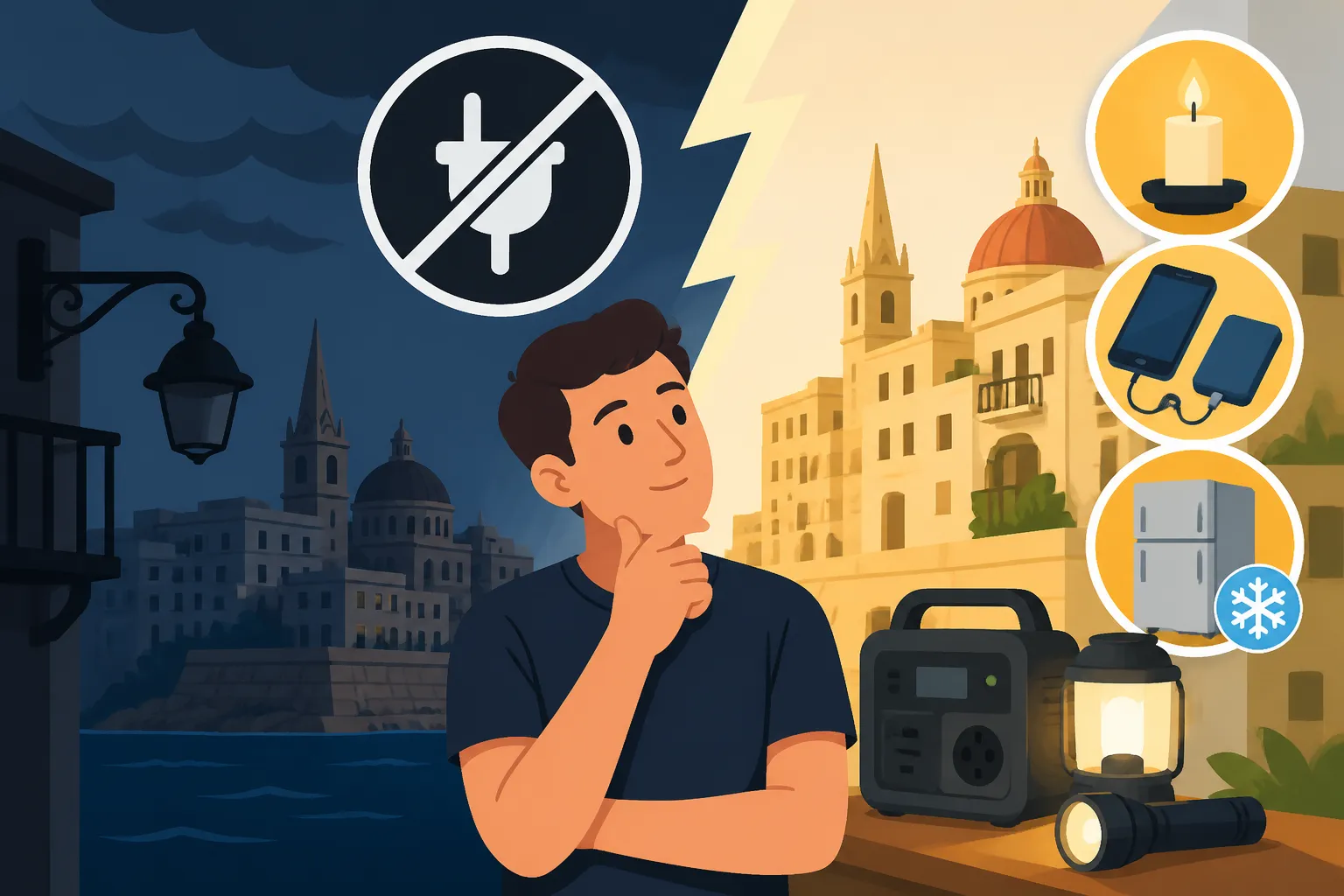
First up, lighting. Forget fumbling for your phone's torch or trying to light candles safely in the dark (a definite fire hazard, especially with excited kids or curious pets). Invest in a couple of good quality, rechargeable LED lanterns. These provide broad, safe light and can often last for several hours. Crucially, keep them charged! Also, a few smaller battery-operated torches or headlamps are great for navigating around the house. And don't forget power banks for your mobile phones. Keep at least two fully charged at all times. Nothing is worse than being in the dark with a dead phone, cutting you off from information and communication.
Next, water and non-perishable food. Keep a supply of bottled water on hand, especially during summer. While power cuts don’t usually affect water supply directly, if the outage lasts a long time and your building relies on electric pumps, your taps might run dry. A few tins of soup, crackers, and some energy bars will come in handy if you can’t cook or don’t want to leave the house.
A basic first-aid kit is always a good idea, power cut or not. And keep some cash readily available. ATMs and card machines in shops will often be out of action during an outage, so having a bit of physical currency is prudent for essential purchases. Finally, a small, battery-powered radio can be surprisingly useful for staying informed if your internet or TV is down and your phone battery needs conserving.
Communication and Information
In a power cut, reliable information is your best friend. Knowing who to contact and how to get updates can alleviate a lot of stress.
Start by saving Enemalta’s customer care number (8007 2224) and their emergency fault reporting line (8007 2249) in your phone. Also, bookmark their official website and social media pages (Facebook and X/Twitter are usually very active during outages). These are often the fastest ways to get updates on the cause and estimated restoration time for larger outages.
Your mobile phone becomes your lifeline, but home Wi-Fi will be down. This is where having robust mobile data is crucial. If you’re often out and about or travel, consider an eSIM service like Airalo. It can be a godsend during a home power cut, ensuring you have internet access on your phone to check Enemalta updates, message family, or just browse to pass the time. Don't rely solely on your home internet; diversify your connectivity options. For more on setting up your digital life, check out Getting Internet and Mobile Service in Malta.
Always remember to check Enemalta's outage map on their website first. They usually update it with known faults. If your area isn't listed and you believe it's a general outage (not just your apartment's fuse), then consider calling their fault line. Avoid calling for minor, very localised outages unless you've confirmed it's not just your apartment's circuit breaker that's tripped. Overloading their lines with individual reports slows down their ability to respond to major incidents.
Lastly, notify neighbours, especially if they are elderly or vulnerable. A quick text or a knock on the door can make sure everyone is aware and safe. Community WhatsApp groups or Facebook pages can also be surprisingly effective for sharing information locally.
Protecting Your Electronics and Appliances
When the power comes back on, it often comes with a surge that can damage sensitive electronics. This is a crucial step that many overlook.
When the power goes out, the first thing you should do is unplug sensitive electronics. This includes TVs, computers, gaming consoles, and charging devices. When the power is restored, there can be a surge that might fry unprotected gadgets. Wait a few minutes after the power returns before plugging things back in, especially delicate items.
For essential electronics like your Wi-Fi router, computer, or even medical equipment, consider investing in an Uninterruptible Power Supply (UPS). A UPS provides a battery backup that kicks in immediately when the power fails, giving you time to safely shut down your devices and protecting them from surges. It's a small investment that can save you a lot of grief and money in replacements.
As for your fridge and freezer, the best advice is simple: keep the doors closed as much as possible. A well-sealed fridge can keep food cold for about four hours, and a full freezer can maintain its temperature for up to 48 hours, as long as the doors remain shut. Every time you open them, you let cold air out and warm air in, accelerating the thawing process. If you’re concerned about utilities, make sure you're registered as a residential user for fair tariffs, which you can learn more about in Understanding Tiered Utility Tariffs and Registered Residents in Malta.
Coping During a Power Cut: Practical Tips and Strategies
So, the lights are out, your phone is charging on the power bank, and you’ve confirmed it’s a widespread issue. Now what? It’s time to switch into coping mode, embracing a bit of old-school ingenuity and Maltese resilience.
Staying Safe and Comfortable
Your immediate priorities should be safety and maintaining a reasonable level of comfort.
First, lighting. As mentioned, avoid candles unless absolutely necessary and used with extreme caution. Rechargeable lanterns are far safer and more effective. Place them strategically around your home to provide general illumination and in key areas like the bathroom or kitchen. If you're using a torch, direct it towards the ceiling to bounce light around the room, reducing harsh shadows.
During the scorching Maltese summers, staying cool is paramount. With no air conditioning or fans, things can get uncomfortable quickly. Open windows and doors (if safe to do so) to create a cross-breeze. If you have battery-operated fans, now is their moment to shine. Stay hydrated by drinking plenty of water. You might find some excellent general tips for dealing with the heat in How Do I Cope with the Summer Heat in Malta?. During winter outages, layer up with blankets and extra clothing, and huddle together for warmth.
For food safety, adhere to the 'keep doors closed' rule for fridges and freezers. If the power cut lasts for many hours, prioritise eating perishables from the fridge first. If food has been above 4°C for more than two hours, it's generally safer to discard it.
Above all, stay calm. Power cuts are a temporary inconvenience, not a catastrophe. Take a deep breath, and remember that Enemalta engineers are likely working hard to restore power.
Monitoring and Reporting
Knowing when and how to get updates or report an issue can be tricky. Here’s the local lowdown.
Your first port of call for updates should always be Enemalta's official channels. Check their website's outage map, their Facebook page, or their X (formerly Twitter) feed. They typically post updates for larger or more complex outages. Don't call immediately after a power cut unless you have reason to believe it's a very localised issue unique to your building, and you've already checked the circuit breaker.
If you've checked the online map and there's no mention of an outage in your area, and your neighbours are also affected, then it's appropriate to report the outage to Enemalta's fault line (8007 2249). When you call, be clear and concise. Provide your exact address, including your street name, house number, and locality. Describe the issue briefly – e.g., "Total power cut at [Your Address] since [Time]." This helps them pinpoint the problem more efficiently. Remember, patience is a virtue, as their lines can be busy during widespread outages.
It’s also wise to check in with local community groups online. Sometimes, neighbours will have heard updates from Enemalta that you haven't, or can confirm if a repair crew is spotted nearby. This collective knowledge can be reassuring. For managing your bills and payments when the power returns, ensure you know How Do I Pay My ARMS Utility Bill Online in Malta?.
Managing Your Schedule and Lifestyle
A power cut forces an unplanned pause, which can be an opportunity to slow down, if you let it.
Embrace the 'slow down' mentality. This is Malta, after all! Instead of stressing about what you can't do, focus on what you can. Read a physical book, play board games, or simply sit on your balcony and enjoy the evening air. If you have kids, it’s a perfect chance for some screen-free family time.
Plan activities that don't require power. This could be meal prepping with no-cook ingredients, catching up on chores that don't need electricity, or taking a walk. If it's daytime, head out to a cafe with Wi-Fi (if they have power!) or enjoy a stroll. If you work from home, this is where a UPS for your laptop can give you a crucial extra hour or two to save your work before switching to phone-based tasks, leveraging your Airalo data for essential communication.
Whenever power is available, even briefly, charge all your devices. Keep power banks topped up, ensure laptops are fully charged, and don't let your phone dip too low if you can help it. A car charger can also be a lifesaver for phones if you have a vehicle. This habit ensures you’re always as prepared as possible for the next outage.
Long-Term Considerations and What We Can Do
While preparing for individual power cuts is essential, it's also worth considering the bigger picture of energy reliability in Malta and what options exist for greater independence.
Investing in Backup Solutions
For those planning a longer stay or purchasing property, investing in more robust backup solutions can significantly improve your quality of life during outages.
Solar panels and battery storage are becoming increasingly popular in Malta. While a significant upfront investment, they can provide a degree of energy independence. During a power cut, if your solar system is equipped with battery storage, your home can continue to draw power from the stored energy, keeping essential appliances running. This is a game-changer, particularly if you’re a homeowner. You’ll also find that proper registration for your utility accounts is crucial for accurate billing, and you can delve into that more with How Do I Get My Maltese ID Card Number?.
For renters or those not ready for solar, portable power stations are a more accessible option. These are essentially large, rechargeable batteries with multiple outlets (AC, DC, USB) that can power small appliances, charge laptops multiple times, and run fans for hours. Brands like Anker or EcoFlow offer various models that can be invaluable.
Consider also having a gas hob or a portable gas camping stove for cooking. Many older Maltese apartments still have gas hobs, which are fantastic during power cuts. If yours doesn't, a small camping stove can ensure you can still make hot food and drinks, a huge comfort when everything else is dark.
Advocating for Better Infrastructure
Living in a place means engaging with its systems. While Enemalta is continually working to improve the grid, citizen feedback and understanding the broader energy landscape are important.
Understanding where to provide constructive feedback is key. While individual complaints during an outage are frustrating for all, participating in local community discussions or raising concerns via your local council can contribute to a collective voice for infrastructure improvements. The rapid development of Malta means increased strain on existing resources, a point often highlighted when discussing the Cost of Living in Malta: Budgeting for the Real Numbers.
Malta is actively working on upgrading its energy grid, enhancing its interconnector capacity, and investing in renewable energy sources. This long-term vision aims to create a more resilient and sustainable power supply. While these changes take time, knowing that efforts are underway can provide some reassurance. Different localities might experience different frequencies of power cuts due to varying infrastructure, so exploring Choosing Where to Live in Malta: Towns, Regions, and Gozo might give you some insight if you're planning a move. The goal is to move towards a future where unexpected blackouts are a rare occurrence, rather than an anticipated part of island life.
| Emergency Power Cut Kit Item | Purpose | Key Considerations |
|---|---|---|
| Rechargeable LED Lanterns | General room illumination, safer than candles. | Keep fully charged. Aim for 2-3 per household. |
| Power Banks | Charging mobile phones, tablets, small USB devices. | At least two, fully charged. Prioritise phone charging for communication. |
| Battery-Operated Torches/Headlamps | Navigating in the dark, hands-free light. | Include spare batteries or ensure they are rechargeable. |
| Bottled Water | Drinking, basic hygiene (if pumps affected). | Keep a few large bottles for emergencies. |
| Non-Perishable Food | Snacks, light meals that don't require cooking. | Tinned goods, crackers, energy bars. Rotate stock regularly. |
| First-Aid Kit | Treating minor injuries. | Essential for any emergency, power cut or not. |
| Cash | Essential purchases when card machines are down. | Keep a small amount in local currency. |
| Battery-Powered Radio | Receiving news/updates if internet/TV is out. | Include spare batteries. |
| Portable Power Station (Optional) | Powering laptops, fans, small appliances for extended periods. | Larger investment, but offers significant relief during longer outages. |
| Gas Hob/Camping Stove (Optional) | Cooking hot food and drinks. | Ensure proper ventilation if using indoors. |
Disclaimer
Please note that this information is intended as a general guide for expats and tourists in Malta. While accurate at the time of writing, policies, procedures, and conditions related to power supply and emergency services can change. Always refer to official government websites, local authorities, and service providers like Enemalta for the most up-to-date and specific advice.