What Does Public Healthcare Actually Cost in Malta?
I remember standing in the pharmacy in Sliema during my first month in Malta, clutching a prescription and wondering if I was about to drop a week's worth of grocery money just to stop a fever. I've lived through the confusion of the Maltese "free" healthcare system, and this guide clarifies exactly what you will pay—and what you won't—as a foreigner navigating life on the islands.
The Concept of Free Healthcare in Malta: Who Actually Pays Nothing?
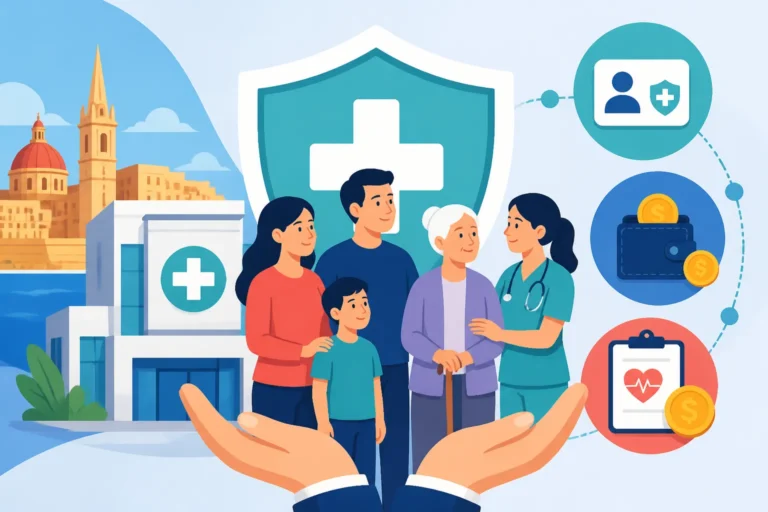
The most common phrase you will hear when moving here is that healthcare is free. While this is technically true for many, it is not a universal right granted just by stepping off the plane at Luqa. In Malta, public healthcare is a contributory system. It is funded primarily through social security contributions and general taxation. If you are not contributing to the pot, the state usually expects you to pay your own way or provide proof of private coverage.
The Social Security Handshake
For most of us working a standard 9-to-5 or running a local business, the cost of healthcare is "hidden" in our monthly payslip. If you are employed by a Maltese company, you are likely paying Class 1 Social Security contributions, which are usually 10 percent of your gross salary, capped at a weekly maximum. For 2026, this cap is approximately 58 Euro per week.
Once you are in the system and paying these contributions, you are entitled to the same level of care as a Maltese citizen. This means you can walk into a health centre or Mater Dei Hospital and receive treatment without a bill. However, it’s vital to understand How Malta's Public Healthcare Works: Entitlement, Contributions, and Costs before you assume you’re covered. The entitlement is not automatic upon signing a contract; you often need to register with the Entitlement Unit first.
EU Nationals and the EHIC Advantage
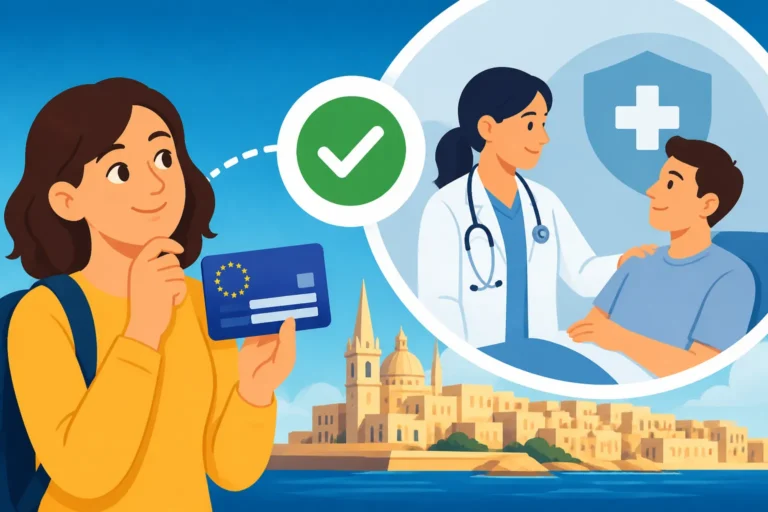
If you are an EU, EEA, or Swiss national, your European Health Insurance Card (EHIC) acts as a temporary bridge. It covers "medically necessary" care—meaning anything that cannot wait until you return home. This is perfect for the first few weeks while you are settling in. However, once you become a resident or start working, the EHIC is no longer your primary source of cover. At that point, you must transition to the local system or use an S1 form if you are a pensioner or posted worker. Many newcomers rely on Using Your EHIC for Care While Settling Into Malta to avoid early out-of-pocket costs, but don't let the card's expiration catch you off guard.
The Sticker Price: Hospital Fees for the Non-Entitled
What happens if you fall through the cracks? Perhaps you are a digital nomad on a permit that doesn't require NI contributions, or you are a TCN (Third Country National) waiting for your first payslip to be processed. In these scenarios, the public system views you as a "non-entitled" patient. In recent years, Mater Dei Hospital has become much stricter about billing those who cannot prove their right to free care.
Mater Dei Daily Bed Rates
If you are admitted to Mater Dei and do not have entitlement, the costs can escalate quickly. The billing department follows a specific fee structure defined under the Healthcare Fees Regulations. For 2026, these costs are generally in the following ranges:
- General Ward Bed: Approximately 260 Euro per day.
- High Dependency Care: Approximately 490 Euro per day.
- Intensive Care Unit (ICU): Approximately 930 Euro per day.
These fees only cover the bed and basic nursing. Specialized surgeries, advanced imaging like MRIs, and certain high-cost medications are billed on top of this. This is where a plan like SafetyWing becomes an absolute lifesaver. Because SafetyWing is designed for global travelers and nomads, it provides a safety net that covers these sudden, high-cost hospitalizations while you are in the "limbo" phase of your Maltese residency.
Emergency and Specialist Consultations
For those without entitlement, even a visit to the Accident & Emergency (A&E) department is not technically free, although life-saving stabilization is always prioritized. If you are treated for a minor injury at the emergency room without proof of entitlement, you might be asked to pay an administrative and consultation fee ranging from 50 to 100 Euro.
Specialist consultations at the public hospital outpatient clinics are also billed to the non-entitled. A single visit to a consultant might cost between 30 and 80 Euro. If you find yourself in this position, you might ask, Can I See a Doctor in Malta Before My Health Entitlement Is Approved? The answer is yes, but you should be prepared to pay the government-mandated rates.
Primary Care and the Health Centre System
Malta’s primary care is delivered through a network of regional health centres and smaller community clinics. For residents who pay social security, these centres are a fantastic resource. They offer everything from GP visits to blood tests and wound dressing, all for zero Euro at the point of use.
Walk-in Costs vs. Registered Care
If you are entitled, you can simply present your Maltese ID card and see a doctor. But if you are not yet registered or are a visitor, the health centres may charge a fee for a GP consultation, often around 15 to 30 Euro. While this is significantly cheaper than a private hospital visit, it’s still an out-of-pocket expense that adds up if you have a family.
Experienced expats often suggest Registering with a Health Centre and Choosing a GP in Malta as one of the first things you do after getting your residency card. It streamlines the process and ensures that if you wake up with a chest infection, you can get seen without worrying about the cost.
| Service Type | Entitled (Social Security Payer) | Non-Entitled (Tourist/New Arrival) |
|---|---|---|
| GP Visit (Health Centre) | 0 Euro | 20 – 30 Euro |
| A&E Admission | 0 Euro | 50 – 100 Euro (Base Fee) |
| Overnight Hospital Stay | 0 Euro | 260+ Euro per day |
| MRI / CT Scan | 0 Euro | 150 – 500 Euro |
| Blood Tests (Health Centre) | 0 Euro | 10 – 50 Euro |
Prescriptions and the POYC Scheme
One area where many foreigners get confused is the cost of medicine. In the UK or other parts of Europe, you might be used to a flat-rate prescription fee. Malta does things differently.
What’s Covered and What’s Out-of-Pocket
Public healthcare only provides free medications in two specific circumstances:
- While you are an inpatient at a hospital.
- If you suffer from a recognized chronic condition under the Schedule V (Yellow Card) or Schedule II (Pink Card) schemes.
If you have a chronic condition like diabetes or asthma, you can register for The POYC Pharmacy of Your Choice Scheme: How to Collect Free Medicines. This allows you to pick up your regular medication for free at your local pharmacy. However, for acute issues—like a one-off course of antibiotics or a cream for a rash—everyone pays the full market price. Generally, medications in Malta are reasonably priced, but if you require a brand-name drug that isn't on the government's bulk-buy list, you will pay the retail rate at the pharmacy counter.
The Exclusions: Dental, Vision, and Extras
Even if you are the most diligent social security payer in the country, the public system does not cover everything. This is a common point of frustration for many expats who expect a truly "all-inclusive" service.
Dental Care: The Private Standard
For adults, public dental care is almost exclusively limited to emergency extractions or acute infections treated at Mater Dei. If you need a filling, a cleaning, or a crown, you will be heading to a private dentist. Fortunately, dental costs in Malta are lower than in Northern Europe or the US, but they are still 100 percent out-of-pocket.
Most of us living here long-term accept that we will pay around 50 Euro for a check-up and cleaning. It’s one of the reasons why Private Healthcare and Insurance in Malta: When You Need Cover is a frequent topic of conversation; some top-tier private plans include a small dental allowance, but for the most part, it's a separate budget item.
Vision and Opticians
Similar to dental, eye care is largely private. While children and certain low-income groups can get help with glasses, most expats will visit an optician in towns like Birkirkara or Valletta and pay for the exam and frames privately. Expect to pay 20 to 40 Euro for an eye test, with frames starting from 80 Euro and going up significantly for designer brands.
Bridging the Gap with Private Protection
The reality of living in Malta is that while the public system is high-quality, it can be slow. Waiting lists for non-urgent surgeries or specialist appointments can stretch into months. This is why a hybrid approach is the standard "expat way." You pay your social security to ensure that if you have a major accident, Mater Dei will fix you for free, but you keep a private policy for everything else.
Why SafetyWing Makes Sense for Newcomers
If you are just arriving, I highly recommend looking at SafetyWing. It’s particularly useful because it covers you globally, which is essential if you’re traveling back and forth to your home country or exploring the rest of Europe. When you are first navigating Healthcare in Malta for Foreign Residents: The Complete System Guide (2027), there is often a gap between your arrival and the moment your "entitlement" is officially recognized by the government.
SafetyWing acts as that crucial bridge. It handles the "what if" scenarios—like an appendicitis or a broken leg during a hike in Gozo—without you having to worry about the Mater Dei daily bed rates I mentioned earlier. Once you are settled and paying NI, you might transition to a local private plan, but for the nomadic or transitional phase, having that digital-first coverage is a massive stress-reliever.
Managing Chronic Conditions and the Entitlement Unit
If you arrive with a pre-existing condition, you need to head to The Entitlement Unit: Sorting Out Your Right to Treatment in Malta as soon as you have your residence card. You will need to provide medical records from your home country, translated into English if necessary. The staff there will help you apply for the Schedule V card, which is the "Yellow Card" that unlocks free chronic meds.
Be warned: the process can be bureaucratic. You might need to see a local consultant first to "verify" your diagnosis, even if you've had it for twenty years. During this verification period, you will be paying for your meds out-of-pocket at the local pharmacy, so bring a two-month supply from home if you can.
Practical Tips for Your First Medical Need
If you feel ill today and haven't sorted your paperwork yet, don't panic. You have options. You can visit a GP at a local pharmacy—look for the green cross signs. Most pharmacies in Malta have a doctor who visits for a few hours each day. You don't usually need an appointment; you just show up, wait in line, and pay about 15 to 20 Euro.
This is often much faster and less stressful than trying to navigate a public health centre as a newcomer. For anything more serious, remember that Emergency Medical Care in Malta: 112, A&E, and Urgent Help is always there. The paramedics aren't going to check your bank balance before they help you in a crisis, but knowing the cost structure beforehand helps you manage the administrative aftermath.
Disclaimer
The information provided in this guide is for informational purposes only and does not constitute legal or medical advice. Healthcare regulations, social security rates, and entitlement criteria in Malta are subject to change by the Ministry for Health and the Department of Social Security. While we strive to provide the most current data for 2026, always verify your specific status with the Entitlement Unit or a qualified legal advisor. Your right to free healthcare depends on your specific residency status, employment type, and contribution history.