Why Do Nomad Residence Permit Holders Need Private Insurance in Malta?
Navigating the administrative maze of the Mediterranean can feel like a full-time job before your actual remote work even begins. I vividly remember sitting in a sun-drenched cafe in Valletta, staring at my laptop screen in total confusion because the healthcare rules I read online didn't match the reality at the residency office. This guide clarifies exactly why nomad residence permit holders must have private insurance in Malta and how to ensure your policy meets the strict criteria for approval.
The Regulatory Reality of the Nomad Residence Permit
When you apply for the Nomad Residence Permit in Malta, you are entering a specific legal category that differs significantly from traditional employment or EU residency. The agency responsible for this, Identità, is notoriously meticulous about documentation. One of the most common reasons for a "request for further information" or an outright rejection is a health insurance policy that doesn't tick the right boxes. It is not enough to simply have a basic travel policy that covers "emergency medical." The Maltese government requires proof of a comprehensive policy that covers all risks normally covered for Maltese nationals.
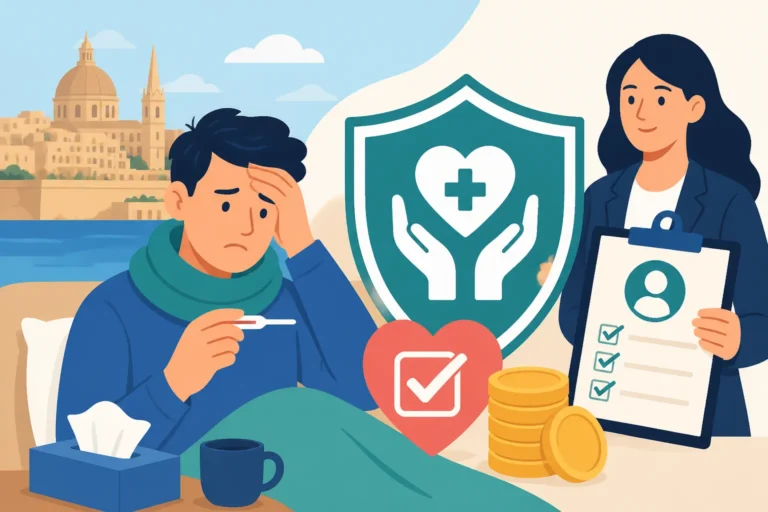
From a veteran’s perspective, the "Nomad" status is a bit of a double-edged sword. You get the incredible benefit of living on this historic archipelago while working for an employer back home, but because you aren't paying social security contributions into the Maltese system, you don't have an automatic "key" to the public health treasure chest. The private insurance requirement is the government's way of ensuring you won't become a financial burden on the state if you happen to trip over a limestone curb in Mdina or develop a sudden illness.
What Full Coverage Actually Means for Identità
The term "full coverage" is often thrown around in residency meetings, but it has a very specific meaning in the context of the Nomad Residence Permit and Residence Programmes in Malta. Your policy must include inpatient and outpatient care, hospitalization, and most importantly, repatriation of remains. Many nomads try to use the health coverage bundled with their premium credit cards, only to be told it isn't sufficient because it lacks a clear "limit of indemnity" that meets Maltese standards.
You need a document—usually a "Schedules of Benefits"—that clearly states the geographical area of coverage (which must include Malta) and the duration of the policy. If your permit is for one year, your insurance must cover that entire year. Short-term policies that require you to leave the country every 90 days to "reset" will not be accepted. This is where specialized providers like SafetyWing become incredibly useful, as they understand the "subscription" model that remote workers prefer while still providing the necessary documentation for residency offices.
The Validity of Your Policy During Renewal
A mistake I see far too often is the "set it and forget it" mentality. When it comes time for Renewing Your Maltese Residence Permit Before It Expires, you will need to show that your insurance has been continuous. If there is a gap of even a few days between your old policy and your new one, Identità may flag this as a breach of your permit conditions. They want to see that you have been protected every single second you’ve been on the island.
Public vs. Private Healthcare Why Nomads Are Excluded from the Public System
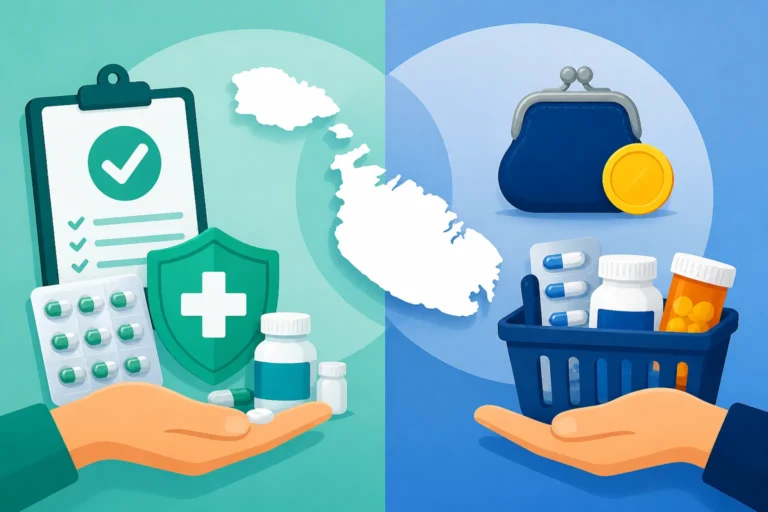
Malta is famous for having one of the best healthcare systems in the world, centered around the massive, state-of-the-art Mater Dei Hospital. However, there is a massive misconception that "free healthcare" applies to everyone living here. As a nomad, you are essentially a guest who is economically self-sufficient. Because your income is derived from abroad and you are not paying Class 1 social security contributions, you do not have "entitlement."
If you were to walk into a local health centre without private insurance, you would be billed as a "non-entitled" person. These costs can spiral quickly. While a GP visit might only be €20 or €30, a night in a hospital bed or a series of diagnostic scans can cost thousands. The private insurance requirement is a protective barrier for both you and the Maltese taxpayer.
Understanding Social Security and Entitlement Gaps
In Malta, the healthcare system is funded by the people working here. For those employed by Maltese companies, a portion of every paycheck goes toward the national health service. You can read more about this in our guide on How Malta's Public Healthcare Works: Entitlement, Contributions, and Costs. Since you, as a nomad, are specifically exempt from these local contributions to avoid double taxation, the "entry fee" for healthcare is shifted to the private market.
Newcomers are often advised that even if you could somehow talk your way into the public system, you might not want to rely on it exclusively. While the care is excellent, the waiting lists for non-urgent specialist appointments can be long. Having private insurance allows you to bypass these queues and head straight to private hospitals like St. James or DaVinci, where you can often see a specialist within 48 hours. This is a huge relief when you’re trying to maintain a 40-hour work week for a boss in New York or London.
The Emergency Room Scenario
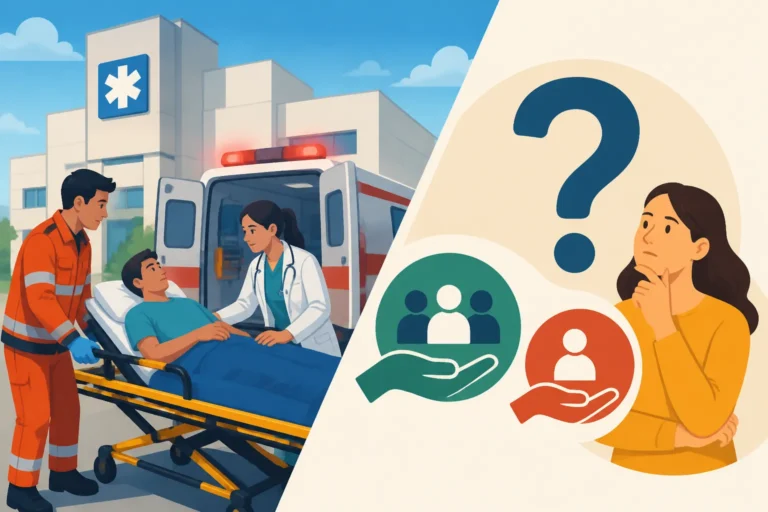
Even in an emergency, the rules apply. If you call 112 and are taken to Mater Dei, the doctors will treat you immediately—they won't leave you in the hallway over a paperwork issue. However, once you are stabilized, the billing department will come knocking. Without a valid private policy, you will be responsible for the full "international patient" rate. This is why having a provider like SafetyWing is so valuable; they offer the kind of global medical coverage that covers these high-stakes emergency situations without the headache of wondering if a local Maltese clerk will recognize the brand.
The Difference Between Travel Insurance and International Health Insurance
This is the hill where many nomad applications go to die. Standard travel insurance is designed for "trips." It assumes you have a "home" to go back to for long-term recovery. Residency-compliant insurance, however, is designed for "living." Identità wants to see that you have health insurance, not just travel insurance.
Travel insurance usually covers things like cancelled flights, stolen luggage, and emergency dental. While those are nice, the Maltese government is specifically looking for "Health Coverage." If your policy says "Travel Insurance" in big bold letters at the top, you might get a skeptical look from the officer. You need to ensure your provider issues a "Visa Letter" or a "Certificate of Insurance" that explicitly mentions healthcare coverage in Malta.
Why the Repatriation Clause is Non-Negotiable
It sounds morbid, but the "repatriation of remains" clause is a hard requirement for the Nomad Residence Permit: Income Threshold and Conditions. The Maltese state does not want to be responsible for the logistical or financial burden of transporting a deceased foreigner back to their home country. If your insurance policy lacks this specific clause, your residency application will be paused. When shopping for insurance, look for "International Healthcare" or "Nomad Insurance" rather than "Backpacker Insurance."
| Feature | Standard Travel Insurance | Residency-Compliant Nomad Insurance |
|---|---|---|
| Duration | Usually limited to 30-90 days per trip | 365 days (continuous) |
| Outpatient Care | Limited to emergencies only | Includes GP visits and specialist referrals |
| Repatriation | Often an optional add-on | Strictly required by Identità |
| Hospitalization | Emergency stabilization only | Full inpatient care and surgery |
| Proof for Visa | Simple booking confirmation | Formal Certificate of Insurance / Visa Letter |
How SafetyWing Fits the Nomad Requirement
SafetyWing has become a staple in the Maltese nomad community because they were one of the first to build a product specifically for the legal requirements of remote work visas. Their "Nomad Insurance" provides a letter that is widely recognized by Identità. Many digital nomads in the "Expats in Malta" Facebook groups who successfully used SafetyWing for their initial application and their subsequent Getting Your Maltese eResidence Card and ID Number. It offers a middle ground: it feels like a subscription service but provides the heavy-duty legal protection required by the Mediterranean authorities.
Real-World Benefits of Private Coverage in Malta
Beyond just satisfying the government, having private insurance in Malta changes your daily life. The "health centres" (Berġa) in local villages are great for basic needs, but they are often crowded. With private insurance, you have access to a network of private pharmacies and clinics where the experience is much more streamlined.
I remember needing a simple ultrasound a few years ago. The public system had a three-month wait. Because I had my private coverage sorted, I walked into a private clinic in Sliema, paid my deductible, and had the scan done that afternoon. For someone working on a Nomad Residence Permit in Malta, time is quite literally money. You cannot afford to spend three days trying to navigate a public referral system when you have Zoom calls to attend.
Accessing Private Specialists and GPs
One of the quirks of the Maltese system is that many of the best doctors work in both the public and private sectors. They might spend their mornings at Mater Dei and their afternoons at a private clinic. By having private insurance, you are essentially paying for "front-of-the-line" access to the exact same world-class surgeons and specialists.
If you are wondering How Do I Get a Referral to a Specialist in Malta?, the answer is much simpler with private insurance. You simply book an appointment with a private GP (often found in the back of local pharmacies), pay the small consultation fee, and they will write you a referral that your private insurance will then use to authorize treatment at a private hospital.
Managing Chronic Conditions as a Nomad
If you have a pre-existing condition, the insurance requirement becomes even more critical. You need to be very careful that your policy doesn't have an "exclusion clause" that leaves you vulnerable. While the Managing a Chronic Condition in Malta: Schedule V Medicines and Care scheme provides free medicine to locals with certain illnesses, nomads generally do not qualify. You will need to rely on your private insurance to cover the costs of your maintenance medications and regular check-ups. Always disclose your full history to your insurer to ensure your "Visa Letter" is actually worth the paper it’s printed on.
Common Pitfalls and How to Avoid Rejection
The most common pitfall I see is nomads buying a policy that starts on the day they think they will arrive, rather than the day they actually apply. Identità often wants to see that you are covered from the moment you submit your application if you are already in the country on a tourist visa. If there is a "waiting period" on your insurance before it becomes active, your permit will be delayed.
Another issue is the "deductible" or "excess." Some very cheap policies have an excess of €5,000 or more. If the residency officer feels the excess is so high that you couldn't realistically pay it, they might argue that the insurance doesn't truly provide "full coverage." Keeping your deductible at a reasonable level (under €500-€1,000) is usually the safest bet for a smooth application.
The Importance of the English Language Document
Malta’s official languages are Maltese and English. If your insurance policy is in Spanish, German, or Mandarin, you must provide a certified translation. Save yourself the €100 translation fee by choosing a global provider like SafetyWing that provides all documentation in English by default. When you hand over your stack of papers at the Identità office in Msida, the less the officer has to think, the faster you get your card.
Using the myHealth Portal with Private Insurance
Even as a nomad with private insurance, you can still benefit from some of the digital infrastructure in Malta. Once you have your ID card, you can look into Booking Appointments and Using myHealth Online in Malta. While this is primarily for the public system, having your records digitized can help if you ever need to transition from private care to emergency public care. It’s all about creating a "paper trail" of your health while living on the island.
Final Steps Securing Your Coverage for 2026
As we move forward, the scrutiny on the Nomad Residence Permit is only increasing. The "wild west" days of remote work are over, and the Maltese government is looking for residents who are organized and well-protected. Before you click "submit" on your application, do a final check of your insurance policy. Does it cover the full duration? Does it include repatriation? Is the limit of indemnity at least €30,000 (a common benchmark)?
If you're still feeling overwhelmed, don't worry. Most of us who have lived here for years started exactly where you are. The key is to treat the insurance not as a "tax" or a "hoop to jump through," but as your safety net in a foreign land. Once that eResidence card is in your hand and you're enjoying a pastizz and a Kinnie by the sea, the stress of the insurance paperwork will be a distant memory. Just make sure you know Which Health Centre Do I Go to After Moving to Malta? just in case of a minor scrape, even if your private doctor is your primary contact.
Disclaimer
The information provided in this guide is for educational and informational purposes only and does not constitute legal or professional medical advice. Immigration policies and healthcare regulations in Malta are subject to change. Always verify the latest requirements with the official Identità website or consult with a qualified immigration professional before purchasing insurance or submitting your residency application.