Using Your EHIC for Care While Settling Into Malta
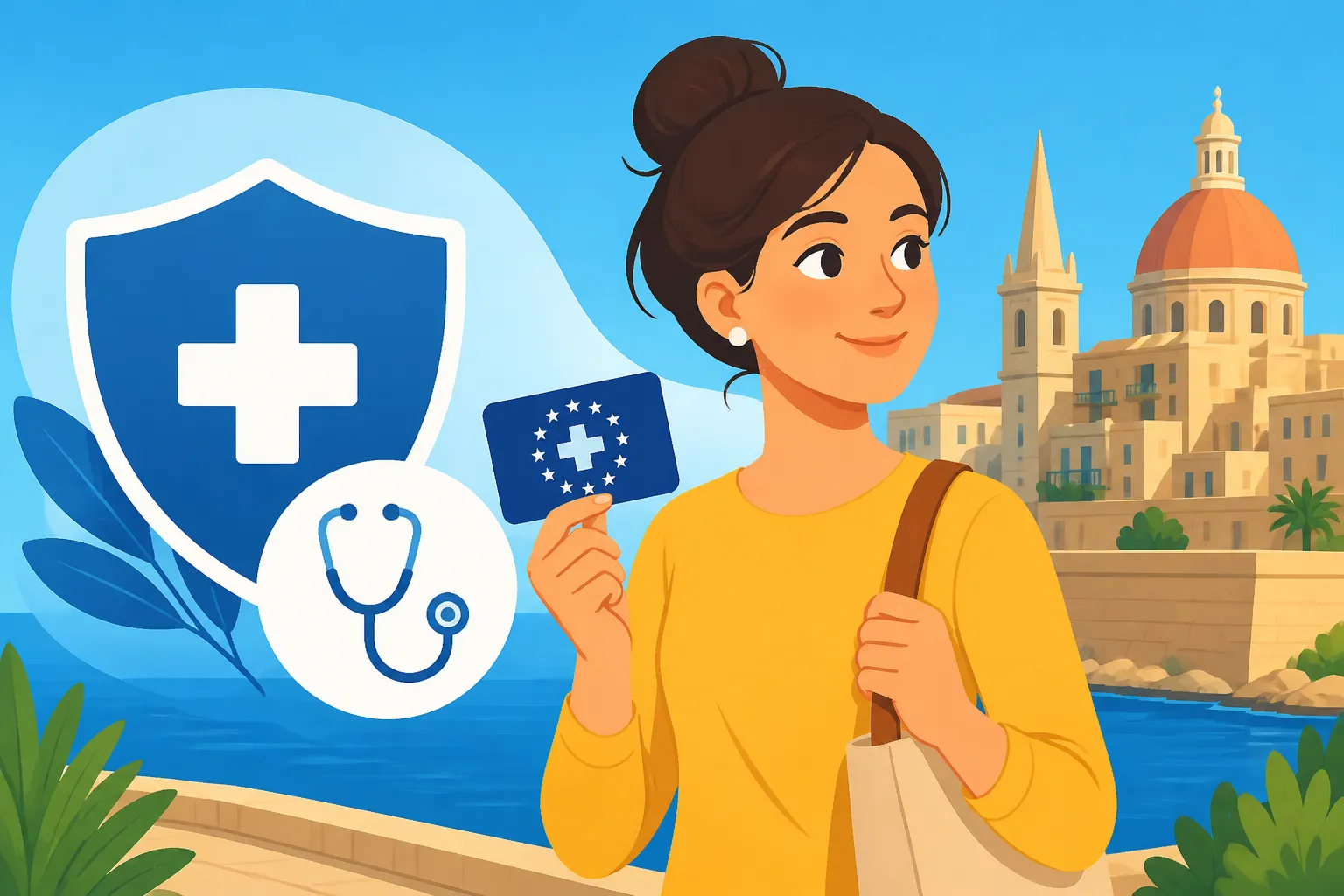
Moving to Malta often feels like a whirlwind of paperwork, but nothing is more stressful than realizing you do not yet have your local ID card while feeling a fever coming on. I remember sitting in my first rental in Sliema, clutching my blue European Health Insurance Card (EHIC) and wondering if it actually worked at the local clinic. This guide explains how to use your EHIC for care while settling into Malta and navigating the transition to full residency.
What the EHIC Actually Covers in Malta
The first thing you need to understand is that the EHIC is designed for temporary stays, not for permanent relocation. If you are an EU, EEA, or Swiss national, your card gives you access to state-provided healthcare in Malta under the same conditions as a local. However, the operative word here is "necessary." This means treatment that cannot wait until you return home, such as emergency room visits at Mater Dei or acute illnesses.
Newcomers often assume the EHIC is a replacement for local health registration, but it is purely a safety net. It does not cover private healthcare, and Malta has a very active private sector. If you accidentally walk into a private clinic in St. Julian's expecting to use your EHIC, you will be met with a bill. The card only works within the public system, which is high-quality but operates differently than what you might be used to in Northern Europe or elsewhere.
Furthermore, the EHIC does not cover "medical tourism." You cannot use it to move to Malta specifically to receive elective surgery or long-term treatment for a pre-existing condition that is already stable. Understanding this distinction is vital because the Maltese health authorities are quite strict about verifying your status. If they determine you are now "ordinarily resident"—meaning you live here permanently—they will expect you to transition to the local system rather than relying on your home country's card.
Medically Necessary vs. Routine Care
In the eyes of the Maltese health system, "medically necessary" care includes anything from a broken bone to a sudden infection. If you find yourself needing Emergency Medical Care in Malta: 112, A&E, and Urgent Help, your EHIC is your golden ticket. It ensures that you won't be charged the "non-resident" rates, which can be quite steep for hospital stays.
Routine care, however, is a grey area. While you can technically visit a public health centre for a minor issue, the doctors there may remind you that for ongoing management of chronic conditions, you should be Registering with a Health Centre and Choosing a GP in Malta. I found that during my first few months, the EHIC was great for a one-off prescription for an ear infection, but for anything more complex, the staff began asking when my Maltese ID card would arrive.
Public vs. Private Facilities
One of the most confusing things for expats is that many doctors in Malta work in both the public and private sectors. You might see a specialist at Mater Dei (the main public hospital) and then see the same doctor at a private pharmacy clinic the next day. Your EHIC is only valid at the public hospital and the various regional health centres spread across the islands.
If you choose to visit a private hospital like St. James, the EHIC provides zero coverage. This is where many expats choose to supplement their initial stay with a nomad-friendly insurance like SafetyWing. This is particularly useful because the public system can have long wait times for non-urgent issues. Having a backup plan while you are still Can EU Citizens Use Maltese Healthcare with an EHIC Card? ensures you aren't stuck waiting six months for a scan that you could get in six days privately.
The Practical Process of Using Your Card
Using your EHIC in Malta is relatively straightforward, provided you have the physical card or a valid Digital Provisional Replacement Certificate. When you arrive at a health centre or the emergency department, the first thing the reception desk will ask for is your identification. You must present your EHIC alongside your passport or national ID card. They need to verify that the names match and that the card is still within its expiry date.
Many newcomers get caught out because their EHIC expired a month after they moved. Since you are still in the process of Getting Your Maltese ID Card Number: The Key to Accessing Healthcare, you cannot easily renew an EHIC from your home country once you’ve officially left it. Always check the date on your card before you pack your bags. If you lose your card while in Malta, you will need to contact the health authorities in your home country to issue a replacement certificate, which can be a bureaucratic nightmare when you’re already feeling unwell.
Visiting Mater Dei Hospital
Mater Dei is the hub of the Maltese medical world. It is a state-of-the-art facility, but it is also very busy. If you are using your EHIC here, you will typically enter through the Accident & Emergency (A&E) department. You will be triaged based on the severity of your condition. It is important to realize that Is Emergency Treatment at Mater Dei Free for Everyone in Malta?—the answer is generally yes for life-threatening issues, but for everything else, the EHIC is what ensures you are treated under the "public" umbrella rather than as a third-country payer.
Once admitted, the administration will take a photocopy of your EHIC. Keep in mind that while the medical care itself is free, there are ancillary costs that the EHIC might not cover, such as certain high-end orthopedic braces or specific non-essential medications prescribed upon discharge. Most expats find that the level of care is excellent, but the environment can be loud and crowded, which is a common complaint in the Mediterranean public sector.
Accessing Local Health Centres
For non-emergencies, you should head to one of the regional health centres, such as those in Floriana, Mosta, or Paola. These act as the primary care gateway. When you enter, you’ll take a number and wait to be seen by the GP on duty. You cannot "book" a specific doctor here; it is a walk-in service. When it is your turn, you present your EHIC at the window.
The doctors in these centres are used to seeing expats. They will treat your acute symptoms and can provide Prescriptions in Malta: Free Entitlement Medicines and Buying Privately. However, they cannot refer you for long-term specialist care under the EHIC. If your condition requires ongoing specialist visits, they will likely tell you that you need to complete your residency paperwork to get a local reference number. This is a common hurdle for those who are Finding a Doctor in Malta: GPs, Specialists, and the Referral System during their first few weeks.
The Residency Transition Period
There is a specific "no-man's land" that exists between the time you land at Luqa airport and the time your eResidence card arrives in your mailbox. Legally, as an EU citizen, you have the right to live in Malta for 90 days as a "tourist" or "visitor." During this window, your EHIC is your primary health coverage. However, the moment you start working or apply for residency, your status changes.
Malta’s health system is funded through Social Security contributions. Once you start a job, a portion of your paycheck goes toward the national health fund. At this point, you should technically stop using your EHIC and start the process of How to Register for Health Entitlement with the Entitlement Unit in Malta. Using an EHIC when you are a registered worker is a bit of a legal grey area; while the hospital might accept it, you aren't "using the system" correctly, which can cause issues later if you need to claim sickness benefits or maternity care.
Moving from Tourist to Resident Status
The transition happens the moment you submit your application to Identità (formerly Identity Malta). While you wait for your card, you are issued a "blue paper" or a receipt. Most public health centres will accept this receipt along with your passport as proof that you are "in the system." However, during this limbo period, having a flexible plan like SafetyWing can be a lifesaver. It covers the gaps that the EHIC might miss, especially if you need to be repatriated to your home country—something the EHIC never covers.
I highly recommend keeping your EHIC in your wallet until the very day your Maltese ID card arrives. Even if you have started working, it acts as a secondary proof of your EU rights. Just be aware that if you are Healthcare on a Visa-Based Permit in Malta: Nomads, Retirees, and Investors, the rules are different, and the EHIC may not apply to you at all if you are from a non-EU country, even if you previously lived in the EU.
Why EHIC Coverage Stops Being Valid
An EHIC is issued by your "country of competence"—usually where you pay taxes or receive a pension. The moment you move your tax residency to Malta, your home country may technically cancel your EHIC. Many expats don't realize this and continue using their old card for months, only to find out later that their home country has billed the Maltese government, and the Maltese government is now coming to them for reimbursement.
To avoid this, as soon as you are settled, you must visit the Entitlement Unit in Valletta (or contact them online). They will determine if you are entitled to free care based on your employment or your S1 form (for retirees). This is the "official" hand-off. Once the Entitlement Unit approves you, you will no longer need the EHIC for care within Malta, though you will eventually apply for a Maltese-issued EHIC to use when you travel outside of Malta.
Bridging the Gap with Private Solutions
Because the transition to Maltese residency can take anywhere from three weeks to six months, relying solely on the EHIC is risky. The Maltese public system is great for trauma, but it is not built for convenience. If you have a raging sinus infection on a Tuesday afternoon, waiting four hours in a health centre waiting room feels like an eternity.
This is why many of us veterans suggest having private medical insurance during your first year. It allows you to skip the queues and head straight to a private GP in a pharmacy. Most private GP visits in Malta cost between €15 and €35, which is affordable, but the costs of diagnostic tests, X-rays, and blood work in the private sector add up quickly.
The SafetyWing Factor for Newcomers
For digital nomads and those who haven't quite decided if Malta is their "forever home," SafetyWing offers a practical solution. Unlike traditional expat insurance which can be incredibly expensive and require long contracts, this is a subscription-based model. It works well in Malta because it covers you globally, which is perfect if you’re still hopping back and forth between Malta and your home country during the relocation.
SafetyWing is particularly useful for things the EHIC ignores, such as travel delays, lost luggage, and most importantly, emergency dental work. Public dental care in Malta is extremely limited; usually, they only handle extractions or emergency pain relief. For anything else, you're on your own. Having that extra layer of protection while you are Buying Over-the-Counter Medicine at a Maltese Pharmacy or figuring out the local geography gives you much-needed peace of mind.
Handling Repatriation and Non-Medical Needs
One of the biggest misconceptions about the EHIC is that it will fly you home if you are seriously injured. It won't. If you are hiking in Gozo, fall, and require a specialized medivac flight back to Germany or France, the costs (which can be tens of thousands of Euros) will fall entirely on you.
The EHIC only covers treatment in Malta. This is a critical distinction for expats. Private insurance includes repatriation of remains or emergency medical evacuation. When you are still Using Your EHIC for Care While Settling Into Malta, you are at your most vulnerable because you don't yet have a local support network. Investing in a bridge policy during these first few months is probably the smartest financial move you can make.
From EHIC to Maltese Entitlement
Eventually, the goal is to stop being a "visitor" and start being a "resident." This means getting your health entitlement sorted officially. In Malta, this is handled by the Entitlement Unit, which is part of the Ministry for Health. They are the gatekeepers who decide if you get free access to the Pharmacies and the POYC Scheme: Getting Medicines in Malta or if you have to pay out of pocket.
The process involves proving that you are paying Social Security in Malta. If you are self-employed, you’ll need to show your Jobsplus engagement form and your recent contributions. If you are an EU retiree, you will need the S1 form from your home country. This form "transfers" your healthcare rights to Malta, and the Entitlement Unit will then issue you an entitlement certificate.
The Entitlement Unit and the S1 Form
The S1 form is a lifesaver for pensioners. It essentially tells the Maltese government: "Treat this person, and send the bill to us." I helped my retired parents through this process, and while it requires some patience with the Valletta office, it is the only way to ensure 100% coverage without paying Maltese social security. Once registered, you’ll be able to access the same benefits as any Maltese citizen, including The POYC Pharmacy of Your Choice Scheme: How to Collect Free Medicines.
For those of us who are working, the process is linked to our ID cards. Once you have a Maltese ID number (ending in 'A' for foreigners), your employer's contributions are logged against that number. You can then register for the Booking Appointments and Using myHealth Online in Malta portal, which is a fantastic digital tool where you can see your blood test results and find your assigned health centre.
Social Security and Your New Rights
Once you've transitioned away from the EHIC, you unlock the full spectrum of the Maltese "cradle-to-grave" system. This includes Family and Children's Healthcare in Malta: Maternity, Well-Baby, and Beyond and preventive screenings. It’s a wonderful feeling to finally put the EHIC away and realize that you are a contributing member of the society you now call home.
| Coverage Feature | EHIC (Temporary) | Public Entitlement (Resident) | Private Insurance (e.g., SafetyWing) |
|---|---|---|---|
| Emergency Care | Yes (State Hospitals) | Yes (State Hospitals) | Yes (Global Coverage) |
| Routine GP Visits | Limited/Urgent Only | Yes (Health Centres) | Yes (Private Clinics) |
| Dental Care | Emergency Only | Very Limited | Often Included |
| Specialist Referral | No | Yes (via GP) | Yes (Direct/Fast) |
| Prescription Subsidy | No | Yes (Schedule V/POYC) | No (Usually Reimbursed) |
| Repatriation | No | No | Yes |
Common Pitfalls and Resident Realities
Even with a valid EHIC, you might encounter some friction. One common issue is the "Residential Utility" vs. "Domestic" status on bills, which is a whole other headache, but in healthcare, the friction usually comes at the pharmacy. Even with an EHIC, you will likely have to pay full price for medications at a local pharmacy unless you are an inpatient at the hospital.
Unlike some other EU countries where you might get a refund for prescriptions when you return home, Malta's system doesn't always provide the necessary itemized receipts in a format your home country's health board will accept. Always ask for a "VAT receipt" and a signed medical report if you plan to claim any costs back later.
Pharmacy Costs and Prescriptions
In Malta, pharmacies are the heart of the community. You’ll find one on almost every corner, often indicated by a green cross. If you are using an EHIC, the doctor at the health centre will give you a prescription. You take this to any pharmacy. You will pay the market price for the medicine.
Wait times for the "free" medicine scheme are long and require a Pink or Yellow card, which you can only get after becoming a resident. So, factor in the cost of medications for your first few months. Luckily, Buying Over-the-Counter Medicine at a Maltese Pharmacy is quite affordable compared to the US or UK, but if you require expensive biological drugs or chronic medication, make sure you bring a three-month supply from home.
Emergency vs. Routine Care
I cannot emphasize this enough: if you have a life-threatening emergency, go to Mater Dei immediately and don't worry about the paperwork. The system is designed to save lives first and check ID cards second. However, for "routine" matters like a persistent cough or a skin rash, try to find a private GP first. It will cost you €20, but it will save you five hours of sitting on a hard plastic chair in a public health centre.
Most veteran expats use a "hybrid" approach. We use the public system for major issues and private GPs for day-to-day convenience. This keeps the public system free for those who truly need it and keeps your sanity intact. This is also why having SafetyWing is so helpful; it covers those "in-between" moments where you want better service than the basics but aren't yet fully integrated into the Maltese way of life.
Healthcare in Malta for Foreign Residents: The Complete System Guide (2026)
This guide is just the beginning of your journey. As you settle in, you’ll need to learn about How Malta's Public Healthcare Works: Entitlement, Contributions, and Costs and eventually how to navigate Mater Dei and Beyond: A Guide to Malta's Public Hospitals and Health Centres. Malta is a small island, but its healthcare bureaucracy can feel as vast as the Mediterranean Sea.
Stay proactive. Don't wait until you're sick to figure out where your nearest health centre is. Take a walk, find the building, and check their opening hours. Keep your EHIC handy, but start the residency process as soon as you have your lease agreement. Before you know it, you'll be teaching the new arrivals how the system works over a Cisk in the village square.
Disclaimer
The information provided in this article is for general informational purposes only and does not constitute legal or medical advice. Healthcare regulations and entitlement rules in Malta are subject to change. Always consult with the Maltese Entitlement Unit or a qualified legal professional regarding your specific residency and healthcare status. Use of third-party insurance providers is at your own discretion.