Is Therapy Covered by Maltese Public Healthcare?
Finding a mental health professional in a new country can feel like navigating a maze without a map, especially when you are already feeling overwhelmed. I remember my first winter in Sliema, struggling with the isolation that sometimes hits you in a small island community and feeling completely lost about where to turn for support without breaking the bank. This guide clarifies exactly what mental health services are covered by Malta's public system and how to access them.
Understanding the Public Mental Health System in Malta
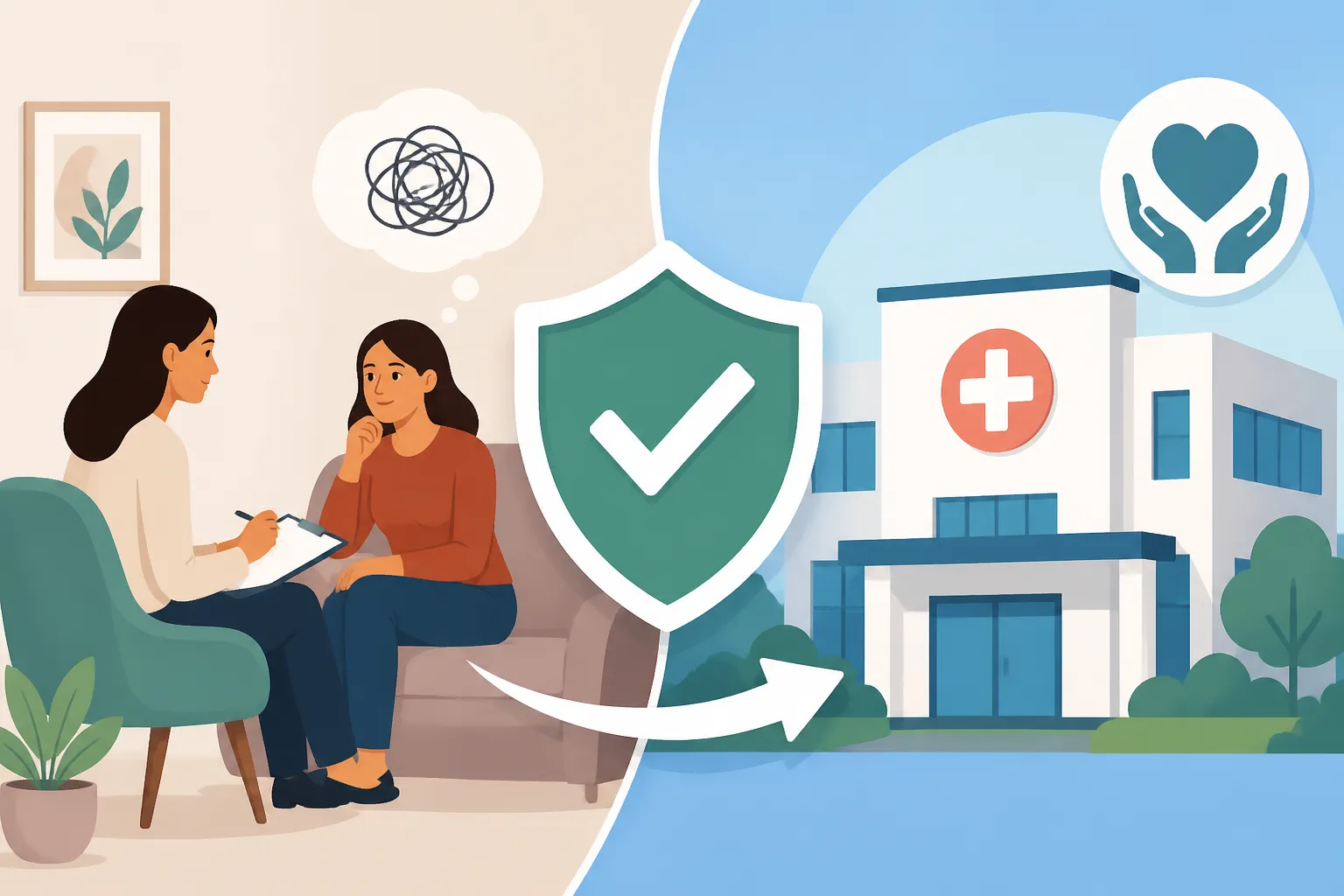
The short answer is yes, therapy and mental health services are covered by the Maltese public healthcare system, but there are significant caveats regarding how you access them and what the "experience" looks actually like on the ground. Public mental health services are managed primarily through the Department of Psychiatry, which operates out of Mount Carmel Hospital and several community-based clinics and health centres across the islands.
For most of us living here, the public system is a safety net. If you are a resident paying social security contributions, you are generally entitled to these services for free. You can learn more about the broader context in Healthcare in Malta for Foreign Residents: The Complete System Guide (2027). However, the public system is heavily geared toward psychiatric care and crisis management rather than long-term, weekly "talk therapy" that many expats might be used to in their home countries.
When you enter the public system, you are typically assigned to a multi-disciplinary team. This team might include a psychiatrist, a psychiatric nurse, a social worker, and sometimes a psychologist or occupational therapist. The focus is often on clinical stabilization and management. If you are looking for specialized psychotherapy—such as CBT, EMDR, or long-term psychodynamic counseling—the public sector does offer it, but the waiting lists can be daunting. It is common for patients to wait several months for an initial appointment with a psychologist after their psychiatric intake.
The Referral Maze: How to Actually Get an Appointment
You cannot simply walk into a therapist's office in a public health centre and ask for a session. The system is strictly gatekept by referrals. Your first port of call will always be a General Practitioner (GP). You have two main routes here: the public route via a local Health Centre or a private GP.
If you choose the public route, you need to head to the health centre serving your locality. For example, if you live in the harbour area, you might go to the Floriana Health Centre. You should read up on Registering with a Health Centre and Choosing a GP in Malta to make sure you go to the right place with the correct documentation. Once you see the GP, you need to be very clear and firm about your mental health needs. Maltese GPs are often incredibly busy, dealing with everything from flu to workplace injuries, so you must advocate for yourself. Ask specifically for a referral to the "Mental Health Services."
After the GP writes the referral, it is sent to the psychiatric outpatient department. You will then receive a letter in the mail (the Maltese postal system is usually reliable, but keep an eye out!) with an appointment date. This appointment is usually for a psychiatric assessment, not therapy. The psychiatrist will evaluate your condition and decide if therapy is the appropriate course of action. If they agree, you are then placed on the psychological services waiting list.
For those who are just arriving or are here on a shorter-term basis, the administrative hurdles can be a headache. If you are a digital nomad or waiting for your residency to be processed, you might find that having a plan like SafetyWing provides a much-needed bridge, allowing you to access private care while you wait for the public system to acknowledge your entitlement.
Public vs Private Therapy: Costs and Logistics
While the public system is "free" at the point of use for those with entitlement, many expats eventually opt for private therapy due to the speed and choice it offers. In the public system, you generally do not get to choose your therapist, and you may see different professionals over time. In the private sector, you have full control.
Private therapy in Malta typically costs between €40 and €80 per session. Some highly specialized consultants may charge more. This can add up quickly if you need weekly sessions. If you are looking for private options, it is worth checking if your insurance policy covers outpatient mental health. For many remote workers and frequent travelers, SafetyWing is often used to cover unexpected health issues, though it is always essential to check the specific limits regarding chronic mental health conditions versus acute episodes.
| Service Type | Public System (National Health Service) | Private Sector | NGO Sector (e.g., Richmond) |
|---|---|---|---|
| Cost | Free (for entitled residents) | €40 – €80 per session | Sliding scale or free |
| Wait Time | 3 to 9 months for therapy | 1 to 2 weeks | 2 to 4 weeks |
| Referral | Required from a GP | Not required | Usually not required |
| Choice | Assigned by the clinic | You choose your therapist | Assigned by the NGO |
| Consistency | May vary based on staff | High consistency | High consistency |
It is also important to consider the cost of medication. If a public psychiatrist prescribes you psychiatric medication, you might be eligible to receive it for free under the "Schedule V" or "Pink Card" schemes, provided your condition is chronic. You can find more details on this in Are Mental Health Medicines Free in Malta?. If you go the private route, you will have to pay the full market price for your prescriptions at a local pharmacy unless you take that private prescription back to the public system to be "converted"—a process that, frankly, requires a lot of patience and extra GP visits.
Specialized Support and NGO Alternatives
Sometimes the public system feels too clinical, and the private system feels too expensive. This is where Malta's robust NGO sector comes in. Organizations like the Richmond Foundation and the Paolo Freire Institute offer mental health support that sits somewhere between the two.
The Richmond Foundation, in particular, is a cornerstone of Mental Health Support in Malta: Services, Therapy, and Mount Carmel Hospital. They offer various services, including "OLLI.chat," which is a free, confidential chat service for anyone feeling distressed. They also provide more structured therapy sessions at a lower cost than many private clinics, often using a sliding scale based on your income.
For students or those here for work, it is also worth checking if your institution or employer has an Employee Assistance Programme (EAP). Many of the bigger iGaming and Fintech firms in Malta offer 3 to 6 free therapy sessions as part of their benefits package. This is a great way to get immediate help while you figure out a longer-term plan within the How Malta's Public Healthcare Works: Entitlement, Contributions, and Costs framework.
If you are a nomad or a freelancer not tied to a local company, the flexibility of private insurance becomes even more relevant. Using a service like SafetyWing can provide that extra layer of security, especially if your mental health struggles are compounded by the stress of relocating or living between countries.
What to Do in a Mental Health Crisis
If you or someone you know is in immediate danger, the public system's "Crisis Intervention Team" is your primary resource. You do not need a referral for emergencies. You can go directly to the Accident & Emergency (A&E) department at Mater Dei Hospital. They have a psychiatric liaison team available 24/7.
While Mater Dei is the main general hospital, psychiatric emergencies are often redirected to Mount Carmel Hospital's crisis unit. It can be an intimidating place, but the staff are trained to handle acute distress. For more on emergency procedures, see How Do I Access Mental Health Crisis Support in Malta?.
For non-physical crises, you can call 179 (the national support line) or 1770 (Richmond Foundation’s helpline). These lines are staffed by people who understand the local landscape and can talk you through your options. Even if you are still figuring out What Does Public Healthcare Actually Cost in Malta?, these helplines are free to call and offer immediate emotional support.
Public Healthcare for Visa Holders and New Arrivals
Your right to free therapy in the public system is tied to your legal status. If you are an EU citizen, your EHIC can cover "necessary" care, but it isn't usually meant for long-term therapy. If you are a Third Country National on a work permit, you are covered as soon as you start paying your National Insurance (NI).
However, there is often a gap between arriving and getting your ID card. During this window, you are technically in a gray area. This is another scenario where having SafetyWing or a similar international health policy is a lifesaver. It ensures that if you hit a wall mentally during your first few months, you can see a private psychologist immediately without worrying about the Private Healthcare and Insurance in Malta: When You Need Cover requirements or waiting for the Identità office to process your paperwork.
For those on specific visas, like the Nomad Residence Permit, the rules are slightly different. You are generally required to have private insurance because you aren't paying into the local NI system in the same way an employee is. You can find specific guidance on this in Healthcare on a Visa-Based Permit in Malta: Nomads, Retirees, and Investors.
Final Thoughts on Therapy in the Sun
Malta is a beautiful place to live, but the "paradise" image can sometimes make it harder to admit when you are struggling. The public system is there for you, and it is capable of providing excellent care, but it requires you to be patient and persistent.
If you need help quickly, my veteran advice is to start with a private session or an NGO while simultaneously starting the public referral process through a GP. This way, you get the support you need now, while setting yourself up for the long-term, free care that your social security contributions pay for. Don't be afraid to ask for help—the community here is more supportive than it might first appear when you're staring at a stack of bureaucratic forms.
Medical Disclaimer
The information provided in this article is for educational and informational purposes only and does not constitute medical or legal advice. Healthcare regulations and entitlement criteria in Malta are subject to change. Always consult with a qualified healthcare professional or the relevant Maltese authorities regarding your specific medical needs and entitlement status. If you are experiencing a medical or mental health emergency, please call 112 or visit the nearest emergency department immediately.