Which Medicines Are Free Under Malta’s Entitlement Schemes?
Navigating the healthcare bureaucracy in a new country often feels like trying to solve a puzzle where the instructions are written in a language you haven’t quite mastered yet. When I first moved here, I walked into a local pharmacy expecting to pay full price for my regular prescriptions, only to be asked if I had "the yellow card." This guide meticulously breaks down exactly which medicines are free under Malta's entitlement schemes, ensuring you don't pay a cent more than necessary for your health.
The Foundation of Free Medicine Entitlement in Malta
To understand how free medicines work here, you first have to understand the concept of entitlement. Unlike some systems where everything is free for everyone, Malta uses a targeted approach based on your social security contributions and your specific health status. If you are working and paying your Class 1 or Class 2 contributions, you are essentially "in the system." However, being in the system doesn't automatically mean every pill is free.
The government maintains what is known as the Government Formulary List. This is a comprehensive list of medications that the state has agreed to provide free of charge to those who qualify. If a doctor prescribes a brand-name drug that isn't on this list, you’ll likely have to pay for it out of pocket, or your doctor might suggest a generic alternative that is covered. Understanding How Maltese Health Entitlement Fits with Social Security Contributions is the first step in seeing where you fit into this map. For many of us expats, the transition period between arriving and getting our full documentation can be a grey area where we rely on private options like SafetyWing to bridge the gap before the state system fully kicks in.
It is also important to note that the system is built on "Schedules." These schedules determine why you get free medicine—whether it is because you have a chronic illness or because your income falls below a certain threshold. It can be a bit of a headache to set up initially, but once you have your "card," the process becomes much smoother. You can read more about the broad strokes in our Healthcare in Malta for Foreign Residents: The Complete System Guide (2027).
Schedule V The Chronic Illness Entitlement (Yellow Card)
The most common way for residents to access free medicine is through Schedule V, universally known among locals as the "Yellow Card." This scheme is specifically designed for people living with chronic conditions that require long-term medication. It is not based on your income; it is based entirely on your diagnosis.
Which Chronic Conditions Are Covered?
The list of conditions covered under Schedule V is extensive, but it is not exhaustive. Common conditions include diabetes, hypertension (high blood pressure), asthma, chronic arthritis, and certain mental health conditions. If you have one of these, the state recognizes that the cost of lifelong medication would be a significant burden.
When I was first looking into this for a friend, I was surprised to find that even things like glaucoma or certain skin conditions are included. However, the catch is that the medication must be on the official formulary. If the government only provides one specific type of insulin and your body reacts better to a different, more expensive brand not on the list, you may still find yourself paying a private pharmacy. For those who need more flexibility in their medication brands, having a plan like SafetyWing can provide a safety net if you prefer to seek private consultations and branded meds outside the state formulary.
The Application Process for the Yellow Card
You cannot simply walk into a health centre and ask for a Yellow Card. The process starts with a specialist. In Malta, while a GP can suggest you might be eligible, the actual application usually needs to be initiated by a consultant who is registered with the Maltese medical council. They will fill out a specific application form detailing your condition and the required treatment.
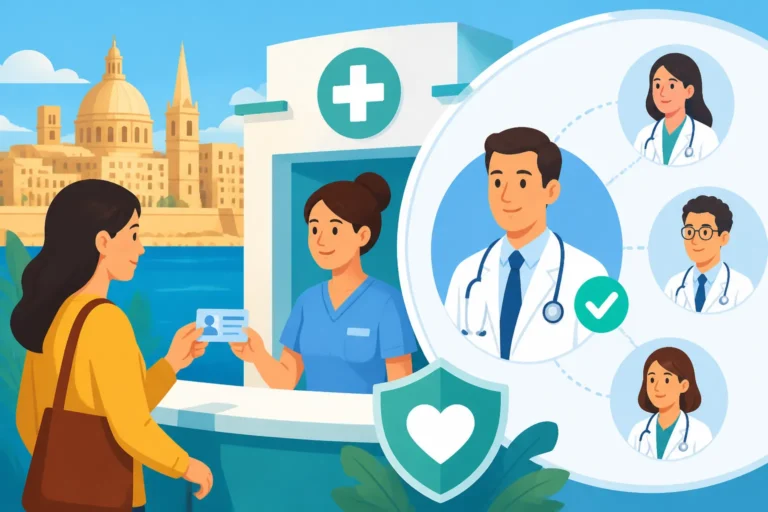
Once the form is filled, it is sent to the Entitlement Unit. After approval, they will issue your card, which lists the specific medications you are entitled to receive for free. This card is your golden ticket. You’ll need to present it along with your ID card every time you collect your meds. To prepare for this, you should ensure you are following the right steps for How Do I Qualify for Free Chronic-Disease Medicines in Malta? to avoid being sent back and forth between offices.
Schedule II The Means-Tested Entitlement (Pink Card)
While the Yellow Card is about what you have, the Pink Card (Schedule II) is about what you earn. This scheme is designed to help those who are socially disadvantaged or have a very low income. If you qualify for a Pink Card, you are entitled to a broader range of free medicines, even those not strictly linked to a chronic condition, as well as free dental treatment and some optical services.
Income Thresholds and Eligibility
The Pink Card is generally reserved for those receiving social assistance or those whose income is below a specific threshold set annually by the government. For many expats working in iGaming or tech, this won't apply. However, for retirees or those on lower-income permits, it’s a vital resource.
The application for this is handled through the Social Security department rather than just the medical Entitlement Unit. It involves a rigorous check of your financial status. If you are a newcomer still figuring out your finances, you might find yourself in a position where you haven't yet qualified for state support. This is where Health Entitlement in Malta: How Social Security Contributions Unlock Free Care becomes essential reading to see if you meet the criteria. Until that status is confirmed, maintaining private coverage through SafetyWing ensures you aren't left vulnerable if you need immediate, non-chronic treatment.
What the Pink Card Covers
Unlike the Yellow Card, which is restricted to specific meds for a specific illness, the Pink Card covers a wider "general" list. This can include antibiotics for a one-off infection or certain creams and ointments. It is essentially a "low-income health pass." Because it's so comprehensive, the government is quite strict about who gets it and for how long, often requiring renewals every year or two. You can find more detail in the guide on What Is the Schedule V (Pink Card) Scheme in Malta? (note: despite the title, locally we refer to Schedule II as Pink and V as Yellow).
The Pharmacy of Your Choice (POYC) Scheme
Once you have your entitlement sorted—whether it's Yellow or Pink—you don't actually go to the hospital to get your pills. Malta has a fantastic system called the Pharmacy of Your Choice (POYC). This allows you to collect your free government-funded medicines from a regular local pharmacy of your choosing, rather than trekking to Mater Dei or a regional health centre.
How to Register for POYC
To use this system, you need to register at a pharmacy that is convenient for you—usually one near your home or work. You’ll need your eResidence card, your entitlement card (Yellow or Pink), and a prescription from your consultant or a state doctor. The pharmacist will help you fill out the registration form.
I highly recommend choosing a pharmacy where the staff is friendly and speaks your language well, as you will be seeing them at least once a month. Once registered, your "quota" of medicine is essentially assigned to that specific shop. If you decide to change pharmacies later because you moved house, you’ll need to go through a transfer process. Check out The POYC Pharmacy of Your Choice Scheme: How to Collect Free Medicines for a deeper dive into the logistics.
Collecting Your Medication
Typically, you will collect a one-month or two-month supply at a time. The pharmacist will check your card, log the collection in the national system, and hand over your meds. Trust me, it is a much better experience than the old days of waiting in long hospital queues.
However, one "expat reality" you should be aware of is the "Out of Stock" (OOS) phenomenon. Sometimes, the government supply chain experiences delays, and the pharmacy won't have your specific medication. When this happens, you have a choice: wait for it to come back in stock or buy it privately. If your medication is critical and frequently OOS, this is another scenario where having SafetyWing or similar private backup can help, as you might choose to see a private doctor for an alternative prescription you can buy immediately. If you're struggling with the collection process, read How Do I Collect My Free Medicines Under the POYC Scheme? for troubleshooting tips.
Summary of Entitlement Schemes
| Scheme Name | Card Color | Primary Eligibility | Main Benefit |
|---|---|---|---|
| Schedule V | Yellow | Diagnosis of a chronic condition | Free meds for that specific condition |
| Schedule II | Pink | Low income / Social assistance | Broad range of free meds and dental |
| Schedule III | Pink/White | Specific rare diseases | Specialized treatments and meds |
| POYC | N/A | Must hold a Yellow or Pink card | Ability to collect meds at local pharmacies |
What Is Not Covered by Free Schemes?
It is equally important to know what you won't get for free. The Maltese system is generous, but it isn't a blank check. If you walk into a pharmacy with a common cold, don't expect free cough syrup or paracetamol unless you hold a Pink Card.
Over-the-Counter (OTC) and Non-Formulary Meds
Standard painkillers, vitamins, most skin creams, and "lifestyle" medications are generally not covered. Furthermore, if your doctor prescribes a very new or very expensive drug that hasn't been added to the Government Formulary List yet, you will have to pay the full price.
Malta’s market is small, so sometimes specific brands aren't imported at all, or they are significantly more expensive than in larger EU countries. If you are moving here and rely on a specific brand, check Private Healthcare and Insurance in Malta: When You Need Cover to see how to handle specialized needs through private routes. SafetyWing is often a great choice for those who are highly mobile and might need to source their meds from different countries if the Maltese local market is out of stock.
Hospital vs. Community Prescriptions
Medications administered while you are an inpatient at Mater Dei are free for those entitled to care. However, once you are discharged, the "free" rule only continues if you have the relevant entitlement cards. You might get a week's supply of meds upon leaving the hospital, but after that, you're on your own unless your Yellow Card is processed. This gap is a common frustration for newcomers, making it essential to know Do I Need Private Health Insurance for My Maltese Residence Permit? to ensure you have coverage during those first few months of residency.
Practical Advice for Newcomers
Getting your free medicines sorted is a marathon, not a sprint. The paperwork can be slow, and the Entitlement Unit is known for having a bit of a backlog. Here are a few "boots-on-the-ground" tips I’ve learned:
- Bring your history: When you first see a consultant in Malta to apply for a Yellow Card, bring your medical records from your home country. It makes the "Maltese diagnosis" much faster.
- Check the "OOS" lists: Many local Facebook groups for expats track which medicines are currently out of stock at the POYC. It saves a wasted trip.
- Keep copies: Always photocopy your application forms before you hand them in. Papers sometimes go missing in the bureaucracy.
- Use Private as a Bridge: Don't wait until your last pill is gone to apply for your card. Start the process early and use a service like SafetyWing to ensure you have medical access if you need to go private while the government processes your "Yellow Card."
- Talk to your pharmacist: They are often more helpful than the doctors when it comes to navigating the POYC system. They know the shortcuts.
Disclaimer
The information provided in this article is for educational and informational purposes only and does not constitute medical or legal advice. Healthcare regulations, entitlement criteria, and the Government Formulary List in Malta are subject to change. While we strive to keep this information up to date, you should always verify your eligibility with the Maltese Health Authorities or the Entitlement Unit.