How Does Healthcare Work for Posted Workers in Malta?
Landing in Malta as a posted worker often feels like being caught in administrative limbo where your home country says you're covered, but the local clinic looks at you blankly. I once spent three hours arguing about an A1 form in a dusty Valletta office. This guide settles the confusion, explaining exactly how to navigate Maltese healthcare entitlement.
Understanding Your Status as a Posted Worker in Malta
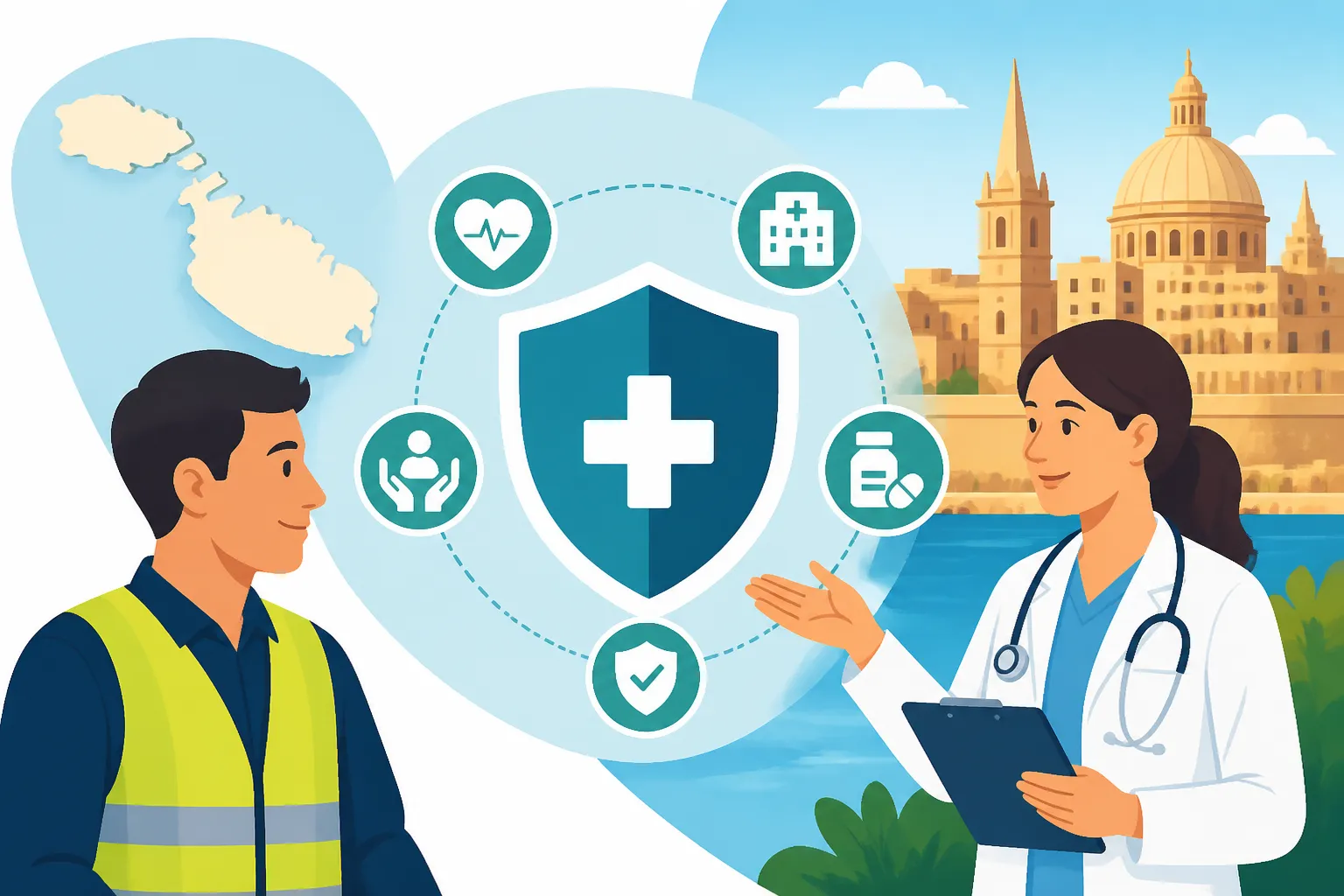
When you are "posted" to Malta, you are essentially a professional nomad. You remain employed by a company in your home country—typically within the EU, EEA, or Switzerland—and you continue to pay social security contributions there. However, you are physically performing your duties on Maltese soil. This unique cross-border arrangement is governed by EU Social Security Coordination rules, which aim to ensure you don't lose your right to healthcare just because your boss sent you to work in the sun for six months.
The legal framework is designed to be seamless, but the reality on the ground often involves a significant amount of paper-trailing. The core principle is that you should be treated as if you were a local contributor to the Maltese system, even though your "stamps" are being paid elsewhere. This is a vital distinction because How Malta's Public Healthcare Works: Entitlement, Contributions, and Costs usually hinges on local payments. As a posted worker, you are the exception to that rule.
Because you aren't paying into the Maltese Social Security Department directly, the Maltese government needs a guarantee that your home country will reimburse them for any medical costs you incur. This is where the specific EU forms come into play. Without these, you might find yourself being asked to pay private rates at Mater Dei or a local health centre, which can quickly drain your relocation budget.
The Role of the A1 Form
The A1 form is the foundation of your legal status in Malta. It proves that you remain subject to the social security legislation of your home country. While the A1 is primarily for your employer and the Maltese tax authorities to prove you don't owe local social security, it is also a prerequisite for healthcare. When you apply for a residency document or health entitlement, the authorities will often ask to see this form to confirm your "posted" status.
I remember my first week in Malta, thinking the A1 was just for my HR department. It wasn't until I tried to register for a local ID card that I realized how central this document is to every administrative door in the country. If your employer hasn't provided this, your first step is to demand it. It is the document that prevents you from being double-taxed and sets the stage for your medical coverage.
Distinguishing Between Short and Long Term Postings
The way you access healthcare in Malta depends heavily on the duration of your stay. If you are here for a very short stint—perhaps a few weeks to a couple of months—your European Health Insurance Card (EHIC) is often sufficient for "medically necessary" care. This includes emergencies or treatments that cannot wait until you return home. You can learn more about this in the guide on Using Your EHIC for Care While Settling Into Malta.
However, if your posting is intended to last longer, usually more than six months, the EHIC is no longer the appropriate tool. At this point, you are considered to be "staying" or "residing" in Malta rather than just visiting. The Maltese authorities will expect you to formalize your status. This transition is where most posted workers get tripped up, often assuming their EHIC is a permanent golden ticket when, in reality, it’s a temporary bridge.
Accessing the Public Healthcare System in Malta
The Maltese public healthcare system is world-class, but it is also heavily bureaucratic. For a posted worker, the gatekeeper to this system is the Entitlement Unit. This office, located within the grounds of St. Luke’s Hospital in Pieta, is responsible for verifying that foreigners have a right to free care. You cannot simply walk into a hospital with a foreign contract and expect free treatment; you need a certificate of entitlement.
Getting this certificate is a multi-step process that requires patience. You will need to provide proof of your posting, your A1 form, and most importantly, the S1 form. Many newcomers find this daunting, but it is a necessary hurdle. Once you have your entitlement sorted, you gain access to the same services as any Maltese citizen, from GP visits to major surgeries. This is covered in depth in Healthcare in Malta for Foreign Residents: The Complete System Guide (2027).
The S1 form is specifically for people living in one EU country but insured in another. Your home insurance provider issues it, and you must "register" it with the Maltese Entitlement Unit. Once registered, Malta treats you as a local patient, and they bill your home country behind the scenes. This is the only way to ensure full coverage for chronic conditions or non-emergency specialist care.
Registering with the Entitlement Unit
When you visit the Entitlement Unit, bring every piece of paper you own. You will need your passport, your Maltese eResidence card (if you have it yet), your S1 form, and a copy of your work contract. The staff there are generally helpful but very strict about documentation. If a stamp is missing or a date is unclear, they will send you away. Many expats lose their cool in that waiting room; the trick is to be over-prepared and polite.
Once they process your S1, they will issue you an entitlement paper. This document is your shield. Keep it safe, and perhaps keep a digital scan on your phone. When you visit a health centre, this paper proves that you are not a "health tourist" but a registered resident with full rights. For more details on this specific office, see The Entitlement Unit: Sorting Out Your Right to Treatment in Malta.
Using Health Centres and Choosing a GP
In Malta, the first point of contact is rarely a hospital. Instead, the island is divided into catchment areas, each served by a regional Health Centre. As a posted worker with a certificate of entitlement, you are eligible to use these centres for free. These facilities handle everything from minor injuries and blood tests to diabetes clinics and dressings.
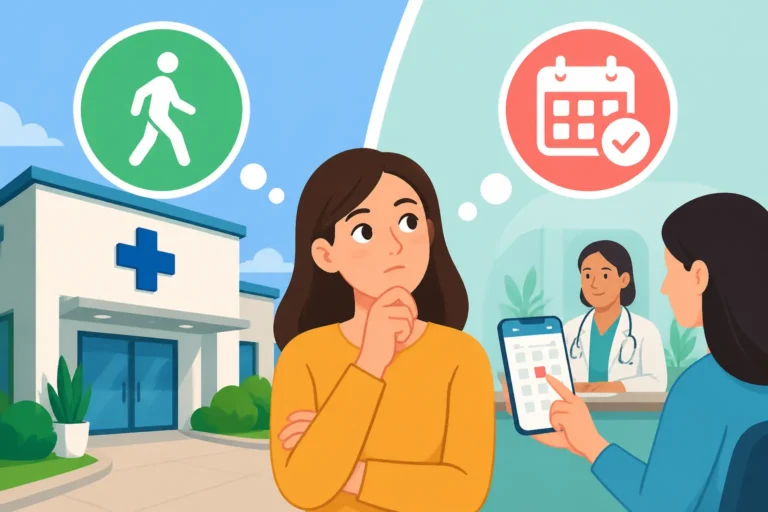
Unlike some other countries, you don't necessarily "register" with one specific GP at the health centre; you usually see whoever is on duty. However, many posted workers find the queues at health centres to be quite long. If you prefer more consistency, you might look into Registering with a Health Centre and Choosing a GP in Malta. It’s worth noting that many locals also visit "private" GPs who operate out of the back of local pharmacies for a small fee, usually around twenty euros, just to save time.
Navigating Private Healthcare Options and Supplemental Coverage
While the public system is excellent, many posted workers choose to supplement their coverage with private insurance. This is often because the waiting lists for certain non-urgent procedures in the public system can be lengthy. If you are only in Malta for a year or two, you might not want to spend six months of that time waiting for a minor orthopedic consultation.
Private healthcare in Malta is relatively affordable compared to Northern Europe or the US, but it is not free. Most private specialists operate out of clinics or private hospitals like St. James. To avoid out-of-pocket expenses, having a robust insurance policy is key. This is especially true if you plan on traveling frequently between Malta and your home country or other EU states during your posting.
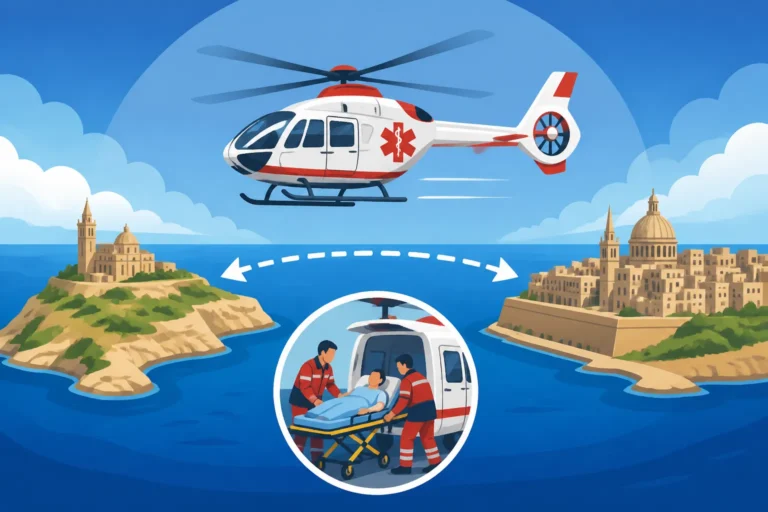
For those who want a flexible solution that covers them both in Malta and during their travels, SafetyWing offers a range of products designed for the modern mobile worker. While your S1 form covers you for basic public care in Malta, a policy from SafetyWing can provide that extra layer of security, especially for medical evacuations or private room upgrades in a hospital. It’s a great way to bridge the gap if your S1 paperwork is taking weeks to process, which, let's be honest, it often does.
When to Consider Private Insurance
There are specific scenarios where relying solely on your posted worker entitlement might be risky. For instance, if your posting ends abruptly, your S1 entitlement might be cancelled almost immediately. Having a secondary policy ensures you aren't left vulnerable during a transition period. Additionally, Private Healthcare and Insurance in Malta: When You Need Cover explains that some specialized treatments are simply easier to access through the private route.
I personally found that having a private backup gave me peace of mind when I needed a specialist second opinion. Using a provider like SafetyWing allows you to bypass the public referral system, which often requires a GP at a health centre to sign off on every single step. If you're a busy professional on a tight schedule, time is often more valuable than the cost of a premium.
SafetyWing for the Transition Period
The first 90 days in Malta are often the most "unprotected" for a posted worker. You are waiting for your eResidence card, your S1 is still in the mail, and the Entitlement Unit hasn't given you the green light yet. During this "gray zone," you are technically only covered for emergencies via your EHIC. SafetyWing can be an excellent "buffer" policy during this time. It’s easy to set up and provides coverage that moves with you, which is perfect for someone whose life is currently split between two countries.
| Coverage Type | Public (S1/Posted) | Private Insurance | EHIC (Short-term) |
|---|---|---|---|
| Emergency Care | Free at Mater Dei | Covered (check policy) | Free / Medically necessary |
| GP Visits | Free at Health Centres | Paid (approx. €20-€50) | Free at Health Centres |
| Specialist Access | Via referral (can be slow) | Direct access (fast) | Emergency only |
| Prescriptions | Subsidized/Free (POYC) | Full price out-of-pocket | Full price |
| Choice of Doctor | Limited | High | None |
Administrative Realities and Practical Tips
The most important thing to remember as a posted worker is that your healthcare rights are only as good as your ID number. In Malta, everything is tied to your ID card. Without it, you are a ghost in the system. As soon as you arrive, you should start the process of Getting Your Maltese ID Card Number: The Key to Accessing Healthcare. This number will eventually be linked to your medical records and your entitlement status.
Once you have your ID card and your entitlement certificate, you should also look into the "myHealth" portal. This is a digital system that allows you to see your lab results, your prescriptions, and your upcoming appointments online. It is one of the more modern aspects of the Maltese system and can save you multiple trips to the clinic just to ask for a printout of a blood test.
Managing Prescriptions and the POYC
If you have a chronic condition that requires regular medication, the "Pharmacy of Your Choice" (POYC) scheme is a lifesaver. As a posted worker with an S1 form, you are eligible for this if your condition is on the approved list (known as the "Schedule V" or the "Pink Card" scheme). This allows you to collect your medicine for free from a local pharmacy of your choosing.
However, getting onto this scheme requires a consultant from the public hospital (Mater Dei) to sign off on your condition. This can take time. If you are moving to Malta, I highly recommend bringing at least a three-month supply of your regular medication from home. You can read more about this in The POYC Pharmacy of Your Choice Scheme: How to Collect Free Medicines. Don't assume you can just walk into a pharmacy on day one and get your pills for free.
Dealing with Language and Culture
One of the great things about being in Malta is that English is an official language. Almost every doctor, nurse, and receptionist will speak fluent English. This removes a massive barrier that posted workers face in places like France or Italy. You can confidently explain your symptoms and understand the treatment plan without a translator.
However, the medical culture can be quite "direct." Don't be offended if a doctor seems rushed or if the waiting room feels chaotic. It’s just the Mediterranean way of doing things. If you feel you aren't getting the attention you need, don't be afraid to ask questions. Maltese healthcare professionals are generally very competent, but the system is under a lot of pressure, so being your own advocate is essential. For more tips on this, see Can I See a Doctor in English in Malta?.
Summary of Essential Steps for Posted Workers
To ensure you don't get stuck with a massive medical bill, follow this checklist as soon as you know you're heading to the islands:
- Request your A1 and S1 forms from your home country's social security office at least a month before you leave.
- Ensure your EHIC is valid for the initial transition period.
- Apply for your eResidence card immediately upon arrival, as this is the "hook" for all other services.
- Visit the Entitlement Unit at St. Luke’s Hospital to register your S1 form.
- Locate your nearest Health Centre and keep your entitlement certificate in your wallet.
- Consider supplemental insurance like SafetyWing to cover gaps, private care, or travel outside of Malta.
Being a posted worker is a fantastic opportunity to experience the Maltese lifestyle without the permanent commitment of a local contract. By sorting your healthcare paperwork early, you can focus on the things that actually matter—like finding the best pastizzi in Rabat or the quietest beach in Gozo. If you're ever in doubt, just remember that the system does work; it just requires a little bit of Maltese patience and a lot of photocopies.
Disclaimer
This guide is intended for informational purposes only and does not constitute legal or medical advice. Healthcare regulations and social security laws in Malta are subject to change. Always verify your specific entitlement status with the Entitlement Unit and consult with your employer's HR department or a qualified legal professional regarding your social security obligations and rights.