How Do I Book a COVID or Flu Vaccine in Malta?
Navigating the Maltese healthcare system for something as simple as a seasonal jab can feel like trying to find a parking spot in Sliema on a Saturday night—frustrating and seemingly impossible. I remember spent my first winter here shivering in a pharmacy queue only to be told I needed a specific form I’d never heard of. This guide simplifies the entire process of booking your COVID and flu vaccines in Malta, ensuring you get protected without the administrative headache.
Understanding the Seasonal Vaccination Campaigns in Malta
Malta typically runs its major vaccination drives in the autumn and winter months, usually starting around October. The Health Promotion and Disease Prevention Directorate coordinates these campaigns, often launching them simultaneously so that residents can receive both the influenza vaccine and the COVID-19 booster during the same visit. This "one-stop-shop" approach is designed to reduce the number of visits to health centres, but it requires a bit of foresight regarding where and when to show up.
In my experience, the government usually prioritizes vulnerable groups during the first two weeks of the campaign. This includes people over the age of 55, those with chronic respiratory or heart conditions, and healthcare workers. If you fall into these categories, you’ll often find that the process is slightly more streamlined. If you are a healthy adult under 55, you might have to wait a few weeks until the "open for all" phase begins. It is crucial to keep an eye on the local news or the official Health Ministry social media pages, as they announce the specific dates for each group with very little lead time.
For expats, the timing is everything. If you’ve just arrived and haven't yet sorted your paperwork, you might feel left out of the loop. This is where having a solid backup plan is essential. While you wait for your local health entitlement to kick in, services like SafetyWing can provide the medical travel insurance coverage you need for general health issues, though public vaccinations usually follow a specific state-mandated protocol.
Eligibility and the Importance of the Maltese ID Card
The single most important piece of plastic you will own in Malta is your eResidence card. Without it, accessing the public health system for free vaccinations is significantly more complicated. When you show up at a health centre or a local clinic for your jab, the first thing the clerk will ask for is your ID card. They use this to check your records in the national database and ensure you are eligible for free care under the social security system.
If you are an EU citizen, the process is generally smoother as you can often use your EHIC for urgent needs, but for routine vaccinations, the local ID is still the gold standard. For third-country nationals, having a valid permit is mandatory. You should check Getting Your Maltese ID Card Number: The Key to Accessing Healthcare to ensure your documentation is in order before the flu season peaks. If you are here on a more flexible arrangement, such as a digital nomad, you may find that you aren't immediately eligible for free public vaccinations. In these instances, nomads often rely on private clinics, and having a plan from SafetyWing ensures they have medical support for other health-related emergencies while they navigate the local bureaucratic waters.
Furthermore, your eligibility is often tied to your contributions. If you are working and paying NI, you are entitled to the same care as a local. You can read more about how this works in Healthcare on a Visa-Based Permit in Malta: Nomads, Retirees, and Investors to see where you stand. If you don't have an ID card yet, don't panic. You can sometimes get vaccinated at private pharmacies for a small fee, which we will discuss later in this guide.
How to Book Your Appointment Online
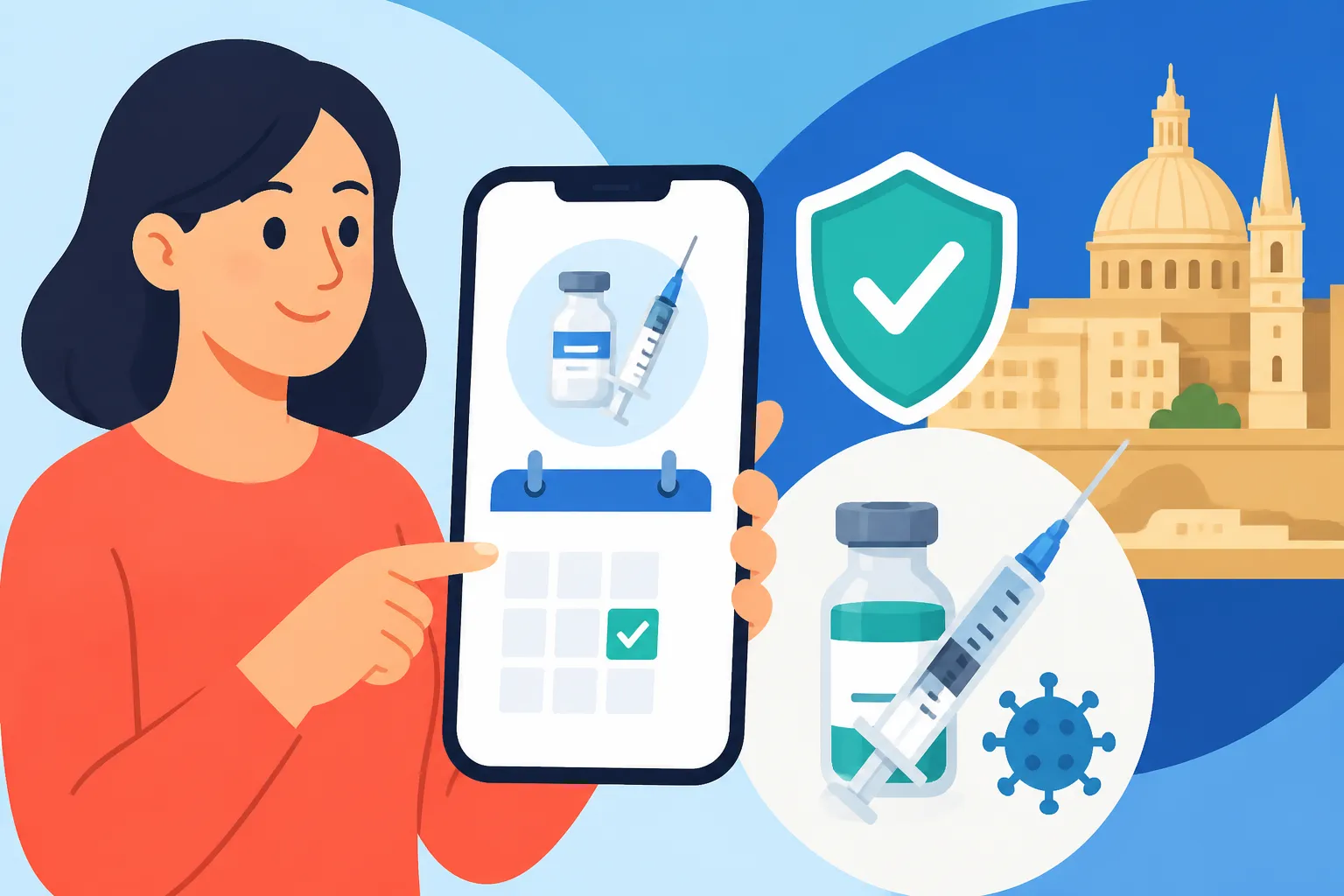
In recent years, Malta has moved toward a digital-first approach for COVID-19 boosters and flu shots. The primary portal used is the national vaccination booking system, usually found at vax.gov.mt. During peak season, this portal allows you to choose your preferred health centre and a specific time slot.
When using the online system, you will need:
- Your Maltese ID card number (e.g., 123456A).
- A valid local mobile number (for the confirmation SMS).
- Your date of birth.
The beauty of the online system is that it generates a unique code which you simply show on your phone when you arrive. It bypasses the need to sit in the waiting room for hours, which is a common complaint among those who prefer the "walk-in" method. However, the system can be glitchy during high-traffic periods. If the website isn't loading, it’s usually because a new age bracket has just been opened, and half the island is trying to book at once. Just wait a few hours and try again in the evening.
If you are tech-savvy, you should also look into What Can I Do on Malta's myHealth Online Service? as this portal is where your vaccination records will eventually be stored. Having your digital records updated is vital for travel or if you need to prove your vaccination status to an employer.
Walk-in Services and Health Centres
Despite the push for online bookings, Malta still maintains a robust walk-in system, especially for the flu vaccine. This is very "old school" Malta—you turn up, take a number (the famous "biljetti"), and wait your turn. The main Health Centres, such as those in Mosta, Floriana, Paola, and Gzira, usually have dedicated rooms for vaccinations during the winter campaign.
The walk-in hours are generally 8:00 AM to 1:00 PM, and sometimes they offer afternoon sessions from 3:00 PM to 7:00 PM. I personally prefer the Gzira Health Centre for its central location, though it can get incredibly busy. If you choose the walk-in route, I highly recommend going mid-week. Monday mornings are notoriously hectic as everyone who felt a sniffle over the weekend rushes in.
Before heading out, make sure you know Which Health Centre Do I Go to After Moving to Malta? because you are usually expected to visit the one serving your specific locality. If you show up at the Mosta Health Centre but live in Marsascala, the staff might kindly (or firmly) redirect you to your local catchment area.
Vaccination Booking Methods Comparison
| Feature | Online Booking (vax.gov.mt) | Walk-in (Health Centres) | Private Pharmacies |
|---|---|---|---|
| Availability | Usually for COVID/Boosters | Primarily for Flu | Primarily for Flu |
| Cost | Free (with ID card) | Free (with ID card) | Approx. €15 – €25 |
| Waiting Time | Minimal (set time slot) | Can be 1-3 hours | Appointment based |
| Documentation | ID Number / Mobile | ID Card / Residency Proof | ID or Passport |
| Best For | Planning ahead | Spontaneous visits | Those without local ID |
The Role of Local Pharmacies and Private Clinics
If the public system feels too daunting or you simply don't have the time to wait at a health centre, private pharmacies are a fantastic alternative. Most large pharmacies in Malta have an in-house GP who can administer the flu vaccine. You will have to pay for the vaccine itself and sometimes a small consultation fee for the doctor.
The process in a pharmacy is much more relaxed. You can usually call your local pharmacy a day or two in advance and book a slot. This is the preferred method for many expats who are still waiting for their How to Register for Health Entitlement with the Entitlement Unit in Malta process to be completed. It avoids the bureaucracy of the public system and costs roughly the price of a decent lunch in St. Julian's.
Keep in mind that while pharmacies are great for the flu jab, they rarely stock the COVID-19 booster, as that remains strictly under the purview of the National Health Service. For COVID vaccines, you almost always have to go through the government channels or Mater Dei and Beyond: A Guide to Malta's Public Hospitals and Health Centres. If you are a traveler or a nomad who isn't yet "in the system," a policy from SafetyWing can help cover other medical costs, but you will likely need to pay out-of-pocket for these private vaccinations.
What to Bring to Your Appointment
Whether you are going to a shiny health centre or a small village clinic, being prepared will save you a lot of grief. Maltese administrative staff are generally helpful, but they have very little patience for missing documentation.
You must bring:
- Your eResidence Card: This is non-negotiable for free treatment.
- Vaccination Record Card: If you were given a small cardboard card during your previous COVID doses, bring it. They will update it with your new booster info.
- List of Medications: If you are taking blood thinners or have severe allergies, have these written down.
- A Mask: While not always mandatory, many health centres still request that you wear one in the clinical areas.
If you are a parent bringing a child for their flu spray (which is the standard for kids in Malta), you should also bring the "blue book" (The Parent-Held Child Health Record). To understand more about pediatric care, check Registering with a Health Centre and Choosing a GP in Malta to ensure your child is properly registered in the system.
Accessing Your Vaccination Records Post-Jab
Once the needle is out, your job isn't quite done. You want to make sure the data actually makes it into the system. In Malta, this usually happens automatically within 24 to 48 hours. You can verify this by logging into the myHealth portal using your e-ID credentials.
If you need a digital certificate for international travel, the portal allows you to generate a PDF with a QR code that is compliant with EU standards. This is particularly useful for those of us who travel frequently back to our home countries. If the record doesn't show up after a week, you'll need to contact the 145 helpline—Malta’s dedicated public health line. They are surprisingly efficient at fixing data entry errors, which occasionally happen when names are misspelled or ID numbers are entered incorrectly.
For those who are not eligible for an e-ID (which is common for new arrivals), you may need to visit The POYC Pharmacy of Your Choice Scheme: How to Collect Free Medicines office or a health centre in person to request a physical printout of your records. It’s a bit of a trek, so try to get your e-ID sorted as soon as possible after moving.
Dealing with Side Effects and Follow-up Care
Maltese doctors are quite thorough in explaining the potential side effects—usually a sore arm or a bit of a fever for 24 hours. If you do experience more significant symptoms, the advice is generally to visit your local Health Centre's GP clinic or your private family doctor.
If you find yourself feeling quite unwell after a vaccination and it’s outside of normal hours, you can utilize the emergency services, but please be mindful of when to use them. You can read Emergency Medical Care in Malta: 112, A&E, and Urgent Help to understand what constitutes a real emergency here. Most post-vaccine malaise can be handled with rest and paracetamol, which you can pick up at any pharmacy. Just remember that pharmacies in Malta have specific opening hours, often closing for a long "siesta" in the afternoon.
For expats, having a safety net like SafetyWing is great for peace of mind if you have an unexpected reaction that requires more than just a nap, especially if you are still navigating the complexities of Private Healthcare and Insurance in Malta: When You Need Cover.
Special Considerations for Non-Resident Expats
If you are in Malta on a tourist visa or a short-term stay and desperately need a vaccine, your options are limited in the public sector. The public health system is funded by local social security contributions, so they are strict about who gets "free" shots.
In these cases, your best bet is a private hospital like St. James or DaVinci. They offer a high standard of care and often have shorter waiting times, though you will pay a premium. I’ve used private clinics for minor issues while waiting for my paperwork to clear, and the efficiency is often worth the cost. While SafetyWing is an excellent choice for nomad medical insurance and covers many unexpected health hurdles, routine or elective vaccinations like the seasonal flu shot are typically an out-of-pocket expense for travelers.
Always call ahead to these private hospitals to check their stock. During high-demand periods, even the private sector can run low on the latest COVID boosters.
Important Disclaimer
The information provided in this guide is for educational and informational purposes only. Vaccination protocols, booking websites, and eligibility criteria in Malta can change rapidly based on government policy and public health requirements. Always consult the official Ministry of Health website or your primary healthcare provider for the most current advice. This guide does not constitute professional medical or legal advice. If you are experiencing a medical emergency, please dial 112 immediately.