What Should I Know About Village Feasts and Local Life in Malta?
Moving to a new country like Malta often means facing a delightful but sometimes overwhelming collision of the familiar and the wonderfully foreign. While you might settle into your new apartment and navigate the paperwork, truly understanding the heartbeat of the island – its traditions and local rhythms – can feel like trying to decipher a secret code. This guide is here to demystify one of Malta's most vibrant expressions of local life, the festa, and help you weave yourself more deeply into the rich, intricate tapestry of Maltese village culture.
The Heartbeat of Malta: Understanding Village Feasts (Festi)
Oh, the festa! If you've spent any summer on this island, you'll know what I'm talking about. You've probably heard the distant boom of fireworks, seen the elaborate street decorations suddenly appear, or found yourself inadvertently caught in a joyous, noisy street procession. For newcomers, these village feasts can be a bewildering spectacle of sound and colour, a stark contrast to the quiet Mediterranean evenings you might expect. But trust me, once you understand them, they become one of the most endearing parts of living here.
More Than Just Fireworks: The Spiritual and Community Core
While the fireworks might be what first grab your attention, the festa is profoundly more than just a pyrotechnic display. At its very soul, it's a deeply spiritual and communal event, rooted in the strong Catholic faith that defines much of Malta's heritage. Each feast celebrates the patron saint of a particular village or town, an annual homage that dates back centuries. It’s a moment of profound devotion, yes, but also a powerful reaffirmation of community identity.
Think about it: every village has its own saint, its own church, its own unique traditions around their feast. For months leading up to the main event, volunteers pour their heart and soul into preparations. These aren't paid professionals; these are your neighbours, local shopkeepers, and lifelong residents. They lovingly polish the ornate silver statues of the saint, meticulously hang the damask banners that drape over every street, and string countless fairy lights. The local band clubs, often two competing ones in larger villages, become hives of activity, rehearsing traditional marches and preparing their supporters for friendly rivalry. This isn't just a party; it's a testament to dedication, faith, and fierce village pride. The sense of belonging it fosters is palpable, and even as an outsider, you can't help but feel swept up in it.
A Sensory Overload: The Sights, Sounds, and Smells of a Festa
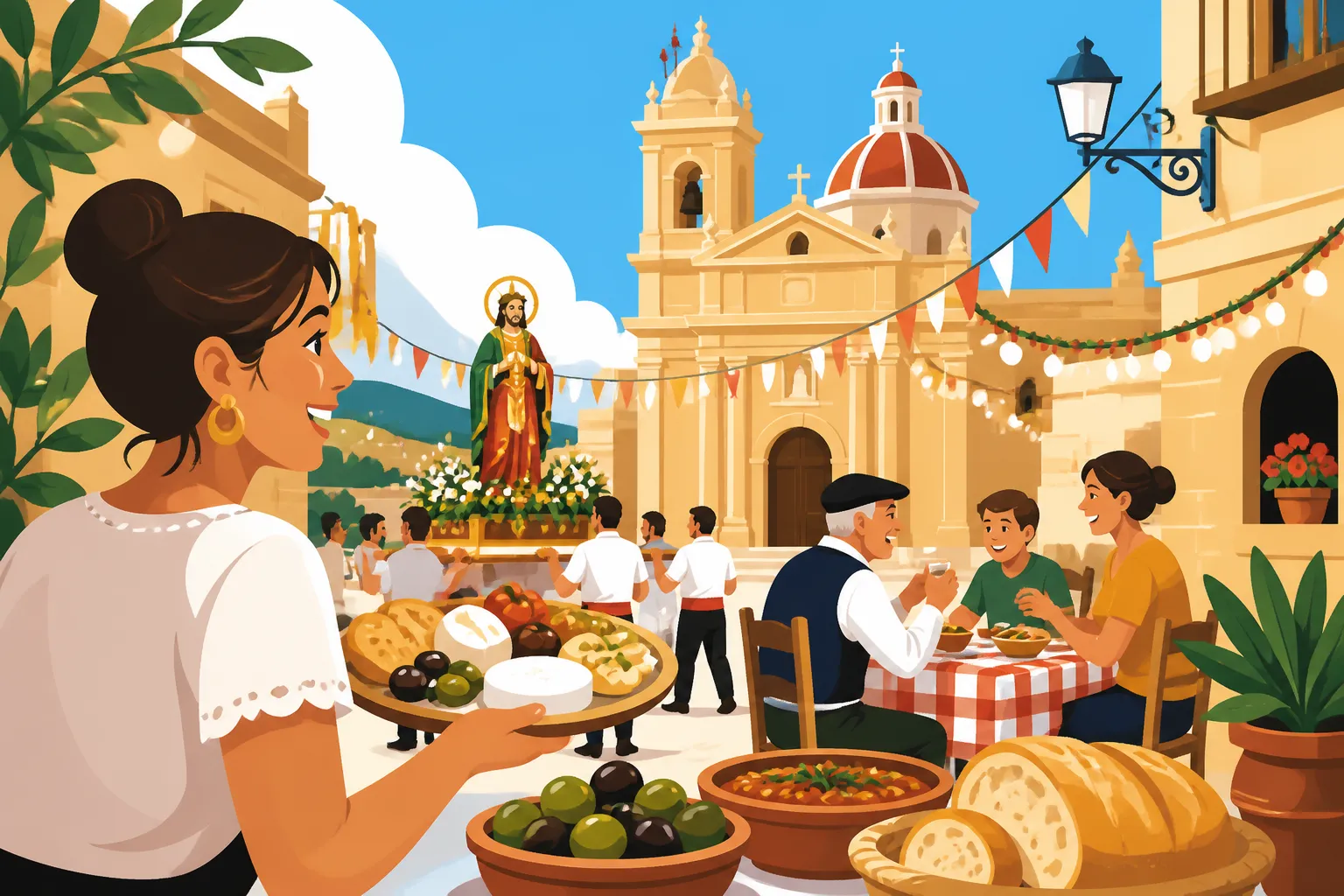
Experiencing a festa is a full-body immersion. It truly engages all your senses in a way few other events do. As you walk into a village during its feast week, you're immediately hit by a kaleidoscope of sights. The streets are transformed. Think intricate, brightly coloured street decorations, grand arches spanning the roads, and thousands upon thousands of tiny light bulbs creating an ethereal glow as evening falls. The main focus is always the church, which becomes a dazzling beacon, often adorned with elaborate lighting schemes that highlight its architectural grandeur. And then, of course, there's the statue of the patron saint, brought out of the church with immense fanfare for a procession through the streets, carried aloft by enthusiastic devotees, often to the cheers and applause of the crowds.
The sounds are just as defining. The triumphant, often slightly out-of-tune, marching bands playing traditional tunes echo through the narrow streets. The cheers of the crowds, the laughter of children, and the incessant chattering of families gathered on their balconies contribute to a lively, almost chaotic symphony. And the fireworks! Maltese fireworks are a world unto themselves. You'll experience both aerial displays, bursting high above the village in spectacular fashion, and the truly unique ground fireworks, known as ġigġifogu. These are intricate, spinning structures that create a mesmerising, often deafening, spectacle of sparks and light at street level. It’s loud, it’s dramatic, and it’s completely unforgettable.
And the smells? Oh, the smells! The sweet aroma of mqaret (date cakes) frying, the savoury scent of grilled meats from countless food stalls, the faint whiff of gunpowder lingering in the air, and even the subtle fragrance of freshly ironed damask banners. It all blends into a unique aroma that, for many, becomes synonymous with summer evenings in Malta. As you plan your first few weeks on the island, you'll quickly realise that understanding What Should I Do in My First Week After Moving to Malta? involves embracing these experiences.
Navigating the Festa Calendar: When and Where to Experience Them
If you're wondering when and where to dive into this cultural phenomenon, the good news is that they are plentiful. The festa season truly kicks off around late May and runs intensely throughout the summer, usually tapering off by mid-September. Practically every village and town on Malta and Gozo has its own feast, sometimes even more than one if they honour multiple saints or have rival band clubs.
To find out what's happening, you'll want to keep an eye on local news, community Facebook groups, or dedicated festa websites. The Malta Tourism Authority website often publishes a calendar of events. Local council websites are also a great resource, especially if you know which specific village you want to explore. It is worth newcomers checking out a few different feasts if they can. Each one has its own distinct flavour and intensity. Some, like those in larger towns such as Floriana or Żebbuġ, are massive affairs that draw huge crowds, while smaller village feasts offer a more intimate, traditional experience. Just remember that during a festa, parking can be a nightmare, and roads will be closed, so plan your transport accordingly. Relying on public transport or even a good old walk can save you a lot of grief.
Here’s a snapshot of typical festa activities and what to expect:
| Event/Activity | Description | Timing | What to Expect (for a Newcomer) |
|---|---|---|---|
| Street Decorations | Elaborate banners, statues, arches, and intricate lighting schemes transforming the village streets. | Weeks leading up to the feast. | A village completely transformed, almost magical at night. Great for evening strolls and photos. |
| Band Marches | Local band clubs march through the streets, playing festive music, often accompanied by cheering crowds. | Evenings, especially Friday-Sunday. | Lively, often crowded streets. Can be very loud! Join the procession, or find a cafe to watch from. |
| Religious Procession | The statue of the patron saint is carried from the church through the village streets, typically accompanied by the band and clergy. | Sunday evening (main feast day). | A deeply reverent yet festive atmosphere. Respectful attendance is appreciated, avoid blocking the procession. |
| Fireworks | Both aerial (fire in the sky) and ground (ġigġifogu) displays. Malta is famous for its intricate, loud fireworks. | Friday, Saturday, and Sunday evenings. | Loud! Be prepared for very close-range, powerful explosions. Find a good vantage point, or experience them up close. |
| Food Stalls | A variety of street food, sweets (like mqaret), and drinks are available from numerous vendors. | All evenings of the feast. | Delicious, greasy, traditional treats. Don't miss the chance to sample local delicacies. |
| Village Bazaar | Sometimes stalls selling toys, trinkets, and other wares are set up. | Evenings. | A fun, bustling market atmosphere, especially enjoyable for families. |
Immersing in Maltese Daily Life Beyond the Festi
While the festa offers a powerful, concentrated dose of Maltese culture, everyday life here has its own unique cadence. For expats, getting beyond the tourist hotspots and understanding the fabric of daily routines can be incredibly rewarding. It’s where you truly begin to feel at home, even if it comes with its own set of charming quirks. When you're thinking about Choosing Where to Live: Sliema, St Julian's, and the Inner Harbour versus a quieter village, these daily rhythms become a significant factor.
The Rhythm of the Village Square: Social Hubs and Daily Rituals
Step outside the bustling central areas, and you'll quickly discover that the village pjazza (square) is often the undisputed heart of local life. It's not just a place for festa celebrations; it’s where daily life unfolds. Early mornings see the baker or pastizzerija doing brisk business, with locals grabbing a pastizz and a coffee before work. Throughout the day, especially in the late afternoon and early evening, the cafes around the pjazza fill up with people catching up, discussing the latest news, or simply watching the world go by.
You'll see elderly gentlemen debating politics, mothers chatting while their children play, and friends sharing a beer. This isn't just socialising; it’s a vital part of the Maltese social fabric, a communal living room where generations interact seamlessly. It's a slower, more deliberate pace than many might be used to, and it’s beautiful to observe, and even better to join in. Don't be afraid to pull up a chair at a kafe or a local bar; a friendly nod or smile can often open the door to a conversation, even if it's initially in broken English and enthusiastic gestures. This slower pace is a key aspect of What Is Daily Life Like for Expats in Malta?.
Language and Communication: Bridging the Gap
One of the most common questions expats have is about language. While English is an official language and widely spoken, especially in business, tourist areas, and among younger generations, Maltese is the national language and the language of the home and the street for most locals. It's a fascinating Semitic language with strong Romance influences, reflecting Malta's unique history.
You'll find that in many everyday interactions, particularly in smaller villages or with older residents, Maltese is the primary mode of communication. Don't fret too much, though. Most Maltese people are incredibly accommodating and will switch to English if they can, or at least try their best to understand you. However, learning a few basic phrases – "Grazzi" (thank you), "Bonġu" (good morning), "Saħħa" (hello/goodbye) – will go a long, long way. Locals genuinely appreciate the effort, and it can instantly warm up an interaction. If you're concerned about medical situations, you'll be relieved to know that How Do I Get Care If I Don't Speak Maltese? is rarely an issue, as healthcare professionals are typically fluent in English.
When it comes to staying connected, especially in those initial weeks, sorting out your mobile service is paramount. While setting up a long-term plan requires some paperwork, services like Airalo offer convenient eSIMs that can get you data and connectivity right off the plane, helping you bridge that initial communication gap without hassle while you figure out How Do I Get a Maltese Phone Number Without a Residence Card?.
Respecting Local Customs and Traditions
Malta is a place with strong traditions, and showing respect for these is key to integrating smoothly. The Catholic faith is deeply ingrained in society, so when visiting churches – and you absolutely should, they are stunning – dress modestly. Shoulders and knees should be covered. During religious processions, whether for a festa or during Holy Week, observe quietly and avoid being disruptive.
Family is another cornerstone of Maltese society. You'll notice multi-generational households are common, and respect for elders is paramount. Politeness and good manners are highly valued. Hospitality is also a huge part of the culture; don't be surprised if a neighbour offers you a coffee or a small treat, especially if you're new to the area. Accepting these gestures with a warm "Grazzi" (thank you) is always appreciated. Understanding these nuances will help you in How Do I Make Friends as a Newcomer in Malta?.
Practical Tips for Integrating into Maltese Local Life
So, you're ready to move beyond just visiting the tourist spots and truly become part of the local scene? Excellent! It takes a bit of effort and an open mind, but the rewards are immense. Here are some practical tips to help you navigate and embrace Maltese village life. When you're getting ready to make the big move, remember that companies like Sirelo can assist with finding reliable international moving services, taking some of the logistical stress off your shoulders so you can focus on cultural integration.
Embracing Community Events and Participation
Beyond the festi, villages often have numerous other community events throughout the year. These might include local concerts, theatrical performances, sports tournaments, or even small educational workshops. Keep an eye on local notice boards, community Facebook groups, or the local council's announcements. Joining in, even as a spectator, is a fantastic way to feel connected.
Consider joining a local club or society that aligns with your interests. Whether it's a sports club, a hiking group, a choir, or even a local band club (many welcome new members, even if you're just learning an instrument!), it’s a direct route to meeting locals who share your passions. Volunteering for a local charity or community project is another excellent way to contribute and build relationships. It shows a genuine interest in your new home, and you'll find people are incredibly welcoming when they see you're willing to pitch in.
Navigating the Pace: From Fast City Life to Village Tranquility
If you're coming from a fast-paced metropolis, adjusting to the rhythm of Maltese village life can be a delightful, but sometimes challenging, experience. Things tend to operate at a more relaxed speed. Bureaucracy can take time, appointments might run late, and a quick errand can turn into a long chat with the shopkeeper. This is just how it is. Trying to rush or becoming frustrated rarely helps and can sometimes be counterproductive.
Embrace it! Use these moments to practice your Maltese, observe the local interactions, or simply enjoy a moment of stillness. The ability to switch off from the constant urgency of urban life is one of Malta's hidden gifts. For many expats, this shift in pace is one of the most significant aspects of What Is Maltese Workplace Culture Like for Newcomers? compared to their home countries. Be patient with service providers, with queues, and with yourself. The island teaches a valuable lesson in slowing down.
Everyday Conveniences and Challenges in a Local Setting
Living in a Maltese village also means adapting to certain practicalities that might differ from what you're used to. For instance, while larger towns have big supermarkets, many villages still rely on smaller grocers, butchers, and fishmongers. These local shops often offer fresher produce, a more personal service, and a chance to truly connect with the community. You’ll find that Grocery Shopping in Malta: Supermarkets, Markets, and Saving Money can be a varied experience depending on where you choose to live.
Public transport, while extensive, can be less frequent in more remote villages, especially on Sundays or public holidays. Having a car can be a huge convenience, but navigating narrow streets and finding parking can be an adventure in itself. On the flip side, many villages are incredibly walkable, and daily strolls around the area are a great way to explore.
Utilities, particularly electricity and water, are managed by ARMS Ltd. It's crucial to ensure your landlord registers your property at the residential tariff if you're renting, as commercial tariffs are significantly higher. You'll also discover that Is Tap Water Safe to Drink in Malta? is a common question, and while it is technically safe, most residents opt for bottled water for drinking due to its taste, often delivered to their homes in large five-gallon containers. And during the long, hot summers, understanding How Do I Cope with the Summer Heat in Malta? becomes a daily challenge, involving tactics like siestas, air conditioning, and plenty of hydration.
Truly settling into Malta involves more than just finding a job and an apartment; it means opening yourself up to the island's unique rhythm, its vibrant traditions, and the warmth of its people. The festa is just one colourful facet of this incredible experience. Dive in, be open, and you'll soon find yourself not just living in Malta, but truly living like a local.
Disclaimer
The information provided in this guide is intended for general informational purposes only. While we strive to offer accurate and up-to-date advice based on personal experience and available resources, regulations and local practices in Malta can change. We strongly recommend consulting official government websites, local authorities, and professional advisors for the most current and specific guidance pertaining to your individual circumstances. We cannot be held responsible for any decisions made based on the information presented herein.