The National Immunisation Schedule for Children in Malta
Moving to Malta with children involves a steep learning curve, especially when you realize your home country’s medical records don't automatically sync with the local system. I remember the anxiety of sitting in the Floriana Health Centre, wondering if my toddler’s previous shots would even count toward school entry requirements here. This guide breaks down the National Immunisation Schedule for children in Malta, helping you navigate the public system and ensure your family stays protected.
Understanding the National Immunisation Schedule in Malta
The National Immunisation Service (NIS) in Malta is a robust public health initiative designed to protect the population from infectious diseases. It is managed by the Primary HealthCare department and is generally provided free of charge to all children who are residents and entitled to public healthcare. For many of us coming from abroad, the biggest shock isn't the vaccines themselves, but the administrative process of getting your child "into the system."
The Role of the National Immunisation Service
The NIS operates through a network of government health centres scattered across the islands. These clinics are the backbone of childhood health, providing not just the shots themselves but also maintaining the centralized database of every child’s vaccination history. When you first arrive, you’ll likely hear people talking about the "Yellow Book." This is the official immunization record card. If you don't have one yet, don't panic; the clinic will issue one once you present your child’s foreign records and your residency documents.
It is important to realize that while the schedule is comprehensive, it is updated periodically to reflect current global health standards. For example, vaccines like the HPV vaccine were integrated into the school-age schedule relatively recently. The service is highly organized, and once you are registered, you will often receive appointment letters in the mail, though as an expat, you shouldn't wait for these to arrive automatically. Proactive registration is key to ensuring your child doesn’t fall behind.
Mandatory vs Recommended Vaccines in the Maltese Context
In Malta, vaccinations are not strictly mandatory by law in the sense that you won't be fined for refusing them, but they are "socially mandatory" for school entry. Most state, church, and private schools will request a copy of the immunization record before a child can be enrolled. If your child is missing core components of the schedule, such as the MMR (Measles, Mumps, Rubella) or the 5-in-1/6-in-1 primary series, you may face significant hurdles during the admissions process.
Beyond the free schedule, there are "recommended" vaccines that the government does not provide for free but that many private pediatricians suggest. These often include the Varicella (Chickenpox) vaccine, Meningococcal B, and sometimes the Hepatitis A vaccine. As an expat, you might find that your home country included these in the standard schedule, whereas in Malta, you will have to pay for them out-of-pocket at a private pharmacy or clinic. This is where Private Healthcare and Insurance in Malta: When You Need Cover becomes a relevant consideration for families who prefer a more inclusive approach to preventative medicine.
How the Maltese Schedule Aligns with International Standards
Malta follows the guidance of the World Health Organization (WHO) and the European Centre for Disease Prevention and Control (ECDC). If you are moving from the UK, Ireland, or most EU countries, you will find the schedules are very similar, often only differing by a few months in the timing of booster doses. For those moving from further afield, such as the United States or Australia, you might notice that Malta uses different combination vaccines (like the 6-in-1) to reduce the number of actual injections a child receives.
One thing I’ve noticed is that Malta is quite strict about the timing of the MMR. If your home country gave the second dose at age five, but Malta expects it at age three or four, the local health centre might insist on a "catch-up" dose to bring the child in line with local requirements. It’s always best to have your records reviewed by the Immunisation Unit in Floriana early on to avoid any last-minute stress before the school term starts.
Key Milestones A Timeline of Childhood Vaccinations
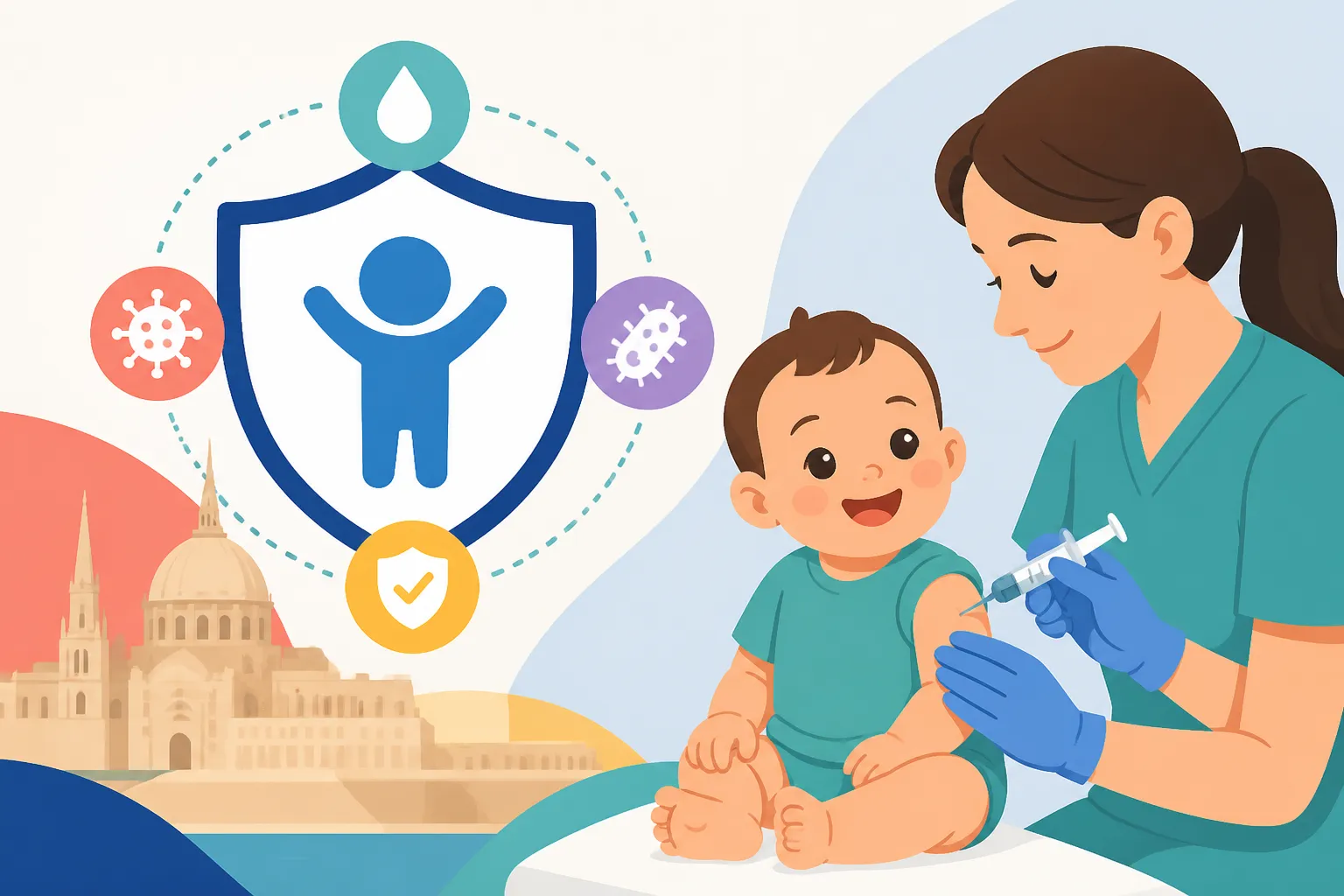
The Maltese vaccination calendar starts early, usually at the six-week mark. The primary goal is to build immunity during the most vulnerable months of infancy. Understanding these milestones helps you prepare for the routine of health centre visits and the inevitable "fever days" that sometimes follow.
Infancy The First Six Months of Protection
The journey begins at six weeks of age. At this stage, infants receive the 6-in-1 vaccine, which covers Diphtheria, Tetanus, Pertussis (Whooping Cough), Polio, Haemophilus influenzae type b (Hib), and Hepatitis B. In the same visit, they usually receive the first dose of the Pneumococcal Conjugate Vaccine (PCV) and the Rotavirus vaccine, which is administered orally.
This initial phase is intensive. Repeat doses of the 6-in-1 and PCV are given at three months and four months. It’s a lot for a little one to handle, and the health centres in places like Mosta or Paola can be busy, so it is wise to book the earliest possible slot. During these early months, if you are still waiting for your residency documents to be finalized, you might find yourself in a gray area regarding free care. Some parents use providers like SafetyWing to ensure they have global health coverage during the transition period before they can fully access the local state system.
Toddlerhood and the 12 to 18 Month Window
Once your child hits their first birthday, the schedule shifts focus toward long-term boosters and the critical MMR vaccine. Between 12 and 15 months, children in Malta receive the first dose of the MMR and a booster for the PCV and Hib. This is a major milestone because the MMR is often the primary document requested by nurseries and childcare centres.
During this period, many expat parents also choose to visit a private pediatrician to discuss the Varicella vaccine. Chickenpox is quite common in Maltese schools, and since it isn't on the free national schedule, you’ll need to buy the vaccine from a pharmacy (with a prescription) and have your doctor administer it. If you’re unsure how to find a doctor who speaks your language or understands your home country's medical context, you can read more about Finding a Doctor in Malta: GPs, Specialists, and the Referral System.
The Preschool and School Age Boosters
Before a child starts primary school, usually around the age of three or four, they are called in for their preschool boosters. This typically includes the DTaP-IPV (Diphtheria, Tetanus, Pertussis, and Polio) and the second dose of the MMR. In Malta, this "preschool" booster is vital for the transition from childcare to the formal education system.
Later in childhood, usually around age 12 (Year 8), children are offered the HPV vaccine and the school-leaver booster (Tetanus, Diphtheria, and Polio). These are often administered directly in the school setting by the school nursing team, which makes life much easier for working parents. You will receive a consent form at home, and it’s important to return it promptly. For more on how the school health system integrates with general care, see Children's Health in Malta: Well-Baby Clinics, Vaccinations, and School Health.
Navigating the Public vs Private System for Vaccinations
One of the first decisions you'll make is whether to stick with the government health centres or go private. Both have their pros and cons, and often, expat families end up using a mix of both.
Free Vaccinations at Government Health Centres
The government health centres (known locally as the "Bereġ" or "Health Centres") are where the free vaccinations happen. Centres like those in Floriana, Gżira, and Birkirkara are well-equipped and the nurses are incredibly experienced with children. The main advantage is, of course, the cost—it’s free. Furthermore, any vaccine given here is automatically updated in the national database, which is the gold standard for school records.
However, the environment can be a bit clinical and "first-come, first-served," even with an appointment. You might wait in a hallway with other families, and the sessions can feel a bit rushed. If your child is particularly anxious, you might find the pace of a public clinic challenging. It’s also worth noting that you must be registered for health entitlement to use these services for free. If you're still figuring out the paperwork, you'll need to know How to Register for Health Entitlement with the Entitlement Unit in Malta to avoid being billed as a non-resident.
Opting for Private Pediatricians
Many expats prefer to see a private pediatrician for vaccinations. The benefit here is continuity of care; the same doctor who sees your child for a chest infection will also be the one giving their shots. Private clinics are generally more "homely" and offer longer appointment slots where you can ask detailed questions about side effects or different vaccine brands.
When you go private, you will have to pay for the pediatrician’s consultation fee (usually between €20 and €50) and the cost of the vaccine itself. You’ll be given a prescription, you’ll walk to the nearest pharmacy to buy the vaccine (ensuring it stays cold in a thermal bag), and then return to the clinic for the injection. While this sounds cumbersome, it allows you to access vaccines not on the government schedule, like Meningococcal B. For families on a Nomad Residence Permit who might not yet be paying into the local social security system, using a private doctor alongside coverage from SafetyWing is a common and practical solution.
Managing the Yellow Book and National Records
Regardless of where the vaccine is given, you must ensure it is recorded. If a private doctor gives a shot, they should stamp your child’s Yellow Book. However, private doctors do not always have direct access to the national digital database. To ensure your child’s electronic record is up to date—which is what schools check—you may periodically need to take your stamped Yellow Book to the Immunisation Unit in Floriana so they can manually update the system.
Keeping this book safe is critical. It is your "passport" to the Maltese health system. If you lose it, reconstructing the history from various private clinics and foreign records can be a bureaucratic nightmare. It is advisable to take a high-quality photo of every page after a new entry is made. If you are just starting this journey, you’ll first need to focus on Getting Your Maltese ID Card Number: The Key to Accessing Healthcare, as this number is used to link all medical records.
Practical Steps for Expat Parents
If you’ve just landed in Malta with kids in tow, your priority should be "importing" their medical history. The Maltese authorities are generally helpful, but they expect you to have your paperwork in order.
Registering with the Immunisation Unit
The nerve centre for all things vaccination is the Immunisation Unit, located at the Floriana Health Centre. As a new resident, you shouldn’t just show up at your local health centre in, say, St. Paul's Bay and expect them to know your child’s history. You first need to have the child’s previous records "vetted."
You will need to provide:
- The child's original vaccination records (translated into English if they are in another language).
- The child’s birth certificate (again, translated if necessary).
- Your Maltese ID card (eResidence card) or at least the blue "receipt" showing you’ve applied.
- Proof of address in Malta.
Once the unit reviews these, they will issue a Maltese Yellow Book and tell you exactly which doses your child needs to "catch up" to the Maltese schedule. You can find more detail on the initial registration process in our guide on How Do I Register with a Health Centre in Malta?.
Translating and Transferring Foreign Records
Malta is quite international, but for official medical records, the language of preference is English or Maltese. If your child’s records are from a country like Italy, many local doctors will understand them, but the official Immunisation Unit may still require a certified translation. Don't wait until a week before school starts to do this.
When you transfer the records, check for differences in vaccine names. For example, the "6-in-1" might be called "Infanrix Hexa" or "Vaxelis" in other countries. Having the brand names and batch numbers from your previous doctor can help the Maltese nurses ensure the record is 100% accurate. If you are a digital nomad or a frequent traveler, having a global insurance plan like SafetyWing can be helpful if you need to pop back to your home country to get original copies of medical records that weren't digitized.
School Entry Requirements and Certificates
In Malta, the "Vaccination Certificate" is a specific document. It’s not just a photocopy of the Yellow Book; it’s often a signed and stamped summary from the Health Department confirming the child is "up to date." When you apply for a school, they will give you a form for your doctor or the health centre to sign.
If you are missing vaccines, the school may give you a "grace period" of a few months to get the shots done. However, they are very strict about the MMR. If there is an outbreak of measles in a school, any child without a documented MMR vaccine will be excluded from school for several weeks for their own safety. This is why understanding Family and Children's Healthcare in Malta: Maternity, Well-Baby, and Beyond is so important for long-term planning.
Common Challenges and Troubleshooting for New Arrivals
No matter how much you plan, things rarely go perfectly. From vaccine shortages to confusing appointment letters, here are the hurdles expat parents face most often.
Catching Up on Missed or Delayed Doses
If your move was chaotic or if you lived in a country with a very different schedule, your child might be "behind." The Immunisation Unit is very good at creating "catch-up schedules." This might involve giving doses at shorter intervals than usual (while still staying within safe clinical limits).
The most common "missed" dose for expats is the second MMR or the specific strain of Meningococcal vaccine used in Malta. Do not try to guess the catch-up schedule yourself. Let the experts at the Floriana Unit map it out. It’s also a good time to check if you, the parent, are covered, as Health Entitlement in Malta: How Social Security Contributions Unlock Free Care sometimes extends to certain adult boosters if there's a public health need.
Dealing with Shortages and Supply Issues
Like many small island nations, Malta occasionally faces supply chain issues. There have been times when specific vaccines, like the one for Hepatitis B or certain brands of the 6-in-1, have been out of stock for a few weeks. If this happens in the public system, you have two choices: wait until the government restocks, or check if private pharmacies have any in stock that you can buy and have a private pediatrician administer.
During these shortages, the health centres usually keep a waiting list and will call you once the stock arrives. It’s frustrating, but it’s a reality of island life. Having a reliable private pediatrician can be a lifesaver here, as they often have different suppliers. If you’re worried about the costs of shifting to private care during a shortage, remember to check What Public Healthcare Costs in Malta: Free Services and Paid Extras.
Travel Vaccinations for Mediterranean Life
Living in Malta often means easier access to North Africa, the Middle East, and other parts of Europe. The standard childhood schedule doesn't cover travel-specific vaccines like Yellow Fever, Rabies, or Typhoid. For these, you’ll need to visit the Floriana Health Centre’s Travel Clinic.
These vaccines are not free; you have to pay for the consultation and the vaccine itself. It’s best to book these at least six to eight weeks before you travel. If you are traveling frequently, the peace of mind provided by a plan like SafetyWing, which offers global coverage, is well worth the investment for an expat family.
Detailed Vaccination Schedule Table
To help you visualize the journey, here is a breakdown of the standard free vaccines provided under the Maltese National Immunisation Schedule for children.
| Age | Vaccine(s) Administered | Protection Against |
|---|---|---|
| 6 Weeks | 6-in-1, PCV, Rotavirus | Diphtheria, Tetanus, Pertussis, Polio, Hib, Hep B, Pneumococcal, Rotavirus |
| 3 Months | 6-in-1, Rotavirus | Second doses of the above |
| 4 Months | 6-in-1, PCV | Third doses (excluding Rotavirus) |
| 12-15 Months | MMR, PCV, Hib | Measles, Mumps, Rubella, Pneumococcal & Hib Boosters |
| 3-4 Years | DTaP-IPV, MMR | Preschool Boosters for Diphtheria, Tetanus, Pertussis, Polio, MMR |
| 12 Years | HPV | Human Papillomavirus (usually 2 doses) |
| 13-16 Years | Td-IPV | School-leaver Booster (Tetanus, Diphtheria, Polio) |
Note: This table reflects the core public schedule. Vaccines like Meningococcal B or Varicella are currently only available through the private sector.
Managing the Administrative Burden
The secret to surviving the Maltese health system as an expat is documentation. Never leave a clinic without a stamp in your book or a printout of the visit. If you’re told that your child’s records have been "sent to the system," check back in a month to make sure they actually appear. You can often do this via the myHealth portal if you have a Maltese e-ID.
If you find the process overwhelming, don't be afraid to ask for help in expat Facebook groups or from your local pharmacist. Pharmacists in Malta are highly trained and are often the most accessible source of information for quick questions about vaccine brands or availability. For more on how to use your local pharmacy for more than just prescriptions, see Pharmacies and the POYC Scheme: Getting Medicines in Malta.
Ultimately, while the paperwork might feel like a mountain, the actual care your child receives is generally excellent. The nurses at the health centres see thousands of children and are incredibly efficient. Once you have that Yellow Book stamped and your school certificate in hand, you can breathe a sigh of relief and get back to enjoying the Mediterranean sun. If you are still in the very early stages of your move, you might want to review Healthcare on a Visa-Based Permit in Malta: Nomads, Retirees, and Investors to ensure you know exactly where you stand regarding your rights to these services.
Disclaimer
The information provided in this guide is for informational purposes only and does not constitute professional medical advice, diagnosis, or treatment. Vaccination schedules and public health policies in Malta are subject to change by the Ministry for Health. Always consult with a qualified healthcare provider or the National Immunisation Service for the most current advice and to discuss your child's specific health needs. Any reliance on the information in this article is at your own risk.