How Do I Enrol My Child in School in Malta?
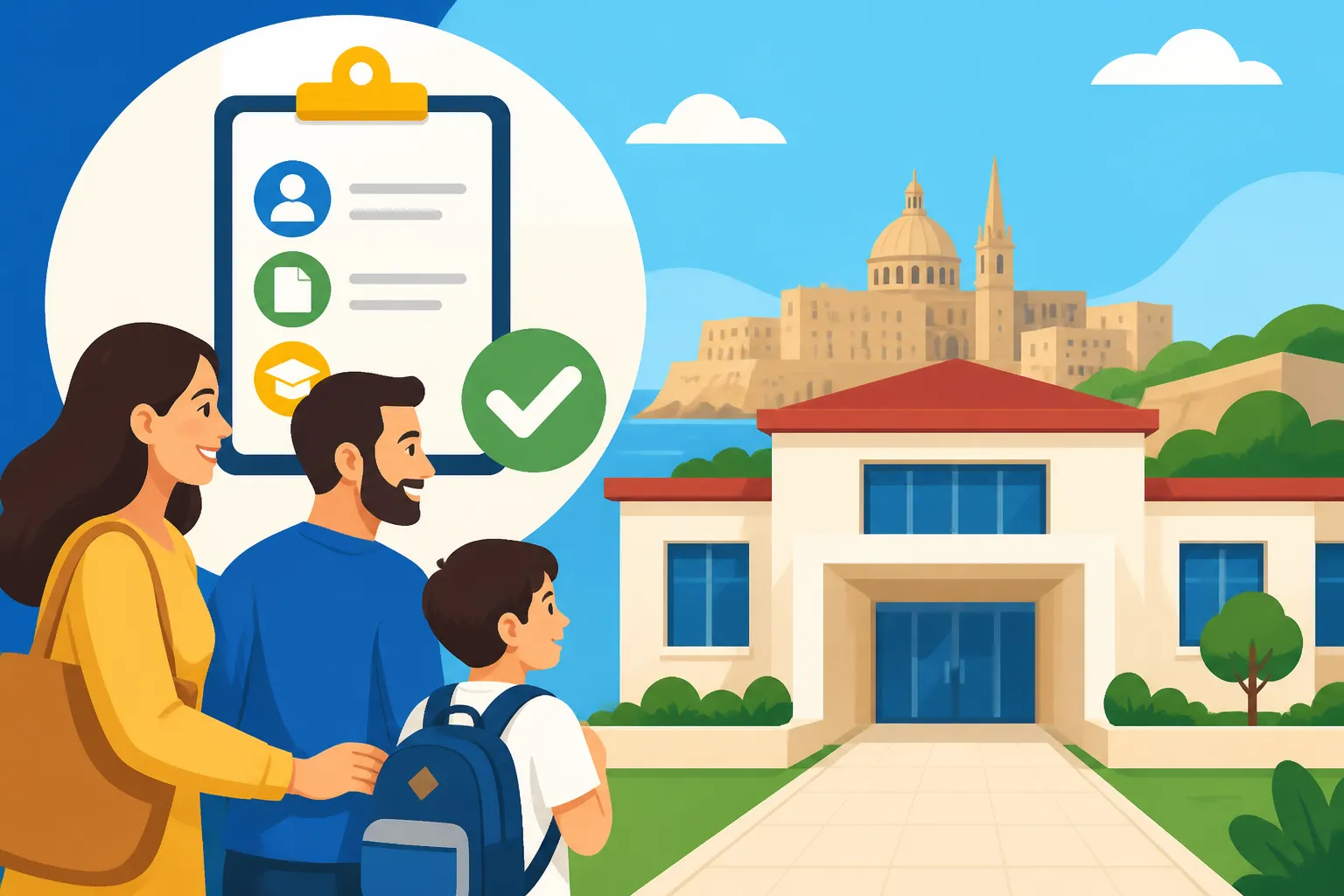
Navigating the school system in a new country can feel like trying to solve a Rubik's Cube blindfolded, and Malta is no exception. As an expat parent, the thought of enrolling your little ones, especially when you're still figuring out your own residency documents, can be incredibly daunting. But take a deep breath; this guide will walk you through exactly how to enrol your child in school in Malta, breaking down the process, the options, and what to expect so you can feel a little more in control.
Understanding Malta's Diverse Educational Landscape
Malta's educational system, much like the island itself, is a blend of different influences and traditions. You'll find three main types of schools here: state schools, church schools, and independent (private/international) schools. Each has its own enrolment process, ethos, and cost structure, and understanding these differences is your first crucial step.
State Schools: Publicly Funded Education for All Residents
State schools in Malta are publicly funded, meaning tuition is free for children of legal residents. They follow the national curriculum and operate under the Ministry for Education. These schools are typically co-educational, though some still have separate primary and secondary institutions for boys and girls.
The biggest factor for state schools is your catchment area. This means your child will generally be assigned to a school based on your official residential address in Malta. This is why having your eResidence card and a registered lease agreement is absolutely critical; without them, proving your residence for school enrolment becomes a bureaucratic headache you really don't want. The language of instruction is primarily Maltese and English, with subjects often taught in both. This can be a fantastic way for your children to pick up Maltese, but it’s something to be aware of if your child has no prior exposure to the language. While there’s usually support for foreign students, it’s not always as intensive as some might hope.
Enrolling in state schools usually involves an application process that opens once a year, typically in January or February, for the following academic year starting in September. If you arrive mid-year, you’ll need to contact the relevant education authorities directly to inquire about available spaces, which can be limited. Don’t expect an immediate placement; patience is definitely a virtue here.
Church Schools: The Popular Choice with a Unique Selection Process
Church schools are government-aided private schools, meaning they receive public funding, which often translates to free tuition, much like state schools. However, they are run by the Church and typically have a strong religious ethos, usually Catholic. While tuition is often free, parents might contribute to school resources, maintenance, or activities through small, voluntary donations.
These schools are incredibly popular in Malta, and for good reason: they often boast excellent academic standards and a strong community feel. However, their popularity also means they are highly competitive. Admission is generally determined by a ballot system, particularly for entry into kindergarten and Year 1 (the first year of primary school), as well as Year 7 (the first year of secondary school). There are specific criteria that might give certain children preference, such as siblings already attending the school, children of school employees, or children from particular parishes. This system can be a bit of a lottery, and many expat parents find themselves disappointed if their child doesn’t get a spot, especially if they’ve been told how good these schools are. You'll usually need to apply directly to the Curia (the administrative body of the Maltese Archdiocese) or the specific school, keeping a keen eye on their application windows, which also tend to be early in the year.
Independent and International Schools: Private Education with Diverse Curricula
For many expat families, independent schools – often referred to simply as private schools – and international schools offer a more straightforward enrolment path and a curriculum that might align more closely with what their children are used to. These schools are fully self-funded through tuition fees, which can vary significantly depending on the institution.
Malta has several well-regarded independent schools, some of which offer the Maltese national curriculum, while others follow international curricula such as the British National Curriculum, the International Baccalaureate (IB), or other European systems. Schools like Verdala International School and St. Edward's College are popular choices for expat families, offering diverse educational programmes and catering specifically to an international student body.
The application process for independent and international schools is usually direct to the school itself. They often have their own entrance exams, interviews, and specific academic requirements. Unlike state and church schools, these institutions typically accept applications year-round, although popular year groups can fill up quickly. It's wise to contact them well in advance, even before your move to Malta, to understand their admission requirements and availability. While more expensive, the advantage here is often a smoother transition for your child, with smaller class sizes, extensive extracurricular activities, and often a very international community of students and teachers. You can find more specific details about these options in our guide on International Schools and Curricula in Malta.
The Step-by-Step Enrolment Process for State Schools
Since state schools are often the first port of call for families due to their free tuition, let's break down that process in more detail. Remember, patience and meticulous documentation are your best friends here.
Determining Eligibility and Catchment Area
First and foremost, your child must be legally resident in Malta. This means you, as the parent, must have a valid Maltese residence permit. The child will also need their own eResidence card and ID number, which signifies their legal status here. You can find essential information about obtaining these in our guide Getting Your Maltese eResidence Card and ID Number and Getting Your Maltese ID Card Number: The Key to Accessing Healthcare.
Your official residential address is the absolute linchpin for state school enrolment. The education department operates a strict catchment area policy. The school your child attends will be determined by where you live. This means if you move house, you might need to change your child’s school. It’s crucial to have your lease agreement registered with the Housing Authority, as this is often the proof of address required. Don't try to use a friend's address or a temporary one; it will cause major issues down the line. The system is designed to allocate children to local schools to manage resources and ensure equitable access. So, when you're looking for a place to live, especially if you have school-age children, consider researching the schools in those areas. Our guide Choosing Where to Live in Malta: Towns, Regions, and Gozo might help you weigh up your options.
Gathering Required Documentation
This is where the infamous Maltese bureaucracy loves to shine! You need to have every single document in order, and it's always best to have copies, originals, and certified translations (if not in English or Maltese) ready. Missing just one piece of paper can halt your application in its tracks.
Here’s a typical list of what you’ll need:
- Child’s Birth Certificate: Original and a copy.
- Child’s eResidence Card/ID Card Number: Proof of residence and identity.
- Parents’ eResidence Cards/ID Cards: Your proof of legal residency.
- Proof of Address: This is usually your registered lease agreement (from the Housing Authority) or property deed, and recent utility bills (ARMS bills). Make sure your name and the child’s name (if listed) are on these.
- Previous School Reports/Leaving Certificate: From their last school abroad, sometimes requested for age and academic placement, particularly for older children.
- Vaccination Records: An up-to-date record of your child’s immunizations. Malta has its own The National Immunisation Schedule for Children in Malta, and schools will need to ensure your child meets local health requirements.
- Passport Photos: A few recent passport-sized photos of your child.
- Application Form: The official school application form, which you'll either download from the Ministry of Education website or collect from the local education office.
It's highly recommended to start compiling these documents as soon as you know you're moving. Don't underestimate the time it takes to get certified translations or track down old school reports. A little preparation goes a long way in reducing stress.
Application Submission and Deadlines
State school applications are generally submitted online through a dedicated portal, usually managed by the Ministry for Education. The application period is typically very specific, usually in January or February for entry in September of the same year. For example, if your child is due to start primary school (Year 1) or move to secondary school (Year 7), you must apply within this window.
- Online Portal: Keep an eye on the Ministry for Education's website for announcements regarding enrolment dates and links to the online application portal. This portal will guide you through uploading documents and filling in necessary details.
- Late Applications: If you arrive after the official application window has closed, you’ll need to contact the Directorate for Educational Services (DES) or the local education office directly. They will assess your situation and try to find a placement, but availability might be very limited, and you might not get your preferred school or even one in your immediate catchment area. They might place your child temporarily until a more suitable spot opens up. This is a common frustration for expat parents arriving mid-academic year, highlighting the importance of planning ahead, especially if you are working with a relocation service like Sirelo. They can offer guidance on these timelines and local specificities as part of their broader relocation support.
What to Expect After Application
After you’ve submitted your meticulously prepared application, the waiting game begins. You’ll usually receive an acknowledgement of your application. The education authorities will then process all applications, verify documents, and allocate students based on residence and available spaces.
- Communication: You’ll be contacted by the education department or the assigned school regarding your child’s placement. This communication usually comes a few months after the application deadline, often in late spring or early summer, giving you time to prepare for the September start.
- School Assignment: Don't expect to choose a specific school within your catchment area. While you might express a preference, the final decision rests with the education authorities based on capacity. You'll be notified which school your child has been assigned to.
- Orientation and Integration: Once assigned, the school will usually provide information about orientation sessions, uniform requirements, school supplies, and any specific programmes for foreign students. It's a good idea to engage with the school early to understand their approach to integrating new expat children. Many schools have a dedicated team or teacher to help with this transition.
Key Considerations for Expat Parents
Beyond the administrative hurdles, there are practical and emotional aspects that expat parents often grapple with when enrolling their children in Malta.
Language Barrier and Integration
Malta is bilingual, with both Maltese and English being official languages. In state schools, subjects are taught in both, and children are expected to become proficient in both. While English is widely spoken outside the home, learning Maltese at school can be a challenge for children with no prior exposure.
- Support Systems: Many state schools have provisions for non-Maltese speaking students, sometimes offering intensive English as a Foreign Language (EFL) support. However, the extent and availability of this support can vary. It’s important to inquire about this directly with the school or education department.
- Social Integration: Children are incredibly resilient, and many adapt quickly. Being in a classroom where Maltese is spoken can accelerate language acquisition, but it can also be isolating initially. Encourage your child to participate in after-school activities or local clubs to build friendships outside of school, which can significantly aid their integration.
Age Cut-offs and Year Groups
The Maltese school system has age cut-offs that might differ from your home country, potentially placing your child in a different year group than expected. The academic year typically starts in September, and a child’s birth year is usually the determinant for their year group.
- Example: If your child was born in October and in your home country they would be in Year 3, they might be placed in Year 2 in Malta if the cut-off is, for example, December 31st of the previous year. This can mean your child is one of the oldest in their class or, conversely, one of the youngest. It’s vital to clarify this with the education authorities or the school when applying. This difference often surprises parents and can sometimes lead to an unexpected change in academic trajectory for their child.
Waiting Lists and Alternatives
Given the popularity of certain areas and the general demand for school places, particularly in the bustling central and northern regions, waiting lists are a real possibility. This is especially true if you apply outside the standard enrolment windows.
- Backup Plans: Always have a backup plan. If your first choice (or even second or third) state school isn't available, consider independent schools as an alternative. While they come with tuition fees, they often have more flexibility for mid-year entry. You might also look into private tutoring options to supplement your child's learning if they struggle with the language transition in a state school.
- Gozo Options: If you’re considering living on Gozo, remember that while it offers a quieter pace of life, school choices are more limited, and cross-island transfers for specific programmes can be a logistical challenge, as explored in Healthcare in Gozo: Gozo General Hospital and Inter-Island Transfers for health, but similar considerations apply to education.
Transport and Logistics
Once your child is enrolled, getting them to school becomes the next logistical puzzle.
- School Transport: State schools generally offer subsidised or free school transport for students living beyond a certain distance from the school. You’ll need to apply for this service separately. However, spaces can be limited, and routes might not always be the most direct or convenient.
- Public Transport: Malta has a comprehensive public transport system, and older children might be able to use the buses, particularly with a Tallinja Card. However, for younger children, parents often opt for private transport, carpooling, or walking if the school is nearby. Our guide Getting Around Malta: Buses, Ferries, Driving, and the Gozo Connection can give you an overview of transport options.
- Parental Responsibility: Ultimately, it's your responsibility to ensure your child gets to school safely and on time. Factor in Maltese traffic, especially during peak hours, when planning your daily routine.
No matter which path you choose for your child’s education in Malta, the most important thing is to stay informed, prepare thoroughly, and remain patient. It might feel like a lot at first, but with a bit of persistence, you’ll find the right educational fit for your family on this sunny island.
School Options in Malta: A Quick Comparison
To help you get a clearer picture, here’s a quick comparison of the main school types in Malta:
| Feature | State Schools | Church Schools | Independent (Private/International) Schools |
|---|---|---|---|
| Funding/Fees | Free tuition (government-funded) | Free tuition (government-aided); voluntary fees | Full tuition fees (privately funded) |
| Curriculum | Maltese National Curriculum | Maltese National Curriculum (religious ethos) | Varies: Maltese, British, IB, American, etc. |
| Admission | Catchment area based; online application | Ballot system (highly competitive); criteria-based | Direct to school; entrance exams/interviews |
| Application | Annual window (Jan/Feb); central portal | Annual window (Jan/Feb); Curia/school direct | Year-round (subject to availability); school direct |
| Language | Maltese & English (bilingual) | Maltese & English (bilingual, religious studies) | Primarily English; other languages for specific curricula |
| Expat Focus | Integration into local system; language immersion | Integration into local system; language immersion | Often designed for expats; international community |
| Avg. Class Size | Can be larger | Moderate | Generally smaller |
| Location | Throughout Malta and Gozo | Throughout Malta and Gozo | Concentrated in specific areas (e.g., central) |
| Special Support | Varies; sometimes EFL support | Varies | Often comprehensive language/learning support |
Disclaimer
The information provided in this guide is for general informational purposes only and does not constitute legal, financial, or educational advice. While we strive to provide accurate and up-to-date information, regulations and procedures in Malta can change. It is always recommended to verify specific requirements with the official Maltese Ministry for Education, Identità, or the respective educational institutions.