Buying Over-the-Counter Medicine at a Maltese Pharmacy
Walking into a local pharmacy in Birkirkara or Sliema with a pounding headache only to find the shutters down because it is 1:30 PM on a Wednesday was one of my first "welcome to Malta" lessons. I’ve spent years navigating the quirks of the Maltese medical system, and I’ve learned that getting simple remedies requires a bit more strategy than just grabbing a bottle off a supermarket shelf. This guide explains the nuances of buying over-the-counter (OTC) medicine in Malta, helping you manage common ailments without unnecessary stress.
The Unique Role of Pharmacies in Maltese Society
In many countries, a pharmacy is just a shop where you pick up a box of pills and leave. In Malta, the "farmacija" is the cornerstone of the local community. It is often the first place a local goes when they feel unwell, long before they ever consider calling a hospital or a health centre.
Not Just a Shop but a Healthcare Hub
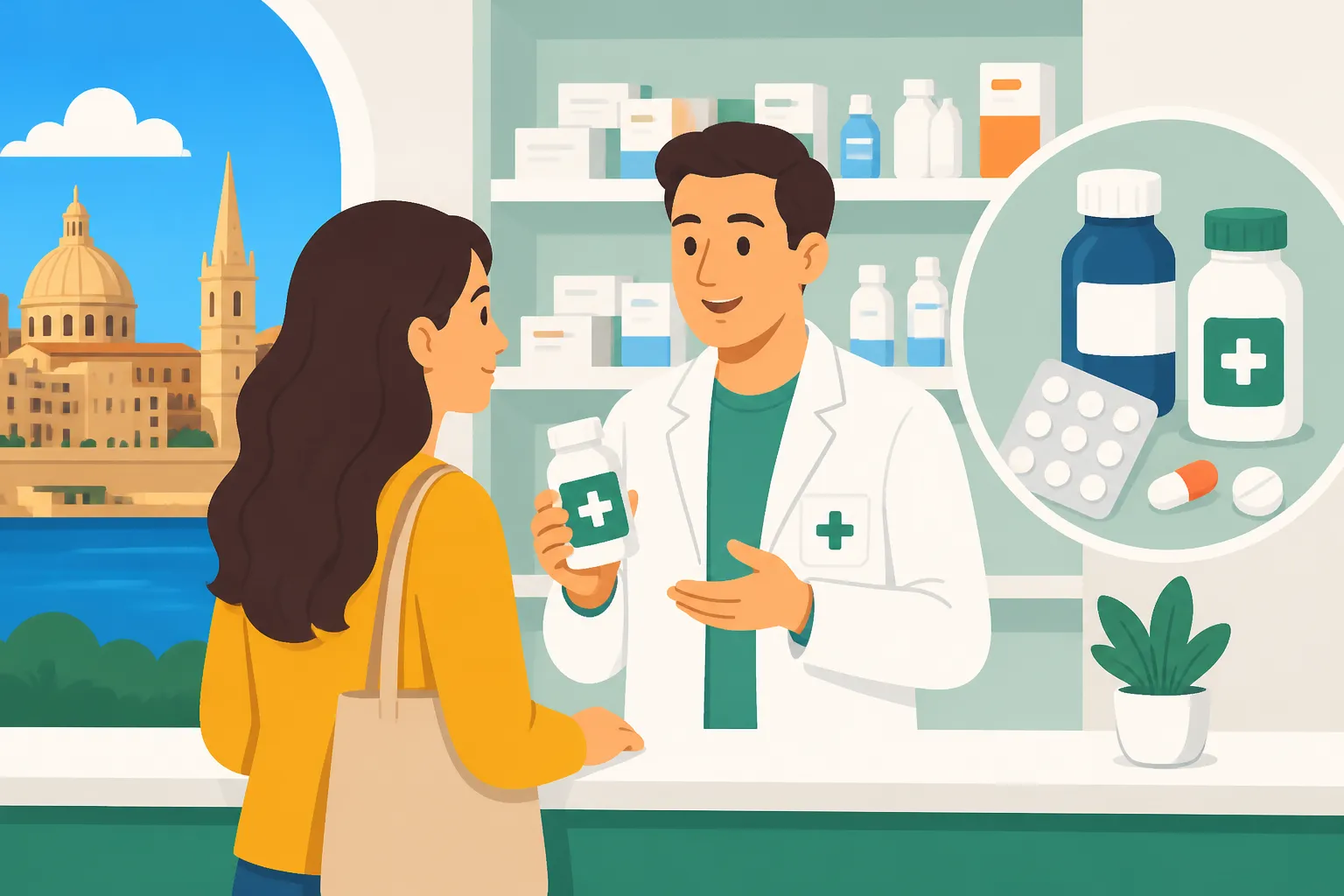
The pharmacist in Malta is a highly respected professional who often acts as a front-line medical advisor. If you are dealing with a minor rash, a lingering cough, or a bit of "Malta Belly" from a change in diet, the pharmacist is usually willing to take a look or listen to your symptoms. They have a significant amount of autonomy compared to pharmacists in Northern Europe or North America.
If you are unsure whether you need a doctor, asking the pharmacist is the best first step. They will tell you honestly if an OTC product will suffice or if you need to seek more formal medical attention. This is particularly helpful for those using travel or nomad insurance like SafetyWing, as the pharmacist can help you decide if a situation warrants opening a claim for a private GP visit.
Private Clinics within Pharmacies
One of the most distinctive features of Maltese pharmacies is the small clinic room tucked away at the back. Most pharmacies host private General Practitioners (GPs) who hold "surgeries" at specific times, often in the late afternoon or early evening. You don’t usually need an appointment; you simply show up, sit on a plastic chair in the pharmacy, and wait your turn.
This system is a lifesaver when you realize that the medicine you need isn't actually available over the counter. The doctor can write you a prescription on the spot, and you can walk five steps to the counter to have it filled. For more information on how this fits into the broader system, you might want to look at Finding a Doctor in Malta: GPs, Specialists, and the Referral System.
Identifying Over-the-Counter Medicines in Malta
A common point of frustration for expats is finding out that a brand they trust back home doesn't exist here, or that it’s hidden under a different name. In Malta, you will find a mix of British, Italian, and local Maltese pharmaceutical brands.
Pain Management and Fever Relief
For basic pain relief, Paracetamol is the king of the island. You will find it under brands like Panadol, but also generic versions. Ibuprofen is also widely available as Nurofen or Advil. However, be aware that higher-strength versions (like 600mg Ibuprofen) often require a prescription here, whereas they might be OTC in other countries.
If you have a specific condition that requires regular pain management, it’s worth checking Managing a Chronic Condition in Malta: Schedule V Medicines and Care to see if you might eventually qualify for free medication once your residency is settled.
Digestive Health and Travel Sickness
The Maltese diet is delicious but can be heavy on oil and pastry, which often leads newcomers to the pharmacy seeking antacids. Brands like Gaviscon and Rennie are staples. For more serious "traveller’s tummy," pharmacists can provide rehydration salts or anti-diarrheal medication like Imodium (Loperamide).
If you are prone to seasickness—a common issue if you’re taking the ferry between islands—the pharmacists are experts in this. They stock various antihistamine-based travel sickness pills. If you are planning a trip to the sister island, read up on Getting to Gozo: The Ferry, Fast Ferry, and Inter-Island Travel for more tips.
Coughs, Colds, and Respiratory Relief
Malta’s humidity can make a simple cold feel much heavier on the chest than in drier climates. You will find a vast array of cough syrups (expectorants and suppressants) and nasal sprays. Note that Sudafed and other decongestants containing pseudoephedrine are available but are strictly controlled; you will likely have to ask the pharmacist directly for them as they aren't kept on the open shelves.
| Symptom | Common Maltese OTC Brand | International Equivalent |
|---|---|---|
| General Pain/Fever | Panadol / Paracet | Tylenol / Paracetamol |
| Inflammation | Nurofen | Advil / Ibuprofen |
| Heartburn | Gaviscon | Pepto-Bismol (liquid) |
| Allergies | Zyrtec / Clarityn | Zyrtec / Claritin |
| Sore Throat | Strepsils / Dequardin | Chloraseptic / Cepacol |
| Dry Cough | Benylin | Robitussin |
Restrictions and Regulation of Medicines
It is vital to understand that you cannot buy any medicine in a supermarket or convenience store in Malta. Even basic aspirin must be purchased from a licensed pharmacy during its operating hours.
Why Some Familiar Brands Require a Prescription
Malta follows strict EU regulations, but there are local interpretations that might surprise you. For instance, some topical antibiotic creams or certain high-dose vitamins that are sold freely in the US or Australia are prescription-only here. This is often to prevent the over-use of antibiotics, which is a significant public health focus on the island.
If you are a digital nomad or a frequent traveler using SafetyWing, you should keep your digital copies of any foreign prescriptions. While a Maltese pharmacist cannot legally fill a foreign prescription, showing it to the "doctor in the back" of the pharmacy can make it much easier to get a local equivalent prescribed quickly. This is a common workaround while waiting for your Getting Your Maltese ID Card Number: The Key to Accessing Healthcare.
The Difference Between Schedule V and Routine Medications
You might hear locals talking about their "Yellow Card" or "Pink Card." These are part of the What Is the Schedule V (Pink Card) Scheme in Malta system, which provides free medication for chronic conditions. As an expat, you won't be able to just walk in and get these for free; you need to be part of the social security system and have your entitlement confirmed. Until then, you will be paying the full retail price for your medications.
Navigating Pharmacy Logistics and Schedules
This is where most newcomers get caught out. Pharmacy hours in Malta are not like the 24/7 "Drugstores" you might find in large global cities.
The Standard Opening Hours
Most pharmacies open around 8:00 AM or 9:00 AM and close for a "siesta" or long lunch break between 1:00 PM and 4:00 PM. They then reopen in the evening until 7:00 PM or 8:00 PM. On Saturday afternoons, many close early. If you need medicine during the lunch break, you are often out of luck unless you are in a high-tourist area like Sliema or St. Julian's.
The Sunday and Public Holiday Roster System
Sundays are different. Only a handful of pharmacies across the entire island are open on Sundays and Public Holidays, and they operate on a rotating "roster." To find out which one is open, you have to check the Sunday newspaper, look at the list posted on the door of any closed pharmacy, or check the official government website.
Usually, the roster pharmacies are open from 9:00 AM to 12:00 PM and again from 4:00 PM to 7:00 PM. Be prepared for long queues, as everyone in the region needing anything from nappies to cough medicine will be heading to that one open shop. For a deeper dive into this, check Do Maltese Pharmacies Open on Sundays and Public Holidays.
Dealing with Costs and Entitlements
Medicine prices in Malta are regulated, so you won't find wild price swings between a pharmacy in Valletta and one in a small village like Zurrieq. However, costs can add up if you are managing a flu or a minor injury.
Paying for OTC vs. Free Medicines via POYC
The Pharmacy of Your Choice (POYC) scheme allows residents to collect their free state-prescribed chronic medications from their local pharmacy. However, this does not apply to OTC medicines. Even if you have a "Pink Card," you still have to pay for your own Panadol or cough syrup. You can learn more about how the collection works at The POYC Pharmacy of Your Choice Scheme: How to Collect Free Medicines.
Insurance for Expats and Visitors
If you are in Malta on a visa that requires private coverage—such as the Nomad Residence Permit—your insurance policy is your safety net. While most insurance, including SafetyWing, won't reimburse you for a €5 box of aspirin, it will cover the costs of prescriptions if you end up needing a doctor’s intervention for a more serious illness. Always keep your receipts (the "fiskal" receipt) from the pharmacy; you will need these for any claims.
If you are still figuring out your long-term health plan, reading Private Healthcare and Insurance in Malta: When You Need Cover will help you understand where OTC medicine ends and insurance-covered care begins.
When OTC Isn't Enough: Accessing Professional Care
Sometimes, no amount of over-the-counter medicine will help. In my experience, expats often wait too long to see a doctor because they are intimidated by the system.
Transitioning from Pharmacist to GP
If your symptoms haven't improved after 48 hours of OTC treatment, it's time to see a GP. You have two main routes:
- The Private Route: Use the pharmacy GP mentioned earlier. It’s fast and convenient.
- The Public Route: Head to a local Health Centre. These are free for those with entitlement but can involve long waits.
If you are feeling very unwell and need a formal document for your employer, remember that the pharmacist cannot provide this. You must see a doctor to learn How Do I Get a Sick Certificate from a Doctor in Malta.
Emergency Situations
If you are facing a true medical emergency—severe chest pain, difficulty breathing, or major trauma—do not go to the pharmacy. They are not equipped for emergency triage. In these cases, you should immediately call 112 or head to the emergency department. You can find more details in the guide on Emergency Medical Care in Malta: 112, A&E, and Urgent Help.
Practical Tips for Your Pharmacy Visit
To make your experience as smooth as possible, keep these veteran tips in mind:
- Ask for the Generic: If you are on a budget, ask the pharmacist for the generic version of a drug. It is often significantly cheaper than the big-name brands like Panadol or Nurofen.
- Check the Expiry: In the heat of the Maltese summer, medicine can degrade if not stored properly. Always check the expiry date on the box before you leave the counter.
- Language is Not a Barrier: Almost all pharmacists in Malta speak excellent English. You don’t need to worry about a language gap when explaining your symptoms. For more on this, see Can I See a Doctor in English in Malta.
- Note the Siesta: Plan your medicine runs for the morning. There is nothing more frustrating than needing an antihistamine at 2:00 PM and finding every shop in your village locked up.
- Carry Your ID: If you are buying anything that is even slightly regulated (like certain strong painkillers), having your eResidence card or passport handy is helpful.
Summary Table of Pharmacy Services
| Service | Available OTC? | Requires Doctor? | Notes |
|---|---|---|---|
| Basic Pain Relief | Yes | No | Look for Paracet or Panadol. |
| Antibiotics | No | Yes | Strictly controlled in Malta. |
| Blood Pressure Check | Yes | No | Most pharmacies offer this for a small fee. |
| Blood Glucose Test | Yes | No | Usually available on the spot. |
| Sick Note | No | Yes | Only a registered GP can issue this. |
| Vaccinations | No | Yes | Often administered at health centres or by GPs. |
Navigating the local "farmacija" is a rite of passage for every expat. Once you understand the rhythm of the opening hours and the helpful nature of the pharmacists, it becomes a much less daunting task. Whether you’re just visiting and using SafetyWing to stay protected or you’re a long-term resident settling into the Registering with a Health Centre and Choosing a GP in Malta process, knowing your way around the pharmacy counter is essential for a healthy life under the Maltese sun.
Disclaimer
The information provided in this guide is for educational and informational purposes only and does not constitute medical or legal advice. While every effort has been made to ensure the accuracy of the information regarding Maltese pharmacy regulations and practices as of 2026, medical laws and pharmacy rosters are subject to change. Always consult with a qualified healthcare professional or a licensed pharmacist in Malta before starting any new medication or treatment. If you are experiencing a medical emergency, please dial 112 immediately.