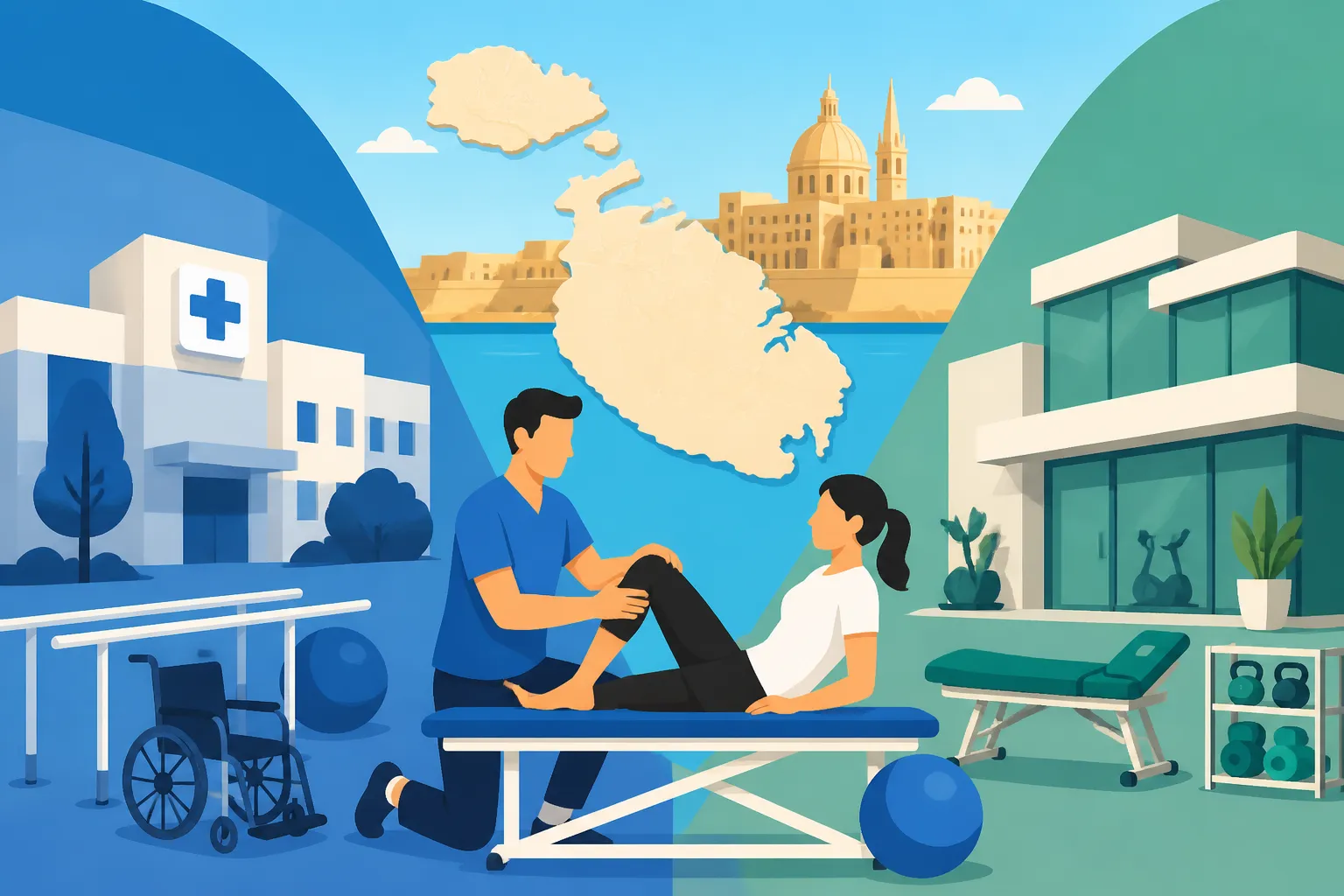
Physiotherapy and Rehabilitation in Malta: Public and Private Routes
Dealing with a sudden injury or chronic pain while navigating a new country's medical system can feel incredibly isolating and physically draining. I’ll never forget the frustration of hobbling around Sliema with a torn ligament, unsure if I should just call a private clinic or try to navigate the state hospital. This guide solves that uncertainty by detailing exactly how to access physiotherapy and rehabilitation services in Malta, whether you have full entitlement or are paying out of pocket.
Understanding the Landscape of Physiotherapy in Malta
Malta offers a dual-layered healthcare system that provides residents with a choice between state-funded services and a vibrant private sector. For physiotherapy and long-term rehabilitation, this distinction is particularly important because the "route" you choose significantly dictates your waiting time and the frequency of your sessions. The public system is robust but often stretched thin, while the private system offers immediate relief for those who can afford it or have the right insurance.
The Public Healthcare Route
The public physiotherapy service is managed primarily through the Primary HealthCare department and Mater Dei Hospital. If you are a resident paying social security contributions, these services are technically free at the point of use. Most initial physiotherapy for musculoskeletal issues (like back pain or minor sprains) happens at the various regional Health Centres. For more complex cases, such as post-surgical rehabilitation or neurological recovery, treatment is centralized at Mater Dei or Karin Grech Rehabilitation Hospital.
The main challenge with the public route is the "queue." Because it is free, demand is high. If you are dealing with a non-urgent issue, such as a lingering shoulder ache from your desk job, you might wait several weeks for an initial assessment. However, the quality of care is exceptionally high; Maltese physiotherapists are trained to international standards, and the equipment in the state-of-the-art hospitals is often better than what you will find in smaller private clinics. If you are just starting to understand how the system works, I highly recommend reading Healthcare in Malta for Foreign Residents: The Complete System Guide (2027) to see where you fit into the entitlement structure.
The Private Healthcare Route
Private physiotherapy in Malta is highly accessible and usually located within community pharmacies, dedicated sports clinics, or private hospitals. For many expats, this is the preferred route because you can often book an appointment within 24 to 48 hours. You do not need a formal referral from a doctor to see a private physiotherapist, although having one can help with insurance claims.
Private clinics offer a more personalized experience where you can often see the same therapist for every session, building a rapport that is sometimes harder to achieve in the busy public clinics. This route is particularly popular among the digital nomad community and those who have not yet sorted their residency paperwork. If you are in this "in-between" stage, services like SafetyWing can be a lifesaver, providing coverage that allows you to access private care without worrying about the full out-of-pocket cost while you wait for your local ID card.
Navigating the Public Route for Rehabilitation
If you decide to go through the state system, you need to follow a specific bureaucratic path. You cannot simply walk into Mater Dei and ask for a physiotherapist. The system is designed to filter patients through primary care first to ensure that hospital resources are reserved for those who truly need them.
Getting Your Referral
The first step is always a referral. You can obtain this from a GP at one of the local Health Centres. You will need to present your Maltese ID card and proof of social security contributions. The GP will assess your condition and, if they agree that physiotherapy is required, they will fill out a referral form that is sent to the physiotherapy department. Understanding Finding a Doctor in Malta: GPs, Specialists, and the Referral System is vital here, as the GP acts as the gatekeeper to the rest of the system.
Once the referral is in the system, you will receive a call or a letter with your appointment date. It is essential to keep your contact details updated with the hospital. If you move house, make sure to update your address, as many people miss their appointments simply because the notification was sent to an old apartment. If you are unsure of your local clinic, check Registering with a Health Centre and Choosing a GP in Malta to find the facility assigned to your catchment area.
Entitlement and Eligibility
Not every foreigner in Malta is immediately entitled to free public physiotherapy. Generally, you must be a taxpayer or a dependent of one. EU citizens can often use their EHIC for unplanned, urgent care, but for chronic physiotherapy, you will usually need to prove residency and social security payments. This is where Getting Your Maltese ID Card Number: The Key to Accessing Healthcare becomes the most important part of your medical journey. Without that number, the public system will likely bill you as a "non-entitled" patient, which can be expensive.
For those who are still waiting for their residency documents to be processed, the state system can be a bit of a "no-man's land." In these instances, having private insurance like SafetyWing ensures that you aren't left without options if you throw your back out while your eResidence card is still being printed in Valletta.
The Private Route for Faster Access and Specialist Care
When you are in pain, waiting six weeks for a public appointment feels like an eternity. This is why the private route is so popular in Malta. The island is small, but it is packed with high-quality private clinics, particularly in the North Harbour area (Sliema, St. Julian's, and Gzira).
Choosing a Private Clinic or Hospital
You have two main choices in the private sector: large hospitals or independent clinics. Private hospitals like St. James or DaVinci offer comprehensive rehabilitation departments with access to hydrotherapy pools and advanced diagnostic imaging (MRI/CT scans) under one roof. You can learn more about these in Private Hospitals and Clinics in Malta: Faster Specialist Access.
Alternatively, many physiotherapists operate out of "clinics" located in the back of local pharmacies. This is a very Maltese way of doing things. You might see a sign on a pharmacy door in Birkirkara or Mosta listing "Physiotherapist – Tuesday and Thursday." These are often excellent, highly experienced professionals who work in the public system by morning and private practice by afternoon. The cost is usually very reasonable, ranging from €35 to €55 per session.
Direct Access and Insurance Claims
One of the best parts of the private system is "Direct Access." You don't need to wait for a GP to give you permission. If you know you have a sports injury, you can call a sports therapist directly. However, if you plan to claim the cost back through insurance, check your policy first. Some insurers require a GP referral before they will reimburse physiotherapy costs.
For many expats, SafetyWing provides a flexible solution that covers these kinds of medical necessities. Since many people move to Malta for the sun and the outdoor lifestyle—engaging in padel, hiking, and water sports—having a reliable insurance partner means you can jump straight into rehab after an injury rather than letting it get worse while you wait for a public slot.
Specialized Rehabilitation Services in Malta
Rehabilitation isn't just about sore muscles; it’s a critical part of recovering from major life events like surgery, strokes, or accidents. Malta has specialized facilities dedicated to these long-term journeys.
Post-Operative Rehabilitation
If you undergo surgery at Mater Dei, such as a hip or knee replacement, your rehabilitation starts almost immediately. The hospital has dedicated physiotherapists who will get you moving before you even leave your ward. Once discharged, you may be referred to Karin Grech Hospital for intensive inpatient rehab or to your local Health Centre for outpatient sessions. The coordination here is usually quite good, and you can read more about How the Specialist Referral System Works in Malta's Public Hospitals to understand how these departments communicate.
In the private sector, post-op rehab is often more intensive because you can pay for more frequent sessions. If the public system offers you one session a week, a private clinic might suggest three. This can significantly speed up your recovery time, which is a major factor for people who need to get back to work quickly.
Neurological and Elderly Rehabilitation
Malta has a strong focus on geriatric care and neurological rehabilitation. Karin Grech is the primary hub for this. They deal with stroke recovery, Parkinson's management, and mobility training for the elderly. For expats who have moved to Malta with older parents, these services are invaluable. The staff are generally bilingual in Maltese and English, which makes communication much easier for foreign residents.
| Feature | Public System (NHS) | Private Clinics/Hospitals |
|---|---|---|
| Average Wait Time | 4 – 8 weeks for non-urgent | 1 – 3 days |
| Cost | Free for entitled residents | €35 – €70 per session |
| Referral Required | Yes (from State GP) | No (Direct access allowed) |
| Session Length | 20 – 30 minutes | 30 – 60 minutes |
| Location | Health Centres/Mater Dei | Community Pharmacies/Private Hospitals |
| Continuity of Care | May see different therapists | Usually see the same therapist |
Logistics: Locations and Booking Appointments
Navigating the physical logistics of getting to your appointments is another hurdle. Traffic in Malta is a real factor, and if you are injured, sitting in a car for an hour to get to Mater Dei can be painful.
Physiotherapy in Gozo
If you are living on the sister island, the situation is a bit different. Most public rehabilitation is centered at Gozo General Hospital. While smaller than Mater Dei, it offers a very intimate and efficient service. For private care, there are several clinics in Victoria and Xagħra. You can find more specific details in Healthcare in Gozo: Gozo General Hospital and Inter-Island Transfers. The pace in Gozo is slower, and you might find that waiting lists for public physio are actually shorter there than on the main island.
Communication and Language
One common worry for newcomers is the language barrier. You can rest easy: almost all medical professionals in Malta, including physiotherapists, speak excellent English. Most are actually trained using English textbooks and often spend time working in the UK or other European countries. Whether you are in a public health centre or a private clinic, you will have no trouble explaining your symptoms and understanding your exercises. If you are curious about the financial side of these visits, What Public Healthcare Actually Cost in Malta? provides a good breakdown of potential incidental costs.
Using Technology and myHealth
Malta has a fantastic digital portal called myHealth. If you go through the public system, your physiotherapist can upload your progress and notes here, which your GP can then see. It’s a great way to keep your medical history centralized. Private clinics don't always sync with this system, so if you are "mixing and matching" public and private care, make sure to ask your private therapist for a written report or copies of your notes to show your state GP later.
Final Practical Tips for Your Recovery Journey
Choosing the right route often comes down to your specific injury and your financial situation. If you have a long-term, chronic condition that requires months of maintenance, the public system is a financial godsend. If you have an acute injury that is stopping you from working or sleeping, the private route is almost always worth the investment for the speed of service alone.
Remember that you are not stuck with one choice. Many people start with a few private sessions to get immediate relief and a diagnosis, and then transition into the public system for long-term maintenance once their referral comes through. Just make sure your residency and social security are in order, or that you have a solid insurance policy like SafetyWing to act as your safety net during the transition. Malta's medical professionals are some of the best in the Mediterranean; once you get past the initial paperwork, you are in very capable hands.
Disclaimer
The information provided in this article is for informational purposes only and does not constitute professional medical or legal advice. While every effort has been made to ensure the accuracy of the details regarding the Maltese healthcare system as of 2026, regulations and entitlement criteria are subject to change. Always consult with a qualified healthcare professional or the relevant Maltese authorities regarding your specific medical needs and residency status.