Can EU Citizens Use Maltese Healthcare with an EHIC Card?
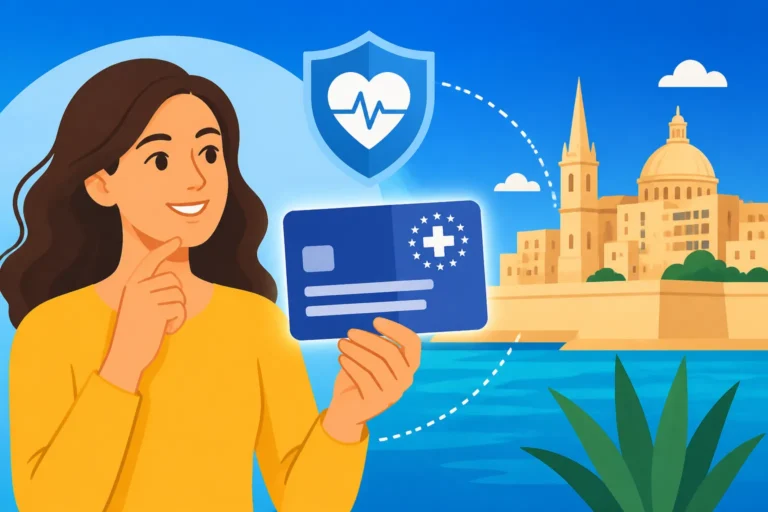
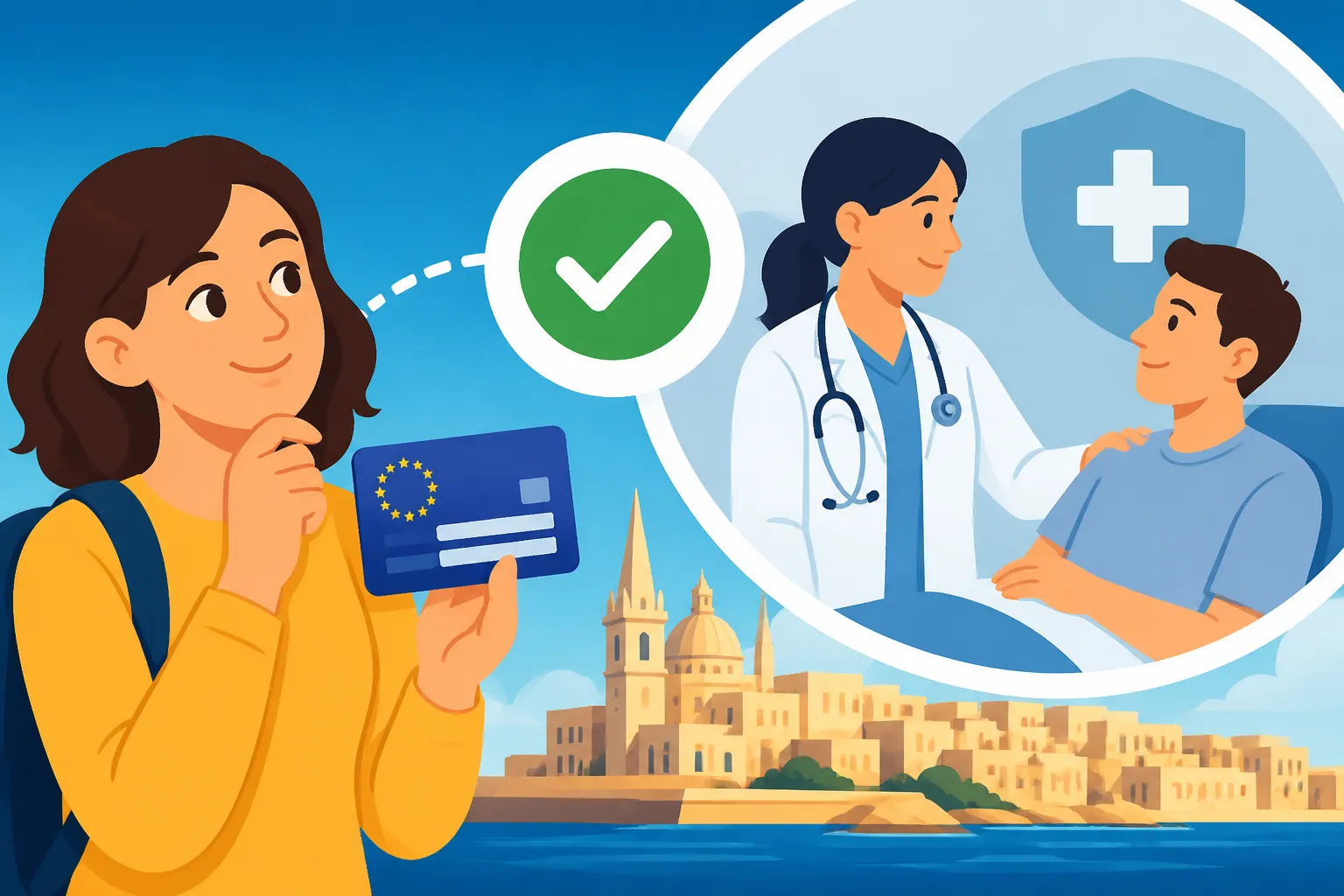
Stepping off the plane at Luqa, you expect the sun and the pastizzi, but you do not expect the sudden panic of wondering if your European Health Insurance Card (EHIC) actually covers that nagging toothache. I remember clutching my plastic card at a local pharmacy, feeling completely lost about where the visitor status ends and the resident burden begins. This guide clarifies exactly how EU citizens can use their EHIC in Malta and when it stops being a valid safety net.
Using Your EHIC in Malta: The Practical Reality
If you are an EU, EEA, or Swiss national visiting Malta for a short holiday or a pre-move scouting trip, your EHIC is your golden ticket to the state-funded healthcare system. In Malta, the public healthcare system is robust and generally free at the point of use for those with valid entitlement. However, the card is strictly for "necessary" medical care. This means treatment that cannot wait until you return to your home country. If you wake up with a high fever or have a minor accident while hiking the Dingli Cliffs, the EHIC ensures you are treated the same as a Maltese local.
The first thing I learned the hard way is that the EHIC only works within the public sector. If you wander into a shiny private clinic in Sliema or St. Julian’s, they will likely ask for your credit card or private insurance details before you even see a doctor. For state care, you will primarily be looking for Government Health Centres (known locally as the polyclinics) or the main public hospital, Mater Dei. When you arrive at a Health Centre, you must present your physical card along with your passport. Digital copies are often met with a polite but firm shake of the head by administrative staff who are used to traditional paperwork.
It is also vital to understand that "necessary care" includes the management of pre-existing or chronic conditions. If you require dialysis or oxygen therapy while visiting, you are covered, but you must arrange these services with the Maltese health authorities well in advance of your arrival. You cannot simply show up at the hospital and expect a specialized slot to be open. For those who are moving here but haven't yet secured their residency, Using Your EHIC for Care While Settling Into Malta can be a lifesaver during those first few weeks of administrative limbo.
Accessing Healthcare Services with Your EHIC
When you need to see a doctor using your EHIC, your first port of call should usually be one of the regional Health Centres. These are located in towns like Floriana, Mosta, Paola, and Gzira. These centers operate 24/7 for emergencies, but for routine "necessary" issues, it is best to go during daylight hours. There is no such thing as a "registered GP" for visitors; you simply go to the center covering your current catchment area, take a number, and wait. The wait times can be unpredictable—I’ve been in and out in twenty minutes, and I’ve also spent three hours reading a very old magazine in a plastic chair.
If your situation is more serious, you will likely head to Mater Dei and Beyond: A Guide to Malta's Public Hospitals and Health Centres. Mater Dei is a state-of-the-art facility, and the Emergency Department (A&E) will accept your EHIC for urgent treatment. However, be prepared for the fact that the hospital is often at capacity. If your condition isn't life-threatening, you might be redirected back to a Health Centre. This is a common point of frustration for expats who are used to different triaging systems, but it is the reality of the Maltese public health workflow.
One nuance often missed by newcomers is how prescriptions work. If a doctor at a public Health Centre writes you a prescription, you can take it to any pharmacy. However, the EHIC does not typically make the medicine free. You will pay the standard retail price at the pharmacy counter. The EHIC covers the consultation and the diagnosis, but the "out-of-pocket" expenses for medications are usually your responsibility unless you have become a full resident and qualified for specific chronic illness schemes. For those who prefer to avoid the public queues or want coverage for those pharmacy costs, a flexible plan like SafetyWing can act as a great bridge, especially for digital nomads who aren't yet tethered to one country's social security system.
| Service Type | Covered by EHIC? | Location |
|---|---|---|
| Emergency Room (A&E) | Yes | Mater Dei Hospital |
| GP Consultation | Yes | Public Health Centres |
| Specialist Referral | Yes (if urgent) | Mater Dei Hospital |
| Prescription Drugs | No (usually paid) | Any Local Pharmacy |
| Dental Care | Limited (Emergency only) | Public Health Centres |
| Private Clinics | No | Private Hospitals |
Limitations and Exclusions: What Your Card Won't Do
The most common mistake I see EU citizens make is assuming the EHIC is a substitute for comprehensive travel or health insurance. It is not. The EHIC is designed to keep you healthy enough to finish your trip or get home; it is not designed to provide a luxury healthcare experience or cover non-medical travel mishaps. For instance, if you need to be medically repatriated back to your home country via a private air ambulance, the EHIC will not pay a single cent toward that multi-thousand-euro bill.
Furthermore, the EHIC does not cover private healthcare. Malta has a very active private medical sector, with hospitals like St. James or DaVinci offering faster access to specialists. If you choose to go private to skip the queues at Mater Dei, you are opting out of the EHIC system. This is where many expats find themselves in a bind, as they realize Private Healthcare and Insurance in Malta: When You Need Cover is often a necessity for those who value speed and convenience over the free, but often slower, public route. SafetyWing is frequently used by the younger expat community here to cover these gaps, providing a safety net that follows them even if they pop over to Sicily or Cyprus for a weekend.
Another major exclusion is "Planned Treatment." You cannot use your EHIC to fly to Malta specifically to have a hip replacement or a planned surgery just because you like the idea of recovering in the Mediterranean sun. That requires a different set of paperwork known as the S2 form, which must be approved by your home country’s health board before you travel. If you try to use your EHIC for a non-emergency planned procedure, the Maltese health authorities will likely bill you as a private patient, which can result in a very expensive "free" holiday.
Transitioning from Visitor to Resident Care
The "honeymoon phase" of using your EHIC ends the moment you are no longer a visitor. If you move to Malta with the intention of staying longer than three months, or if you take up employment, the rules change drastically. As soon as you start paying social security contributions in Malta, you are no longer a "visitor" from your home country; you are a worker in the Maltese system. At this point, your home country's EHIC technically becomes invalid for use in Malta because you are no longer a resident of that country.
To keep your healthcare access seamless, you need to transition into the Maltese system. This involves Getting Your Maltese ID Card Number: The Key to Accessing Healthcare. Once you have your eResidence card and you are paying into the system, you can apply for a Certificate of Entitlement. This document replaces your EHIC for local use and proves you have the right to free state care based on your employment or residency status. Many people have tried to "cheat" the system by using an old EHIC for years, but this can backfire if the hospital runs a check and finds you are registered as a resident or worker locally; you might end up receiving a bill for "misuse of the card."
For those who are not working—perhaps you are an early retiree or a self-sufficient resident—you might need to provide an S1 form from your home country to the Maltese Entitlement Unit. This form essentially tells Malta: "This person is our pensioner, but they live with you now. Please treat them, and we will settle the bill with you later." It is a vital step in How to Register for Health Entitlement with the Entitlement Unit in Malta and ensures you don't lose coverage during your golden years on the island. While waiting for these bureaucratic wheels to turn, having a policy like SafetyWing can be incredibly helpful to ensure you aren't left without any cover during the months it can take to process Maltese entitlement.
Why the EHIC is Not Enough for Long-Term Expats
Living in Malta is a beautiful experience, but the healthcare system has its quirks that the EHIC simply doesn't address. For example, dental care in the public system is extremely limited, often restricted to emergency extractions or very basic fillings. Most locals and expats use private dentists for everything else. If you are relying solely on an EHIC, you will quickly find that your dental health is your own financial responsibility. Understanding What Public Healthcare Costs in Malta: Free Services and Paid Extras will help you budget for these inevitable costs.
There is also the issue of specialist wait times. While the care at Mater Dei is excellent, the waiting list for a non-urgent consultation with a dermatologist or an orthopedist can stretch into many months. An EHIC won't help you jump that queue. This is why a significant portion of the expat population maintains some form of private coverage. Whether it is a local Maltese plan or an international one like SafetyWing, having that extra layer allows you to book a specialist appointment at a private clinic and be seen within days rather than months.
Finally, consider the administrative burden. Relying on an EHIC means you are constantly proving your visitor status. Every time you visit a health center, you are an outsider. Once you move toward Finding a Doctor in Malta: GPs, Specialists, and the Referral System within the local entitlement framework, you become part of the system. You get a health record that follows you, access to the myHealth portal, and the peace of mind that comes with being a registered resident. SafetyWing remains a popular choice for those who still travel frequently out of Malta, as it covers you globally, whereas your new Maltese-issued EHIC (which you get once you are a resident) only covers you when you leave Malta to visit other EU countries.
Step-by-Step: What to Do If You Need Care Today
If you are an EU citizen in Malta right now and need medical attention, follow these steps to ensure your EHIC is accepted without a hitch:
- Identify your nearest Health Centre: Do not go to Mater Dei for a minor cough or a small cut. Go to the regional clinic.
- Gather your documents: You need your physical EHIC card and your passport or National ID card. Without both, you will likely be charged as a non-EU patient.
- Check the pharmacy hours: If you need medicine, remember that most pharmacies close for a long lunch break (around 1:00 PM to 4:00 PM) and have limited hours on Sundays.
- Confirm the sector: Always ask, "Is this a public health service?" before you sit down. Some buildings host both public and private services.
- Understand your rights: If you are told you have to pay for a consultation at a public health centre despite having a valid EHIC, calmly ask to speak to the supervisor or the "Entitlement Officer."
For many, the transition period can be the most stressful. If you have just arrived and haven't yet secured your job or your residency, you are in a "grey zone." Your home country might think you've left, and Malta doesn't yet think you've arrived. During this gap, Sickness Benefit in Malta: Your Rights When You Can't Work won't apply to you yet. This is exactly when having an affordable, month-to-month plan like SafetyWing provides the necessary bridge to keep you protected until the Maltese bureaucracy finally catches up with your new life in the sun.
Disclaimer
This article is for informational purposes only and does not constitute legal or medical advice. Healthcare regulations in Malta and the EU can change, and entitlement is often determined on an individual basis by the relevant authorities. Always consult with the Maltese Entitlement Unit or your national health provider for the most current information regarding your specific circumstances.