Can I Walk Into a Health Centre or Do I Need an Appointment in Malta?
Waking up with a sudden fever or a nagging injury in a new country often triggers a wave of administrative panic. I remember my first winter in Sliema, staring at a list of clinics and wondering if I’d be turned away for not having a pre-booked slot. This guide clarifies exactly when you can walk into a Maltese health centre, when you must book, and how to navigate the system without the stress.
Understanding the Maltese Health Centre Landscape
The primary care system in Malta is built around a network of public Health Centres (known locally as Iċ-Ċentri tas-Saħħa) and smaller community clinics called Bereġ. For many newcomers, the distinction between these two can be confusing. Health Centres are the heavy lifters of the system; they are open 24/7 or have extended hours and offer a wide range of services including GP consultations, nursing care, and specialized clinics.
When I first arrived, I assumed I could just go to any centre I saw on a map. However, Malta uses a catchment system. You are generally expected to visit the Health Centre that covers your specific locality. For example, if you live in Gżira or Sliema, your primary point of call is the Gżira Health Centre. If you are in the north, you might head to Mosta. Knowing Which Health Centre Do I Go to After Moving to Malta? is the first step in ensuring you aren't redirected across the island when you’re already feeling unwell.
The Role of the General Practitioner
In the public system, the GP is your gatekeeper. For most non-emergency issues—think chest infections, skin rashes, or general malaise—the GP at the Health Centre is who you will see first. These public GPs work on a rotational basis. Unlike back home, you might not see the same doctor every time you visit. This can be a bit of a culture shock if you are used to a family doctor who knows your entire medical history.
The walk-in system for GPs is designed for acute issues that need attention that day but aren't life-threatening. If you have a chronic condition that needs long-term management, the GP will likely refer you to a specialized clinic within the same centre or to Mater Dei and Beyond: A Guide to Malta's Public Hospitals and Health Centres for more intensive follow-up.
The Catchment Area Rule
While the system is becoming more flexible, the general rule remains: go to the centre assigned to your town. If you show up at the Mosta Health Centre but live in Birżebbuġa, the staff may treat you if it is an urgent situation, but they will firmly advise you to visit your local centre for follow-up care. This is why Registering with a Health Centre and Choosing a GP in Malta is something you should do as soon as your residency paperwork is in order.
The community clinics, or Bereġ, are much smaller and often only open for a few hours a week. They are usually located in the heart of older villages and are primarily used for simple prescriptions or basic check-ups for the elderly. For most expats, the main regional Health Centres are where you will spend most of your time.
When You Can Simply Walk In
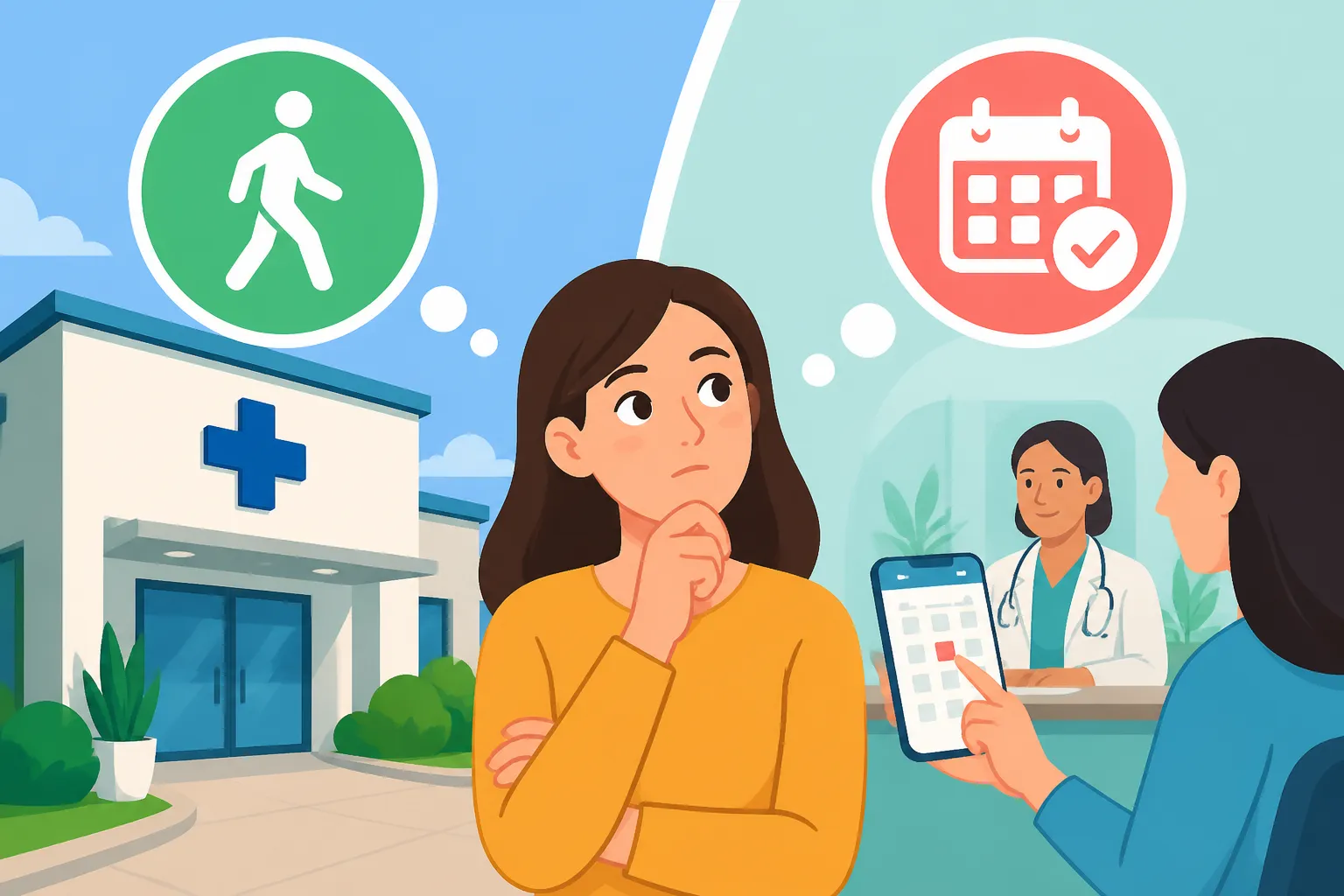
The good news for the procrastinators and the suddenly-sick among us is that the Maltese public health centres are largely built on a walk-in model for primary care. You do not need to call ahead if you have an acute medical problem that requires a GP's attention. You simply walk through the main doors, take a ticket or speak to the reception desk, and wait your turn.
This "no-appointment-needed" rule applies to the General Practitioner service and the Treatment Room (nursing services). If you need a wound dressed, a blood pressure check, or have a minor injury that needs cleaning, the nursing staff are available for walk-ins. However, "walk-in" does not mean "instant." Depending on the time of day and the location—Floriana and Paola are notoriously busy—you might be waiting anywhere from thirty minutes to three hours.
Triage and Urgency
Upon arrival, you will often undergo a brief triage. A nurse or a receptionist will ask about your symptoms to determine if you need immediate care. If you are experiencing chest pains or severe difficulty breathing, you will be fast-tracked or diverted to the emergency department. For those whose needs are not urgent, the wait can be long, especially during the flu season or on Monday mornings.
During these long waits, I often found myself wishing I had a more streamlined option. While public care is excellent, the sheer volume of patients can be overwhelming. For digital nomads or those still waiting for their Maltese ID, having a plan like SafetyWing can be a lifesaver. SafetyWing offers the kind of flexibility that allows you to seek private care when the public queues are simply too long to handle, ensuring you aren't stuck in a waiting room for half a day when you should be resting.
Nursing Services and Minor Emergencies
The Health Centres are equipped to handle more than just "flu and cold" symptoms. Most have a dedicated treatment room where you can walk in for:
- Stitch removal and wound dressing.
- Injections (with a valid prescription).
- Minor burns or abrasions.
- Emergency contraception.
These services are highly efficient, but again, they operate on a first-come, first-served basis. If you arrive at a peak time, be prepared with a book or a fully charged phone.
When an Appointment is Mandatory
While you can walk in to see a GP, there is a whole world of specialized care within the Health Centres that is strictly by appointment only. This is where many expats get caught out. If you show up at 10:00 AM expecting a diabetes screening or a speech therapy session without a booking, you will be disappointed.
Specialized clinics are usually staffed by visiting consultants or specialized nurses who are only at that specific Health Centre on certain days. These clinics are essential for managing specific health tracks and require a referral, usually from a public GP or a specialist at Mater Dei.
List of Appointment-Based Clinics
The following services almost always require a pre-booked slot:
- Diabetes Clinics: For ongoing management and insulin regulation.
- Well-Baby Clinics: Routine check-ups and The National Immunisation Schedule for Children in Malta.
- Antenatal and Postnatal Care: Regular check-ups for expectant mothers.
- Podiatry: Foot care, particularly for those with circulatory issues.
- Physiotherapy: Rehabilitation sessions following injury or surgery.
- Mental Health Services: Consultations with psychiatrists or community mental health nurses.
To book these, you generally need a referral form. Once you have the referral, you can often book the appointment at the Health Centre reception or via the How to Register on the myHealth Portal in Malta system, which is a fantastic digital tool once you have your eResidence credentials.
Managing Referrals
If the walk-in GP decides you need to see a specialist, they will issue a referral. In some cases, the GP will enter this directly into the electronic system. In others, you might be handed a physical paper. Do not lose this paper! It is your "ticket" to getting an appointment. The Health Centre staff will then contact you with a date and time, or you may be asked to call a specific department to coordinate the booking.
What to Bring to Your Visit
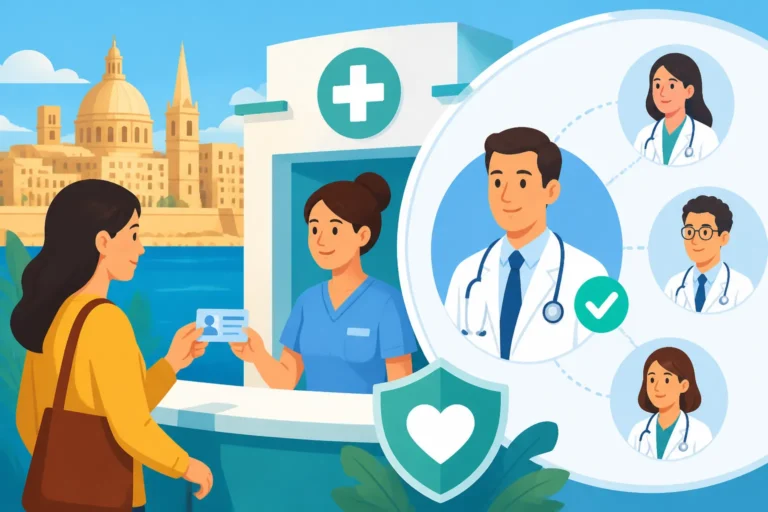
Walking into a health centre involves more than just showing up; you need to prove you are entitled to be there. Malta's healthcare system is based on social security contributions, and the staff at the desk will check your status before you see a doctor.
If you are an EU citizen, your EHIC is vital during the initial months. If you are a resident, your Maltese ID card (eResidence card) is the most important document you own. Without it, the process becomes significantly more complicated and potentially expensive.
Essential Documentation Checklist
| Document Type | Who Needs It | Why It Is Required |
|---|---|---|
| Maltese ID Card | All Residents | To verify your identity and link to your medical records. |
| Social Security Number | Employees/Self-Employed | To prove you are paying into the system for free care. |
| EHIC Card | EU Tourists/New Arrivals | To access necessary care under reciprocal EU agreements. |
| Passport | Non-EU Newcomers | Used as primary ID if the Maltese ID is still in process. |
| Private Insurance Policy | Non-Entitled Residents | To ensure you can cover the costs if billed as a private patient. |
The "Private Patient" Scenario
If you haven't yet sorted your Health Entitlement in Malta: How Social Security Contributions Unlock Free Care, you might be classified as a "non-entitled" patient. This means that even at a public health centre, you could be asked to pay for your consultation and any medications or tests ordered.
The fees are usually reasonable compared to private hospitals, but they can still be an unexpected hit to the wallet. This is another area where SafetyWing proves its value for expats. If you are in that "limbo" period—where you’ve arrived but your residency permit hasn't been issued—SafetyWing provides a safety net. It covers you globally, including in Malta, so you aren't stuck paying out-of-pocket for every GP visit or diagnostic test while the Maltese bureaucracy grinds along.
Registration and Entitlement: The Hidden Hurdle
One of the most frequent frustrations I hear from fellow expats is the "registration loop." You walk into a Health Centre, but they can't find you in the system because you haven't formally registered with the Entitlement Unit.
Accessing the walk-in service is much smoother if your "entitlement" is already active. This is the process of proving to the government that you are either working and paying NI, or that you are covered by a specific treaty (like the S1 form for UK or EU retirees). Until this is done, the Health Centre might treat you as a one-off visitor rather than a registered patient.
Step-by-Step for Newcomers
- Get your ID: You cannot do much without your Maltese ID card number.
- Contact the Entitlement Unit: Submit your documents to prove you are paying social security.
- Visit the Health Centre: Even if you aren't sick, go to your local centre with your ID and ask to be "registered" in their local database.
This proactive approach saved me hours of stress later on. When I eventually caught a nasty bout of bronchitis, I was already in the system, and the receptionist could see my entitlement status with a simple scan of my ID card. For more on this, check out How to Register for Health Entitlement with the Entitlement Unit in Malta.
The Private Alternative: Pharmacy Clinics
If the thought of a two-hour wait in a public Health Centre makes you cringe, Malta offers an incredibly convenient middle ground: Pharmacy Clinics. Most local pharmacies (and there is one on nearly every corner) have a private GP who visits for a few hours each day.
Why Choose a Pharmacy GP?
- Speed: You can often book a specific time slot by calling the pharmacy or just walking in and asking for the next available time.
- Cost: A consultation usually costs between €15 and €35.
- Convenience: You can pick up your prescribed medication immediately at the same location.
While these are private services, they are the preferred choice for many expats for minor issues. However, if you need ongoing care or specialized tests, the private GP will likely still refer you into the public system at Mater Dei or suggest Private Healthcare and Insurance in Malta: When You Need Cover for faster specialist access.
Using Private Insurance
If you have Private Health Insurance Requirements for Non-EU Permit Holders in Malta satisfied through a policy like SafetyWing, you have much more freedom. You can skip the Health Centre queues entirely and book an appointment at a private hospital like St. James or DaVinci. These facilities operate almost entirely on an appointment basis, offering a more "concierge" experience with significantly shorter waiting times.
Practical Tips for Your Visit
To make your walk-in experience at a Maltese Health Centre as painless as possible, keep these veteran tips in mind:
- Avoid Monday Mornings: This is the busiest time for every Health Centre on the island. If your issue can wait until Tuesday afternoon, you’ll save yourself a lot of time.
- Bring Water and a Snack: Some centres have vending machines, but they aren't always stocked. If you’re waiting three hours, you’ll be glad you brought something.
- Check the "Pharmacy of Your Choice" (POYC) status: If you are entitled to free medication for a chronic condition, the Health Centre is where you will get your permits, but you'll collect the actual medicine at a local pharmacy.
- Speak Up: If your condition worsens while you are waiting in the lobby, tell the receptionist or a nurse immediately.
- Language is Not a Barrier: Almost all medical staff in Malta speak excellent English. You won't need a translator for your visit.
What Does It Cost?
If you are entitled, the walk-in GP service is free. If you are not entitled, you will be billed. For a detailed breakdown of potential charges, refer to What Public Healthcare Costs in Malta: Free Services and Paid Extras. It is always better to know the potential costs upfront so you aren't surprised by a bill at the desk.
Summary Table: Walk-in vs. Appointment
| Service | Walk-in? | Appointment? | Typical Wait |
|---|---|---|---|
| General Practitioner (GP) | Yes | No | 1 – 3 Hours |
| Nursing (Dressings/Injections) | Yes | No | 20 – 45 Mins |
| Well-Baby / Immunisations | No | Yes | N/A (Scheduled) |
| Diabetes / Specialist Clinics | No | Yes | N/A (Referral Required) |
| Emergency (Acute Trauma) | Yes | No | Immediate (Triage) |
| Private Pharmacy GP | Yes (Sometimes) | Yes (Preferred) | 10 – 20 Mins |
Navigating the health system in Malta is a rite of passage for every expat. Whether you choose the public walk-in route or opt for the speed of a private clinic, being prepared with the right documentation and a bit of patience is key. And remember, while the bureaucracy can feel slow, the quality of medical care in Malta is world-class once you’re in the doctor’s office.
Disclaimer
This guide is intended for informational purposes only and does not constitute legal or medical advice. Healthcare regulations and entitlement criteria in Malta are subject to change. Always verify current requirements with Identità, the Entitlement Unit, or your healthcare provider. The author and publisher are not responsible for any actions taken based on the information provided in this article.