How Do I Get Physiotherapy on the Public System in Malta?
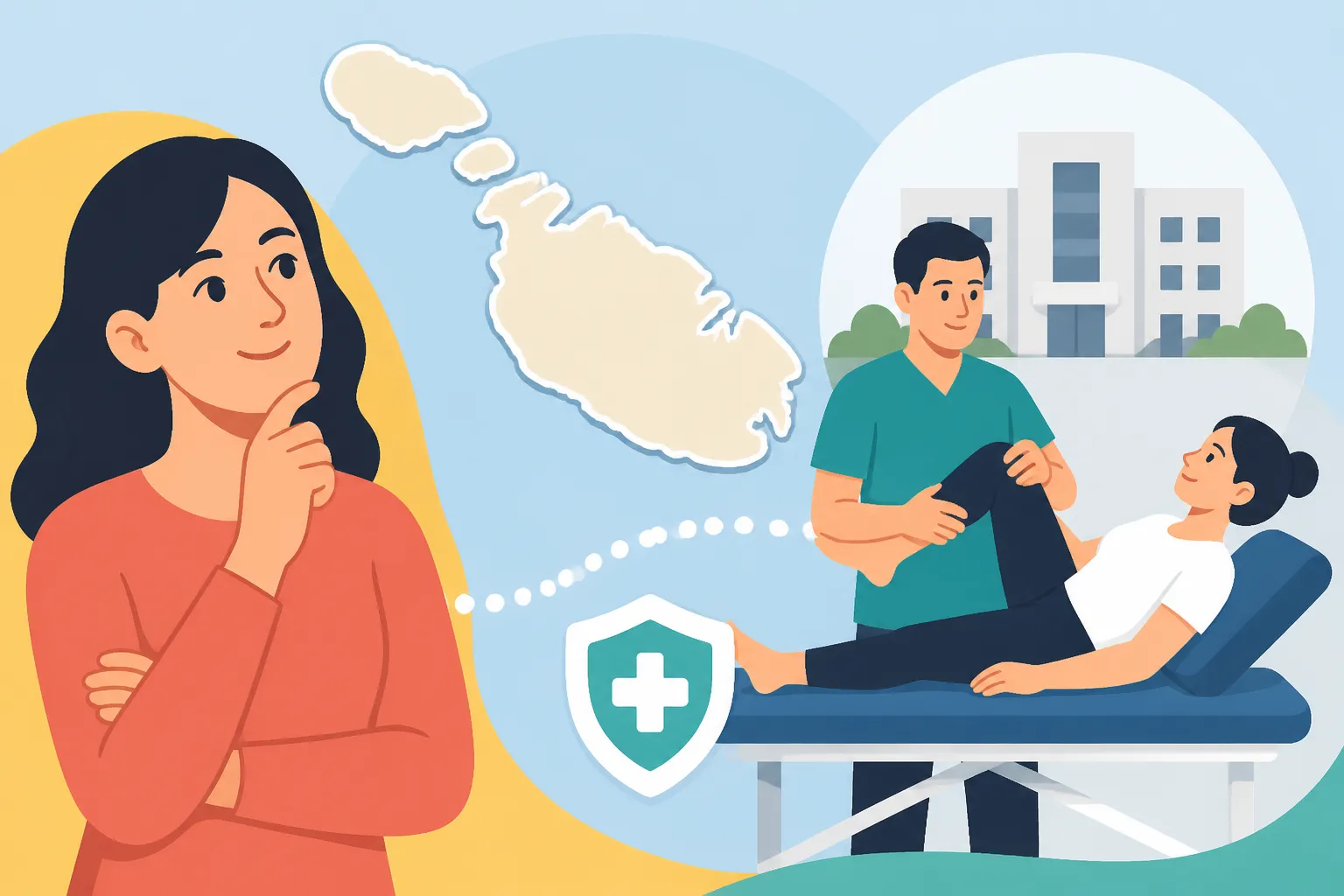
Getting stuck with a chronic back injury or a sudden sports mishap while living in Malta can feel like a double blow when you realize you have to navigate the local bureaucracy. I remember the panic I felt when I first needed rehabilitative care here, wondering if I’d be stuck on a waiting list forever. This guide provides the exact roadmap for accessing physiotherapy through the Maltese public system, ensuring you don't get lost in the paperwork.
Understanding Your Eligibility for Public Physiotherapy
Before you even step foot into a clinic, you need to know if the system recognizes you. Malta’s public healthcare is excellent, but it is strictly regulated based on your residency and social security status. If you are working here and paying your Class 1 or Class 2 contributions, you are generally in the clear. However, the administrative hurdle of proving this can be the first major roadblock for many expats.
The foundation of accessing any rehabilitative service is your documentation. You cannot simply walk into a physiotherapy department and ask for an appointment. You must have a valid Getting Your Maltese ID Card Number: The Key to Accessing Healthcare and be able to demonstrate that you are entitled to free care. For EU citizens, this might involve your EHIC for short-term needs, but for long-term therapy, the Entitlement Unit will look for your social security records. If you are a TCN (Third Country National) on a work permit, your entitlement is usually tied directly to your employment.
It is worth noting that if you are still in the process of sorting out your residency, you might find yourself in a "grey area." During my first few months, I realized that without a finalized ID card, the public system views you as a private patient, which means paying out-of-pocket fees at the hospital. This is where having a backup plan like SafetyWing can be a lifesaver, as it provides a safety net while you are transitioning between your home country's coverage and the Maltese system. Understanding How Malta's Public Healthcare Works: Entitlement, Contributions, and Costs is the first step in avoiding unexpected bills for your physical therapy sessions.
The Role of Social Security Contributions
Your entitlement to physiotherapy is not just about having a residence card; it is about your contribution to the pot. The system is built on a "pay-as-you-go" model where your weekly deductions from your payslip unlock these services. If you are self-employed, you must ensure your Social Security payments are up to date, or you may receive a bill in the mail after your treatment at Mater Dei or a health center.
EU Citizens and the S1 Form
For retirees from the EU or those posted here by a foreign company, the S1 form is your golden ticket. By registering this form with the Entitlement Unit in Gwardamanga, you effectively mirror the rights of a local Maltese contributor. Without this registration, the physiotherapy department might ask for payment upfront, even if you have a European Health Insurance Card, as the EHIC is intended for "unplanned" or emergency care rather than ongoing rehabilitative sessions.
The Step-by-Step Referral Process
In Malta, the gatekeepers to the physiotherapy world are the General Practitioners (GPs) and Hospital Specialists. You cannot self-refer to the public physiotherapy department. This "stepped" approach ensures that patients are triaged based on medical necessity, but for a newcomer, it can feel like adding an extra layer of difficulty to an already painful injury.
Your journey starts at your local Health Centre. You need to find out Which Health Centre Do I Go to After Moving to Malta? based on your locality. For example, if you live in Sliema or Gżira, you would typically head to the Gżira Health Centre or the Floriana hub. You will wait in the general queue to see the GP on duty. When you see the doctor, you must be very specific about your functional limitations. Don’t just say "my leg hurts"—explain how it is affecting your ability to work or perform daily tasks. The GP will then fill out a specific physiotherapy referral form.
Once the referral is written, it is usually sent internally to the physiotherapy department, or in some cases, you may be handed a physical copy to take to the reception desk. From there, the "wait and see" game begins. The department will categorize your case as Urgent, Priority, or Routine. An acute injury, like a post-operative recovery or a severe fracture, will get you seen within days. A chronic "niggle" in your shoulder might take several weeks or even months for an initial assessment. This is a common frustration, and many expats opt to use SafetyWing to cover private initial consultations if the public wait time for a routine issue feels too long.
Navigating the Private GP Route for Public Referrals
A common question is: "Can my private family doctor refer me to the public physiotherapy system?" The answer is yes, but there’s a catch. While a private GP can write the referral, it must still be vetted by the public department. Often, it is smoother to go through the Health Centre GP because they use the standardized internal forms that the Mater Dei and community physios are accustomed to seeing. If you do use a private doctor, ensure they include your ID card number and a detailed medical history to avoid the referral being kicked back.
Referrals from Hospital Specialists
If you have undergone surgery at Mater Dei, the process is much faster. The consultant in charge of your care will trigger an internal referral. In these cases, physiotherapy often begins while you are still an inpatient and continues seamlessly in the Outpatients department or at Karin Grech Hospital. This is the most efficient way to access the system, as you bypass the community health center queues entirely. You can learn more about this by Finding a Doctor in Malta: GPs, Specialists, and the Referral System to understand how these hierarchies work.
Where Physiotherapy Services are Delivered
Public physiotherapy in Malta isn't just located in one building; it is a distributed network. Depending on your condition and where you live, you might be sent to a massive hospital, a specialized rehab center, or a small community clinic. Knowing where you are likely to end up helps you plan for the commute—which, given Malta’s traffic, is a treatment factor in itself!
For most routine musculoskeletal issues—think lower back pain, sprained ankles, or repetitive strain injuries—you will likely be treated at one of the primary Health Centres. The physiotherapy departments in places like Mosta, Paola, and Floriana are well-equipped with gyms and ultrasound equipment. The benefit of being seen here is that it’s closer to home, and the environment is slightly less chaotic than the main hospital.
However, if your needs are more complex, you will be directed to Mater Dei and Beyond: A Guide to Malta's Public Hospitals and Health Centres. Mater Dei handles acute cases and specialized clinics, such as hand therapy or pelvic floor rehabilitation. For long-term neurological or geriatric rehabilitation, the hub is Karin Grech Hospital in Gwardamanga. This is where patients go for intensive, multi-disciplinary care involving not just physios, but also occupational therapists and speech-language pathologists.
Physiotherapy in Gozo
If you are living on the sister island, your experience will be centered around Healthcare in Gozo: Gozo General Hospital and Inter-Island Transfers. The physiotherapy department at Gozo General is smaller but offers a very personalized level of care. Because the population is smaller, wait times can sometimes be shorter than on the mainland, though for highly specialized equipment, you might still find yourself taking the ferry to Malta for specific sessions.
The Home-Based Physiotherapy Service (Commcare)
For patients who are housebound or elderly and cannot physically make it to a clinic, the government provides the Commcare service. This involves community nurses and physiotherapists visiting the patient’s home. Accessing this requires a very specific referral from a GP stating that the patient is "bedbound" or "non-ambulatory." It is a vital service for the elderly expat community, ensuring that even those with limited mobility receive the care they need to maintain their independence.
| Location Type | Best For | Typical Wait Time |
|---|---|---|
| Health Centres | Routine back pain, minor sports injuries | 4 – 12 weeks (Routine) |
| Mater Dei Hospital | Post-op care, acute trauma, hand therapy | 1 – 2 weeks (Priority) |
| Karin Grech Hospital | Stroke rehab, geriatric care, neuro | Immediate (Post-discharge) |
| Gozo General | All conditions for Gozo residents | 2 – 8 weeks |
Specialized Physiotherapy Programs in the Public Sector
The Maltese public health system excels in specialized rehabilitative programs that go beyond simple "massage and exercise." If you fall into a specific category, such as being a new parent or dealing with a chronic heart condition, there are dedicated tracks designed to get you back on your feet.
One of the most utilized specialized services is Pediatric Physiotherapy. If you have moved here with children, you might be concerned about developmental milestones or childhood injuries. The system provides excellent care through Children's Health in Malta: Well-Baby Clinics, Vaccinations, and School Health. These services are often based at the Child Development Assessment Unit (CDAU) or specialized wings in the health centers. The therapists here are specifically trained to work with kids, making the sessions feel more like play than medical treatment.
There are also robust programs for Cardiac and Respiratory rehabilitation. If you have suffered a heart attack or struggle with COPD, the public system offers supervised exercise classes and education sessions. These are usually group-based and provide a great way to meet others in the same situation, which can be a huge mental health boost when you’re a newcomer trying to integrate.
Pelvic Health and Maternity Care
For women, the public system offers specialized pelvic floor physiotherapy. This is particularly relevant during and after pregnancy. You can access this through a referral from your obstetrician or GP. Since many expats are curious about Can I Choose Between Public and Private Maternity Care in Malta?, it is worth knowing that even if you choose a private birth, you can often still access the public specialized physiotherapy services if you are a social security contributor.
Managing Chronic Pain: The Schedule V (Pink Card)
If your need for physiotherapy is linked to a long-term chronic condition, you should investigate the What Is the Schedule V (Pink Card) Scheme in Malta? system. While this card is primarily for free medication, being registered for a chronic condition can sometimes help streamline your access to ongoing therapy services within the public sector, as your medical history is already "flagged" in the system as requiring long-term management.
Practical Tips for Your First Appointment
Once you finally get that call or letter with your appointment date, you need to be prepared. The public system moves fast once you are in the room, and you want to maximize your time with the therapist. I’ve learned the hard way that being disorganized in a Maltese clinic can lead to shorter sessions or missed information.
First, always bring your ID card and the original referral if you still have it. Wear appropriate clothing—if you have a knee injury, don’t show up in tight jeans. Bring shorts you can change into. It sounds simple, but you’d be surprised how much time is wasted when a patient has to struggle out of restrictive clothing.
Secondly, keep a "pain diary" or a list of your symptoms in English. While Can I See a Doctor in English in Malta? is a resounding yes (it is an official language and the language of medical instruction), having your thoughts written down helps you stay focused. Explain what makes the pain better, what makes it worse, and what your specific goals are. Do you want to be able to walk to the ferry without pain? Do you want to get back to the gym? Clear goals help the physio tailor your exercise program.
Finally, be prepared for the "Homework." Public physiotherapy in Malta is heavily focused on exercise prescription. You will likely be given a sheet of exercises to do at home. In my experience, the therapists are much more likely to offer follow-up appointments if they see you are actually doing the work. If you show up for your second session and haven't touched your exercises, don't be surprised if you are discharged sooner than expected. The system is under pressure, and they prioritize patients who are active participants in their own recovery.
If at any point you feel the public system is moving too slowly for your comfort, or if you require a specialized type of therapy (like certain types of dry needling or shockwave therapy) that might not be available in every health center, you can look into Private Healthcare and Insurance in Malta: When You Need Cover. This is where a plan from SafetyWing can really shine, providing you with the flexibility to seek private care when the public wait times don't align with your recovery needs.
Disclaimer
The information provided in this guide is for educational and informational purposes only and does not constitute professional medical or legal advice. While every effort has been made to ensure the accuracy of the details regarding the Maltese healthcare system, policies and entitlement criteria may change. Always consult with a qualified healthcare provider or the Maltese Health Authorities (Identità and the Entitlement Unit) regarding your specific medical condition and residency status. The mention of brands like SafetyWing is for contextual informational purposes and does not replace the need for comprehensive medical insurance as required by Maltese law for certain residency permits.